

TL;DR:
- Collaborating closely with artists ensures a perfect, personalized wall art fit.
- Preparation, clear communication, and timely feedback are key to successful custom artwork.
- Engaging actively in the process results in meaningful art that offers lasting emotional value.
Generic wall art from a high-street retailer often lands in a space and immediately feels wrong: too small, the wrong tone, or simply devoid of personality. For homeowners and interior designers alike, that mismatch between vision and reality is genuinely frustrating. A structured, collaborative custom ordering process changes everything. When the process prioritises collaboration and clear feedback, the result is a piece that fits perfectly and means something. This guide walks you through each stage, from understanding what the process involves to avoiding the pitfalls that cost people time and money.
Table of Contents
- Understanding the custom artwork process
- Preparation: What to consider before ordering
- How to order your custom artwork: Step-by-step
- Avoiding common pitfalls and ensuring satisfaction
- Our perspective: Why collaboration beats a solo approach
- Bring your own vision to life with bespoke artwork
- Frequently asked questions
Key Takeaways
| Point | Details |
|---|---|
| Collaboration is key | Open, specific feedback ensures you end up with artwork you love. |
| Good preparation saves time | Defining your needs and collecting references streamlines the process. |
| Mock-ups prevent disappointment | Requesting digital previews helps confirm your vision before committing. |
| Avoid common mistakes | Vague briefs and slow responses can lead to delays or dissatisfaction. |
Understanding the custom artwork process
Custom artwork ordering is not simply requesting a painting and waiting for it to arrive. It is a structured creative exchange between you and a specialist, shaped by dialogue, revision, and mutual understanding. Whether you are a homeowner wanting something personal for your living room or an interior designer sourcing a statement piece for a client project, the process follows a recognisable pattern.
Here is how the stages compare for both audiences:
| Stage | Homeowner focus | Designer focus |
|---|---|---|
| Initial brief | Personal taste and room context | Client brief, trade pricing, project scope |
| Inspiration sharing | Mood boards, reference images | Concept boards, brand guidelines |
| Mock-up review | Digital rendering in your space | Client presentation and sign-off |
| Revision rounds | Personal refinement | Iterative approvals with client |
| Final approval | Personal satisfaction | Client sign-off and invoicing |
| Delivery | Home installation | Site installation or handover |
When you personalise your space with art, the goal is always a piece that belongs rather than one that merely occupies wall space. Designers especially benefit from this process: designer collaboration tips show how specialists can handle the creative execution while the designer retains full control of the project vision.
Common motivations for commissioning custom artwork include:
- Matching a specific colour palette that ready-made prints cannot replicate
- Filling an unusually sized wall without cropping or compromise
- Creating a centrepiece that reflects a homeowner’s personal story or history
- Developing a cohesive series across multiple rooms or floors
- Sourcing unique pieces that clients will not find anywhere else
Delegating to art specialists saves designers time and avoids the costly problem of vague, unactionable feedback stalling a project.
Pro Tip: Vague feedback like “make it feel warmer” wastes everyone’s time. Instead, be precise: “deepen the amber in the lower left corner” gives a specialist something concrete to act on immediately.
Preparation: What to consider before ordering
The quality of your custom artwork is directly tied to the quality of your preparation. Artists and studios can only work with what you give them, so arriving at the first conversation well prepared makes a measurable difference to both the process and the outcome.
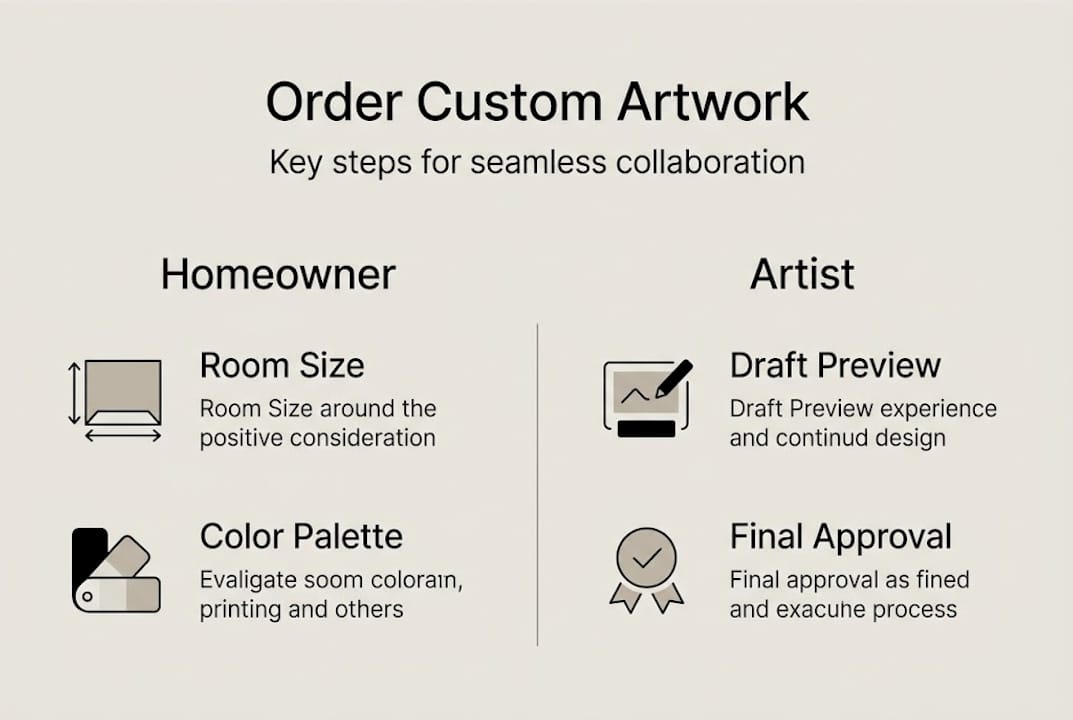
Start by gathering the following information:
- Wall dimensions: Exact height and width in centimetres, including any architectural features such as skirting boards or light switches nearby
- Colour palette: Paint codes, fabric swatches, or reference images that capture the tones already present in the room
- Budget range: A realistic figure covering both the artwork and any framing or installation costs
- Inspiration images: Collect these from magazines, websites, or existing artworks you admire
- Intended mood: Calm and minimal? Bold and graphic? Warm and textured? Words matter here
Here is a simple checklist to take into your first consultation:
| Requirement | Detail to prepare |
|---|---|
| Wall size | Exact measurements in centimetres |
| Colour palette | Paint codes or physical swatches |
| Style direction | Three to five reference images |
| Budget | Minimum and maximum figures |
| Timeline | When the piece must be in place |
| Format preference | Print, original, canvas, framed |
For more guidance on scope, the bespoke wall art guide is a strong starting point. If you are working on a particularly large installation, planning large scale art will help you avoid proportion mistakes that are expensive to correct.
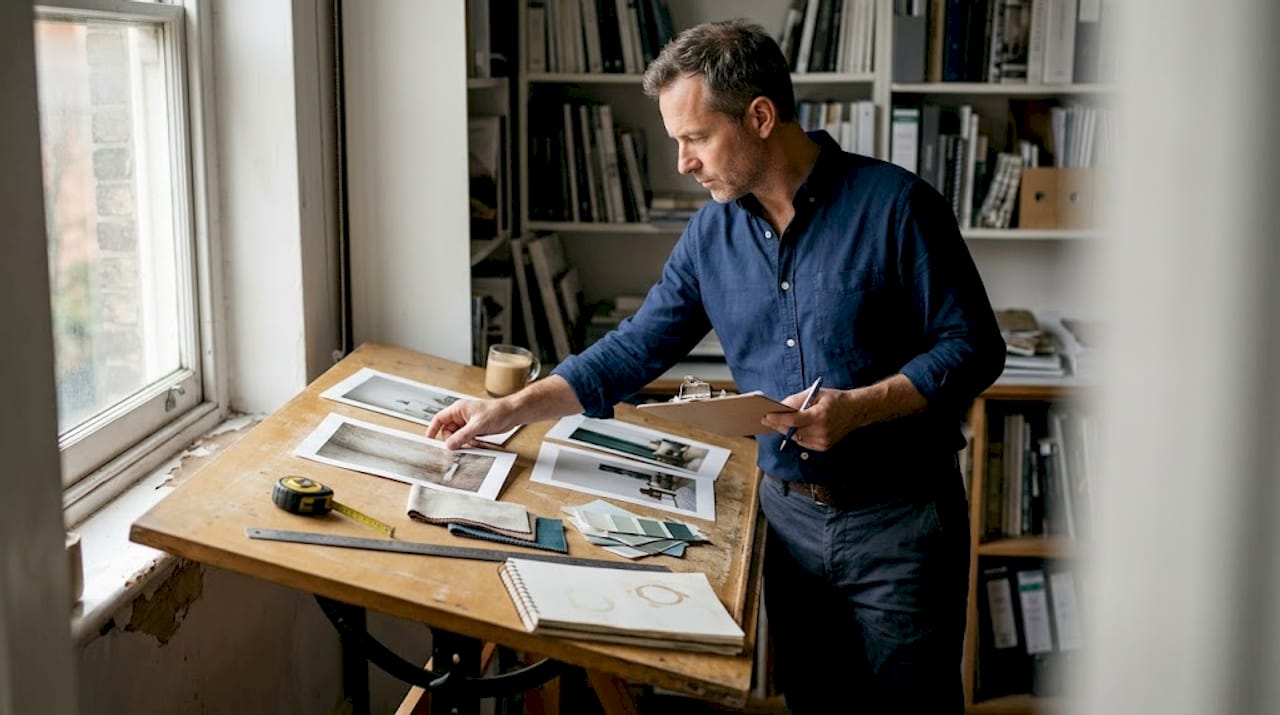
Pro Tip: Before committing to a final size or composition, ask for a digital rendering placed into a photograph of your actual room. In-home trials and renderings are one of the most effective ways to prevent buyer’s remorse and give you genuine confidence before production begins.
Interior designers can take this further by requesting physical mock-ups or sample prints before client presentations, especially on high-value projects where approval is critical and revisions are costly.
How to order your custom artwork: Step-by-step
Once you have your preparation in order, the ordering process itself becomes far less daunting. Here is how a well-run commission typically unfolds:
- Initial enquiry: Contact the studio or platform with your basic requirements. Share wall dimensions, a rough budget, and your preferred style or theme.
- Consultation call or exchange: A specialist will review your brief and ask clarifying questions. This is the most important conversation in the entire process, so come prepared.
- Share your inspiration: Send reference images, colour swatches, and any sketches or mood boards you have assembled. More detail here means fewer revisions later.
- Receive a proposal: The artist or studio provides a quote, suggested format, and an estimated timeline. Review this carefully before agreeing.
- Pay a deposit: Most commissions require a deposit, typically 50%, to begin work. This confirms the project and secures your place in the schedule.
- First draft or mock-up: You receive an initial digital rendering or composition sketch. This is your opportunity to redirect before significant work is invested.
- Revision rounds: Provide specific, written feedback. Collaboration and clear, constructive feedback are what separate a satisfying outcome from a frustrating one.
- Final approval: Once you are happy with the mock-up, you sign off and the piece moves into production. This step is binding.
- Production and delivery: The final artwork is produced, framed if required, and delivered or installed.
For inspiration on what bespoke commissions look like in practice, bespoke artwork examples show the range of possibilities. If you want to understand how personalised artwork creation actually enhances a space, that resource is worth your time before your first conversation.
Pro Tip: Write your feedback in bullet points, not paragraphs. Numbered, specific notes such as “1. Lighten the sky tone; 2. Move the focal point slightly left” are far easier for an artist to act on than a flowing description.
Important: Once you approve the final proof, production begins immediately. Respond to proof requests promptly. Delays in feedback extend your timeline and can affect scheduled delivery dates, particularly around busy periods.
Avoiding common pitfalls and ensuring satisfaction
Even with a clear process in place, commissions can go sideways. The good news is that nearly every common problem is avoidable with a little awareness.
The most frequent errors include:
- Vague briefs: Saying “something abstract and colourful” gives an artist almost nothing to work with. Specificity is kindness.
- Slow feedback: Leaving a proof sitting in your inbox for two weeks stalls the entire project and may cause you to lose your production slot.
- Unrealistic timelines: Expecting a bespoke piece within a week rarely ends well. Build in buffer time, especially for large or complex works.
- Ignoring scale: An artwork that looks beautiful in an online image can feel lost or overwhelming on your actual wall. Always verify proportions.
- Skipping the mock-up stage: It feels like a shortcut to move straight to production, but skipping this step is one of the most common causes of dissatisfaction.
- Changing the brief midway: If your vision shifts fundamentally after production has started, expect additional costs and delays.
Setting clear expectations and collaborating closely is what specialists consistently identify as the difference between a smooth commission and a difficult one.
Pro Tip: Treat your commission as a creative collaboration, not a transaction. The more actively you engage with the process, the more the final piece will genuinely reflect what you imagined.
Remember: You should expect to review and formally approve a final proof before any production begins. If a studio moves to production without your explicit sign-off, that is a red flag.
For a broader view of why this matters, why personalise artwork explores the deeper value of commissioning something made specifically for you. Practical expert art tips can also help you communicate your vision more effectively to any specialist.
Our perspective: Why collaboration beats a solo approach
There is a tendency, particularly among homeowners tackling a commission for the first time, to treat the process like an online order: submit the brief, pay, and wait. This mindset almost always leads to disappointment.
What we have seen across many projects is that the pieces people love most are the ones where they stayed genuinely involved. Not micromanaging, but engaging. Asking questions. Responding quickly. Sharing a reference image they spotted three days into the project. That ongoing creative dialogue is not a distraction from the process. It is the process.
Artists and studios bring technical expertise and creative insight that you simply cannot replicate alone. But that expertise needs your input to become something meaningful. The custom art benefits go beyond aesthetics: the right commission creates a lasting emotional connection to a space that generic art never can. Solo ordering risks producing something technically correct but spiritually empty. Collaboration produces something you will still love in ten years.
Bring your own vision to life with bespoke artwork
If this guide has sparked the confidence to begin your own commission, the next step is straightforward. At Frametheworld, our custom print service is designed to make the ordering process feel supportive rather than overwhelming, whether you are a first-time buyer or an experienced interior designer working on a client project. Our team guides you from brief to delivery, with mock-ups and revisions built into every commission. If you are drawn to quieter, more organic aesthetics, our Wabi Sabi wall art collection offers beautifully considered pieces that work equally well as starting points for inspiration or ready-to-order solutions. Your vision deserves more than a compromise.
Frequently asked questions
How long does the custom artwork ordering process usually take?
Depending on complexity, it normally takes two to six weeks from brief to delivery, though timelines vary by scope and will be clearer after your initial consultation.
Can I see a preview or sample before the artwork is finalised?
Yes. Most artists provide digital renderings or mock-ups for your approval before beginning the final piece, and renderings prevent buyer’s remorse by letting you see the work in context first.
What if I change my mind during the process?
Changes are usually possible at the proof stage, but timely, specific feedback is essential, as major alterations after production has started may incur additional costs or extend your timeline.
Is custom artwork more expensive than buying ready-made art?
Custom artwork is typically pricier, reflecting the bespoke design and the specialist input involved, but bespoke art adds unique value that a ready-made print simply cannot match for your specific space and taste.


Leave a comment
This site is protected by hCaptcha and the hCaptcha Privacy Policy and Terms of Service apply.