
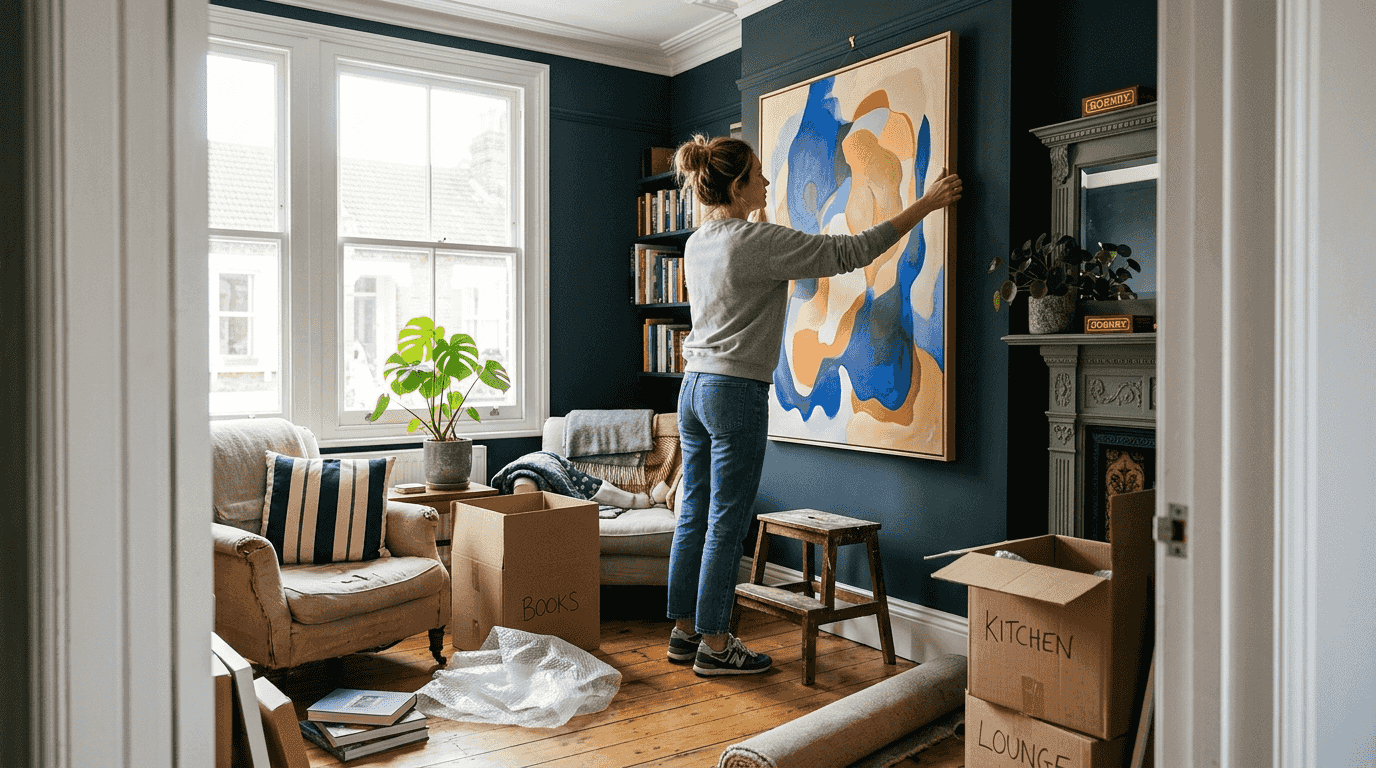
Selecting artwork that genuinely reflects your vision and complements your interior can feel overwhelming. Off-the-shelf prints rarely capture the unique character of your home or commercial project, leaving spaces feeling generic. Bespoke artwork solves this challenge by offering complete customisation, blending artistic expertise with your specific needs and aesthetic preferences. From handcrafted tilework to living moss installations and large scale murals, commissioned pieces transform interiors into personalised expressions of style and identity. This article explores compelling examples of bespoke artwork, practical evaluation criteria, and real world case studies to inspire your next design decision.
Table of Contents
- How To Evaluate Bespoke Artwork For Your Space
- Examples Of Bespoke Tilework With Artistic Value
- Innovative Use Of Moss Art For Bespoke Wall Features
- Large Scale Bespoke Murals And Commercial Art Case Studies
- Material Selection And Durability For Lasting Bespoke Art
- Discover Bespoke Artwork Options At FrameTheWorld
Key takeaways
| Point | Details |
|---|---|
| Complete customisation | Bespoke artwork adapts entirely to your vision, space dimensions, and design requirements |
| Diverse material options | Tiles, moss, murals, and custom prints offer unique aesthetic and functional benefits |
| Collaborative process | Successful commissions require clear communication, realistic timelines, and budget alignment |
| Long term value | Material selection directly impacts durability, maintenance needs, and artwork longevity |
How to evaluate bespoke artwork for your space
Understanding your vision and spatial requirements forms the foundation of any successful bespoke commission. Before approaching artists or suppliers, clarify the mood you want to create, the colours that harmonise with existing furnishings, and any personal motifs or themes that hold meaning. The bespoke process allows complete customisation, adjusting scale, modifying colour palettes, or incorporating entirely new patterns. This flexibility ensures the final piece integrates seamlessly rather than feeling like an afterthought.
Material quality and durability deserve careful consideration. A stunning artwork that deteriorates within months wastes both investment and design potential. Assess whether materials suit your environment, particularly in high traffic areas, humid bathrooms, or spaces with direct sunlight. Tiles offer exceptional longevity for floors and backsplashes, whilst moss art provides natural texture with minimal maintenance. Murals require appropriate primers and paints for lasting vibrancy.
Budget and timeline constraints influence every commission decision. Establish realistic expectations early by discussing costs for materials, artist fees, fabrication, and installation. Complex projects involving multiple craftspeople or custom fabrication naturally require longer lead times. Clear contracts specifying deliverables, payment schedules, and revision policies protect both parties and prevent misunderstandings. When you customise wall art, these upfront conversations ensure smooth collaboration and satisfying outcomes.
Pro Tip: Request material samples and mock-ups before finalising large commissions to verify colours, textures, and scale work as intended in your actual space.
Examples of bespoke tilework with artistic value
Bespoke tilework transforms functional surfaces into narrative driven art installations. Each handcrafted tile carries unique texture, colour variation, and pattern that reflects your personal style and the space’s architectural character. Unlike mass produced options, custom tiles allow you to specify exact dimensions, glazes, and arrangements that complement existing design elements. Bespoke tilework enhances luxury home value whilst offering unmatched personalisation in interior design.
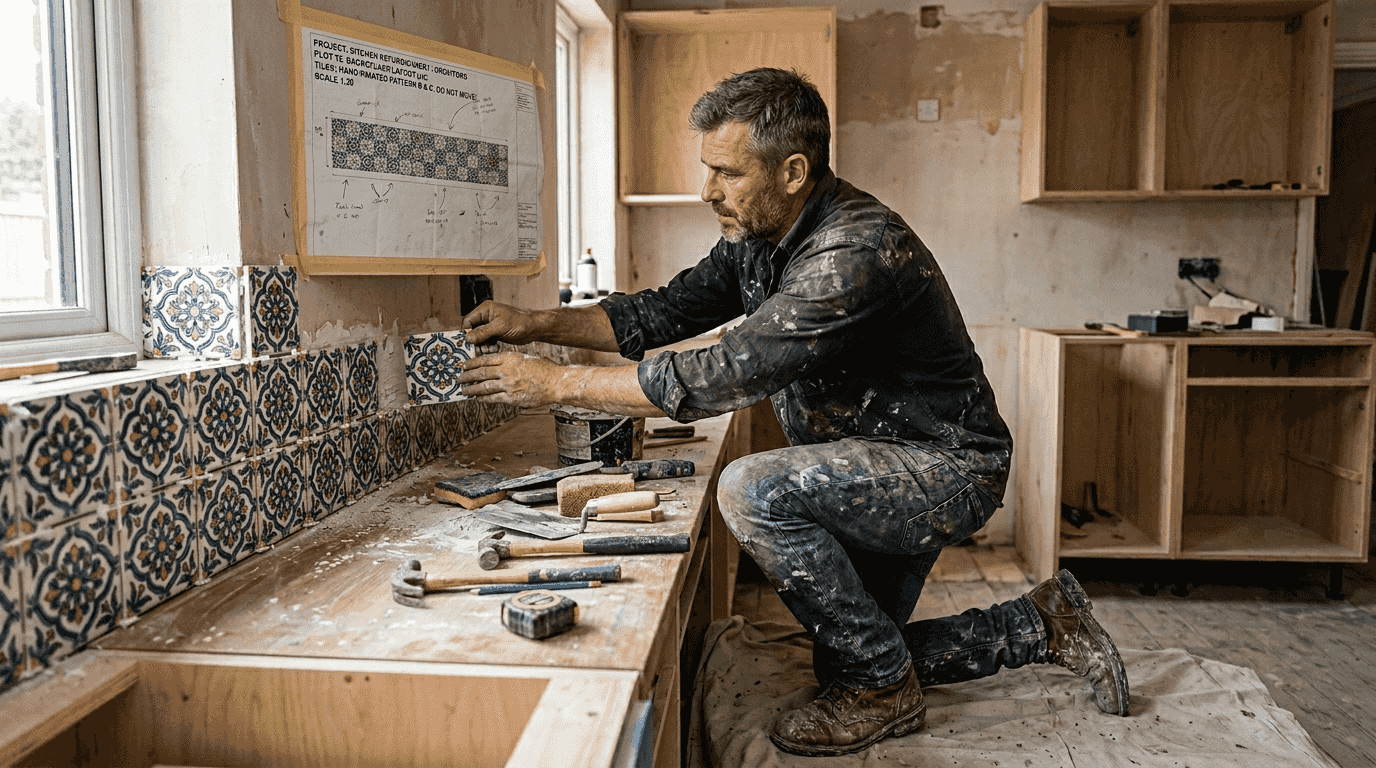
Kitchen backsplashes benefit particularly from custom tilework that bridges countertops and cabinetry with visual interest. Artisans can create intricate mosaics depicting botanical motifs, geometric patterns, or abstract compositions that serve as focal points. Bathroom installations gain spa-like luxury through carefully curated tile arrangements featuring natural stone, handmade ceramics, or glass elements that catch and reflect light beautifully.
Flooring applications showcase tilework’s durability alongside aesthetic appeal. Entrance halls make powerful first impressions with custom tile medallions or border patterns that guide movement through spaces. Commercial settings use branded colours and patterns to reinforce identity whilst withstanding heavy foot traffic. The permanence of tile installations makes thoughtful design crucial, rewarding careful planning with decades of enduring beauty.
When planning large scale art installations, consider how tilework integrates with lighting, furniture placement, and sightlines. Custom shapes like hexagons, arabesques, or elongated rectangles create dynamic visual rhythms that standard square tiles cannot achieve. Material choices spanning porcelain, terracotta, marble, and cement tiles offer distinct textures and maintenance profiles suited to different applications.
Innovative use of moss art for bespoke wall features
Moss art brings biophilic design principles into interior spaces through preserved natural materials arranged into striking wall installations. These living artworks connect occupants with nature whilst offering practical benefits beyond aesthetics. Preserved moss requires no watering, sunlight, or soil, making it viable for interior walls where traditional plants struggle. The soft, organic texture adds warmth to minimalist spaces and visual interest to commercial environments.
Moss art dampens sound effectively, reducing ambient noise by up to 10 decibels whilst contributing to WELL and LEED building certifications. This acoustic benefit proves particularly valuable in open plan offices, restaurants, and residential lofts where sound management challenges traditional design solutions. The natural material also resists fire and produces no allergens, addressing practical concerns for diverse occupant needs.
Customisation options span colour palettes from vibrant greens to muted greys, shapes ranging from organic flowing forms to precise geometric patterns, and scale from accent panels to entire feature walls. Designers combine different moss varieties, including reindeer moss, sheet moss, and pole moss, to create depth and textural contrast. Some installations incorporate preserved ferns, flowers, or branches for additional visual complexity.
Commercial spaces increasingly adopt moss art for branding opportunities and wellness focused environments. Hotels create memorable lobby features, whilst corporate offices signal environmental commitment and employee wellbeing priorities. Residential applications work beautifully in bedrooms, home offices, and meditation spaces where calming natural elements enhance relaxation. When you follow a step by step bespoke approach, moss installations integrate seamlessly with existing design schemes.
Pro Tip: Specify humidity levels between 40 and 60 percent for optimal moss preservation; extremely dry environments may cause brittleness over time despite the low maintenance nature.
Large scale bespoke murals and commercial art case studies
Large murals demand careful orchestration between artistic vision, architectural constraints, and practical execution. The Skyline on Stokes project exemplifies this balance, where artistic expression harmonised with architecture in a luxury residential lobby. The artist collaborated closely with interior designers to ensure the mural’s colour palette complemented marble flooring and brass fixtures whilst capturing the building’s urban context through stylised cityscape imagery.
Commercial projects introduce additional complexity through budget limitations, compressed timelines, and design approval processes. The Flight Paths project involved bespoke artwork for 300 Marriott rooms, requiring standardised yet distinctive pieces that reflected local culture. Artists developed modular designs adaptable to different room configurations whilst maintaining brand consistency. Scheduling challenges necessitated phased installations coordinated with renovation timelines to minimise guest disruption.
Successful mural commissions begin with thorough site analysis. Artists assess wall conditions, lighting throughout the day, viewing distances, and architectural features that influence composition. Digital mock-ups help clients visualise proposals at scale before committing to permanent installations. Material selection considers longevity, particularly for exterior murals exposed to weather, requiring specialised primers and UV resistant paints.
| Project Type | Key Challenge | Solution Approach |
|---|---|---|
| Residential lobby | Harmonising art with luxury finishes | Collaborative design reviews with interior team |
| Hotel rooms | Standardisation across 300 units | Modular designs with local cultural elements |
| Exterior mural | Weather durability | UV resistant paints with protective sealants |
| Corporate office | Brand alignment | Incorporating company colours and values subtly |
These commercial wall art examples demonstrate how constraints drive creative solutions rather than limiting artistic expression. Clear communication channels between all stakeholders, realistic milestone schedules, and contingency planning for unexpected challenges separate successful large scale commissions from problematic ones.
Material selection and durability for lasting bespoke art
Material choices fundamentally shape both immediate visual impact and long term artwork performance. Hardwoods like oak, walnut, and maple bring natural warmth and grain patterns to sculptural pieces and framed works. Material selection affects durability significantly, with hardwoods offering resilience and timeless appeal that justify higher initial costs through decades of use. However, wood requires periodic maintenance in humid environments to prevent warping or splitting.
Paint systems for murals vary dramatically in longevity based on substrate preparation and product selection. Interior walls benefit from acrylic paints offering vibrant colours and easy application, whilst exterior projects demand elastomeric coatings that flex with temperature changes and resist moisture penetration. Primers like ULTRA-GRIP Select create stable foundations that prevent paint delamination and colour shifting over time. Neglecting proper surface preparation leads to premature deterioration regardless of paint quality.
Metal elements introduce industrial aesthetics and exceptional durability for both indoor and outdoor installations. Stainless steel resists corrosion in coastal environments, whilst powder coated aluminium provides lightweight strength for large suspended pieces. Patinated copper and bronze develop rich colour changes over time, adding evolving character that some clients prize and others wish to prevent through protective sealants.
| Material | Primary Benefit | Maintenance Consideration |
|---|---|---|
| Hardwood | Natural warmth and grain | Humidity control prevents warping |
| Acrylic paint | Vibrant colours for interiors | Requires sealed surface preparation |
| Stainless steel | Corrosion resistance | Periodic cleaning maintains lustre |
| Preserved moss | Biophilic texture | Moderate humidity extends lifespan |
Environmental factors guide material appropriateness. High traffic commercial spaces need impact resistant surfaces, whilst residential bedrooms allow delicate materials unsuitable elsewhere. When considering art material selection, align choices with realistic maintenance capabilities and expected wear patterns to ensure your investment maintains beauty throughout its intended lifespan.
Discover bespoke artwork options at FrameTheWorld
Exploring bespoke artwork becomes simpler when you access curated collections designed for personalisation. FrameTheWorld offers hand-painted Wabi Sabi pieces celebrating imperfection and organic beauty, perfect for spaces seeking calm, contemplative atmospheres. Each work embraces natural textures and muted tones that complement minimalist and Japandi design schemes.
The custom print service transforms your personal photographs, designs, or commissioned digital artwork into gallery quality wall pieces. Specify exact dimensions, framing options, and paper types to match your space requirements precisely. This flexibility suits both residential projects and commercial installations requiring consistent branding or themed collections.
For bolder statements, the pop art collection delivers vibrant colours and graphic compositions that energise modern interiors. These pieces work beautifully as focal points in living areas, creative studios, or retail environments where visual impact drives design decisions.
Frequently asked questions
What defines bespoke artwork?
Bespoke artwork refers to pieces custom designed and created specifically for individual clients rather than mass produced. Artists collaborate directly with you to understand your vision, space requirements, and aesthetic preferences, then craft unique works that cannot be replicated exactly. This personalisation ensures the artwork aligns perfectly with your interior design scheme and tells your story.
How does the commission process typically unfold?
Most commissions follow a structured path beginning with initial consultation to discuss your vision, budget, and timeline. Artists then develop concepts through sketches or digital renderings for your review and feedback. After design approval, fabrication begins, followed by professional installation when applicable. Clear communication throughout each stage prevents misunderstandings and ensures the final piece meets expectations.
What advantages do bespoke pieces offer over ready made art?
Bespoke artwork guarantees uniqueness, ensuring no one else owns an identical piece. It allows perfect scale matching for awkward wall dimensions that standard sizes cannot fill effectively. You control every aesthetic element from colours to materials, creating cohesion with existing furnishings. The collaborative process often results in deeper emotional connection to the artwork since it reflects your personal narrative and preferences.
How should I establish budget and timeline expectations?
Research typical costs for your desired artwork type and scale before approaching artists. Request detailed quotes breaking down materials, labour, and installation separately. Discuss payment schedules, typically structured as deposit, progress payments, and final balance. Allow generous timelines for complex projects, understanding that quality craftsmanship cannot be rushed. Factor in potential delays for material sourcing or unexpected technical challenges. Following a clear bespoke wall art process with defined milestones keeps projects on track.


Leave a comment
This site is protected by hCaptcha and the hCaptcha Privacy Policy and Terms of Service apply.