
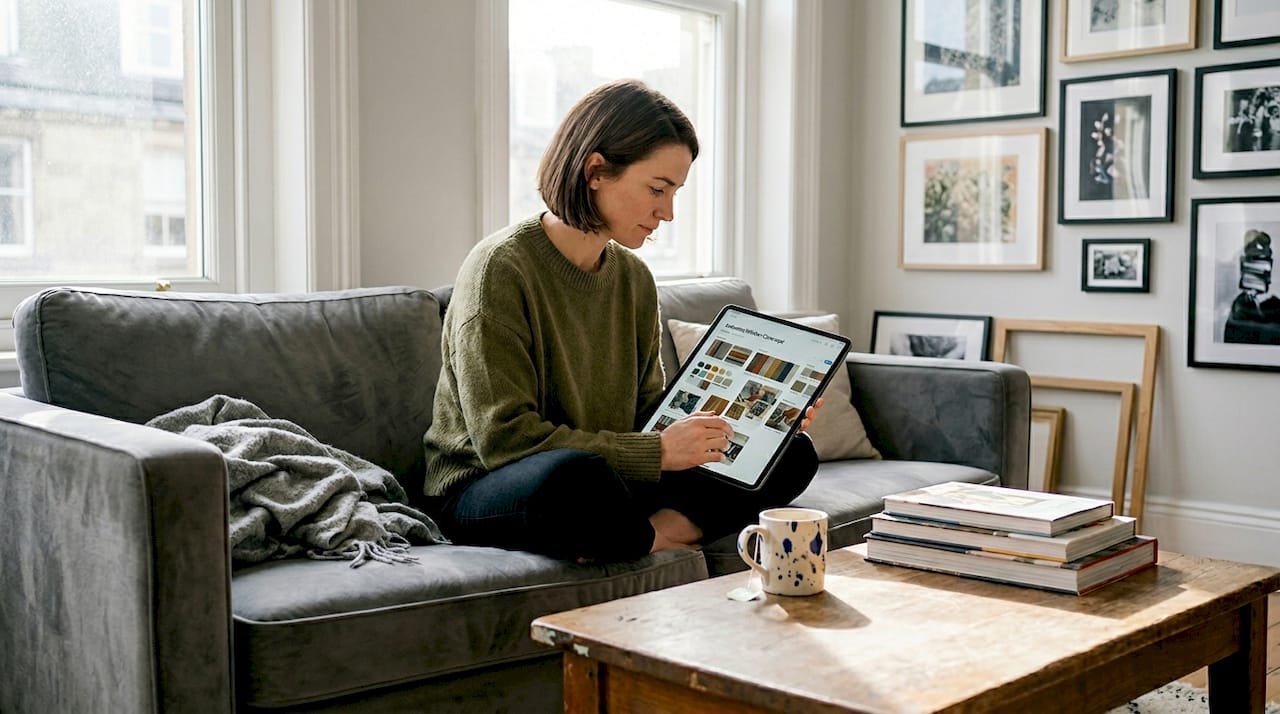
Choosing artwork for your home or professional space often feels like a compromise between style and personal connection. Generic prints might match your colour scheme, but they rarely tell your story or create the emotional resonance that transforms a house into a home. Personalising artwork bridges this gap, allowing you to infuse your spaces with meaning whilst maintaining aesthetic harmony. This guide walks you through practical methods to create or commission artwork that reflects your unique narrative, from initial concept to final display.
Table of Contents
- What You Need Before Personalising Artwork
- Step-By-Step Guide To Personalising Your Artwork
- Common Pitfalls And How To Avoid Them
- What To Expect After Personalising Your Artwork
- Discover Unique Personalised Artworks At FrameTheWorld
- How To Personalise Artwork: Frequently Asked Questions
Key takeaways
| Point | Details |
|---|---|
| Multiple customisation methods | Photo prints, meaningful quotes, and bespoke commissions offer varied approaches to personalisation |
| Emotional engagement matters | Commissioned hand-illustrated art creates 27% higher engagement than generic alternatives |
| Complement your architecture | Personalised artwork should harmonise with interior features and existing décor |
| Balance efficiency and uniqueness | Digital tools streamline ideation whilst professional commissioning ensures authenticity |
| Growing market demand | The personalised art sector reflects increasing consumer desire for meaningful home décor |
What you need before personalising artwork
Successful artwork personalisation begins with thoughtful preparation rather than impulsive purchases. Reflect on your personal style by examining your wardrobe, favourite spaces, and lifestyle patterns. A minimalist who values calm might choose subtle monochrome abstracts with personal symbolism, whilst an extrovert may prefer vibrant gallery walls celebrating family moments. Consider how you use each room, morning coffee rituals in the kitchen suggest different themes than a formal dining space for entertaining guests.
Architectural features and existing décor provide crucial context for personalisation decisions. High ceilings accommodate oversized statement pieces, whilst period features like cornicing pair beautifully with classical portraiture or vintage-inspired prints. Photograph your walls at different times of day to understand natural lighting, shadows can dramatically alter how colours and textures appear. Personalise wall art to enhance your home style by mapping emotional goals to specific rooms.
Digital tools streamline the ideation process before committing to final artworks. Create mood boards on Pinterest or Canva, grouping images that resonate emotionally alongside paint swatches and furniture photos. Apps like Houzz allow you to virtually place artworks on your walls, testing scale and composition. The essential guide to customizing your art collection to match your lifestyle recommends prioritising commissioning for unique emotional impact whilst using hybrid approaches for efficiency.
Gather meaningful materials that will inform your personalised pieces. Sort through photographs identifying moments that still evoke strong emotions, not just technically perfect shots. Collect quotes, song lyrics, or poetry fragments that articulate your values. Consider textures or objects with personal significance, a fabric from your grandmother’s dress or sand from a meaningful beach can inspire colour palettes or mixed media elements. Understanding the role of art in home style helps you select themes that resonate.
Preparation checklist
- Personal style audit examining lifestyle patterns and emotional responses to existing spaces
- Architectural assessment noting ceiling heights, lighting conditions, and period features
- Digital mood board compilation grouping inspirational images and colour schemes
- Meaningful materials collection including photographs, quotes, and symbolic objects
- Budget framework accounting for DIY supplies, printing costs, or artist commissions
| Preparation element | Time investment | Impact on outcome |
|---|---|---|
| Style reflection | 2-3 hours | Ensures coherent vision |
| Digital visualisation | 1-2 hours | Prevents costly mistakes |
| Material gathering | 3-5 hours | Enriches personal narrative |
| Budget planning | 1 hour | Enables realistic scope |
Pro Tip: Create a dedicated folder on your phone for inspiration photos captured during daily life, patterns in nature, colour combinations in cafés, or architectural details that catch your eye become invaluable references when briefing artists or selecting prints.
Establish realistic timelines and budgets before starting. DIY photo prints might cost £50-150 and arrive within days, whilst commissioning bespoke oil paintings typically requires 4-8 weeks and £300-2000 depending on size and complexity. Factor in framing costs, which can equal or exceed the artwork itself for museum-quality presentation. Review the wall art selection process to understand decision frameworks.
Step-by-step guide to personalising your artwork
Begin by selecting your personalisation method based on budget, timeline, and desired uniqueness. Photo collages and gallery walls offer accessible entry points, allowing you to curate existing photographs into cohesive displays. Quote overlays combine typography with meaningful words, perfect for motivational spaces like home offices. Bespoke commissions provide maximum uniqueness, transforming your concepts into original artworks that cannot be replicated.
Personalisation methods ranked by approach
-
Gather comprehensive inspiration across multiple sources, not just Pinterest. Visit galleries noting which pieces make you pause, screenshot social media posts that resonate emotionally, photograph street art or nature scenes. Create separate folders for colour palettes, composition styles, and subject matter.
-
Select your primary technique matching your skill level and resources. Photo printing services like Printful or local print shops handle technical execution for DIY projects. Commissioning requires researching artists whose existing portfolios align with your vision, request initial sketches before full commitment.
-
Create or commission your artwork following best practices for each method. For photo collages, select 5-9 images with varied compositions but consistent colour tones. Quote prints benefit from limiting text to 3-7 words in legible fonts. When commissioning, provide detailed briefs including dimensions, colour preferences, and 3-5 reference images.
-
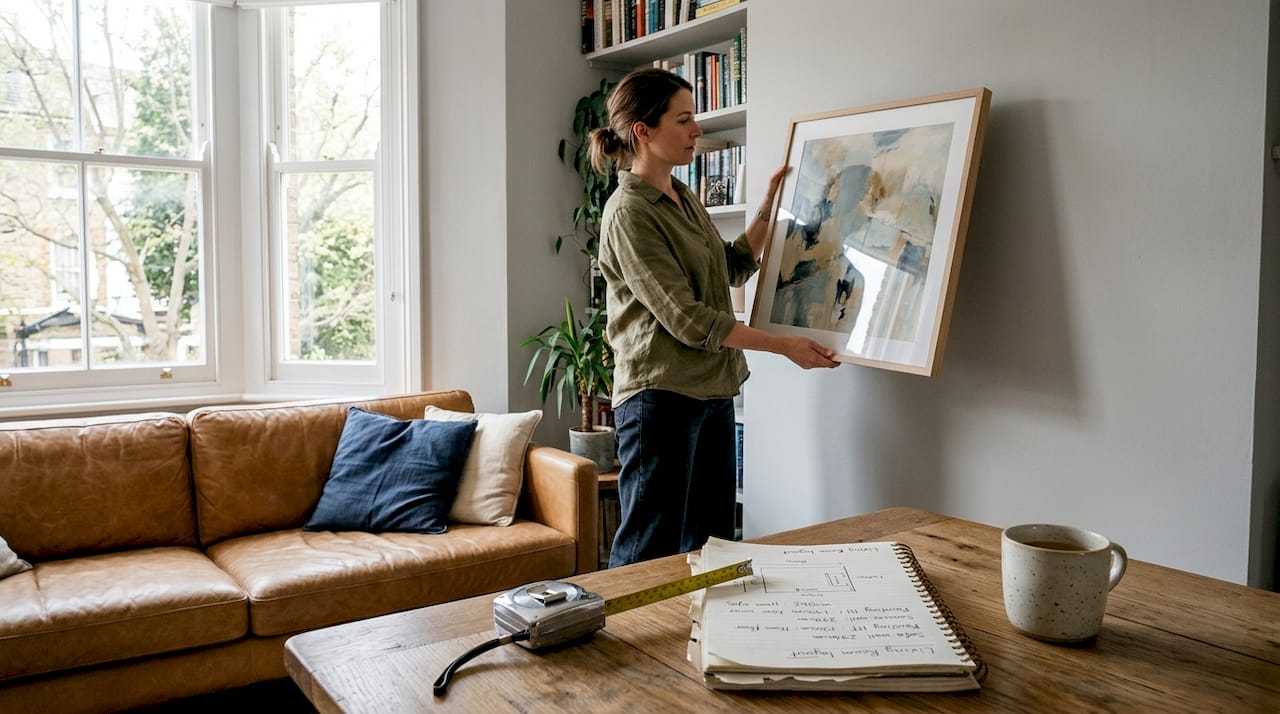
Prepare your display space by cleaning walls, checking for level surfaces, and planning hanging heights. Standard practice places artwork centres at 145-150cm from the floor, mimicking gallery eye levels. Group arrangements should maintain 5-8cm spacing between frames for visual breathing room.
-
Install with professional techniques using appropriate fixtures for weight and wall type. Plasterboard requires wall anchors for pieces over 2kg, whilst solid walls accommodate standard picture hooks. Use a spirit level and mark positions lightly in pencil before committing to holes.
| Method | Cost range | Timeline | Uniqueness | Emotional impact |
|---|---|---|---|---|
| Photo collages | £50-200 | 1-2 weeks | Medium | High |
| Quote overlays | £30-150 | 3-7 days | Low-Medium | Medium |
| Bespoke commissions | £300-2000+ | 4-12 weeks | Very High | Very High |
| Gallery walls | £200-800 | 2-4 weeks | Medium-High | High |
| Mixed media pieces | £150-600 | 3-6 weeks | High | High |
Maintain balance between personal narrative and visual harmony by limiting each room to one primary theme. A living room celebrating family might feature a gallery wall of milestone moments, but avoid mixing this with unrelated abstract pieces. Colour consistency matters more than subject matter, black and white photographs integrate seamlessly with monochrome abstracts even when themes differ.
Pro Tip: Photograph your wall arrangements before hanging to test compositions digitally. Print photos at small scale, cut them out, and rearrange on the floor until the layout feels balanced, this prevents unnecessary wall damage from repositioning.
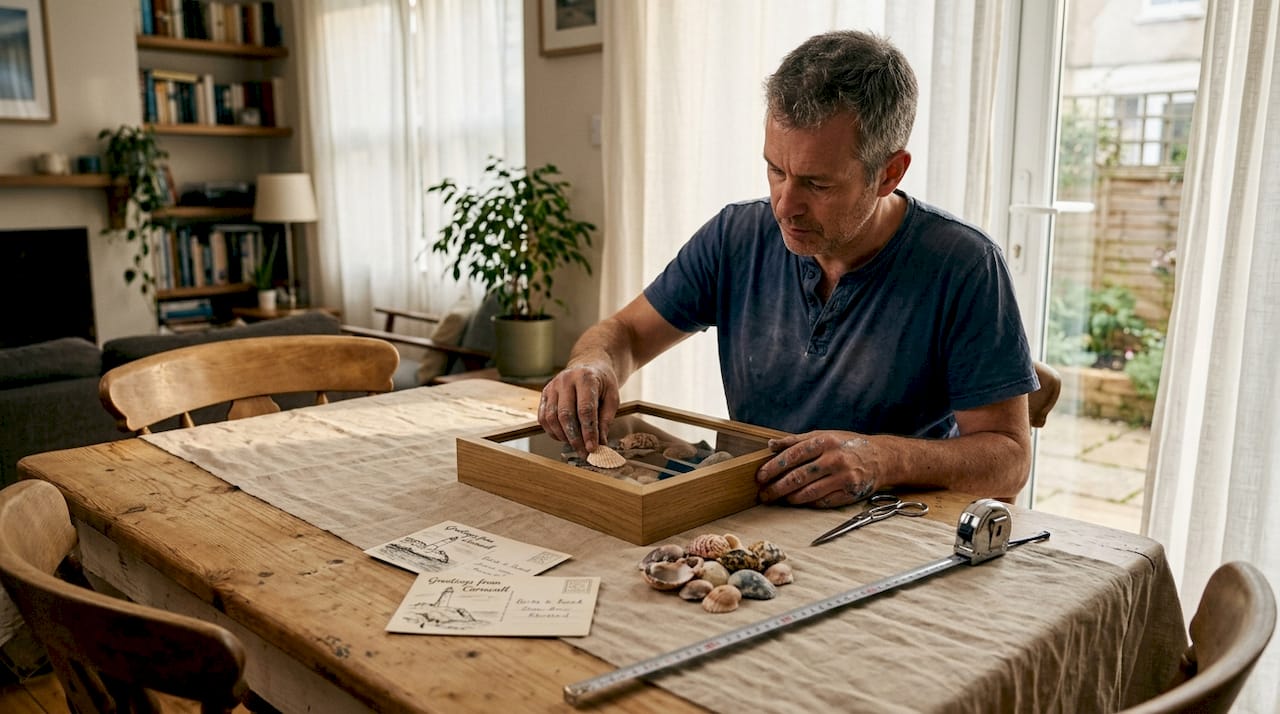
Consider mixed media elements to enhance texture and depth. Shadow box frames accommodate three-dimensional objects like dried flowers from your wedding or vintage family jewellery alongside photographs. Layering techniques place smaller frames atop larger prints, creating visual interest through depth. Explore bespoke artwork examples demonstrating professional approaches to personalisation.
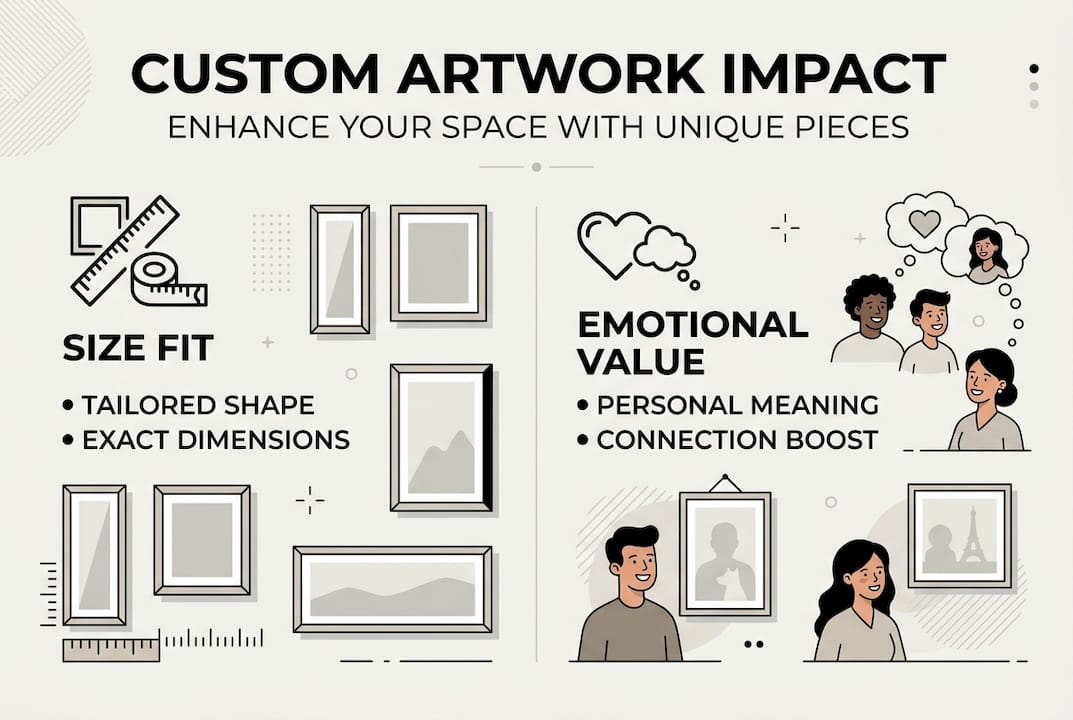
Understand the benefits of custom art prints extend beyond aesthetics to include precise size matching for awkward spaces and colour customisation ensuring perfect coordination with existing décor. Custom printing allows you to crop or adjust images for optimal composition, removing distracting backgrounds or emphasising focal points.
Common pitfalls and how to avoid them
Generic designs masquerading as personalisation represent the most frequent mistake. Printing your name in trendy typography or selecting mass-produced “family” word art fails to create genuine connection. True personalisation requires incorporating elements unique to your story, a photograph from your grandmother’s garden rather than stock florals, or commissioning an artist to illustrate your actual home rather than generic architecture.
Ignoring room architecture leads to visual clashes that undermine even meaningful artwork. Ornate gold frames compete with decorative cornicing, whilst ultra-modern abstracts feel jarring in period properties. Assess your space’s bones before selecting presentation styles. Contemporary homes with clean lines suit frameless canvases or slim metal frames, traditional spaces benefit from substantial wooden frames echoing existing woodwork.
Overloading walls dilutes impact rather than enhancing it. Gallery walls work beautifully when curated thoughtfully, but cramming every family photo onto one wall creates visual chaos. Apply the two-thirds rule, artwork should cover roughly two-thirds of available wall width, leaving breathing room. Resist the urge to fill every blank space, negative space provides visual rest.
Mistakes to avoid
- Selecting impersonal designs lacking authentic connection to your narrative
- Disregarding architectural features causing style clashes between frames and mouldings
- Cramming excessive pieces onto walls reducing individual artwork impact
- Choosing low-quality printing that appears pixelated or washed out
- Relying exclusively on AI-generated art for spaces requiring emotional depth
- Mismatching frame styles within gallery walls creating visual discord
Low-quality printing undermines personalisation efforts regardless of meaningful content. Pixelated images or faded colours cheapen the entire presentation. Invest in professional printing services offering archival-quality inks and heavyweight paper stocks. Request sample prints before committing to large or expensive pieces, colours often appear different on screen versus paper.
Commissioned hand-illustrated art has higher engagement and emotional depth, avoiding the emotional hollowness some AI-generated pieces convey. Whilst AI tools assist with ideation and composition testing, they struggle to capture nuanced emotional qualities that make artwork personally resonant. Human artists interpret your brief through their creative lens, adding unexpected elements that often prove most meaningful.
“The difference between personalised artwork that transforms a space and decoration that merely fills it lies in authentic emotional connection. Commission skilled artists who take time understanding your story rather than rushing to generic solutions.”
Pro Tip: When commissioning artists, request a brief consultation call before engagement. Artists who ask probing questions about your lifestyle, values, and emotional goals typically deliver more satisfying results than those who jump straight to technical specifications.
Balance DIY projects with professional commissions for optimal authenticity and budget management. Create your own photo collages or quote prints for secondary spaces like hallways, reserving commissioned pieces for primary rooms where you spend most time. This approach maintains personal connection throughout your home whilst concentrating investment where impact matters most. Understanding why customise wall art helps prioritise spending effectively.
What to expect after personalising your artwork
Evaluate emotional connection by observing your instinctive responses when entering rooms with new artwork. Genuine personalisation creates positive emotional shifts, you smile noticing details, feel calmer in spaces displaying meaningful imagery, or experience motivation from inspirational quotes. If artwork fades into background within weeks, it lacks sufficient personal resonance. Successful pieces maintain interest over months and years.
Assess integration with existing furniture and architectural elements using the squint test. Step back, squint your eyes until details blur, and observe overall colour balance. Personalised artwork should harmonise with dominant room colours whilst providing enough contrast to command attention. Pieces that disappear when squinting lack visual impact, whilst those that jar suggest colour mismatches requiring adjustment.
Post-installation evaluation steps
-
Monitor emotional responses during the first month, noting which pieces consistently draw your attention and generate positive feelings versus those you unconsciously ignore.
-
Photograph your spaces from multiple angles and review images objectively. Cameras reveal compositional issues human eyes overlook, such as pieces hanging too high or frames competing with furniture lines.
-
Solicit feedback from trusted friends or family, asking open questions like “What do you notice first?” rather than leading with “Do you like this?” Genuine reactions provide valuable perspective.
-
Document lighting changes throughout seasons, as summer sun versus winter gloom dramatically alters how colours and textures appear. Adjust positioning if seasonal shifts create unflattering effects.
-
Review maintenance needs specific to your artwork type, establishing cleaning schedules and environmental controls to preserve quality long term.
Notice increased viewer engagement when guests visit. Hand-illustrated art preferred for emotional depth with 27% higher engagement and lower stress indicators compared to AI alternatives. Personalised pieces naturally spark conversations as guests ask about the stories behind images, creating social connection opportunities generic décor cannot match.
Follow care guidelines appropriate to your artwork medium. Photographs and prints require UV-protective glass preventing fading, whilst oil paintings need occasional dusting with soft brushes. Maintain consistent humidity levels between 40-60% to prevent paper warping or canvas sagging. Avoid hanging valuable pieces in direct sunlight or above radiators where temperature fluctuations accelerate deterioration.
Consider evolving your collection as life circumstances change. Personalised artwork should grow with you, adding pieces commemorating new milestones whilst retiring those no longer resonating. Seasonal rotations keep spaces feeling fresh, swap beach holiday prints for autumn landscapes as weather shifts. This approach maintains engagement whilst protecting pieces from prolonged light exposure.
Maintain balance between personal and professionally commissioned work to sustain authenticity without overspending. Budget for one significant commissioned piece annually whilst supplementing with DIY projects quarterly. This rhythm ensures continuous evolution without financial strain. Understanding the role of art in interior design helps prioritise which rooms benefit most from investment pieces.
Recognise that personalised artwork functions as a design anchor, influencing subsequent décor decisions. Once you install a meaningful commissioned piece, furniture arrangements, cushion selections, and even paint colours naturally coordinate around its palette. This anchoring effect simplifies future design choices whilst maintaining cohesion.
Discover unique personalised artworks at FrameTheWorld
FrameTheWorld specialises in handcrafted and customisable artwork designed to support your personalisation journey with professional quality and emotional depth. Explore curated collections including wabi sabi wall art celebrating imperfection and authenticity, vibrant pieces adding energy to contemporary spaces, or pop art making bold personal statements. Each collection offers starting points for personalisation through colour customisation and size variations.
Transform your photographs and creative concepts into gallery-quality pieces through custom print services offering archival inks and premium materials ensuring longevity. Professional colour correction and cropping assistance optimise your images for maximum impact. For truly unique commissions, custom oil paintings from your photos translate cherished memories into heirloom artworks combining your personal narrative with skilled craftsmanship. FrameTheWorld’s expertise ensures your personalised vision achieves professional execution worthy of the stories it tells.
How to personalise artwork: frequently asked questions
What are easy ways to personalise artwork at home?
Create photo collages using online printing services, selecting 5-9 meaningful images with consistent colour tones and arranging them in grid or salon-style layouts. Add personalised quotes using design tools like Canva, limiting text to impactful phrases in legible fonts. Both approaches require minimal technical skill whilst delivering genuine personalisation.
How do I commission personalised art from an artist?
Research artists whose existing portfolios align with your aesthetic preferences, then contact them with a detailed brief including dimensions, colour palette, subject matter, and 3-5 reference images. Request initial sketches before full payment to ensure alignment on vision. Budget 4-12 weeks for completion depending on piece complexity.
Can I use AI tools for personalising artwork effectively?
AI tools excel at ideation and composition testing but struggle with emotional nuance that makes artwork personally meaningful. Use AI to explore colour combinations or layout options, then commission human artists for final execution. This hybrid approach balances efficiency with authentic emotional connection.
What types of artwork best suit different interior styles?
Minimalist interiors benefit from monochrome photography or simple line drawings with personal symbolism. Traditional spaces suit commissioned portraiture or landscape paintings in substantial frames. Contemporary homes accommodate bold abstracts or mixed media pieces. Match artwork complexity to architectural detail levels for harmonious integration.
How do I maintain custom artwork to keep it vibrant?
Use UV-protective glass for photographs and prints, preventing fading from sunlight exposure. Dust oil paintings gently with soft brushes quarterly, avoiding chemical cleaners. Maintain 40-60% humidity levels preventing paper warping or canvas sagging. Rotate pieces seasonally to limit prolonged light exposure whilst keeping displays fresh.

Leave a comment
This site is protected by hCaptcha and the hCaptcha Privacy Policy and Terms of Service apply.