
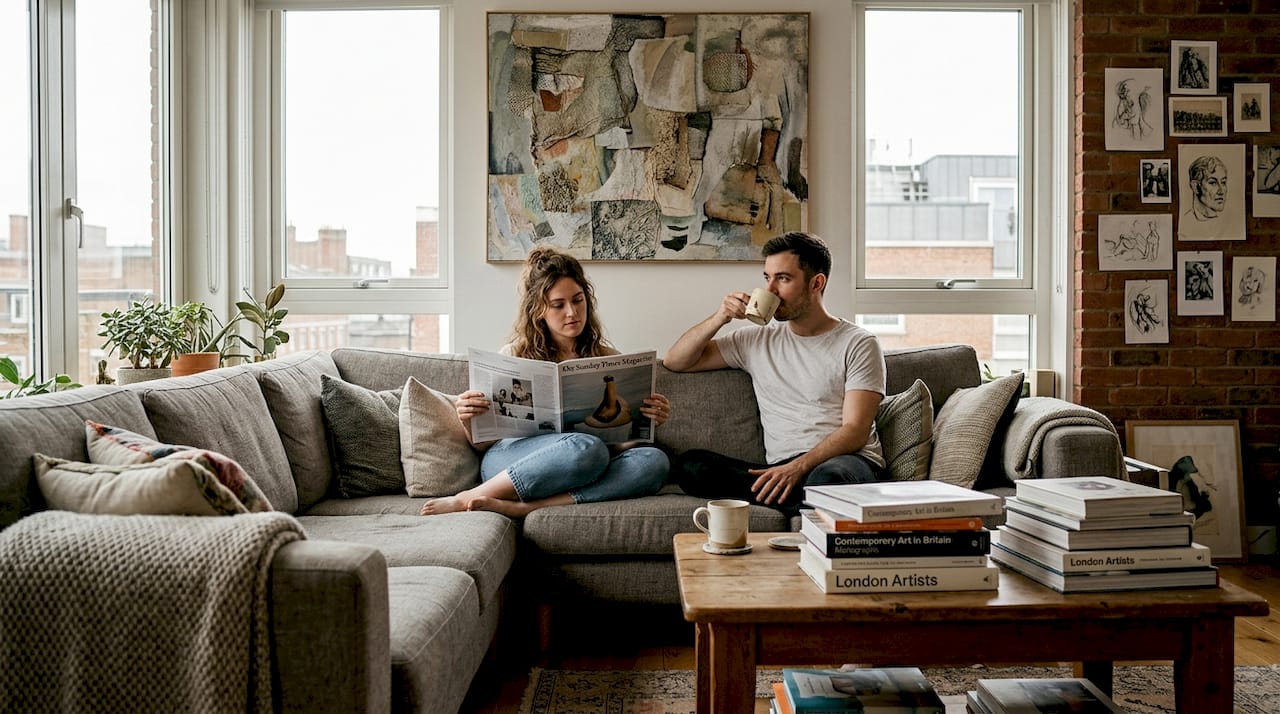
Selecting wall art that truly complements your home’s style whilst enhancing wellbeing can feel overwhelming when faced with countless mass-produced options. Custom wall art offers a solution that goes far beyond generic prints, delivering psychological, aesthetic, and financial advantages tailored to your unique space. Whether you’re a homeowner seeking to create a more calming environment or an interior designer crafting bespoke atmospheres for clients, understanding these benefits helps you make informed decisions that elevate both mood and property value.
Table of Contents
- Key takeaways
- Psychological benefits of custom wall art
- Financial and aesthetic advantages for homeowners and designers
- Methods and considerations in creating your custom wall art
- Custom versus mass-produced wall art: choosing the right fit
- Explore unique custom wall art with Frametheworld
- Frequently asked questions
Key Takeaways
| Point | Details |
|---|---|
| Mental wellbeing boost | Custom wall art reduces stress and enhances wellbeing by aligning imagery and colours with personal preferences and biophilic design principles. |
| Value uplift for homes | Thoughtfully integrated bespoke designs can raise perceived home value by 10 to 18 per cent, while murals near the property may lift actual value by up to 20 per cent. |
| Scale and theme balance | Selecting the correct scale and theme is essential to avoid resale pitfalls and to maintain broad appeal. |
| Personal connection | Personalised art reflecting memories and values fosters psychological ownership and creates a sense of belonging in the home. |
Psychological benefits of custom wall art
Custom wall art significantly improves mental wellbeing by creating environments that respond to individual psychological needs. Research demonstrates that state anxiety decreased post-art exposure by 15-30%, particularly for individuals with high baseline anxiety levels. When you commission pieces featuring nature themes or calming colour palettes, you’re not simply decorating but actively shaping your emotional landscape.
Biophilic design principles explain why custom art incorporating natural elements proves especially effective. Images of forests, water, or botanical subjects trigger physiological relaxation responses that generic abstract prints rarely achieve. You can personalise wall art benefits by selecting imagery that resonates with your personal experiences, whether that’s a favourite hiking trail or a meaningful landscape from your childhood.
Colour psychology plays an equally crucial role in mood regulation. Custom pieces allow you to specify hues that align with intended room functions. Blues and greens promote calmness in bedrooms, whilst warm oranges and yellows energise social spaces like kitchens. Mass-produced art offers no such precision, forcing you to compromise on colours that may actively undermine your wellbeing goals.
Pro Tip: Commission custom art featuring specific nature scenes from places you’ve visited to create stronger emotional anchoring. This personal connection amplifies stress-reduction benefits beyond what generic nature prints can provide.
The emotional connection fostered by tailored artwork extends beyond immediate mood effects. When art reflects your values, memories, or aspirations, it cultivates a sense of belonging within your space. This psychological ownership transforms houses into homes, reducing feelings of displacement and increasing overall life satisfaction. Custom pieces become conversation starters that reinforce your identity, creating environments where you feel genuinely understood.
“Art that speaks to personal experience creates neurological pathways associated with comfort and safety, fundamentally altering how we perceive our living environments.”
Beyond individual benefits, custom wall art in shared spaces fosters empathy and connection amongst household members. Collaborative selection processes for family-focused pieces build shared narratives that strengthen relationships. Children particularly benefit from seeing their creative input valued in permanent home décor, boosting self-esteem and spatial attachment.
Financial and aesthetic advantages for homeowners and designers
Custom wall art delivers measurable financial returns that justify initial investment costs. Studies show properties near murals have up to 20% higher value, whilst well-executed custom designs increase perceived home value by 10-18%. These figures reflect how personalised art signals attention to detail and quality that prospective buyers associate with overall property maintenance.
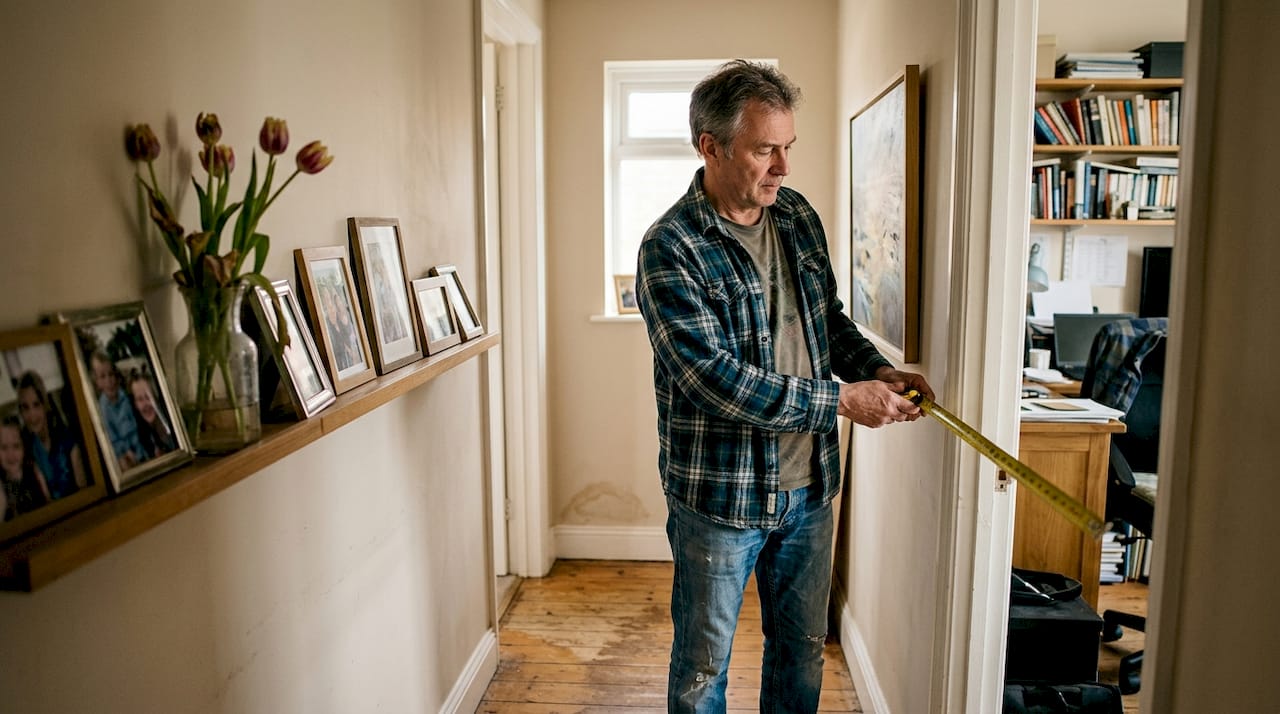
For interior designers, custom pieces solve spatial challenges that off-the-shelf art cannot address. You gain precise control over dimensions, ensuring artwork fills awkward wall spaces without compromising composition. Colour matching becomes exact rather than approximate, allowing seamless integration with existing palettes. This precision elevates entire room designs, demonstrating professional expertise that justifies higher project fees.
Financial impact of custom wall art:
- Increased perceived property value by 10-18% through enhanced aesthetic appeal
- Higher resale prices when art complements architectural features
- Reduced staging costs as existing art already optimises space presentation
- Long-term investment value if original artist gains recognition
The storytelling potential of custom art provides unique selling points during property viewings. Buyers remember homes with distinctive visual narratives far better than generic spaces. When you wall art boosts property value, you’re creating memorable impressions that translate into competitive advantages in crowded markets.
| Aspect | Custom art advantage | Mass-produced limitation |
|---|---|---|
| Spatial fit | Exact dimensions for awkward spaces | Standard sizes leave gaps or overwhelm |
| Colour matching | Precise palette coordination | Approximate matches at best |
| Uniqueness factor | One-of-a-kind appeal | Buyers may own identical pieces |
| Resale narrative | Distinctive story enhances memory | Forgettable generic presence |
Pro Tip: When commissioning art for resale purposes, balance personal expression with neutral appeal. Abstract landscapes or geometric designs in sophisticated colour schemes offer uniqueness without alienating conservative buyers.
Designers benefit from client collaboration opportunities that custom art enables. Involving clients in artistic decisions builds trust and satisfaction, leading to referrals and repeat business. The process demonstrates your commitment to truly personalised solutions rather than template-based approaches. You can customise wall art for design projects that reflect client personalities whilst maintaining professional aesthetic standards.
Investment considerations extend beyond immediate property value. Original custom pieces from emerging artists may appreciate significantly over time, providing financial returns that mass-produced prints never achieve. Even commissioned works from established local artists carry resale value that offsets initial costs, particularly in regional markets where artist recognition grows.
Methods and considerations in creating your custom wall art
Creating effective custom wall art requires understanding available production methods and their respective advantages. Digital AI generation tools now enable rapid concept visualisation, allowing you to experiment with compositions before committing to final production. Traditional artist collaboration offers irreplaceable human creativity and technique, particularly for complex subjects requiring nuanced interpretation. Common techniques include AI generation, upscaling, and print services using canvas, metal, or acrylic substrates with 300 DPI high-resolution CMYK printing.
Production method selection process:
- Define your budget range and timeline constraints
- Assess whether digital precision or hand-crafted texture better suits your vision
- Select substrate based on room conditions (humidity, light exposure, traffic)
- Determine required resolution for your intended viewing distance
- Choose framing or mounting options that complement both art and architecture
- Verify colour accuracy through physical samples before full production
Scale represents the most critical technical consideration. Undersized art disappears on large walls, whilst oversized pieces overwhelm intimate spaces. Professional designers use the two-thirds rule: artwork should occupy roughly two-thirds of available wall width above furniture. You must also consider viewing distance, as intricate details require closer inspection whilst bold compositions work from across rooms.
| Room type | Recommended scale | Viewing distance | Substrate recommendation |
|---|---|---|---|
| Living room | 60-75% of sofa width | 2.5-4 metres | Canvas for warmth |
| Bedroom | 50-60% of bed width | 2-3 metres | Fabric for softness |
| Hallway | Vertical emphasis, 40-50% width | 1.5-2.5 metres | Metal for durability |
| Bathroom | Smaller scale, 30-40% width | 1-2 metres | Acrylic for moisture resistance |
Pro Tip: Create mockups using painter’s tape on walls to visualise scale before commissioning. Photograph the space with tape outlines to assess proportions from various angles and lighting conditions.
Common pitfalls undermine even well-intentioned custom art projects. Overly personal imagery like family photos in formal spaces can alienate future buyers, reducing resale appeal. Poor lighting placement creates glare or shadows that obscure artwork, wasting investment. Insufficient spacing between multiple pieces creates visual chaos rather than curated collections. The wall art selection process should address these technical factors alongside aesthetic preferences.
Theme selection requires balancing personal meaning with broader appeal. Abstract interpretations of meaningful subjects offer emotional connection without excessive specificity. Colour schemes that complement existing décor whilst allowing flexibility for future changes prove most versatile. Avoid trendy styles that date quickly, instead focusing on timeless compositions that maintain relevance across decades.
Material quality directly impacts longevity and perceived value. Archival-quality inks and substrates resist fading and deterioration, protecting your investment. Professional mounting and framing prevent warping and damage from environmental fluctuations. These upfront quality investments pay dividends through reduced replacement costs and maintained aesthetic impact over time.
Custom versus mass-produced wall art: choosing the right fit
The fundamental distinction between custom and mass-produced wall art lies in emotional depth and investment potential. Custom art offers emotional depth and investment value, whilst mass-produced options provide affordability but generic appeal with lower quality and no artist support. This trade-off shapes every aspect of how art functions within your space.
Custom pieces create irreplaceable connections through personal narrative integration. When artwork reflects your experiences, values, or aspirations, it becomes part of your identity rather than mere decoration. This psychological ownership transforms how you interact with spaces, increasing satisfaction and reducing desire for frequent redecorating. Mass-produced art lacks this depth, serving purely functional roles without emotional resonance.
Quality and longevity comparison:
- Custom art uses archival materials designed for decades of display
- Mass-produced prints often employ cheaper inks that fade within years
- Original custom pieces appreciate in value as artists gain recognition
- Mass-produced items depreciate immediately upon purchase
- Custom work supports living artists and local creative economies
- Mass-produced profits flow to corporations rather than creative communities
| Consideration | Custom art | Mass-produced art |
|---|---|---|
| Initial cost | £200-£5,000+ depending on size and artist | £20-£300 for comparable dimensions |
| Emotional value | High personal connection | Minimal attachment |
| Resale potential | Possible appreciation | Negligible secondary market |
| Uniqueness | One-of-a-kind or limited edition | Thousands of identical copies |
| Quality consistency | Varies by artist skill | Predictable but mediocre |
Budget constraints legitimately influence decisions, but frame the comparison accurately. Custom art represents investment rather than expense, delivering returns through enhanced wellbeing, property value, and potential appreciation. Mass-produced pieces function as consumables, requiring replacement as styles evolve or quality degrades. Calculate total cost of ownership over expected display duration rather than comparing initial prices alone.
“The question isn’t whether you can afford custom art, but whether you can afford to live without the psychological and financial benefits it provides.”
Decision frameworks should prioritise rooms where you spend most time. Custom art in primary living spaces maximises wellbeing benefits and visitor impact. Mass-produced pieces may suffice in utility areas like laundries or garages where aesthetic investment yields diminishing returns. You can custom art versus mass-produced decisions room by room based on usage patterns and emotional significance.
For designers, the choice reflects professional positioning. Specifying custom art demonstrates commitment to truly bespoke solutions, justifying premium fees and attracting discerning clients. Mass-produced selections signal template-based approaches that compete primarily on price. Your portfolio and reputation hinge on these seemingly small decisions that collectively define your brand identity.
Explore unique custom wall art with Frametheworld
Frametheworld offers specialised solutions that embody the benefits explored throughout this article. Our custom print services transform your personal imagery into museum-quality wall art, ensuring precise colour matching and archival longevity. Whether you’re seeking to commemorate meaningful places or create entirely original compositions, our production process delivers professional results that enhance both wellbeing and property value.
Explore distinctive collections that demonstrate how curated art transforms spaces. The wabi sabi wall art collection embraces imperfection and natural beauty, creating calming environments that reduce stress through organic aesthetics. For bolder statements, our pop art wall art selections inject energy and personality into contemporary interiors, proving custom doesn’t mean conservative.
Our platform serves both private homeowners and professional designers, offering flexible solutions for projects ranging from single statement pieces to comprehensive property staging. Browse by style, theme, size, and format to find art that fits your specific spatial requirements and aesthetic vision, then customise further to achieve perfect integration with your unique space.
Frequently asked questions
What are the main benefits of custom wall art for wellbeing?
Custom wall art reduces stress by 15-30% through personalised designs featuring calming colours and biophilic elements like nature imagery. It improves focus and mood by creating environments tailored to your psychological needs rather than generic spaces. The emotional connection fostered by meaningful imagery enhances overall life satisfaction and sense of belonging within your home.
How much can custom wall art increase my property value?
Well-integrated custom wall art can increase perceived property value by 10-18%, whilst properties featuring distinctive murals show up to 20% higher market values. The key lies in balancing unique visual appeal with neutral themes that don’t alienate potential buyers. Quality custom pieces signal attention to detail that prospective purchasers associate with overall property care.
What mistakes should I avoid when commissioning custom wall art?
Avoid selecting overly personal imagery that limits resale appeal, such as specific family photos in formal spaces. Ensure proper scale by following the two-thirds rule for wall coverage above furniture. Don’t neglect lighting considerations, as poor placement creates glare that obscures artwork. Finally, resist trendy styles that date quickly in favour of timeless compositions with enduring relevance.
Is custom wall art worth the higher initial cost compared to mass-produced options?
Custom art represents investment rather than expense, delivering returns through enhanced wellbeing, property value increases, and potential appreciation if artists gain recognition. Calculate total cost of ownership over expected display duration, including replacement costs for fading mass-produced prints. The psychological benefits of meaningful, high-quality art justify premium pricing for spaces where you spend significant time.
How do I choose between digital and traditional methods for creating custom art?
Digital methods offer rapid visualisation, precise colour control, and cost efficiency for contemporary designs or photographic subjects. Traditional artist collaboration provides irreplaceable human creativity, unique textures, and investment potential through original works. Consider your budget, timeline, desired aesthetic qualities, and whether you value digital precision or hand-crafted authenticity more highly for your specific project.


Leave a comment
This site is protected by hCaptcha and the hCaptcha Privacy Policy and Terms of Service apply.