

TL;DR:
- Curated art increases revenue and guest engagement in commercial spaces.
- Effective art strategy involves clear goals, careful budgeting, and targeted installation.
- Personalisation, durability, and testing are key to successful art curation projects.
Spaces dressed with generic prints are losing money. Hotels with curated art installations report a 14% average daily rate premium, 36% higher lobby dwell time with biophilic art, and 22% more time spent in public areas. For commercial property owners and interior designers, those numbers represent real revenue sitting on the wall, or rather, failing to sit there. This guide walks you through every stage of the art curation process, from setting measurable goals and managing budgets to installation, troubleshooting, and long-term impact. Whether you manage a boutique hotel, a corporate office, or a retail flagship, the steps here apply directly to your context.
Table of Contents
- Understanding the impact: why curate art?
- Essential prep: setting goals, budgeting and requirements
- The curation process: step-by-step guide
- Troubleshooting and avoiding common mistakes
- Expert perspective: lessons from successful art curation
- Take the next step: curated solutions for your space
- Frequently asked questions
Key Takeaways
| Point | Details |
|---|---|
| Curated art boosts engagement | Spaces with curated art see higher satisfaction and increased public area dwell time. |
| Preparation prevents pitfalls | Careful planning of goals, scale and durability avoids costly mistakes and delays. |
| Follow step-by-step process | Structured curation from concept to installation ensures effective outcomes. |
| Personalisation drives ROI | Customised and site-specific artwork delivers brand value and higher returns. |
Understanding the impact: why curate art?
Curated art is not simply art that looks nice. In commercial settings, it is a deliberate selection of works chosen to support brand identity, guide visitor behaviour, and generate measurable outcomes. The difference between curated and generic art is the difference between a space that guests remember and one they forget before they reach the car park.
The data is hard to ignore. According to the hotel art curation market report, properties with professionally curated collections report higher guest satisfaction scores, a 14% ADR premium, 36% higher lobby dwell time when biophilic elements are included, and 22% increased dwell in public areas. These figures translate directly into revenue and repeat bookings.
| Metric | Generic art | Curated art |
|---|---|---|
| Guest satisfaction | Baseline | Significantly higher |
| Average daily rate | Baseline | Up to 14% premium |
| Lobby dwell time | Baseline | Up to 36% increase |
| Public area dwell | Baseline | Up to 22% increase |
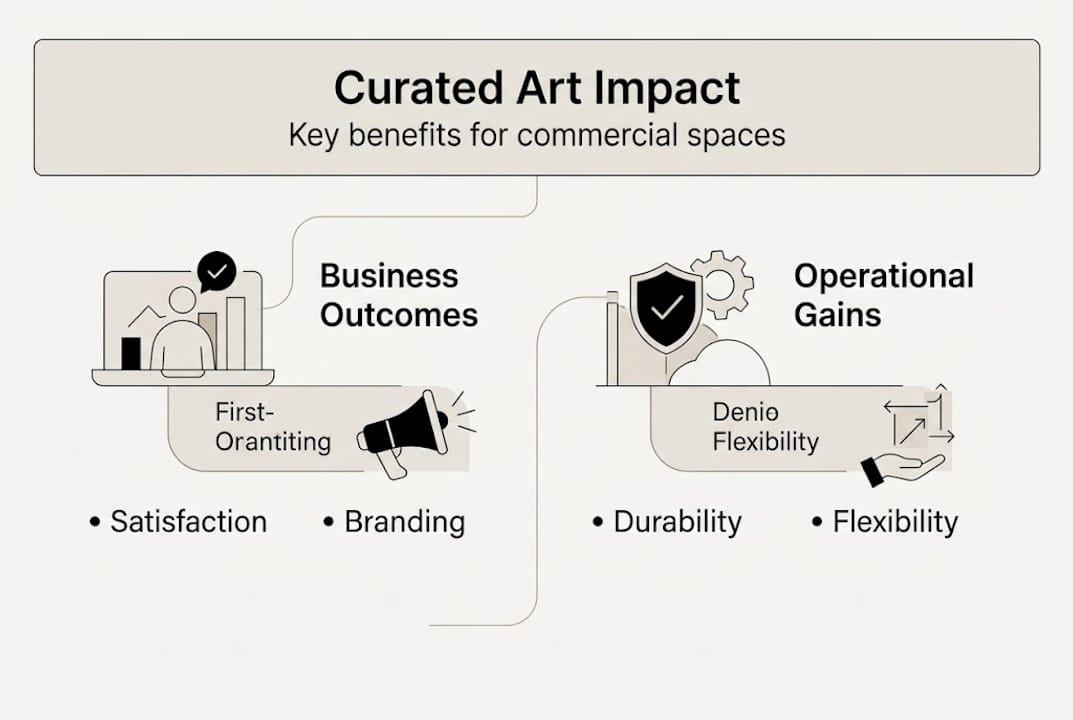
Beyond hotels, research consistently shows that art transforms commercial spaces by reducing perceived wait times, increasing perceived quality, and strengthening brand recall. Retail environments with considered art programmes report stronger emotional connections with shoppers. Corporate offices with curated collections see improved staff wellbeing and productivity.
The major trends shaping the sector in 2026 include:
- Biophilic art: Nature-inspired works that reduce stress and increase dwell time
- Digital and interactive art: Screens and responsive installations that adapt to visitor behaviour
- Augmented reality (AR) integration: Layers of digital content overlaid on physical works
- Personalisation: Collections tailored to local culture, brand narrative, or guest demographics
The commercial wall art role in modern interiors has shifted from decorative afterthought to strategic asset. Ignoring that shift means leaving measurable value behind every single day.
Essential prep: setting goals, budgeting and requirements
Before you select a single piece, you need clarity on what you are trying to achieve. Vague intentions produce vague results. Measurable goals produce measurable outcomes.
Start by defining your objectives. Are you trying to increase average dwell time in a hotel lobby? Reinforce a brand identity in a law firm’s reception? Drive social media sharing in a retail space? Each goal shapes every decision that follows, from style and scale to medium and placement.
Budgeting for commercial art is more layered than most clients expect. Key cost factors include:
- Artwork acquisition: Purchase price or licensing fees for original or reproduction works
- Framing and finishing: Commercial-grade framing adds durability and visual consistency
- Installation: Professional hanging, anchoring, and lighting can account for 20 to 30% of total project cost
- Maintenance: High-traffic environments require UV-resistant finishes and easy-clean surfaces
- Contingency: Always set aside 10 to 15% for delays, replacements, or scope changes
| Approach | Cost | Flexibility | Brand fit | Scalability |
|---|---|---|---|---|
| Off-the-shelf art | Lower | Limited | Generic | Easy |
| Bespoke commissioned art | Higher | High | Precise | Moderate |
| Hybrid (custom prints) | Mid-range | Good | Strong | Very easy |
A hybrid approach, combining ready-made collections with personalised artwork, often delivers the best balance of cost control and brand specificity. You can explore bespoke artwork examples to understand what is achievable at different price points.
Durability is non-negotiable in commercial environments. Common industry pitfalls in art curation include ignoring high-traffic durability, mismatched scale, and bureaucratic delays that push projects over budget and past deadlines.
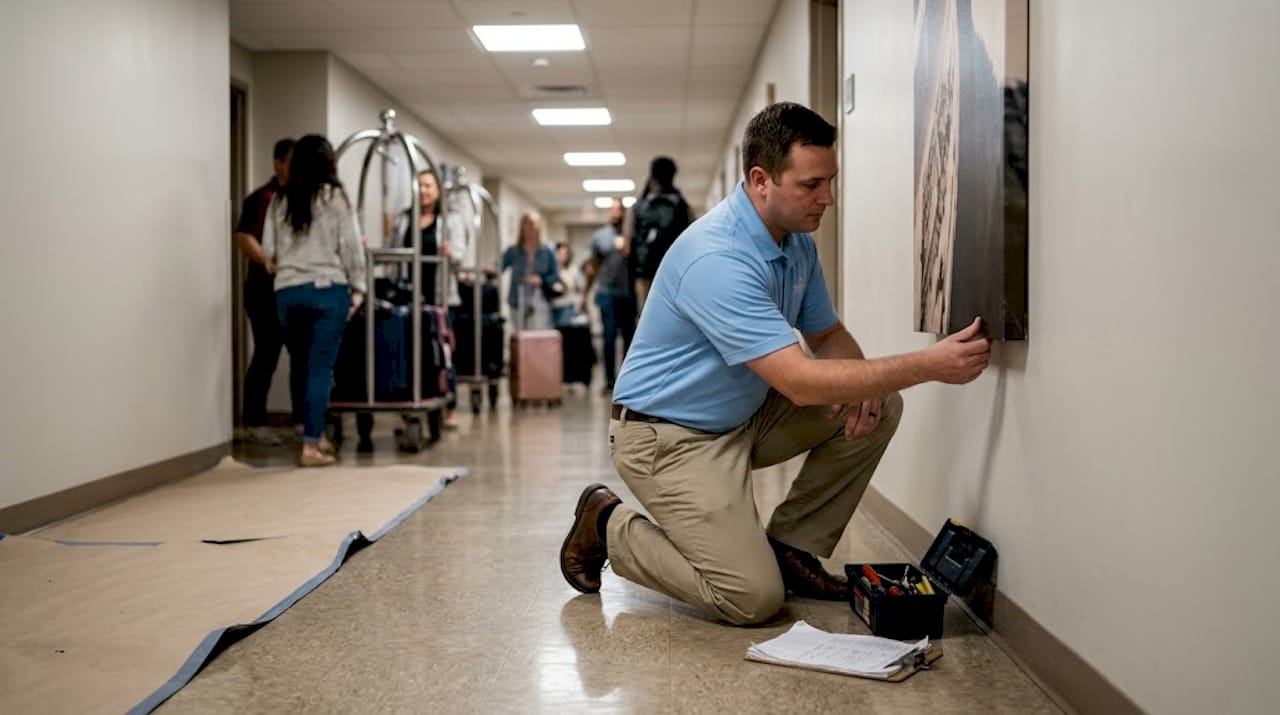
Pro Tip: Always specify materials rated for high-traffic use from the outset. Retrofitting UV coatings or replacing faded prints mid-lease is far more disruptive and costly than getting it right at the planning stage.
The curation process: step-by-step guide
With your goals and budget confirmed, the curation process follows a logical sequence. Skipping steps is where projects go wrong.
- Needs assessment: Survey every space. Note dimensions, lighting conditions, traffic flow, and existing brand elements. Photograph walls at different times of day to capture light changes.
- Theme development: Define a visual narrative. This might be rooted in local heritage, brand values, or a specific emotional tone. The theme is your filter for every subsequent decision.
- Artist sourcing: Identify artists whose practice aligns with your theme. Local artists often bring authenticity and community resonance. Consider artist-in-residence programmes for flagship projects where ongoing creative presence adds brand value.
- Artwork selection: Shortlist works based on scale, colour palette, medium, and durability. Cross-reference with your theme and measurable goals.
- Installation: Work with professional installers. Confirm anchor points, lighting angles, and viewing distances before anything goes on the wall.
- Feedback and iteration: Gather guest or staff feedback within the first 90 days. Adjust placement or swap underperforming pieces based on real data.
Staying current with 2026 wall art trends gives your curation a contemporary edge without chasing fads. Biophilic, digital, and AR integration are no longer niche choices. They are becoming baseline expectations in premium commercial environments.
The benefits of custom art prints for commercial clients are significant. Prints can be produced at precise dimensions, in durable finishes, and at scale, making them ideal for multi-site rollouts. Understanding why customise wall art matters helps you brief suppliers more effectively and avoid costly reprints.
Pro Tip: Use data-driven personalisation where possible. If your property management system tracks guest demographics, use that insight to inform art themes in different zones. A business traveller lounge and a family pool area should not share the same visual language.
Troubleshooting and avoiding common mistakes
Even well-planned projects encounter problems. Knowing what to watch for saves time, money, and credibility.
The most frequent issues in commercial art curation are:
- Bureaucratic delays: Procurement processes, planning permissions for large installations, and supplier lead times can add weeks or months to a project timeline. Build buffer time into every phase.
- Mismatched scale: A piece that looked striking in a gallery can disappear on a hotel corridor wall, or overwhelm a boutique reception. Scale is the single most common error in commercial art projects.
- Durability failures: Works not rated for high-traffic environments fade, scratch, or warp. Always specify commercial-grade finishes, particularly in areas with direct sunlight or high humidity.
- Poor placement: Art hung at the wrong height, in inadequate lighting, or in a space with competing visual noise fails to engage. Viewing distance matters as much as the work itself.
- Ignoring feedback loops: Installing art and never reviewing its impact is a missed opportunity. Set review points at 30, 60, and 90 days post-installation.
Always test scale before installation. A full-size paper mock-up taped to the wall costs nothing and prevents expensive mistakes. Never approve a final piece without seeing it in situ, even digitally.
For spaces requiring a high degree of personalisation, creating personalised artwork with a specialist supplier reduces the risk of scale and style mismatches significantly. Keeping pace with interior design art trends also helps you avoid commissioning works that feel dated before the project is even complete.
Common pitfalls such as bureaucracy delays and mismatched scale are well-documented in the industry. The good news is that all of them are avoidable with proper planning and the right supplier relationships.
Expert perspective: lessons from successful art curation
Here is something the trend reports do not tell you: following trends is not enough. The commercial spaces that consistently outperform their competitors on guest satisfaction and dwell time are not the ones with the most fashionable art. They are the ones with the most considered art.
Personalisation is the real differentiator. Projects that involve local artists, reflect the community surrounding the property, and incorporate stakeholder feedback during the selection process generate stronger emotional responses than any globally sourced collection of approved prints ever will.
The contrarian truth is that durability and scale matter more than style in high-traffic zones. A technically flawless piece in the wrong material, or at the wrong size, fails every time. Style is secondary to suitability.
The most successful projects we have seen share one habit: they test before they commit. Digital previews, physical mock-ups, and phased installations all reduce risk. If you are considering commissioning unique artwork for a flagship space, insist on a digital placement preview before any production begins. It is a small step that prevents large regrets.
Pro Tip: Involve your operations team in the curation process from day one. They know which surfaces take the most punishment and which areas guests actually spend time in. Their input is as valuable as any designer’s eye.
Take the next step: curated solutions for your space
Frametheworld.co.uk works with commercial property owners and interior designers who need art that performs as well as it looks. Browse the wabi sabi wall art collection for calming, nature-inspired works that align with biophilic design principles, or explore bold statement pieces in the pop art wall art range for high-impact retail and hospitality environments. For projects requiring site-specific dimensions, finishes, or brand-aligned imagery, the custom print services team can produce commercial-grade prints at any scale. Whether you are furnishing a single reception or rolling out across multiple sites, the platform makes it straightforward to find, customise, and order art that fits your brief and your budget.
Frequently asked questions
How do I select the right art style for my commercial space?
Start with your brand identity, traffic patterns, and target audience, then match your selection to high-engagement approaches. Biophilic and digital art integration are currently among the strongest performers in commercial environments.
What is the typical ROI for curated art installations?
Curated art can deliver a 14% ADR premium and measurably higher guest satisfaction scores, based on recent hotel industry benchmarks. The return compounds over time as brand identity strengthens.
Which pitfalls should I watch out for when curating art?
The most common issues are mismatched scale, bureaucracy delays, and failing to specify durability-rated materials for high-traffic areas. All three are avoidable with proper planning.
Can commercial spaces benefit from custom art prints?
Absolutely. Custom prints allow precise site-specific sizing and finish selection, and data-driven personalisation through artist-in-residence programmes and tailored collections is one of the fastest-growing approaches in the sector.


Leave a comment
This site is protected by hCaptcha and the hCaptcha Privacy Policy and Terms of Service apply.