

TL;DR:
- Selecting art for commercial spaces should align with brand identity and spatial function.
- Popular styles include Art Deco, biophilic, abstract, pop art, digital, minimalist, and bespoke works.
- Thoughtful, intentional art enhances brand storytelling, wellbeing, and long-term space impact.
Choosing the right art for a commercial space is one of those decisions that looks straightforward on the surface but rarely is. The wrong choice can feel generic, off-brand, or simply forgettable. The right one, however, can transform a reception area into a statement, a corridor into a brand experience, and a waiting room into somewhere clients genuinely want to spend time. For interior designers and commercial property managers, the stakes are high and the options are vast. This guide breaks down the most effective art styles for commercial environments, gives you a clear comparison framework, and helps you make confident, informed decisions.
Table of Contents
- Key criteria for selecting art in commercial spaces
- Overview: Popular art styles for commercial spaces
- Highlighting key styles: Features, benefits and real-world uses
- Side-by-side comparison: Choosing the right art style for your space
- Implementation and future trends: Art in tomorrow’s commercial spaces
- Why choosing art is about more than decoration: Our expert perspective
- Create distinctive spaces with our curated art collections
- Frequently asked questions
Key Takeaways
| Point | Details |
|---|---|
| Match style to brand | Choose art that reflects your commercial space’s identity and values. |
| Prioritise user experience | Art can support wellbeing, boost client comfort, and extend dwell time. |
| Mix trends and timelessness | A strategic blend of styles offers both instant impact and long-lasting appeal. |
| Futureproof with flexibility | Consider scalable, interactive or easily upgraded art solutions for evolving needs. |
Key criteria for selecting art in commercial spaces
With the challenge defined, let’s break down the main criteria that shape the art selection process for commercial environments. Art is not merely decoration in a professional setting. It is a communication tool, a mood regulator, and a brand asset all at once.
When specifying commercial wall art in interiors, the most effective approach starts with brand alignment. Every piece should feel like it belongs to the same visual language as the brand it represents. A law firm and a creative agency may occupy similar square footage, but they require entirely different art strategies.
Spatial function matters just as much. A high-traffic reception area calls for bold, immediate impact. A breakout room or private dining space benefits from something more intimate and considered. Think about how people move through the space, where they pause, and what they see first.
Wellbeing is increasingly central to commercial design briefs. Art in workspace design has measurable effects: biophilic art reduces stress and supports mental wellbeing, while spatial familiarity and visual recognition influence how comfortable clients and staff feel in a given environment. The same research confirms that well-chosen art increases dwell time and strengthens brand loyalty.
Here are the core criteria to evaluate before selecting any art style:
- Brand coherence: Does the style reinforce or contradict your brand values?
- Spatial suitability: Does the scale, tone, and subject matter suit the room’s function?
- Wellbeing impact: Does the art contribute positively to the atmosphere?
- Longevity vs. trend: Is this a timeless investment or a short-term statement?
- Practicality: Is the artwork easy to maintain, replace, or scale across multiple sites?
“The best commercial art programmes are not chosen for the walls. They are chosen for the people who use the space every day.”
Pro Tip: If you are specifying art for a multi-site rollout, prioritise styles that can be adapted or scaled without losing their impact. Abstract and minimalist works tend to travel well across different spatial contexts.
Overview: Popular art styles for commercial spaces
Having established what matters when choosing art, see at-a-glance which art styles are leading in contemporary commercial settings. The table below maps each style to its core characteristics and the environments where it performs best.
| Art style | Core characteristics | Ideal commercial settings |
|---|---|---|
| Art Deco / Neo Deco | Geometric motifs, rich materials, glossy finishes | Luxury hotels, high-end retail, private members’ clubs |
| Biophilic | Nature-inspired imagery, organic forms, earthy tones | Healthcare, wellness centres, offices, hospitality |
| Abstract | Non-representational, expressive, versatile | Corporate offices, creative agencies, co-working spaces |
| Pop Art | Bold colours, graphic imagery, cultural references | Retail, food and beverage, youth-facing brands |
| Digital / AR | Interactive, screen-based, responsive | Tech companies, experiential retail, museums |
| Minimalist / Wabi Sabi | Understated, textural, imperfect beauty | Spas, boutique hotels, premium offices |
| Custom brand artwork | Bespoke, narrative-driven, identity-led | Any sector where brand storytelling is a priority |
Among the most talked-about trends right now, Neo Deco décor is gaining significant traction in luxury commercial spaces. Unlike its original 1920s counterpart, Neo Deco favours a more restrained, curated approach, pairing geometric forms with contemporary materials for a result that feels both timeless and current.
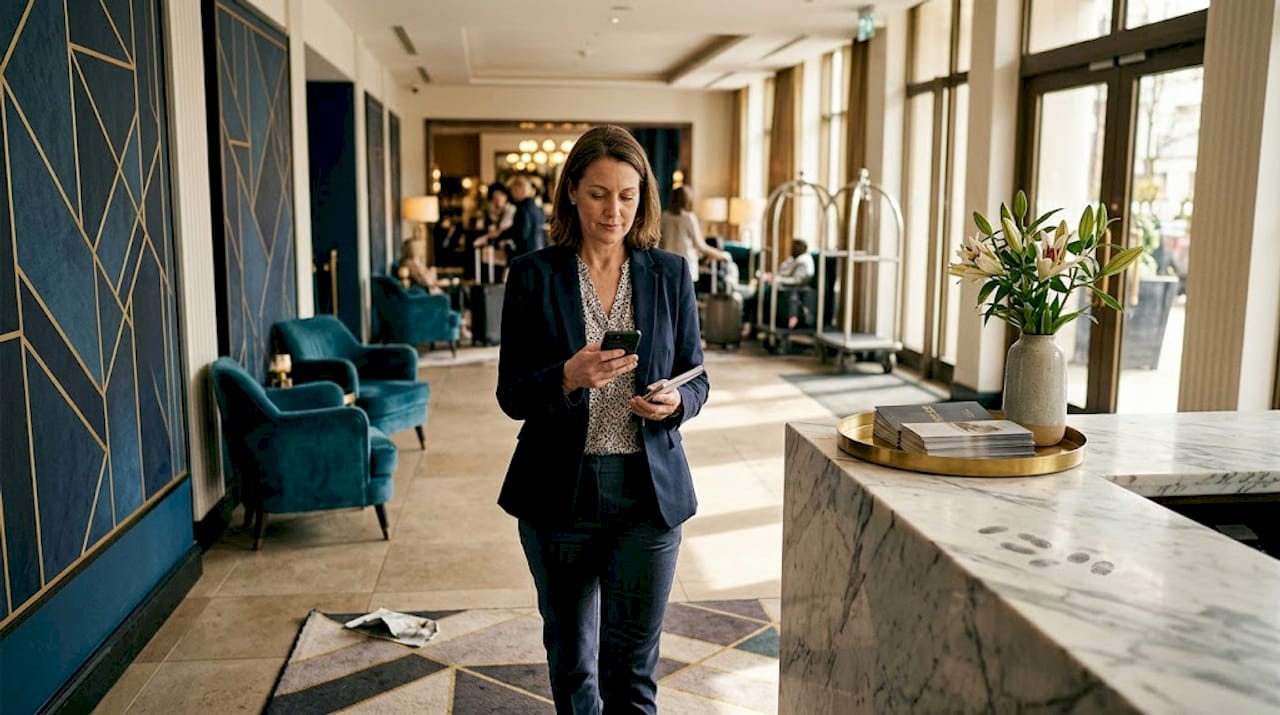
For property developers and commercial clients, understanding these distinctions upfront saves considerable time during the specification process and reduces the risk of costly late-stage changes.
Highlighting key styles: Features, benefits and real-world uses
Now, let’s look deeper at each style to help you match options to your space’s unique goals. Each profile below covers the visual features, commercial benefits, and best-fit environments.
-
Biophilic art brings nature indoors through botanical prints, landscape photography, and organic abstract forms. It is one of the most evidence-backed choices available: biophilic environments reduce stress and support cognitive performance. Healthcare settings, offices, and hospitality venues all benefit. The main limitation is that it can feel generic if not curated carefully.
-
Art Deco and Neo Deco deliver visual theatre and a sense of occasion. Classic Art Deco leans into bold symmetry and gilded detail, while Neo Deco takes a more understated, material-led approach. Both suit luxury hospitality and premium retail. The risk is that strong decorative styles can date if not balanced with neutral surroundings.
-
Pop Art is energetic, immediate, and culturally resonant. It works brilliantly in food and beverage environments, youth-facing retail, and anywhere that wants to feel vibrant and approachable. It is less suited to spaces that need to project calm or authority.
-
Digital and interactive art is the frontier choice. AR-enabled displays and responsive installations create genuine moments of surprise and engagement. Urban and forward-thinking interiors are increasingly incorporating these formats. The investment is higher and the technology requires ongoing management, but the impact is unmatched for innovation-led brands.
-
Minimalist and Wabi Sabi art prioritises restraint, texture, and imperfection. Think unglazed ceramics, monochrome photography, and abstract works with visible brushwork. It signals sophistication without shouting. Ideal for premium offices, spas, and boutique hospitality.
-
Custom brand artwork is the most intentional choice of all. Art that tells a brand story creates a coherent narrative that clients and staff can connect with on a deeper level. It requires more investment upfront but delivers the strongest differentiation.
“The gap between a space that feels considered and one that feels assembled is almost always the quality of the art brief behind it.”
Side-by-side comparison: Choosing the right art style for your space
With a detailed understanding of each style, this table and shortlist clarify how to make the final selection. Use this as a decision-making reference when shortlisting options for a specific venue type.
| Art style | Brand impact | Wellbeing | Trendiness | Adaptability | Relative cost |
|---|---|---|---|---|---|
| Art Deco / Neo Deco | ★★★★★ | ★★★ | ★★★★ | ★★★ | High |
| Biophilic | ★★★★ | ★★★★★ | ★★★★ | ★★★★★ | Low to mid |
| Abstract | ★★★★ | ★★★★ | ★★★ | ★★★★★ | Variable |
| Pop Art | ★★★★ | ★★★ | ★★★★ | ★★★ | Low to mid |
| Digital / AR | ★★★★★ | ★★★ | ★★★★★ | ★★★ | High |
| Minimalist / Wabi Sabi | ★★★★ | ★★★★★ | ★★★★ | ★★★★ | Mid |
| Custom brand artwork | ★★★★★ | ★★★★ | ★★★★ | ★★★ | High |
Venue-based shortlists to guide your decision:
- Hospitality: Art Deco or Neo Deco for luxury properties; biophilic for wellness-led hotels
- Retail: Pop Art for youth and lifestyle brands; custom brand artwork for premium positioning
- Offices: Minimalist or Wabi Sabi for focus environments; art for client engagement using abstract or bespoke pieces in client-facing areas
- Healthcare: Biophilic is the clear frontrunner, supported by evidence that art increases dwell time and reduces anxiety
When personalising spaces with art, the most memorable results often come from combining approaches rather than committing to a single style.
Pro Tip: Layering biophilic prints with custom brand graphics is an increasingly popular approach in offices and hospitality. The biophilic element provides the emotional warmth; the brand element provides the identity. Together, they create a space that feels both human and intentional.
Implementation and future trends: Art in tomorrow’s commercial spaces
Finalise your choice by considering installation, maintenance, and how to keep your interior at the leading edge. A strong art strategy does not end at purchase. It requires ongoing attention to stay relevant and effective.
Practical steps for a successful implementation:
- Budget for the full lifecycle: Include installation, framing, lighting, and periodic refresh in your initial budget
- Plan for rotation: Spaces that change their art periodically feel dynamic and cared-for; a rotation schedule every 18 to 24 months maintains engagement
- Commission bespoke work early: Bespoke artwork for commercial spaces requires lead time; build this into your project timeline from the outset
- Specify for maintenance: High-traffic areas need durable finishes and easy-clean surfaces; discuss this with your supplier before finalising
- Build in flexibility: Modular hanging systems and standardised frame sizes make future updates far less disruptive
Looking ahead, the most significant shift in commercial art is the move towards interactive and digital formats. AR-enabled installations and digitally integrated displays are no longer experimental. They are becoming a genuine specification option for forward-thinking clients. The question is no longer whether to consider them, but when.
The brands that will lead in commercial interiors over the next decade are those that treat art as a living part of their environment, not a one-time purchase.
Why choosing art is about more than decoration: Our expert perspective
Stepping beyond implementation, here is why art choice truly matters. In our experience working with interior professionals and commercial clients, the projects that fall flat are almost never the result of poor taste. They are the result of treating art as an afterthought.
Conventional approaches to commercial art tend to default to safe, decorative choices. Neutral abstracts. Inoffensive landscapes. Art that fills a wall without saying anything. The problem is that clients and visitors notice the absence of intention, even if they cannot articulate it.
The most effective commercial art programmes we encounter treat storytelling through art as a core part of the brand experience. They ask: what do we want people to feel in this space? What story does this collection tell? Is there a coherent thread running from the entrance to the boardroom?
Authenticity matters more than budget. A carefully chosen limited-edition print can outperform an expensive commission if it genuinely reflects the brand’s values. Futureproof spaces also anticipate the shift towards tactility and digital interaction, balancing the warmth of Wabi Sabi textures with the engagement potential of digital formats. True differentiation comes from intentional choice, not decoration for decoration’s sake.
Create distinctive spaces with our curated art collections
Whether you are specifying for a boutique hotel, a corporate headquarters, or a multi-site retail rollout, Frametheworld.co.uk offers the range and flexibility to deliver. Browse Wabi Sabi wall art for understated, premium environments, or explore our Pop Art collection for spaces that want energy and personality. For projects that require something entirely unique, our custom print service allows you to commission bespoke pieces tailored to your brand identity, spatial requirements, and budget. Our team works directly with interior designers and property managers to advise on style, scale, and installation. Get in touch to discuss your next project and find art that does more than fill a wall.
Frequently asked questions
What is the best art style for a hotel lobby?
Art Deco and Neo Deco are standout choices for hotel lobbies, offering luxury visual appeal with geometric forms and rich finishes suited to high-end hospitality. Biophilic and bespoke pieces also perform strongly in welcoming, guest-facing environments.
How does biophilic art benefit commercial spaces?
Biophilic art helps reduce stress and supports mental wellbeing, with studies confirming that art increases dwell time and strengthens brand loyalty in commercial settings.
Which art styles are best for a contemporary office?
Minimalist and Wabi Sabi styles create calm, focused environments, while custom brand graphics and digital or interactive formats suit innovation-led workplaces and client-facing areas.
Can art actually impact client engagement and sales?
Yes. Research shows that art boosts brand loyalty and increases the time clients spend in a space, both of which contribute positively to commercial outcomes and client impressions.


Leave a comment
This site is protected by hCaptcha and the hCaptcha Privacy Policy and Terms of Service apply.