
TL;DR:
- Proper art placement creates focal points, enhances mood, and personalizes a space, significantly impacting room perception.
- Standards like hanging art at 57-60 inches from the floor serve as useful guidelines, but adjustments should suit individual rooms and activities.
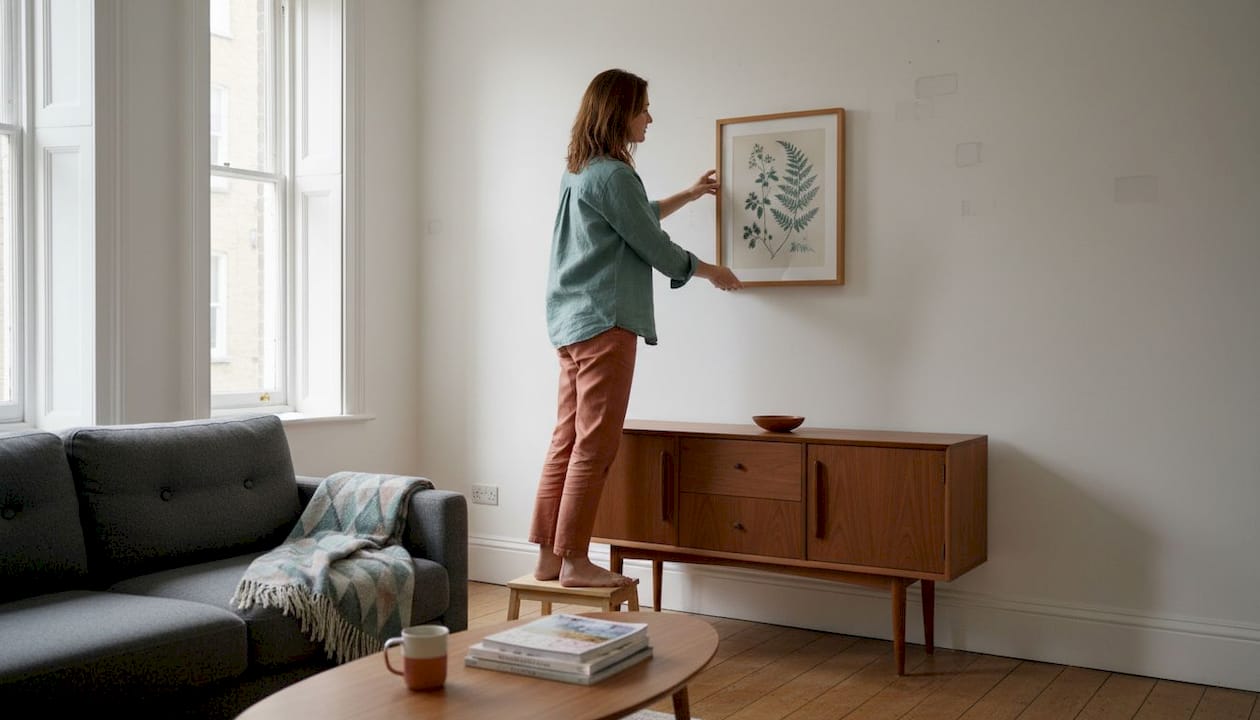
Most people hang art by instinct: find a nail, hold up the frame, and call it done. That approach, however well-intentioned, misses something fundamental. Art placement creates focal points, enhances mood and emotion, personalises a space, and even improves how large or balanced a room feels. The difference between a room that looks professionally styled and one that feels slightly off often comes down to a few centimetres and a handful of principles. This guide gives you the evidence-backed techniques, real measurements, and practical frameworks to get placement right every single time.
Table of Contents
- Why art placement matters in every room
- The science of perfect art height and positioning
- Common mistakes and how to avoid them
- Gallery walls and visual harmony: A practical guide
- When to break the rules: Personal taste and home dynamics
- The real secret: Art placement is about your story
- Find the art that makes your home come alive
- Frequently asked questions
Key Takeaways
| Point | Details |
|---|---|
| Eye-level is key | Mount artwork so the centre is 57-60 inches from the floor for balance and focus in most room types. |
| Adapt to each space | Adjust art height and grouping for seating areas, high ceilings, and your household’s needs. |
| Avoid common errors | Steer clear of hanging art too high, using undersized pieces, or overcrowding gallery walls. |
| Use grouping strategy | Treat gallery wall collections as a unified piece with 2-3 inch spacing between frames. |
| Make it yours | Let your taste and story guide final placement—even when it means breaking a rule. |
Why art placement matters in every room
Hanging art is not just about filling a blank wall. It is about shaping how a room communicates. A well-placed piece draws the eye, establishes a visual anchor, and tells visitors something meaningful about the person who lives there. Get it wrong, and even expensive, beautiful artwork can feel adrift or awkward within a space.
Understanding how art shapes the mood of a room helps explain why placement decisions carry so much weight. A bold abstract print positioned at eye level above a console table creates an immediate focal point and energises an entrance hall. That same print hung too high or too low loses its power entirely, becoming a decorative afterthought rather than a confident statement.
The role of art in interior design extends well beyond aesthetics. Research confirms that thoughtful placement genuinely affects our psychology. Art affects stress reduction, attention restoration, and visual comfort, with even lighting specifics playing a role in how we experience a piece.
Here is what good art placement consistently delivers:
- Focal points: A single well-placed piece directs attention and gives a room a clear visual starting point.
- Emotional resonance: Art at the correct height and scale evokes the intended mood, whether calm, energised, or nostalgic.
- Personalisation: Placement choices communicate identity and lived experience in ways that furniture alone cannot.
- Perceived balance: Correctly scaled art fills wall space proportionally, making rooms feel considered and complete.
- Spatial perception: Strategic placement can make ceilings feel higher, walls feel wider, and rooms feel more generous.
“A room without art is like a sentence without a verb. Placement gives the art its action.”
Now that you see how impactful art placement can be, it is key to understand the underlying principles that consistently create harmonious results.
The science of perfect art height and positioning
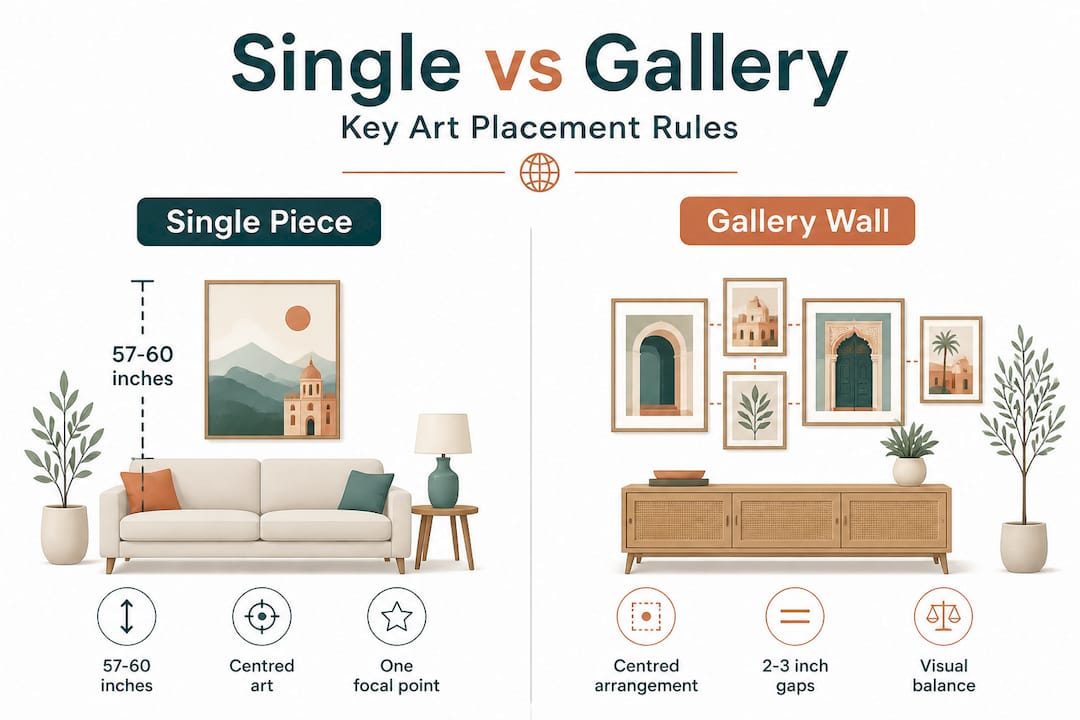
There is a reason museums and galleries all hang art at the same height. Standard hanging height is 57 to 60 inches from the floor to the centre of the artwork, based on the average human eye level. Galleries worldwide use this measurement because it places art comfortably within the natural line of sight, without forcing viewers to crane upwards or stoop downwards.
In a home setting, 57 to 60 inches works brilliantly in hallways, living room walls, and any space where you view art while standing. However, homes are not galleries. Edge cases call for adjustments: in seated areas like dining rooms and bedrooms, dropping the centre to 52 to 54 inches brings artwork into comfortable sightlines when you are sitting down. For rooms with high ceilings or statement hallways and staircases, going up to 60 to 65 inches can feel more proportionate.
| Room type | Recommended centre height | Reason |
|---|---|---|
| Hallway or landing | 60 to 65 inches | Viewed standing; height suits architecture |
| Living room (standing view) | 57 to 60 inches | Standard eye level for most adults |
| Dining room | 52 to 54 inches | Primarily viewed while seated |
| Bedroom above bed | 52 to 54 inches | Viewed when lying or sitting in bed |
| Staircase | Follows the stair angle | Centre of each piece follows the stair rise |
| Home office | 57 to 60 inches | Mixed standing and seated use |
Pro Tip: If you have young children or frequently enjoy art from a seated position, consider dropping your standard hanging height by 3 to 4 inches across the board. Your home is lived in by real people with specific habits, not designed for the average visitor.
For expert interior design art tips that go beyond the basics, remember that the 57 to 60 inch rule is a starting point, not a constraint. The moment you understand why the measurement exists, you are empowered to adapt it intelligently.
Once you know where to start with measurements, it is equally important to learn which mistakes to avoid so your efforts have maximum effect.
Common mistakes and how to avoid them
Even people with genuine aesthetic instincts make the same placement errors repeatedly. Knowing what they are and why they happen makes avoiding them straightforward.
-
Hanging art too high. This is the single most common mistake in residential interiors. Art hung too high floats disconnected from the furniture and the people below it. The fix is simple: always measure from the floor to 57 to 60 inches, not from the top of the frame or the ceiling downwards.
-
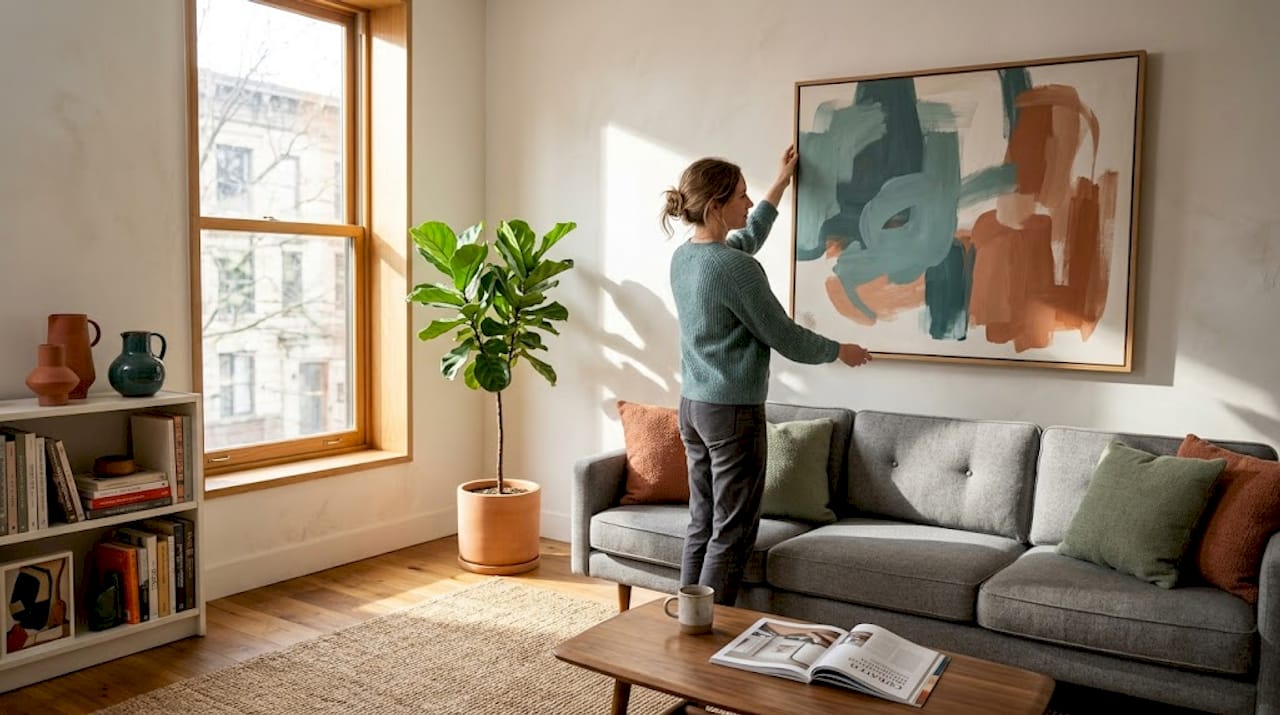
Ignoring furniture proportions. Art that ignores furniture scale creates visual imbalance immediately. A narrow print above a wide sofa looks lost. As a general guide, artwork above a sofa should span roughly 50 to 75 percent of the sofa’s width. This keeps the relationship between furniture and art feeling intentional rather than accidental.
-
The postage stamp effect. Placing a small piece of art on a large, empty wall is one of the most deflating mistakes you can make. The art looks timid, the wall looks bare, and the room feels unresolved. The fix is to either choose a larger piece scaled to the wall, or group smaller pieces into a cohesive arrangement. Learning about art in small spaces is just as valuable as understanding large wall solutions, because proportion matters everywhere.
-
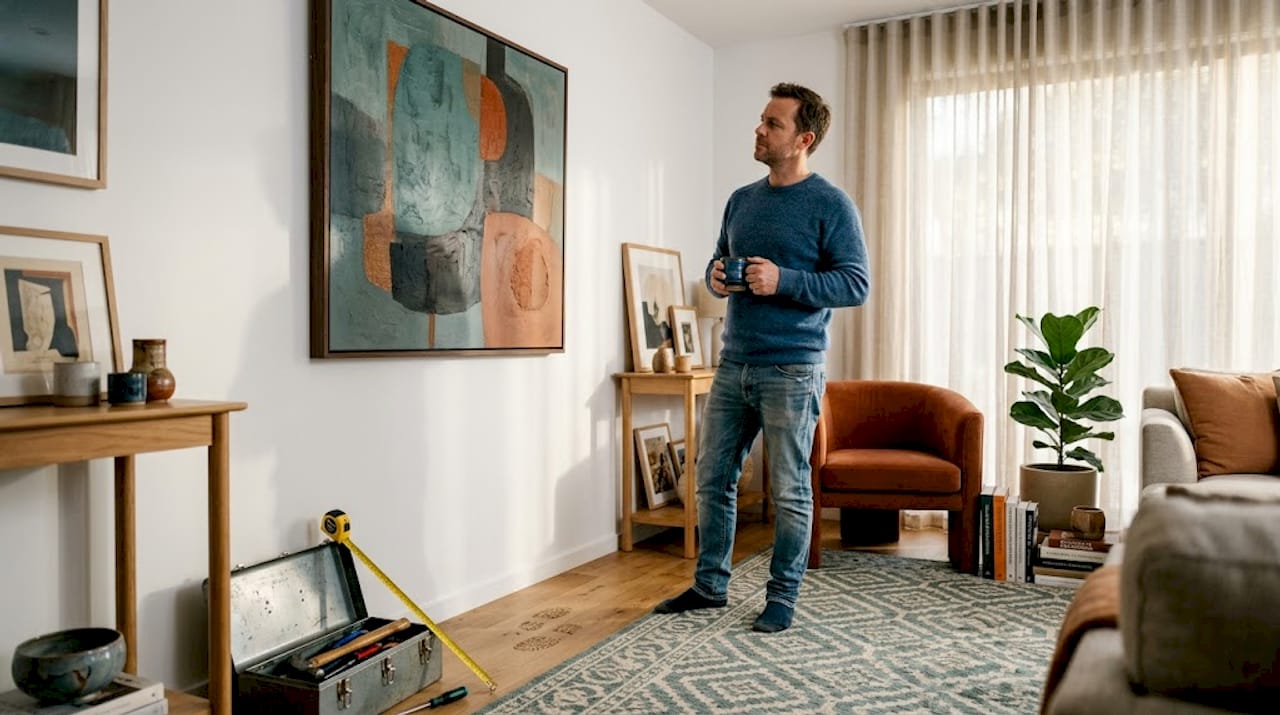
Overcrowding without cohesion. The opposite problem is filling a wall so densely that no single piece can breathe or be appreciated. Overcrowding usually signals a lack of planning. Before hanging anything, lay your pieces on the floor in the arrangement you are considering. This floor plan step takes minutes and saves you from unnecessary holes in the wall.
Using art as a design anchor rather than an afterthought is the mindset shift that prevents most of these mistakes from happening in the first place.
Pro Tip: After placing your art, step back to at least three metres from the wall and view it from a natural standing position. What felt right up close can look dramatically different from across the room. This is the review step most people skip.
Understanding individual piece placement is vital, but gallery walls introduce new dynamics. Here is how to master more complex arrangements.
Gallery walls and visual harmony: A practical guide
Gallery walls are among the most expressive ways to display art, but they require a slightly different approach to placement. The key principle is to treat the gallery as a single unit, with the centre of the entire arrangement sitting at the standard 57 to 60 inch height, and maintaining 2 to 3 inches between each frame for visual coherence.
| Aspect | Single piece | Gallery wall |
|---|---|---|
| Height rule | Centre at 57 to 60 inches | Centre of whole arrangement at 57 to 60 inches |
| Spacing | N/A | 2 to 3 inches between frames |
| Scale consideration | Width relative to furniture | Total arrangement width relative to wall |
| Planning method | Direct measuring | Floor layout first, then transfer to wall |
| Cohesion factor | Style and colour of one piece | Mix of sizes united by theme, tone, or frame style |
Understanding gallery walls explained in full depth is worthwhile before committing to a large installation. The planning stage is where success is decided.
Here are three steps to a well-executed gallery wall layout:
- Step one: Gather and edit. Collect all the pieces you want to include and lay them on the floor. Eliminate anything that genuinely clashes in tone, frame style, or subject matter. A gallery wall works best when there is a unifying thread, whether that is a colour palette, a theme, or consistent framing.
- Step two: Photograph your floor layout. Once you are happy with the arrangement on the floor, photograph it from directly above. This image becomes your hanging reference and saves considerable time and frustration on the wall.
- Step three: Start from the centre. Identify the visual centre of your arrangement and hang that piece first at the correct 57 to 60 inch height. Work outwards from there, maintaining your 2 to 3 inch spacing consistently.
If you want to explore how gallery walls elevate your space and style before committing, looking at different composition approaches can be genuinely inspiring.
Pro Tip: Cut paper templates to the exact dimensions of each frame and tape them to the wall with masking tape before driving a single nail. Rearrange the templates freely until the layout feels exactly right. It costs nothing and prevents wall damage.
For broader guidance on choosing what to hang, a wall art selection guide can help you narrow down pieces that will genuinely work together.
After these specific placement strategies, it is worth asking: are the rules right for every home, or is there more flexibility built in?
When to break the rules: Personal taste and home dynamics
Gallery standards are a guide, not a law. Some homes genuinely call for lower placement, whether to suit a household where most members are shorter, a room primarily experienced from low seating, or a deliberate design choice to create intimacy and warmth. Breaking a rule is not the same as making a mistake; it is a conscious decision based on how a specific space is actually used.
“The most memorable rooms are rarely the most correct ones. They are the most honest.”
Think about a bedroom reading nook where you curl up in a low armchair every evening. Hanging a favourite print at standard eye level means you are always looking slightly upwards at it, which creates mild visual tension. Dropping it to seated eye level makes the art feel like it belongs in that moment, in that chair, in that life.
Here are some questions to help you decide when to adapt the standard rules:
- Who primarily views the art in this room, and at what height are their eyes typically?
- Is the room primarily experienced from a seated, standing, or reclining position?
- Does the architecture of the room (low ceilings, slanted walls, alcoves) make standard heights impractical?
- Would a lower or unconventional placement create a more intimate feeling that suits the room’s purpose?
- Does the furniture arrangement support or contradict the standard hanging height?
Knowing how to match art with interiors as a whole is what gives you the confidence to adapt rules rather than simply follow them.
Now, let us reflect on how these insights challenge typical advice and what really matters most for creating joyful, expressive homes.
The real secret: Art placement is about your story
Here is something most placement guides will not tell you: the rooms that stay with people long after they leave are rarely the ones that followed every rule perfectly. They are the ones that felt genuinely inhabited. There is a quality to a home where the art has been chosen and placed with actual intention, with memory, personality, and a little imperfection folded in.
We believe the measurements and principles in this guide matter enormously. Getting the height right, respecting proportions, and planning a gallery wall carefully will all make your space look more polished and feel more comfortable. But those are the foundations, not the ceiling.
What transforms a well-decorated room into a home is the moment when you look at a piece of art and it tells your story rather than the story of a style trend or a design rulebook. That might mean hanging a modestly sized print in a corner because it is the first thing you want to see each morning. It might mean placing a family photograph slightly lower than conventional wisdom suggests because everyone in your household is a different height and you want everyone to feel equally seen.
We have seen beautifully styled spaces, particularly in the context of art in UK show homes, where every measurement is technically correct and yet something feels hollow. Contrast that with a living room where a slightly lopsided gallery wall is filled with personally meaningful prints and the result is magnetic. Rules create comfort and coherence. Personal placement choices create character.
Use the evidence as your framework. Then trust what the room tells you when you stand in it.
Find the art that makes your home come alive
Ready to put these principles to work? At Frametheworld.co.uk, we have built our collections around the idea that the right art in the right place genuinely changes how a home feels. Whether you are drawn to the quiet textures of Wabi Sabi wall art, looking for something bold and expressive from our colourful paintings, or searching for a piece with specific dimensions to suit an exact wall or furniture grouping, our catalogue is designed to make finding the right match straightforward. For projects where nothing off the shelf quite works, our custom print service lets you create something entirely your own, sized, styled, and personalised to your space and story. Browse, explore, and place with confidence.
Frequently asked questions
What is the ideal height to hang art above a sofa or mantle?
Hang artwork so the centre sits 57 to 60 inches from the floor, or slightly lower at 52 to 54 inches if most viewing is done seated, such as in a dining room or bedroom.
How much space should you leave between frames in a gallery wall?
Maintain 2 to 3 inches between frames for a cohesive gallery wall look that feels intentional without appearing overcrowded.
Does the lighting in a room affect art placement?
Yes, significantly. Optimal art viewing uses cool lighting at around 50lx or warm light at 150lx, so consider your room’s lighting before finalising where a piece hangs.
What is the biggest mistake people make when hanging art?
Hanging art too high or choosing pieces too small for the wall are the most common errors, both of which disconnect the artwork visually from the furniture and the people in the room.
Can art placement affect how spacious a room feels?
Absolutely. Strategic placement improves perceived room size and balance, particularly when art is scaled correctly to the wall and positioned to draw the eye in a deliberate direction.


Leave a comment
This site is protected by hCaptcha and the hCaptcha Privacy Policy and Terms of Service apply.