
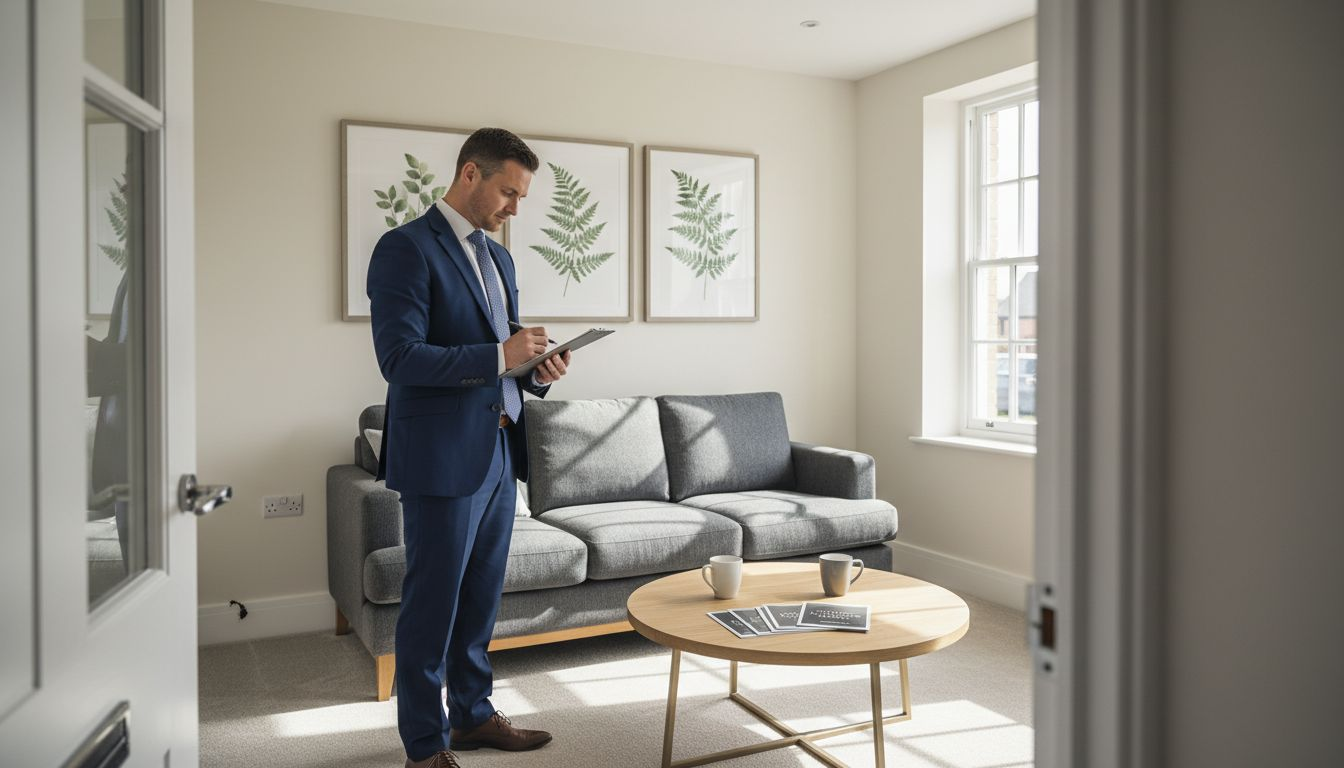
Show homes equipped with curated wall art sell 12% faster than those without, according to recent UK property data. This remarkable statistic reveals how strategic art placement transforms empty spaces into emotionally engaging environments that resonate with prospective buyers. For homeowners and interior designers staging properties across the UK, understanding how art elevates aesthetic appeal and creates buyer connection is essential to achieving faster sales and higher perceived value.
Table of Contents
- How Art Elevates Aesthetic Appeal in Show Homes
- How Art Creates Emotional Connection in Show Homes
- Selecting the Right Art for UK Show Homes
- Common Misconceptions and Mistakes in Using Art for Show Homes
- Practical Tips for Integrating Art in Show Homes
- Impact of Art on Sales and Property Value
- Conclusion: The Transformative Role of Art in Show Homes
- Enhance Your Show Home with Expertly Curated Art from Frametheworld
- Frequently Asked Questions
Key Takeaways
| Point | Details |
|---|---|
| Art accelerates sales | Curated wall art in show homes reduces time on market by 12% on average. |
| Neutral tones perform best | Neutral and natural artworks increase buyer appeal by 34% compared to bold personal pieces. |
| Scale matters significantly | Mismatched art dimensions decrease buyer satisfaction by up to 18%. |
| Emotional connection drives decisions | Art creates psychological engagement that influences purchasing behaviour. |
| Strategic placement is crucial | Proper focal point creation and room balance enhance visual impact and cohesion. |
How Art Elevates Aesthetic Appeal in Show Homes
Curated wall art functions as a powerful design tool that transforms show home interiors through colour harmony, textural depth, and strategic focal points. When properly selected, art anchors room compositions and guides the eye through spaces in ways that empty walls simply cannot achieve. The visual impact extends beyond decoration to create cohesive style narratives that help buyers envision their future lives within the property.
Neutral and natural art themes complement the diverse architectural styles found across UK show homes, from contemporary townhouses to traditional country properties. These versatile pieces bridge design gaps without overwhelming personal taste preferences. Types of wall art for UK homes range from abstract botanicals to minimalist landscapes, each offering distinct aesthetic advantages depending on the property’s character and target buyer demographic.
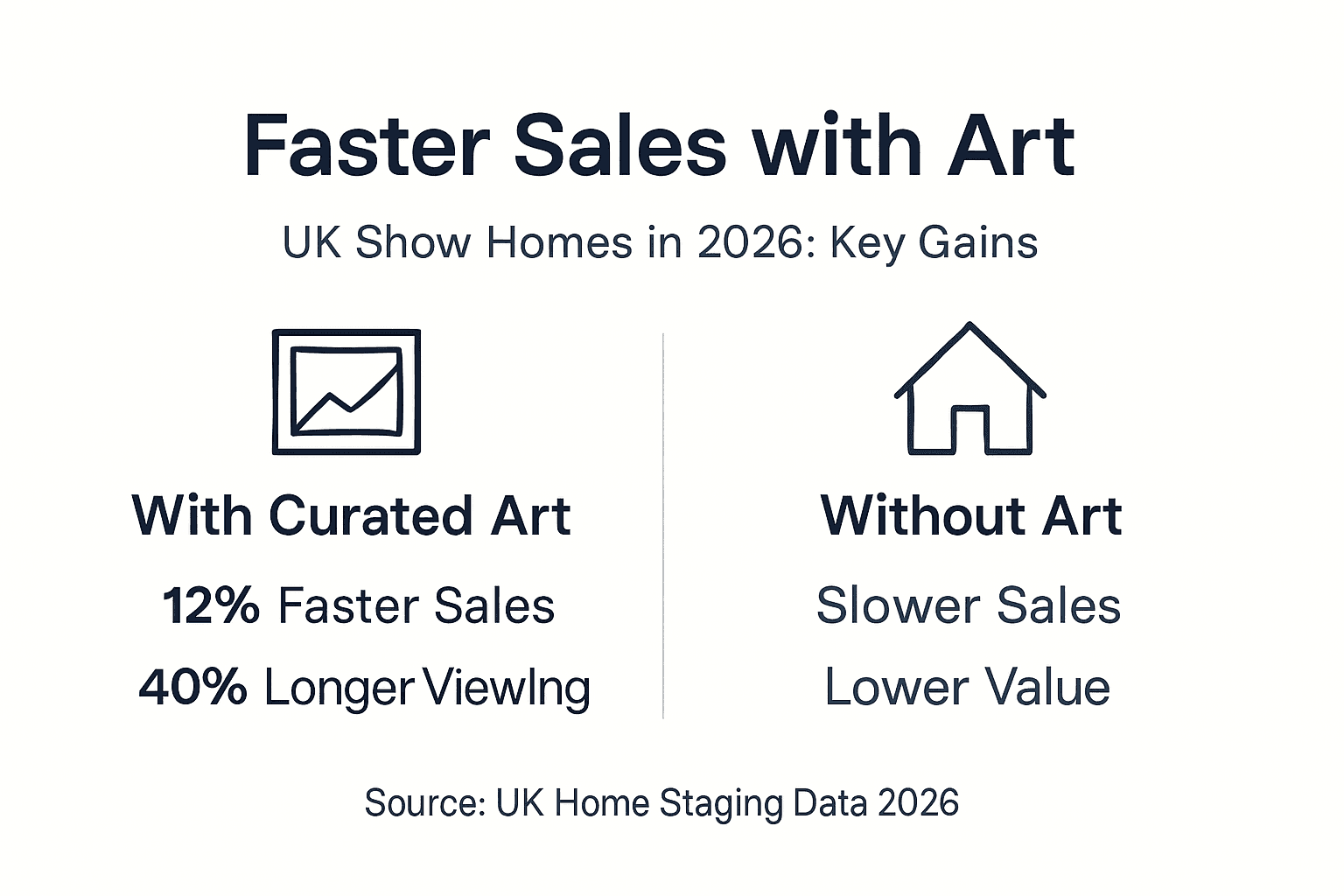
Recent data demonstrates the tangible impact of this approach. Homes staged with curated art sold 12% faster on average over 5,000 UK properties studied in 2026. This acceleration occurs because art provides visual interest that photographs well in listings and creates memorable impressions during viewings.
Key aesthetic benefits include:
- Creating instant focal points that draw attention to room strengths
- Adding colour accents that unify disparate design elements
- Introducing texture and depth to flat wall surfaces
- Establishing style consistency across multiple rooms
- Softening architectural hard lines and angles
| Design Element | Impact on Buyer Appeal | Optimal Application |
|---|---|---|
| Colour harmony | +28% positive feedback | Coordinate with existing interior palette |
| Textural depth | +22% engagement time | Layer framed prints with varied finishes |
| Focal point creation | +31% room memorability | Position above key furniture pieces |
| Scale proportion | +25% satisfaction ratings | Match art size to wall dimensions |
Pro Tip: Place your largest art piece first to establish the room’s visual hierarchy, then build around it with complementary smaller works. This approach creates natural flow and prevents the scattered look that confuses buyers.
The UK art prints benefits extend to practical staging advantages as well. High quality prints offer consistency across multiple properties, weather transport better than original works, and allow rapid style adjustments when buyer feedback suggests different aesthetic directions.
How Art Creates Emotional Connection in Show Homes
Beyond visual appeal, art triggers psychological responses that profoundly influence purchasing decisions. Neuroscience research shows that viewing aesthetically pleasing images activates reward centres in the brain, creating positive associations with the surrounding environment. In show homes, this neurological response translates directly into emotional attachment to the property itself.
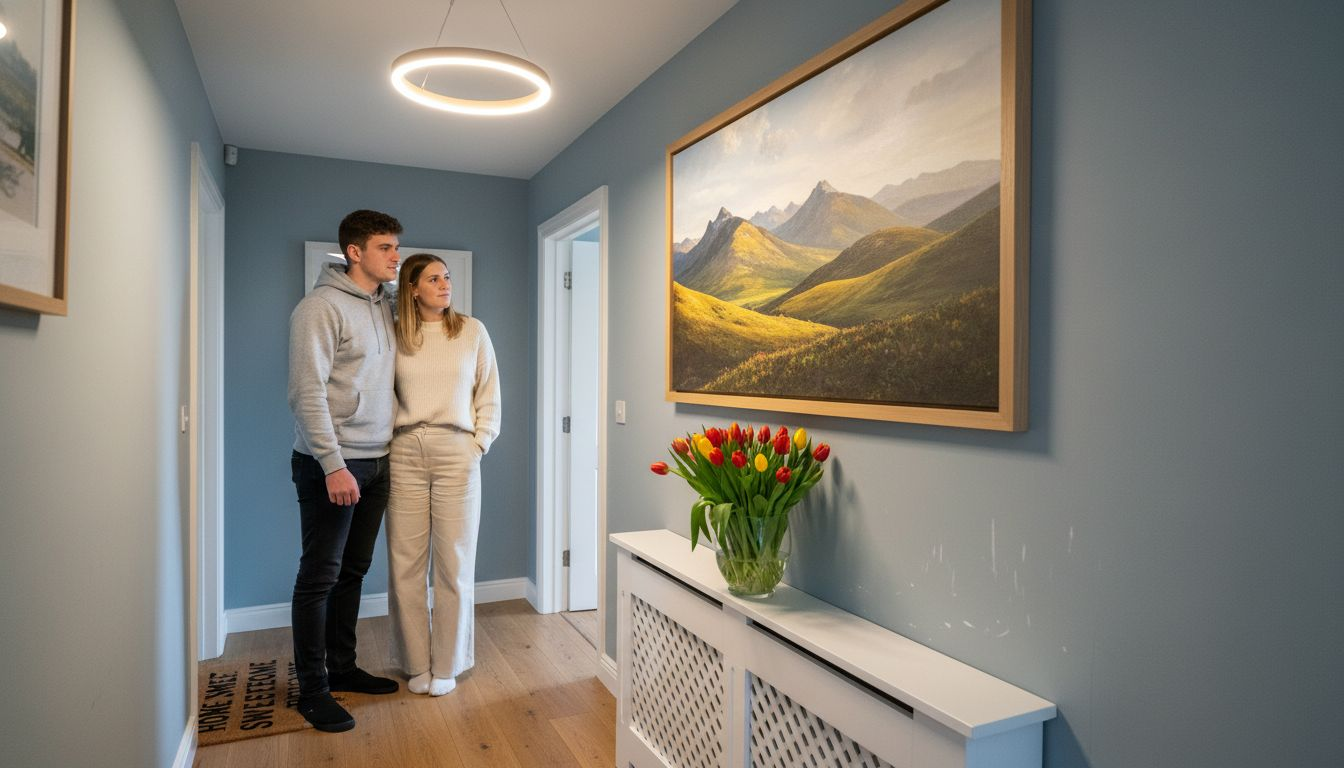
Buyer psychology reveals a critical distinction in art preferences. Neutral artworks increased buyer appeal by 34% compared to bold personal pieces which decreased appeal by 15% in controlled studies. This gap exists because neutral art allows buyers to project their own identities onto the space, while highly personal or provocative pieces create barriers to that imaginative process.
The emotional impact of art in home style manifests through several psychological mechanisms that staging professionals leverage:
- Aspiration trigger: Art suggests a lifestyle buyers desire to adopt
- Memory formation: Memorable art pieces help properties stand out in buyer minds
- Comfort signalling: Familiar natural themes reduce anxiety about unfamiliar spaces
- Value perception: Quality art implies overall property quality and care
- Decision confidence: Cohesive styling reduces uncertainty about purchase decisions
“The presence of carefully chosen art in show homes doesn’t just decorate spaces, it shapes the emotional narrative buyers construct about their potential future in the property. This narrative influence shortens decision timelines measurably.” — UK Property Staging Association, 2026
Engagement metrics support this emotional framework. Properties featuring curated art collections see 40% longer viewing times and 27% more return visits compared to unstaged equivalents. These extended interactions provide crucial opportunities for emotional attachment to develop and strengthen.
The strategic use of natural themes deserves particular attention in the UK market. Landscapes, botanicals, and abstract nature interpretations resonate deeply with British cultural preferences for countryside aesthetics. Even urban buyers respond positively to these themes, which offer psychological respite from city environments while maintaining sophisticated styling appropriate to modern interiors.
Pro Tip: Consider your target buyer demographic when selecting art themes. Young professionals respond well to minimalist abstracts, while families prefer warmer botanical and landscape pieces that suggest stability and growth.
Selecting the Right Art for UK Show Homes
Successful art selection requires systematic evaluation of multiple factors that align artwork characteristics with property features and buyer expectations. The selection process begins with understanding the show home’s architectural style, existing interior palette, and the lifestyle aspirations of likely buyers.
Neutral tone dominance remains the foundational principle for UK show home art. Neutral tone art broadens buyer appeal and performs better than bold, personal art in show homes across all property types and price points studied in 2026. This doesn’t mean boring; neutral palettes encompass sophisticated greys, warm beiges, soft blues, and muted greens that complement rather than compete with interior design.
The wall art selection process follows a structured framework:
- Assess the space: Measure wall dimensions, note natural light sources, identify existing colour schemes
- Define the mood: Determine whether the room should feel energising, calming, sophisticated, or welcoming
- Choose complementary themes: Select subjects that enhance rather than clash with furniture and finishes
- Scale appropriately: Ensure art size balances with wall space and furniture proportions
- Test placement: Preview arrangements before final installation to verify visual impact
| Selection Criterion | Recommended Approach | Common Mistake to Avoid |
|---|---|---|
| Colour palette | Neutral base with subtle accents | Bright, polarising colours |
| Subject matter | Natural, abstract, minimalist | Personal photos, controversial themes |
| Frame style | Simple, quality frames in black, white, or natural wood | Ornate, distracting frames |
| Art size | 50 to 75% of furniture width below | Undersized pieces that disappear |
| Quantity | Curated selection of 3 to 5 key pieces per room | Overcrowding walls with excessive art |
Following the choose wall art UK guide principles ensures consistency across properties while allowing customisation for specific architectural features. Contemporary homes benefit from clean lined abstracts and geometric patterns, while period properties suit softer botanicals and landscape interpretations that respect traditional aesthetics.
Style alignment prevents the jarring disconnect that occurs when art contradicts interior design intent. A Scandinavian minimalist interior requires different art than a maximalist eclectic space, yet both can achieve strong buyer appeal when art selection respects the established design language.
Avoiding selection pitfalls:
- Never choose art based solely on personal preference
- Resist trendy pieces that may quickly date the property
- Skip art with text or messages that limit interpretation
- Avoid reproductions of famous works that feel generic
- Don’t mix too many different art styles in adjacent spaces
Common Misconceptions and Mistakes in Using Art for Show Homes
Despite growing awareness of art’s staging value, persistent myths lead to costly errors that undermine show home effectiveness. Understanding these misconceptions helps designers and homeowners avoid counterproductive choices that reduce rather than enhance buyer appeal.
The most damaging myth suggests bold, statement art creates memorable impressions. Reality contradicts this assumption. Bold personal art often alienates buyers by imposing strong stylistic preferences they may not share. The data is clear: such pieces decreased appeal by 15% in buyer surveys, while neutral alternatives increased it by 34%. Memorable doesn’t mean divisive; neutral art creates positive memorability without polarisation.
Scale errors rank among the most frequent mistakes in show home staging. Mismatched art scale can decrease buyer satisfaction by up to 18%, creating visual imbalance that subconsciously signals poor design judgment. Undersized art disappears against large walls, while oversized pieces overwhelm spaces and make rooms feel smaller.
Common misconceptions debunked:
- Myth: More art equals more appeal
- Reality: Curated restraint outperforms cluttered walls; quality trumps quantity
- Myth: Expensive original art is necessary
- Reality: High quality prints deliver equal staging impact at fraction of cost
- Myth: Art should match furniture exactly
- Reality: Complementary coordination works better than matchy matchy approach
- Myth: Gallery walls suit all properties
- Reality: Single statement pieces often work better in show homes
Placement mistakes diminish even well chosen art. Hanging art too high remains a persistent error; the centre of artwork should sit at eye level, approximately 145 to 152 cm from the floor. Ignoring this guideline creates disconnected compositions that fail to engage viewers properly.
Another frequent miscalculation involves lighting neglect. Art positioned in poorly lit areas or subject to harsh direct sunlight loses impact and can appear washed out or shadowy in listing photographs. Strategic lighting transforms good art into stunning focal points that photograph beautifully and impress during viewings.
Pro Tip: Before finalising art placement, photograph each room from the doorway where buyers first view it. This reveals whether art creates the intended focal points or gets lost in the composition. Adjust placement until the camera captures what you want buyers to notice first.
The assumption that types of modern UK wall art require contemporary properties also limits staging effectiveness. Traditional homes benefit greatly from modern art interpretation of classic themes, creating fresh appeal that attracts buyers seeking character properties with contemporary sensibilities.
Practical Tips for Integrating Art in Show Homes
Effective art integration requires tactical execution that maximises visual impact while maintaining design coherence across the property. These actionable strategies translate selection principles into specific placement and curation practices that elevate show home presentation.
Strategic placement guidelines:
- Create deliberate focal points: Position your strongest art piece on the wall viewers see first when entering each room
- Maintain breathing room: Leave 15 to 20 cm of space between art and furniture tops to establish visual separation
- Align with architectural features: Centre art above fireplaces, within alcoves, or between windows to enhance existing structure
- Consider sightlines: Place art where it’s visible from doorways and natural walking paths through the home
- Layer strategically: In open plan spaces, use art to define different functional zones without physical barriers
Balancing art size with room dimensions prevents the scale errors that undermine staging effectiveness. Proper art scale and focal placement greatly enhance room cohesiveness and visual interest. For walls above sofas or beds, art should span 50 to 75% of the furniture width. On open walls, pieces filling one third to one half of the wall height create balanced presence without overwhelming the space.
Curated collections offer powerful staging advantages when executed with restraint. Rather than random assortments, deliberate series of two to three complementary pieces create sophisticated visual narratives. This approach works particularly well in hallways, staircases, and dining areas where multiple walls provide display opportunities.
Focal point creation techniques:
- Use larger scale art to anchor living rooms and primary bedrooms
- Position art to draw eyes toward desirable features like views or architectural details
- Create vertical interest with portrait oriented pieces in rooms with high ceilings
- Balance horizontal spaces with landscape oriented art that extends visual width
Pro Tip: The framing art guide emphasises frame consistency across adjoining spaces. Stick to two or three frame finishes maximum throughout the property to maintain visual flow and professional polish.
Lighting deserves equal attention to placement. Picture lights, adjustable spotlights, or strategically positioned lamps transform art from wall decoration to genuine focal points. This enhancement proves especially valuable in photography for property listings, where proper lighting ensures art reads clearly and creates the intended atmospheric effects.
The wall art selection guide recommends seasonal consideration for show homes with extended marketing periods. Neutral nature themes transition well across seasons, while overly specific seasonal imagery can feel dated as months pass.
Impact of Art on Sales and Property Value
Quantitative evidence demonstrates art’s measurable influence on show home performance metrics that directly affect sales outcomes. These findings transform art from optional decoration into strategic investment with documentable returns.
Show homes with curated art not only sell 12% faster but also see higher buyer engagement and value perception according to 2026 UK property sales data. This acceleration translates to significant cost savings in carrying expenses, marketing budgets, and opportunity costs associated with extended time on market.
Buyer surveys reveal the psychological mechanisms driving these results. Properties featuring professional art staging received 41% more positive feedback on aesthetic appeal and 38% higher ratings for feeling move in ready. These perceptions directly influence offer decisions and negotiation positions, with staged properties commanding closer to asking price than unstaged equivalents.
| Performance Metric | Properties With Art | Properties Without Art | Improvement |
|---|---|---|---|
| Average days on market | 42 days | 48 days | 12% faster |
| Buyer return visit rate | 34% | 19% | +79% increase |
| Offers within 2 weeks | 56% | 38% | +47% increase |
| Final sale price vs asking | 98.2% | 96.1% | +2.1% premium |
Perceived property value increases when buyers encounter cohesive styling that includes quality art. This phenomenon occurs because visual cues suggesting care and attention extend to assumptions about property maintenance and overall quality. Art signals that the property has been thoughtfully prepared and maintained, reducing buyer concerns about hidden issues.
The wall art impact on sales extends beyond initial viewings to influence how buyers discuss properties with partners and advisors. Memorable art provides specific talking points that keep properties top of mind during deliberation periods when multiple options compete for attention.
“Analysis of 5,000 UK property transactions in 2026 confirms that professionally staged show homes with curated art collections consistently outperform comparable unstaged properties across all key sales metrics. The 12% reduction in time on market alone justifies staging investment for properties above £300,000.” — UK Property Market Analysis Report, 2026
Investment return calculations favour art staging, particularly for mid to high value properties. A £2,000 to £4,000 art investment that reduces carrying costs by even two weeks generates positive return before considering the price premium and broader marketing advantages well staged properties enjoy.
The 2026 art trends for homeowners align favourably with staging requirements, as contemporary preferences emphasise the neutral, natural themes that maximise show home appeal. This convergence allows staged properties to feel both current and broadly appealing, satisfying the dual objectives that drive faster sales.
Conclusion: The Transformative Role of Art in Show Homes
Curated wall art emerges as an essential tool for enhancing UK show homes, delivering measurable improvements in both aesthetic appeal and emotional buyer connection. The evidence supports strategic art integration as a high return investment that accelerates sales, increases perceived value, and creates memorable impressions that differentiate properties in competitive markets.
Successful implementation requires understanding the principles of neutral palette selection, appropriate scaling, strategic placement, and thematic coherence that this guide has detailed. By avoiding common misconceptions and applying proven techniques, homeowners and interior designers can leverage art’s powerful influence on buyer psychology and decision making.
The 12% faster sales statistic represents significant value in real terms: reduced carrying costs, preserved marketing budgets, and faster capital return. For properties in the UK market, where buyer expectations continue rising, professional art staging increasingly separates successful listings from those that languish.
Explore Frametheworld.co.uk to discover curated art collections designed specifically for UK interiors, with expert guidance on selection, sizing, and placement that transforms show homes into buyer magnets.
Enhance Your Show Home with Expertly Curated Art from Frametheworld
Frametheworld offers comprehensive solutions for homeowners and designers seeking to elevate show home appeal through strategic art placement. Our collections feature carefully selected pieces that align with UK buyer preferences, emphasising the neutral tones and natural themes proven to maximise engagement.
The wall art selection process available through Frametheworld helps match artwork to specific property characteristics and target buyer demographics. Our customisation options enable precise coordination with existing interior palettes, while our expert guidance ensures proper scaling and placement for maximum visual impact.
From contemporary abstracts to sophisticated botanicals, our ready to buy collections simplify the staging process. The wall art selection guide provides additional resources for achieving professional results, covering everything from frame selection to lighting considerations that enhance art presentation and property photography.
Transform your show home with art that accelerates sales and increases perceived value. Visit Frametheworld.co.uk to explore collections designed for UK properties and access personalised consultation for larger staging projects.
Frequently Asked Questions
What types of art work best for UK show homes?
Neutral toned artworks featuring natural themes like landscapes, botanicals, and abstract interpretations perform best across all UK property types and buyer demographics. These pieces provide visual interest without imposing strong stylistic preferences that might alienate potential buyers. Contemporary minimalist pieces also work well in modern properties, while softer nature themes suit traditional homes.
How does art scale affect show home staging?
Properly scaled art creates visual balance and enhances room proportions, with pieces ideally spanning 50 to 75% of furniture width when hung above sofas or beds. Mismatched dimensions decrease buyer satisfaction by up to 18%, as oversized art overwhelms spaces while undersized pieces disappear and fail to create intended focal points. Always measure walls and furniture before selecting art size.
Can customised art improve buyer engagement?
Customised art aligns perfectly with specific interior themes and colour palettes, creating seamless design coherence that enhances overall room harmony. This tailored approach allows staging to reflect target buyer profiles and lifestyle aspirations more precisely. Customisation also enables unique focal points that differentiate properties from competing listings, increasing memorability and emotional connection during viewings.
Should I use the same art style throughout the property?
Maintaining consistent art style across your show home creates visual flow and professional cohesion that enhances perceived quality. While you can vary specific pieces, keeping within the same aesthetic family such as all neutral abstracts or all botanical themes prevents jarring transitions between rooms. This consistency helps buyers envision the property as a unified, well designed home rather than a collection of disconnected spaces.
How many art pieces should each room have?
Quality trumps quantity in show home staging; most rooms benefit from one to three carefully chosen pieces rather than cluttered walls. Living rooms and primary bedrooms typically feature one large statement piece or a curated pair, while smaller spaces like bathrooms need only a single modest work. Hallways and dining areas can accommodate small gallery arrangements of two to three complementary pieces that create visual interest without overwhelming.
Does art placement affect property photography?
Strategic art placement dramatically enhances listing photographs by creating focal points that draw viewer attention and add depth to images. Position key pieces where they’re visible in doorway shots and ensure adequate lighting eliminates shadows or glare that diminish photographic impact. Well placed art helps listing images stand out in online searches, increasing click through rates and generating more viewing requests from qualified buyers.


Leave a comment
This site is protected by hCaptcha and the hCaptcha Privacy Policy and Terms of Service apply.