
TL;DR:
- Gallery walls personalize spaces by telling stories with photos and objects. They create visual interest through variety and are adaptable over time. Proper planning and intentional curation prevent clutter and ensure a cohesive, impactful display.
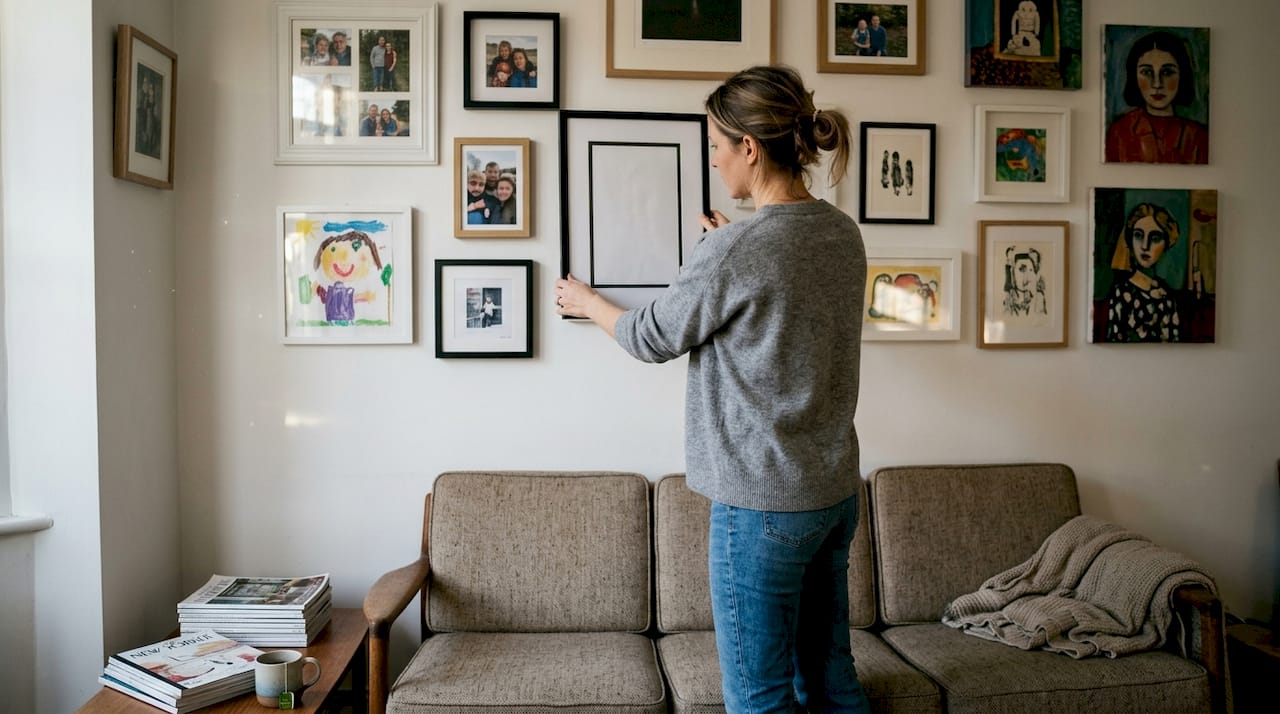
Most people assume that creating visual impact on a wall requires one large, statement painting. It’s a logical thought, but it’s also a missed opportunity. Gallery walls offer something far more compelling: a living, breathing arrangement that evolves with you, tells your story, and transforms any room into something genuinely personal. Whether you’re a homeowner looking to inject character into a blank wall or an interior designer seeking a flexible, client-pleasing solution, this guide covers the real benefits of gallery walls, how to plan them properly, and when to think twice before picking up a hammer.
Table of Contents
- The power of personalisation: Gallery walls as storytelling
- Visual dynamism: Why gallery walls captivate and energise
- Best practices: Planning and executing a gallery wall
- Limitations and when to avoid gallery walls
- Why gallery walls work and why they sometimes fail
- Bring your vision to life with bespoke wall art solutions
- Frequently asked questions
Key Takeaways
| Point | Details |
|---|---|
| Personalisation power | Gallery walls allow you to display personal stories and memories, making spaces truly your own. |
| Visual interest | Mixing frames, art, and textures creates movement and energy that single artworks can’t match. |
| Effective planning | Careful layout, correct spacing, and intentional curation are key to gallery wall success. |
| Know limitations | Avoid gallery walls in narrow, dim, or crowded spaces where they can look cluttered or dated. |
The power of personalisation: Gallery walls as storytelling
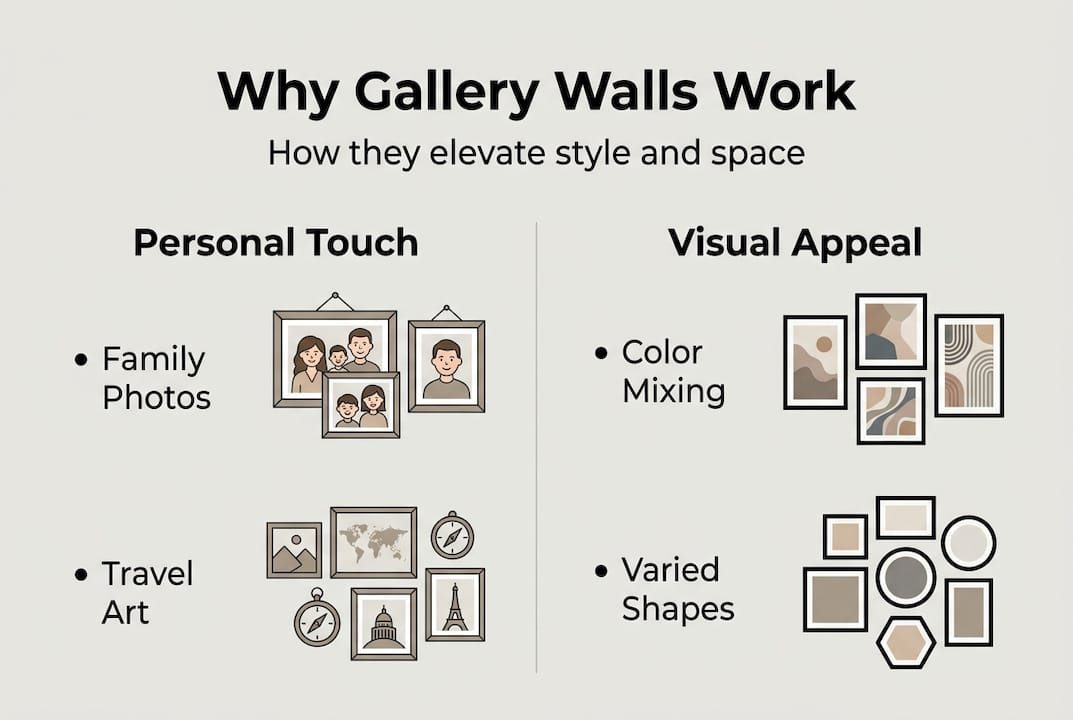
A gallery wall is not simply a collection of frames. It is a curated narrative, a visual autobiography that speaks before you say a word. Unlike a single artwork chosen for its colour palette or size, a gallery wall personalises your space by displaying art, photos, memories, and objects that reflect your personal stories and tastes.
Think about what makes a room feel truly lived-in and inviting. It is rarely the expensive sofa or the perfectly matched cushions. It is the corner where a framed photograph from a family holiday sits beside a small watercolour picked up at a local market. These combinations communicate identity in a way that a single decorative print simply cannot. Understanding the benefits of custom wall art goes hand in hand with understanding why gallery walls resonate so deeply with visitors.
Interior designers often describe gallery walls as the most emotionally effective tool in their repertoire. As one designer put it:
“A well-curated gallery wall doesn’t just fill a space. It creates a conversation. Every piece becomes a prompt, a story, a reason to linger.”
The beauty of this approach is its inclusivity. You are not restricted to fine art prints or matching frames. A gallery wall can feature:
- Travel photographs and postcards
- Children’s drawings or school artwork
- Vintage maps or botanical illustrations
- Typographic prints with meaningful quotes
- Pressed flowers or textile samples in frames
- Concert tickets, certificates, or handwritten notes
Each object anchors a moment in time. When you personalise wall art to reflect your own experiences, the result feels authentic rather than assembled. Guests do not just admire the wall. They ask about it. That is the difference between decoration and storytelling.
For interior designers working with clients, gallery walls also solve a common problem: clients who struggle to articulate their style. Asking someone to bring in a handful of meaningful objects and photographs is often far more revealing than any mood board. The gallery wall becomes a co-created portrait of the client’s life.
Visual dynamism: Why gallery walls captivate and energise
After understanding the personal storytelling of gallery walls, let’s explore how they transform plain walls into dynamic, engaging features.
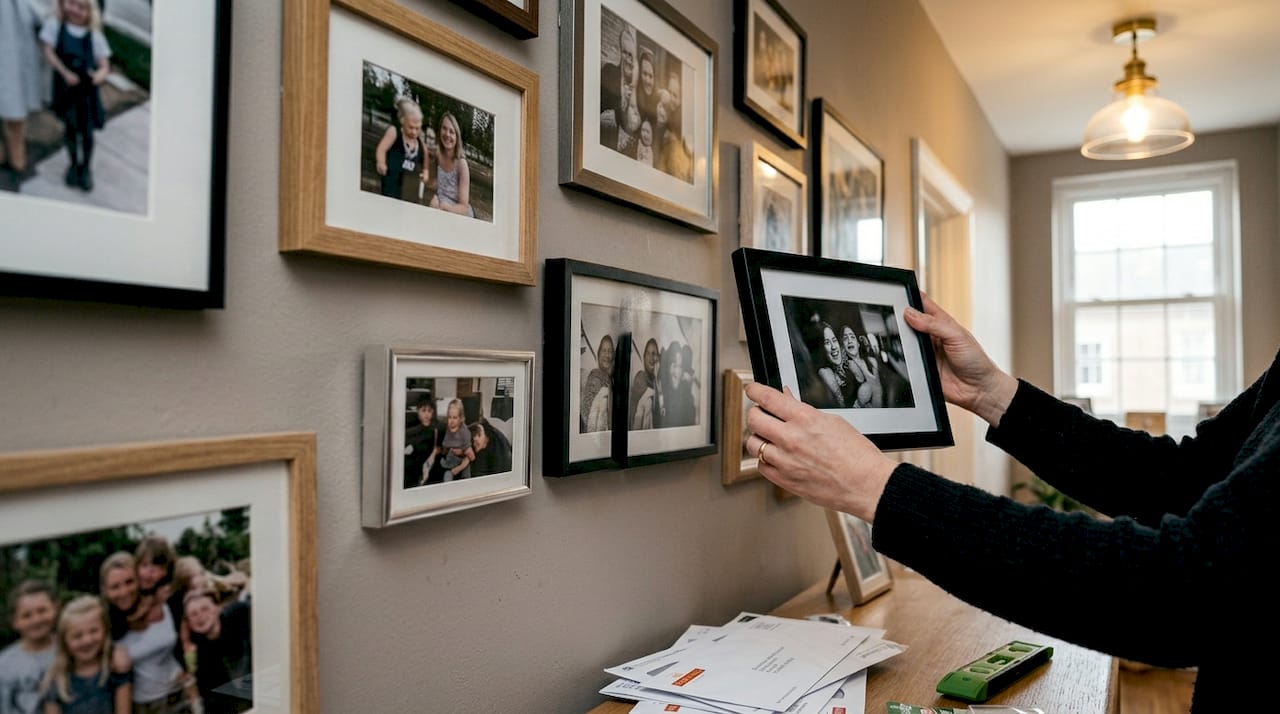
A single large artwork has presence. But it is a static presence. Your eye finds it, registers it, and moves on. A gallery wall works differently. It creates visual interest through variety in frame sizes, shapes, textures, and media, unlike single large pieces. Your eye travels across the arrangement, pausing, exploring, discovering details it missed before.
| Feature | Single artwork | Gallery wall |
|---|---|---|
| Visual movement | Low | High |
| Personalisation | Limited | Extensive |
| Adaptability over time | Difficult | Easy |
| Emotional engagement | Moderate | Strong |
| Cost flexibility | Often high | Very flexible |
This sense of movement is not accidental. It is the result of deliberate contrast: a large black-and-white photograph beside a small oil painting, a round mirror next to a rectangular print. The gallery walls explained guide on our blog explores how these contrasts create rhythm on a wall, much like a well-composed piece of music.
One of the most underrated advantages is adaptability. Your gallery wall does not need to stay the same. Add a new piece after a significant trip. Swap out a print that no longer feels right. Rotate seasonal artwork. A single large canvas offers none of this flexibility. When styling large wall art, the commitment is far greater, both financially and aesthetically.
Pro Tip: When mixing media, choose one unifying element, whether that is a consistent frame colour, a shared tonal palette, or a recurring theme. This gives the eye a thread to follow without making the arrangement feel rigid or predictable.
The risk, of course, is visual clutter. Martha Stewart’s guidance on gallery walls is clear: restraint matters. Filling every inch of wall space is not the goal. Breathing room between frames allows each piece to be seen rather than lost in the crowd.
Best practices: Planning and executing a gallery wall
Having seen how gallery walls energise a room, the next step is mastering their practical setup.
Planning is where most gallery walls succeed or fail. The good news is that with a clear process, the result is far more predictable than it looks. Follow these steps:
- Gather your pieces first. Collect everything you are considering before making a single decision about layout.
- Lay everything on the floor. Arrange your frames on the ground to experiment with compositions without making holes in the wall.
- Use paper templates. Trace each frame onto paper, cut it out, and tape it to the wall with low-tack tape to preview the arrangement.
- Establish your centrepiece. Choose the dominant piece and build outward from it.
- Mark your hanging points carefully. Use a spirit level and pencil before driving any nails.
For spacing and height, layout mechanics are straightforward: centre the arrangement at eye level, typically 57 to 60 inches from the floor, maintain 2 to 3 inches of spacing between frames, and aim for the overall arrangement to span two thirds to three quarters of the furniture width below it.
| Planning element | Recommended measurement |
|---|---|
| Centre height from floor | 57 to 60 inches |
| Spacing between frames | 2 to 3 inches |
| Width relative to furniture | Two thirds to three quarters |
| Minimum pieces for impact | 5 to 7 frames |
Our art selection guide offers detailed advice on choosing pieces that work together, while the wall art selection process guide helps you narrow down your options before you start arranging. If you are starting from scratch, the how to choose wall art guide is an excellent starting point.
Pro Tip: Cut paper templates in the exact size of each frame and tape them to the wall before hanging anything. This costs nothing and saves hours of frustration from misaligned nails.
Common mistakes include starting from the edges and working inward, which almost always results in a lopsided arrangement, and choosing pieces of too similar a size, which removes the visual rhythm that makes gallery walls compelling.
Limitations and when to avoid gallery walls
Practical guidance is only complete when you know what to avoid. Here’s when gallery walls may not be the best fit.
Gallery walls are not universally appropriate, and recognising this saves you from a costly and time-consuming mistake. Certain environments simply do not suit them, and forcing the format into the wrong space creates exactly the visual chaos you were trying to avoid.
Situations where gallery walls tend to underperform include:
- Narrow hallways. The arrangement competes with the architecture and makes the space feel even tighter.
- Small or minimalist rooms. A gallery wall in a room already working hard visually creates sensory overload.
- Dimly lit spaces. Without adequate light, the arrangement loses its impact and individual pieces become hard to read.
- Walls already busy with architectural features. Exposed brick, panelling, or bold wallpaper rarely benefit from additional layering.
- Frequently changing rental properties. The commitment of multiple hanging points may not be practical or permitted.
The most common complaint from homeowners who regret their gallery wall is that it feels chaotic rather than curated. This almost always comes down to a lack of intention during the selection process. As one interior design expert noted:
“Avoid clutter by curating with intention. Every piece on that wall should earn its place. If you cannot explain why it is there, it probably should not be.”
If your wall, room, or lighting situation is not ideal, there are alternatives. A single oversized print, a floating shelf with rotating artwork, or a carefully chosen sculptural piece can deliver personality without the complexity. Our guide on how to decorate living room walls covers these options in detail, helping you match the right approach to your specific space.
The gallery walls from Martha Stewart resource is particularly useful for understanding the edge cases, noting that arrangements can look dated when filled with uncurated items such as repetitive school portraits or mismatched frames with no unifying logic.
Why gallery walls work and why they sometimes fail
Here at Frametheworld, we have seen hundreds of gallery walls, both stunning and deeply regrettable. The difference is almost never about budget or the quality of individual pieces. It is about intention.
The gallery walls that genuinely elevate a space share one quality: every piece was chosen because it belongs, not because there was an empty spot to fill. Our expert guide to framing art makes this point clearly. Framing is not just a practical decision. It is an editorial one. The wrong frame on the right artwork can undermine the entire arrangement.
We also see a recurring pattern with clients who describe their gallery wall as feeling “messy” despite careful effort. Almost always, the issue is too many competing focal points with no hierarchy. One piece needs to lead. The others support. When everything shouts equally, nothing is heard. Restraint, counterintuitively, creates more impact than abundance.
Bring your vision to life with bespoke wall art solutions
Ready to create your own gallery wall? Here is how Frametheworld can help bring your vision to life.
At Frametheworld, we offer everything you need to build a gallery wall that genuinely reflects your style, from calming Wabi Sabi wall art to vibrant pop art prints that make a bold statement. If you have a specific vision in mind, our custom print service allows you to bring truly personal pieces into your arrangement, whether that is a bespoke illustration, a personalised typographic print, or a reproduction of a meaningful photograph. Browse by style, theme, and size to find pieces that work together beautifully, and let your wall tell a story worth remembering.
Frequently asked questions
Are gallery walls suitable for small spaces?
Gallery walls can overwhelm small or minimalist rooms, so they work best in spaces that are uncluttered with sufficient light. If the room is already busy, consider a simpler wall treatment instead.
What should I avoid displaying in a gallery wall?
Avoid filling the wall with too many similar or uncurated items like repetitive portraits, which can make the arrangement look dated. Aim for variety and a clear connecting theme.
How high should I hang a gallery wall?
Centre the arrangement at eye level, 57 to 60 inches from the floor, with 2 to 3 inches of spacing between individual frames.
Do gallery walls go out of style?
Gallery walls feel timeless when curated with intention but can look dated if uncurated or overcrowded. Thoughtful editing keeps the arrangement feeling fresh.
Can I combine different art styles in one gallery wall?
Absolutely. Variety in frame sizes, shapes, and media adds visual interest, provided each piece connects to your overall story or theme.

Leave a comment
This site is protected by hCaptcha and the hCaptcha Privacy Policy and Terms of Service apply.