

Many homeowners treat art as decorative filler, something to cover blank walls once furniture is in place. This overlooks art’s profound influence on how we perceive and experience interior spaces. Well-chosen artwork shapes spatial perception, emotional atmosphere, and personal identity within your home. Understanding how to select and position art transforms rooms from merely furnished to genuinely inspiring. This guide explores the strategic role of art in interior design, offering practical insights to help you curate spaces that resonate emotionally and visually.
Table of Contents
- How Art Shapes The Atmosphere And Perception Of Your Home
- Choosing Art: Scale, Proportion And Placement For Harmony
- The Impact Of Lighting And Natural Elements On Art Display
- Personalising Your Space Through Meaningful Art Choices
- Explore Bespoke Art To Transform Your Interiors
- Frequently Asked Questions
Key takeaways
| Point | Details |
|---|---|
| Spatial influence | Artwork affects both visual aesthetics and emotional experience, increasing perceived spaciousness up to 15% when chosen thoughtfully. |
| Scale matters | Proper proportion and placement create harmony, with client satisfaction rising 20-30% when art is well-scaled. |
| Lighting transforms | Illumination dramatically changes colour perception and mood, though direct sunlight can damage delicate works. |
| Personal expression | Art should reflect your identity and values, not simply fill empty wall space. |
| Thoughtful grouping | Treating multiple pieces as unified compositions enhances visual impact and storytelling. |
How art shapes the atmosphere and perception of your home
Artwork fundamentally alters how we experience interior environments. Research shows that art selection significantly impacts perceived spaciousness and comfort, with well-chosen pieces increasing spatial perception by up to 15% and comfort levels by 20-25%. This isn’t merely aesthetic preference. Art functions as what researchers describe as dynamic fields that actively shape how bodies move, feel, and think within physical space.
Unlike static decoration, artworks engage viewer senses and emotions through colour, composition, and subject matter. A vibrant abstract painting energises a room differently than a serene landscape photograph. The choices you make influence the energy and narrative each space communicates. Understanding how art shapes the mood of a room empowers you to create intentional atmospheres rather than accidental ones.
Consider these fundamental ways art influences interior perception:
- Large-scale works can make ceilings feel higher and rooms more expansive
- Horizontal pieces visually widen narrow spaces
- Vertical arrangements draw eyes upward, emphasising ceiling height
- Cool tones recede, creating depth and calm
- Warm colours advance, making spaces feel intimate and energetic
Art also functions as non-verbal communication, reflecting cultural values and personal identity. The pieces you display tell visitors about your interests, experiences, and aesthetic sensibilities before you say a word. This makes art selection a deeply personal decision that extends beyond matching colours to existing furnishings.
“Art is a form of communication reflecting human culture, thought, and emotion, making it central to how we experience and interpret our surroundings.”
Proper art selection enhances spatial balance by creating focal points that organise visual attention. Without artwork, rooms often feel incomplete or chaotic, lacking the visual anchors that guide how we navigate and understand space. Strategic placement establishes hierarchy, directing focus to architectural features or creating interest in otherwise overlooked areas.
Choosing art: scale, proportion and placement for harmony
Selecting appropriately sized artwork requires careful measurement of both wall space and surrounding furniture. Proportion and scale are critical to maintaining visual harmony throughout your interiors. Oversized works anchor rooms and define zones, whilst pieces that are too small feel lost and ineffective. Before purchasing, measure your wall dimensions and photograph the space to visualise different size options.
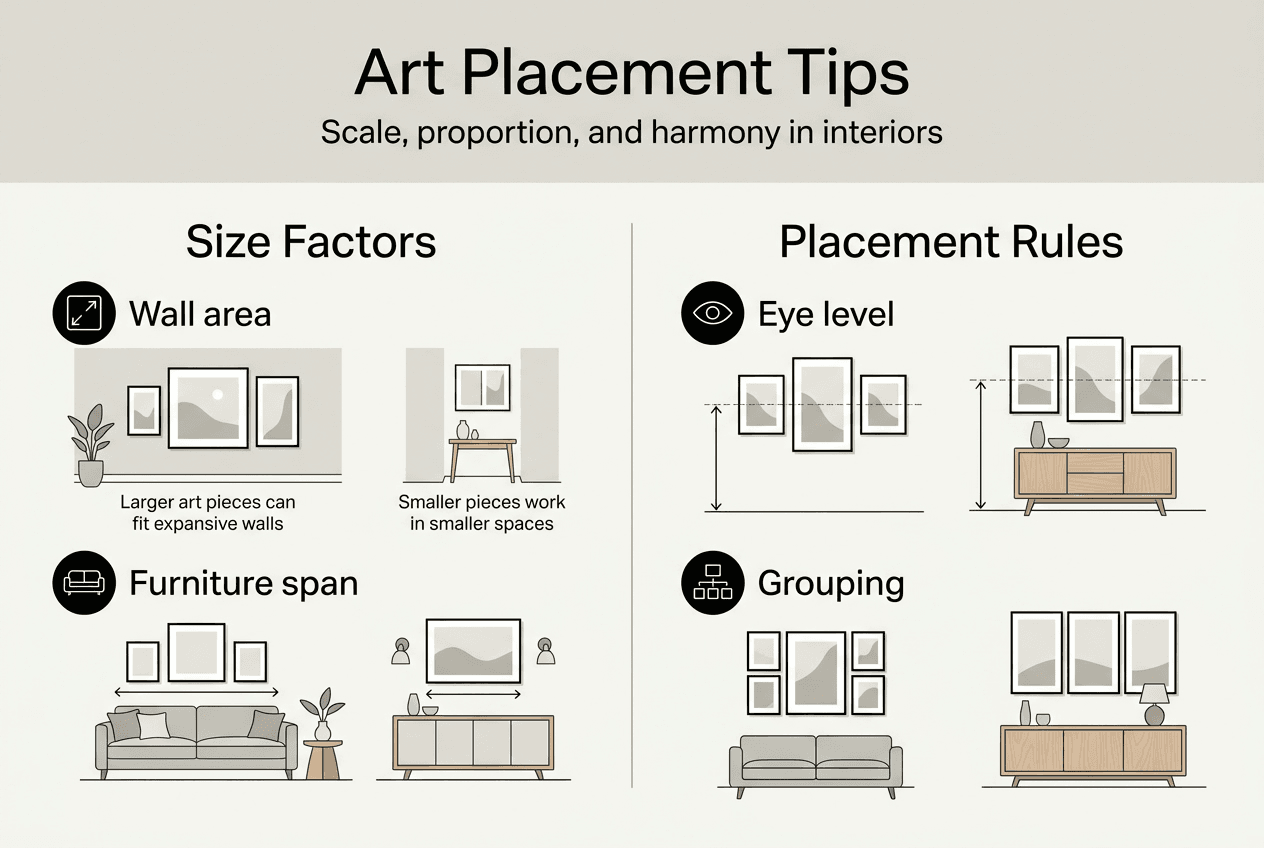
For artwork above sofas or beds, aim for pieces spanning two-thirds to three-quarters of the furniture width. This creates visual connection without overwhelming the arrangement. Single statement pieces work beautifully in this context, as do grouped arrangements treated as one unified composition. When hanging art, position the centre at eye level, typically 145-150 centimetres from the floor, adjusting for ceiling height and primary viewing position.
Follow these placement guidelines for optimal visual impact:
- Measure wall width and furniture dimensions before selecting art size
- Leave 15-20 centimetres between artwork and furniture tops
- Maintain consistent spacing (5-8 centimetres) between grouped pieces
- Adjust centre height in dining rooms where viewers are seated
- Create gallery walls by arranging pieces on the floor first, then transferring measurements to walls
Research confirms that properly scaled art makes rooms feel larger, with client satisfaction increasing 20-30% when pieces are well-proportioned and thoughtfully placed. This demonstrates the tangible impact of getting scale right. Your wall art selection guide should prioritise these technical considerations alongside aesthetic preferences.
| Scenario | Recommended approach | Visual effect |
|---|---|---|
| Large blank wall | Single oversized piece or symmetrical arrangement | Creates bold focal point, anchors space |
| Above sofa | 2/3 furniture width, 15-20cm gap | Balances furniture weight, unifies seating area |
| Narrow hallway | Vertical series or single tall piece | Draws eyes upward, emphasises height |
| Gallery wall | Mix of sizes, consistent spacing | Adds personality, creates collected aesthetic |
Pro Tip: Mixing mediums in gallery walls creates visual interest and depth. Combine photographs, paintings, and prints to achieve a curated, collected appearance that tells a richer story than uniform pieces alone.
Grouped artwork should function as a single visual unit. Lay out your arrangement on the floor, maintaining consistent spacing between pieces, then measure and transfer this layout to your wall. This prevents the scattered, disorganised appearance that undermines the impact of individual works. Treating multiple pieces as one composition ensures cohesive visual flow.
The impact of lighting and natural elements on art display
Lighting transforms how we perceive artwork, revealing texture, enhancing colour saturation, and creating dramatic mood shifts throughout the day. Proper illumination is essential to showcase art’s full visual potential, yet direct sunlight damages works on paper and photography through fading and degradation. Understanding this balance helps you position art strategically whilst preserving its longevity.
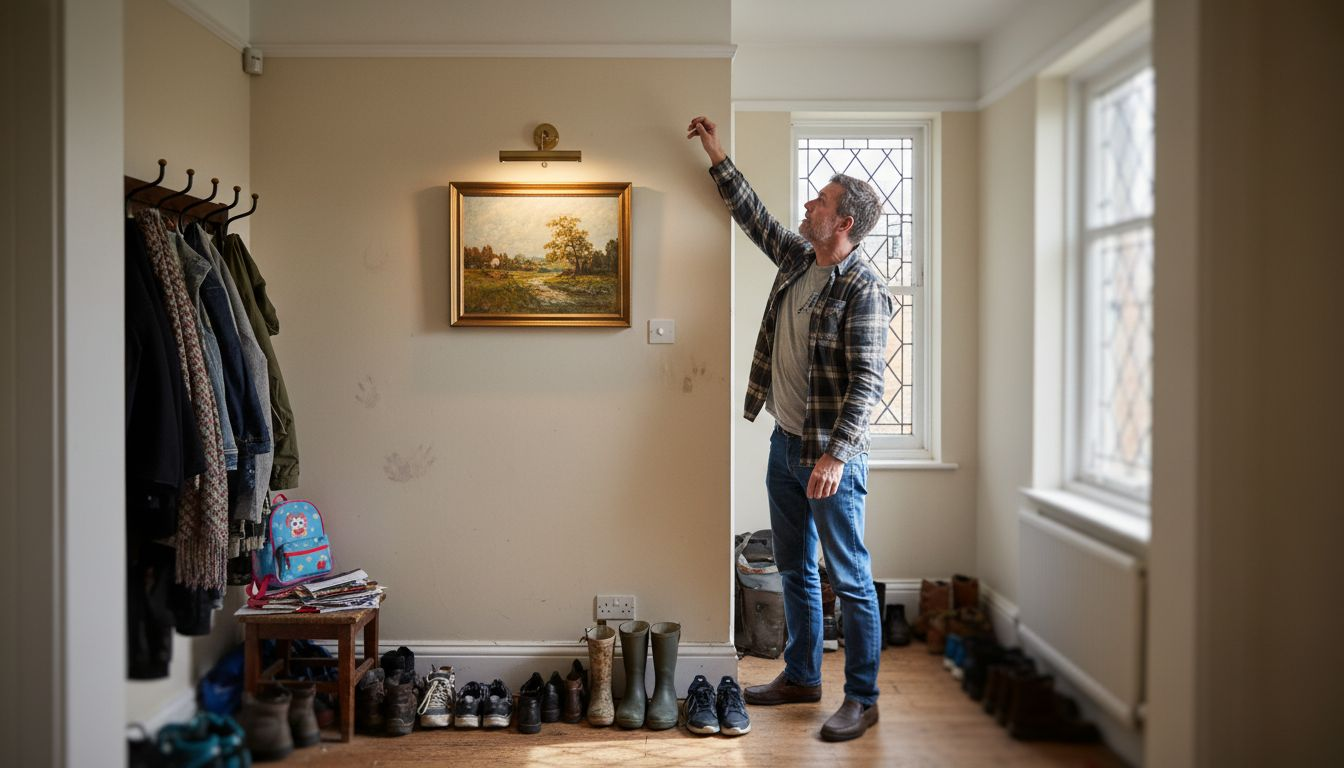
Natural light changes throughout the day, altering how colours appear and which details catch attention. Morning light tends cooler and softer, whilst afternoon sun creates warmer, more intense illumination. Consider these variations when selecting placement, particularly for pieces with subtle tonal shifts or delicate materials. UV-filtering glazing protects valuable works in sun-exposed locations without sacrificing visibility.
Artificial lighting offers control that natural light cannot. Picture lights, track lighting, and adjustable spotlights let you highlight specific works whilst creating ambient atmosphere. Warm LED bulbs (2700-3000K) complement most art without the heat damage of traditional incandescent bulbs. Cooler temperatures (4000K+) suit contemporary spaces but can make warm-toned paintings appear flat.
Incorporating greenery alongside artwork enhances both visual appeal and occupant wellbeing. Studies demonstrate that adding plants positively affects perceived restorativeness of interior spaces, making rooms feel more calming and rejuvenating. The organic forms and textures of plants create compelling contrast with geometric frames and flat surfaces, adding depth and vitality to art displays.
Consider these lighting and natural element strategies:
- Position delicate works perpendicular to windows to minimise direct sun exposure
- Use adjustable track lighting to accommodate seasonal light changes
- Layer ambient, task, and accent lighting for flexibility
- Place trailing plants on shelves above or beside framed works
- Group sculptural plants with abstract art for textural dialogue
Pro Tip: Test lighting at different times before finalising art placement. What looks perfect in morning light might disappear into shadow by evening, particularly in rooms with limited artificial illumination.
The arrangement of plants relative to artwork affects visual coherence. Symmetrical placement feels formal and structured, whilst asymmetrical groupings create dynamic, organic compositions. Both approaches work beautifully when executed intentionally. Understanding art in small spaces helps you balance these elements without overwhelming limited square footage.
Lighting and greenery together influence how occupants emotionally experience interior environments. Thoughtful integration of both elements creates layered, multisensory spaces that engage beyond pure visual aesthetics. This holistic approach to art display acknowledges that interiors affect us through multiple channels simultaneously.
Personalising your space through meaningful art choices
Selecting artwork that genuinely resonates transforms spaces from generically decorated to authentically personal. Art functions as communication reflecting culture, thought, and emotion, making your choices visible expressions of identity and values. This elevates art beyond decoration into meaningful curation that shapes how you and visitors experience your home.
Avoid impulsive purchases driven solely by colour coordination or trend following. Instead, seek pieces that evoke emotional responses, trigger memories, or represent ideas important to you. Art you connect with sustains interest far longer than pieces chosen merely to fill space. Take time to consider what stories you want your interiors to tell and which visual languages speak to you authentically.
Mass-produced prints lack the authenticity and character of original works or limited editions. Whilst budget constraints are real, investing in fewer meaningful pieces creates stronger impact than filling walls with generic imagery. Consider these approaches to building a personal collection:
- Support emerging artists whose work resonates with your aesthetic
- Commission custom pieces reflecting specific memories or places
- Collect works gradually, allowing your taste to evolve naturally
- Mix mediums and styles that share emotional or thematic connections
- Display personal photography professionally framed alongside purchased art
Research confirms that art should evoke viewer connection rather than serving as mere wall filler. This principle guides authentic curation. When pieces genuinely matter to you, their presence enriches daily life rather than fading into background noise. Understanding the role of art in home style helps you make selections aligned with both aesthetic goals and personal meaning.
Combining various mediums enriches visual narratives and creates layered atmospheres. Mixing paintings, photographs, textiles, and three-dimensional works adds textural variety that flat prints alone cannot achieve. This collected approach feels organic and personal, reflecting how real collections develop over time rather than appearing fully formed from a single shopping trip.
“Your art choices reveal and shape your identity, creating spaces that communicate who you are and what you value without requiring explanation.”
Consider how different rooms serve distinct functions and emotional needs. Energising abstract works might suit creative workspaces, whilst calming landscapes better serve bedrooms designed for rest. Matching art to room purpose enhances functional effectiveness whilst maintaining aesthetic coherence throughout your home. This strategic approach creates intentional atmospheres supporting how you actually use each space.
Art selection ultimately reflects ongoing dialogue between your evolving taste and the spaces you inhabit. Allow this process to unfold naturally rather than rushing to complete rooms immediately. The most compelling interiors develop gradually, accumulating meaningful pieces that together tell authentic, layered stories.
Explore bespoke art to transform your interiors
Transforming your interiors with carefully curated art becomes effortless when you have access to unique, customisable options that reflect your personal style. Frametheworld offers hand-painted originals and bespoke prints tailored specifically to your space requirements and aesthetic preferences. Whether you’re drawn to the organic beauty of wabi sabi wall art embracing imperfection or seeking custom print options in precise dimensions, the platform provides flexible solutions for both residential and commercial projects. For truly personal touches, custom oil paintings from photos capture cherished memories as gallery-worthy art. Expert guidance helps you integrate these pieces harmoniously, ensuring your selections enhance spatial balance whilst expressing your unique identity.
Frequently asked questions
What is the role of art in interior design?
Art serves multiple functions beyond decoration, including shaping spatial perception, creating focal points, establishing mood, and expressing personal identity. Well-chosen pieces can increase perceived room size by up to 15% whilst significantly enhancing comfort and emotional connection to spaces.
How do I choose the right size art for my wall?
Measure your wall width and surrounding furniture, then select pieces spanning two-thirds to three-quarters of furniture width for balanced proportion. Oversized works anchor spaces effectively, whilst smaller pieces risk feeling lost unless grouped as unified compositions.
Can art actually make a room feel larger?
Yes, strategic art selection and placement demonstrably affects spatial perception. Horizontal pieces widen narrow rooms, vertical arrangements emphasise ceiling height, and properly scaled works create visual depth that expands perceived dimensions.
Should I match art to my existing colour scheme?
Whilst colour coordination matters, prioritise emotional resonance and personal connection over perfect matching. Art that genuinely speaks to you sustains interest far longer than pieces chosen solely to complement furnishings, which you’ll likely change over time.
How high should I hang artwork?
Position the centre at eye level, typically 145-150 centimetres from the floor, adjusting for ceiling height and whether viewers are primarily standing or seated. In dining rooms, lower placement accommodates seated sightlines.
What lighting works best for displaying art?
Combine ambient lighting with adjustable spotlights or picture lights using warm LED bulbs (2700-3000K) to highlight works without heat damage. Avoid direct sunlight on delicate pieces, using UV-filtering glazing when necessary to prevent fading.


Leave a comment
This site is protected by hCaptcha and the hCaptcha Privacy Policy and Terms of Service apply.