

Choosing the right wall art for your home can feel like navigating a maze of styles, sizes, and options. This process matters because your walls influence the atmosphere, mood, and sense of personality in every room. By focusing on principles of composition in art and aligning them with your unique taste, you’ll discover how small changes make a dramatic difference in both harmony and impact. Prepare to transform your living space into a place that truly feels like yours.
Table of Contents
- Step 1: Assess Your Room And Define Your Style
- Step 2: Determine The Ideal Size And Placement
- Step 3: Browse And Shortlist Artworks By Theme
- Step 4: Customise Art Choices To Match Your Vision
- Step 5: Verify Harmony And Make Your Final Selection
Quick Summary
| Key Point | Explanation |
|---|---|
| 1. Assess your room’s style and function | Understand the décor, lighting, and dimensions of your space to avoid mismatched artwork that competes with existing elements. |
| 2. Choose the right size and placement | Artwork should proportionally relate to furniture, with centre points at eye level to create a balanced visual impact. |
| 3. Browse art by theme | Identify and explore cohesive themes that resonate with your style and the room’s purpose, focusing on similar colour palettes and subjects. |
| 4. Customise selections for personal resonance | Reflect on why certain pieces resonate and adjust choices accordingly, ensuring they reflect your identity and desired atmosphere. |
| 5. Verify harmony in your final choices | Gather all contenders together to assess whether they harmonise in colour, theme, and emotional impact before finalising selections. |
Step 1: Assess Your Room and Define Your Style
Before you hang a single piece of wall art, you need to understand the space you’re working with and the style that genuinely speaks to you. This foundational step shapes every decision you’ll make moving forward. Your room has its own personality, lighting conditions, colour palette, and proportions that all influence what wall art will work best. Taking time to assess these elements now prevents costly mistakes and ensures your chosen artwork enhances rather than competes with your existing décor.
Start by standing in your room and observing it with fresh eyes. What’s the dominant colour on your walls, and is it warm or cool toned? Notice how natural light moves through the space at different times of day, as this dramatically affects how art appears. Look at your furniture and existing décor. Are your pieces modern and minimalist, or do they lean towards traditional and ornate? Pay attention to the room’s proportions. A high ceiling with minimal furniture needs different art than a cosy, compact space. Consider the room’s function too. A quiet bedroom demands a different energy than a social living room. These observations form your room’s baseline, the foundation upon which you’ll build your art collection.
Now turn your focus to your personal style preferences. Think about colours that make you feel energised, calm, or inspired. Do you gravitate towards bold graphic designs, soft watercolours, abstract compositions, or photographic imagery? Understanding principles of composition in art such as balance, rhythm, and proportion helps you recognise what creates visual harmony in a space. You don’t need to memorise design terminology; simply notice what draws your eye in galleries, magazines, or online collections. Your instinctive preferences reveal genuine patterns about your aesthetic. Many homeowners find that an interior design style quiz helps clarify their preferences by exploring furniture choices, lighting preferences, and colour relationships. This clarity becomes invaluable when browsing art options.
The sweet spot exists where your room’s existing aesthetic meets your personal taste. If your living room features clean lines, neutral walls, and contemporary furniture, adding heavily ornamental vintage art might feel jarring. Conversely, if your space celebrates eclectic, layered styling, minimalist line drawings might feel too sparse. You’re not locked into one style permanently. Many people successfully blend styles by finding artworks that share common elements like colour palettes or compositional approaches. Document your observations. Take photos of your room from different angles and in different light. Jot down three to five adjectives that describe the feeling you want your space to evoke. These notes become your reference guide when you’re scrolling through collections on Frametheworld and trying to narrow down options.
Here is a summary of common room types and recommended art characteristics for each:
| Room Type | Ideal Art Themes | Suggested Colour Palette | Proportion Consideration |
|---|---|---|---|
| Living Room | Abstract, Urban, Vintage | Bold, varied, accent colours | Large, statement pieces or clusters |
| Bedroom | Botanical, Calm Scenes | Soft, soothing, muted tones | Medium, calming compositions |
| Hallway | Dynamic, Portraits | Neutral, contrasting shades | Small clusters or series pieces |
| Dining Area | Landscapes, Nature | Earthy, inviting colours | Horizontal, panoramic works |
| Study/Office | Graphic, Minimalist | Monochrome, cool hues | Asymmetrical or linear arrangements |
Pro tip: Create a mood board by gathering images of rooms you love, colours that appeal to you, and art styles that resonate with you, then look for common threads in themes, colours, and moods to guide your selections.
Step 2: Determine the Ideal Size and Placement
Getting the size and placement right transforms a good room into a cohesive, intentional space. Too small and your artwork disappears into the wall. Too large and it overwhelms the room and dominates every conversation. The right size and position create visual balance whilst drawing the eye exactly where you want it to go. This step requires a bit of measurement and some strategic thinking, but the payoff is absolutely worth it.
Start with the furniture piece you want your art to anchor. This might be a sofa, bed, console table, or fireplace. Your artwork should relate proportionally to this anchor point. As a general rule, if you’re hanging art above a sofa, the piece should be roughly two thirds to three quarters of the sofa’s width. This isn’t gospel, but it gives you a solid starting point. For a bed, aim for artwork that spans between 50 to 100 per cent of the bed’s width, depending on your bedroom’s scale and how bold you want to be. Above a console table or desk, smaller individual pieces often work better than one massive artwork. Understanding positive and negative space helps you see how your artwork interacts with the surrounding wall area. The empty wall around your art is just as important as the art itself. It gives the piece room to breathe and prevents your space from feeling cluttered or chaotic.
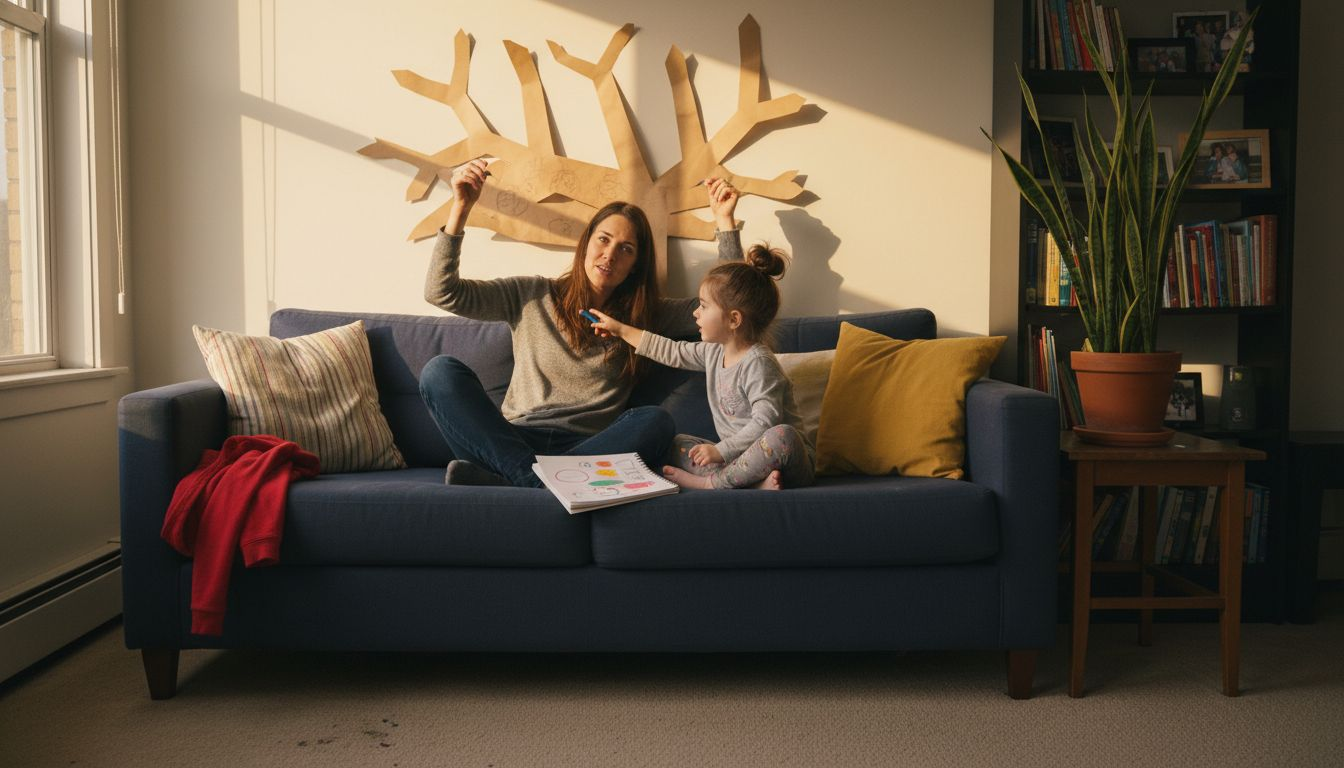
Now consider the wall itself. A small piece on a large, empty wall can feel lonely and lost. A massive piece on a modest wall creates tension and unease. Walk to your wall and stand about two metres back. This is roughly where you’ll view your art most often. Does the wall feel too bare? Too busy? Mentally picture different sizes and see what feels right. If you’re hanging multiple pieces, remember that principles of composition and balance apply to your gallery as much as they do to a single artwork. A cluster of smaller pieces arranged thoughtfully creates rhythm and visual interest. A single statement piece commands attention and creates a focal point. There’s no single correct approach. The key is intentionality. You’re not just filling wall space; you’re creating visual balance within the room’s overall design.
Placement height matters more than many people realise. Hang artwork with the centre roughly at eye level, approximately 152 to 165 centimetres from the floor. Above a sofa, give yourself about 25 to 30 centimetres of space between the top of the furniture and the bottom of the artwork. This creates visual connection without making the piece feel too close. In a hallway or stairwell, adjust for movement patterns and sight lines. Walk through the space and note where your eye naturally lands. That’s where your art should command attention. If you’re working with an awkward wall, remember that unconventional placement can become a design strength. A painting hung slightly off centre above a desk or a series of smaller pieces arranged in an asymmetrical grid can feel modern and intentional rather than sloppy.
Measure twice before you hang. Take a large piece of brown paper or old newspaper and tape it to the wall, cutting it to the exact dimensions of your artwork. Step back. Walk around the room. Live with it for a few hours if possible. This sounds excessive, but it prevents the frustration of rehang holes and second guessing. Once you’re confident in the size and placement, you’ll feel the rightness of it immediately. That moment when everything clicks into place makes the planning worthwhile.
Pro tip: Use painter’s tape and a pencil to mark the exact placement on your wall before making any holes, and take a photo of your brown paper mockup from several distances to review before committing to hanging.
Step 3: Browse and Shortlist Artworks by Theme
Now that you understand your space and your style, it’s time to explore actual artworks and begin building your shortlist. Browsing by theme rather than jumping randomly from piece to piece keeps you focused and helps you discover cohesive collections that work together. A thematic approach ensures your selections feel intentional and connected, whether you’re choosing a single statement piece or building a gallery wall across your home.
Start by defining two or three themes that resonate with the mood and style you’ve chosen. These might be landscape and nature, abstract colour and form, portraiture and figures, vintage illustration, botanical studies, or urban scenes. Your themes should connect to both your personal preferences and the room’s function. A bedroom might benefit from calming botanical or seascape themes, whilst a living room or hallway can embrace more dynamic abstract or historical themes. Many dedicated art platforms allow you to explore collections organised by theme and emotion, making it simple to narrow your search rather than feeling overwhelmed by endless options. Start with one theme and spend time scrolling through pieces. Don’t rush this process. Notice which artworks catch your eye immediately and which ones grow on you the more you look. Save or bookmark anything that creates a spark, even if you’re not entirely sure why. Your instinctive reactions are data about your genuine preferences.
As you browse, open a document or create a Pinterest board and start collecting images of pieces that appeal to you. Include the artwork title, artist name, size, and the source where you found it. This becomes invaluable when you’re comparing options later or discussing ideas with family members. Look for pieces that share common elements with ones you’ve already loved. Are they similar in colour palette, composition style, or subject matter? These patterns reveal what genuinely resonates with you beneath the surface. When you discover vast collections of artwork available for research and personal use, you’ll have access to thousands of quality images across multiple themes. This abundance is wonderful, but it can also feel paralyzing. Set yourself a limit. Browse for 20 or 30 minutes, then step away. Your best selections come from focused exploration, not endless scrolling.
Thematic browsing also helps with practical considerations. If you’re working with a specific colour scheme, searching for artworks within that palette narrows your options significantly. If your room has strong architectural features like exposed brick or high ceilings, certain themes and art styles will complement those elements better than others. Art that works as a design anchor in your room often shares visual or conceptual threads with your existing décor. Don’t force connections. If a piece doesn’t fit your themes or room naturally, it probably shouldn’t make your shortlist no matter how beautiful it is in isolation.
By the end of this step, you should have a shortlist of roughly 10 to 20 pieces across your chosen themes. This feels like a lot, but you’re not buying all of them. You’re creating options and seeing what feels right when you live with the images for a few days. Download your shortlisted images and view them on your phone or tablet in your actual room’s lighting. The way art looks on a screen in bright sunlight differs dramatically from how it appears on your wall. This reality check eliminates pieces that looked great online but don’t work in your space.
Pro tip: Create separate folders for each theme on your device and compare pieces side by side within each theme to identify the strongest contenders, then review your top five choices printed at actual size or projected onto your wall before making a final decision.
Step 4: Customise Art Choices to Match Your Vision
You’ve identified themes and shortlisted pieces that appeal to you. Now comes the part where your collection transforms from “nice artwork” into something that genuinely reflects who you are and what you want your home to say about you. Customising your art choices means going beyond surface-level aesthetics and connecting with pieces on a deeper, more personal level. This is where your living space becomes truly yours.
Start by reflecting on what your shortlisted artworks have in common beyond visual style. Do they explore particular emotions or moods? Do they celebrate specific subjects that matter to you? Are there recurring colour combinations, compositional approaches, or artistic techniques that keep appearing? These patterns reveal your authentic artistic vision without you having to articulate it perfectly. Understanding how artists express individual identity and vision through their work is equally useful for collectors. You’re not just selecting art; you’re curating a personal collection that tells your story. If you notice your shortlist is dominated by landscapes with water, seascapes, or nautical themes, that’s telling you something about what resonates with you emotionally. Perhaps water symbolises calm, travel, freedom, or cherished memories of seaside holidays. Lean into these discoveries. Your home should reflect what genuinely moves you, not what you think should move you.
Consider whether you want your art to tell a particular narrative across your home or speak to a specific chapter of your life. Some people create cohesive collections where every piece connects thematically. Others prefer variety that reflects different facets of their personality. Both approaches work, as long as they’re intentional. Think about unleashing your creative voice through self-reflection and exploring diverse artistic influences. You might explore a childhood passion, celebrate a particular place that shaped you, or showcase values important to your family. How your art shapes the mood of different spaces matters too. Your bedroom might feature calming, introspective pieces that promote rest, whilst your living room or hallway could celebrate bold, energising work that sparks conversation. Customisation means making deliberate choices about which pieces go where and why.
Frametheworld offers customisation options that extend beyond simply selecting ready made pieces. If you find artwork you love but it doesn’t quite fit your colour scheme or vision, consider whether you could customise it. Perhaps a print would work better in different dimensions, different framing, or with specific matting choices. Bespoke commissions allow you to work with artists to create pieces that align perfectly with your vision. This level of customisation transforms art from something you’ve chosen into something you’ve genuinely collaborated on. It becomes far more meaningful.
Before finalising your selections, live with your shortlist for a few more days. View the images in different lighting conditions. Imagine them in your space at different times of day. Ask yourself whether each piece makes you feel more like yourself when you look at it. Does it enhance the atmosphere you’re trying to create? Will you still love it in six months, or does it feel like a momentary trend? The pieces that survive this reality check are the ones worth acquiring. You’re not looking for perfection or universal acclaim. You’re looking for authenticity.
Pro tip: Request digital mockups from Frametheworld showing how your selected pieces will look framed and positioned in your actual room space, then share these mockups with trusted friends or family to gather perspectives before committing to your final choices.
Step 5: Verify Harmony and Make Your Final Selection
You’re nearly at the finish line. Your shortlist is refined, your preferences are clear, and you’ve customised your choices to match your vision. Now comes the critical final step: verifying that your selections work together harmoniously and actually enhance your space rather than compete with it. This is where you step back and look at the bigger picture before committing.
Start by gathering all your final contenders in one place. Print them out if possible, or view them together on a large screen. Look at them as a collection, not as individual pieces. Do the colours complement each other, or do some clash uncomfortably? Understanding harmony in art through complementary colours, shapes, and textures helps you see whether your selections create visual unity or visual chaos. If you’re selecting multiple pieces for the same room, imagine them hung together. Do they feel like they belong in the same space, or does each piece pull the eye in a completely different direction? This doesn’t mean everything needs to match perfectly. Living rooms often celebrate eclectic style beautifully. But there should be threads connecting your pieces, whether that’s a shared colour palette, compositional approach, or thematic connection. Without those threads, your walls feel scattered rather than curated.
Consider the physical space where each piece will hang. Pull up those room photos you took earlier or, better yet, stand in the actual space with your printed images. Hold them up at roughly the right height and position. How does the art interact with your furniture, architectural features, and existing décor? A soft watercolour landscape might feel beautiful in isolation but could get visually lost above a busy sofa with patterned cushions. A bold abstract piece might feel perfect above a minimalist console but overwhelming in a small bedroom. Applying principles of composition including balance, rhythm, and proportion ensures your selections work within the room’s overall design scheme. The artwork shouldn’t fight for attention with competing elements. It should complement and enhance what’s already there.
Now assess the emotional impact. Stand back and look at your final selections as you would experience them daily. Do they create the atmosphere you wanted? Do they make you feel the way you intended when you started this process? This is deeply personal and completely valid as a decision making criterion. One person’s energising bold statement is another person’s visual overstimulation. Trust your gut. If a piece makes you anxious or uncomfortable every time you look at it, no matter how objectively beautiful it is, it doesn’t belong in your home.
Use this reference table to compare key composition principles for selecting harmonious wall art:
| Design Principle | What It Means | Room Impact |
|---|---|---|
| Balance | Even visual weight | Creates calm, relaxing space |
| Rhythm | Repeating elements/movement | Adds energy, visual interest |
| Proportion | Relative size relationships | Maintains room harmony |
| Focal Point | Draws the viewer’s eye | Highlights main area |
With everything verified and feeling right, you’re ready to make your final selection. Order the pieces you’re committing to. Some people choose to display everything immediately. Others prefer a staggered approach, hanging pieces over time and living with them before adding more. Both strategies work. What matters is that you’re confident in your choices and excited about how they’ll transform your space. You’ve done the research, asked the right questions, and made intentional decisions. That confidence shows in your final result.
Pro tip: Take photographs of each piece positioned in your actual room using your phone, then view these photos at different times of day and in different lighting conditions to confirm they work before finalising your purchase.
Elevate Your Space with Thoughtfully Selected Wall Art
Choosing the perfect wall art can feel overwhelming as you navigate size, style, themes, and placement to create harmony in your home. This guide highlights the core challenges of assessing your room, understanding composition principles, and refining art choices to truly reflect your personal vision. If you struggle to find artwork that fits your space proportionally and emotionally or worry about clashing colours and styles disrupting your room’s balance, you are not alone.
At Frametheworld, we understand these pain points deeply and offer tailored solutions to bring your vision to life. From browsing by theme or style to customising dimensions and framing options, our platform makes it easy to build a cohesive, intentional collection. Use our bespoke services for a truly personalised touch that matches your room’s mood and your unique aesthetic. Don’t let uncertainty hold you back. Discover how to make art work for your home by exploring our curated selections today.
Ready to transform your walls with expertly chosen artwork that balances size, placement, and style? Visit Frametheworld to find a diverse range of prints and custom options designed to complement any space. Let us help you create visual harmony and a meaningful atmosphere with art that tells your story. Your perfect piece is waiting for you now.
Frequently Asked Questions
How do I assess my room before selecting wall art?
To assess your room, begin by observing its colours, lighting, and existing décor. Take note of the furniture style and room proportions as these factors will inform your art choices. Document your observations to create a reference guide while art shopping.
What size should my wall art be in relation to my furniture?
As a general guideline, artwork should be roughly two thirds to three quarters the width of the furniture it’s meant to anchor, such as a sofa or bed. Measure carefully before hanging, and consider using large paper to mock up the size on your wall to visualise placement.
How can I choose a theme for my wall art collection?
Define two or three themes that resonate with your desired mood and room function, such as landscapes for a calming bedroom or abstract pieces for an energising living room. Spend time browsing art collections based on these themes to start narrowing your options effectively.
What considerations should I make for the emotional impact of my art?
Reflect on how each piece makes you feel in your space. Stand back and evaluate if the artwork creates the atmosphere you want to achieve; it should make you feel at home and resonate with your personal style over time.
How do I verify that my shortlisted artworks work well together?
Gather all shortlisted pieces and compare them as a collection, checking for harmony in colour, composition, and overall style. Ensure that the art creates a cohesive visual impact without clashing or overwhelming the space.
Should I customise my art choices, and if so, how?
Yes, customising your art choices can greatly enhance your collection’s personal value. Look for options to resize or reframe pieces, or consider commissioning artists for bespoke works that fit your vision perfectly.
Recommended
- Finding the Painting That Feels Like Home | FrameTheWorld
- Art as a Design Anchor | FrameTheWorld
- How to Choose Art as a Gift | FrameTheWorld
- Styling Large Wall Art | FrameTheWorld
- Seaside Interiors: Elevated Design Details That Last - SAM Interiors
- Natural Onyx Solid Stone Wall Art | Handcrafted Stone and Wood Frame – Marmorique
- Canvas Chronicles – Lumber Lovin’


Leave a comment
This site is protected by hCaptcha and the hCaptcha Privacy Policy and Terms of Service apply.