

TL;DR:
- Bespoke artwork offers personalized, meaningful pieces tailored to your space and taste.
- Careful preparation, clear communication, and understanding contracts are essential for a successful commissioning.
- Custom art provides long-term value, unique connection, and enhances the story of your interior.
Generic wall art has a way of feeling almost right. You find a print that ticks most boxes, hang it up, and then spend the next year quietly noticing what is missing. It does not reflect your taste, your space, or your story. Bespoke artwork solves this precisely because it is built around you from the very first conversation. Whether you are a homeowner wanting something truly personal or an interior designer sourcing pieces for a client project, commissioning custom art delivers quality and meaning that ready-made prints simply cannot match. This guide walks you through every stage of the process, from preparation to delivery, so you can order with confidence.
Table of Contents
- What to consider before ordering bespoke artwork
- Step-by-step process: how to order bespoke artwork
- Avoiding common mistakes and issues
- What to expect after ordering: delivery, installation, and aftercare
- Why bespoke artwork is a smarter investment than ready-made pieces
- Where to find your perfect bespoke wall art
- Frequently asked questions
Key Takeaways
| Point | Details |
|---|---|
| Clear goals are crucial | Knowing your space, style, and budget makes the commission process much smoother. |
| Contracts protect you | Always agree contract terms, including deposits, revisions, and copyright. |
| Communication prevents mistakes | Regular updates with your artist ensure you get the artwork you expect. |
| Aftercare matters | Proper care instructions and support maintain your bespoke artwork’s beauty and value. |
What to consider before ordering bespoke artwork
Once you know bespoke artwork is the right choice, thoughtful preparation makes all the difference. Skipping this stage is where most first-time buyers lose time and money, so it pays to be thorough before you even approach an artist.
Start by clarifying your purpose. Are you creating something for your own living room, or sourcing artwork for a commercial interior such as a hotel lobby or office? Personal and commercial commissions have different requirements around copyright, reproduction rights, and usage licences, so getting this straight early shapes everything that follows. If you want to understand the full value of going custom, it helps to read about why people choose to personalise artwork for your home before committing.
Next, measure your wall. This sounds obvious, but it is one of the most commonly overlooked steps. Note the height and width of the available space, any furniture or architectural features that might affect proportions, and the direction and quality of natural light in the room. Alongside dimensions, note your style preferences. Are you drawn to abstract, botanical, landscape, or portraiture? Gather visual references from magazines, social media, or browsing examples of bespoke artwork to articulate what appeals to you.
Budget is another critical conversation to have with yourself before you speak to an artist. Bespoke work is not cheap, and nor should it be. Expect to pay a deposit upfront, typically between 30 and 50 per cent of the total fee. As a general rule with commissioned fine art, deposits are non-refundable, revisions are limited to one or two rounds, and the artist retains copyright unless your contract specifies otherwise. These are standard industry norms, not red flags.
Here is a quick summary of what to prepare before commissioning:
- Your intended use (personal or commercial)
- Wall dimensions and room style notes
- A mood board or visual references
- A realistic budget range, including deposit
- Questions about the artist’s portfolio and past commissions
- A clear list of must-haves versus nice-to-haves
When evaluating artists, look at their portfolio for consistency of quality, not just individual pieces you like. Review their communication style during early enquiries. A good artist asks as many questions as you do.
| Preparation step | Why it matters |
|---|---|
| Measure the space | Ensures artwork fits proportionally |
| Define use (personal or commercial) | Affects copyright and licensing terms |
| Set a budget with deposit allowance | Prevents financial surprises mid-commission |
| Gather visual references | Helps the artist understand your vision |
| Review artist’s portfolio | Confirms style compatibility and quality |
Pro Tip: If you are commissioning artwork for a commercial or shared space, involve all relevant stakeholders in the brief before approaching the artist. Late-stage input from a business partner or client often means costly extra revisions.
Step-by-step process: how to order bespoke artwork
With your preparations complete, it is time to move into the commissioning process itself. Each step builds on the last, so resist the temptation to rush ahead.
-
Initial consultation. Contact the artist or studio and share your vision. Bring your dimensions, references, and budget. A good consultation feels like a creative conversation, not a transaction. Expect the artist to ask about your timeline, the room’s colour palette, and the emotional tone you want the piece to carry.
-
Receive and review the quote. The artist will send a detailed quote covering materials, labour, timeline, and payment structure. Read it carefully. If anything is unclear, ask before signing anything. This is also the moment to confirm the deposit amount and total cost.
-
Sign the contract. Never commission bespoke work without a written agreement. The contract should cover copyright ownership, the number of revisions included, the delivery timeline, and any usage rights for commercial projects. Standard practice means contracts are essential, with a deposit of 30 to 50 per cent and limited revisions built in. For a thorough breakdown of this stage, the guide to ordering custom artwork is worth reading.
-
Provide references and a detailed brief. Once the contract is signed and the deposit paid, supply any reference images, colour swatches, or material samples that will help the artist understand your expectations. The more specific you are, the less guesswork is involved.
-
Review sketches or mockups. Most artists share early sketches or digital mockups before starting the final piece. This is your primary opportunity to redirect the work. Use your allocated revision rounds wisely and give clear, constructive feedback rather than vague impressions.
-
Approve the final version and pay the balance. Once you are satisfied with the direction, give written approval. Pay the remaining balance as agreed, and confirm delivery logistics, including packaging, courier choice, and any installation requirements. For more detail on each stage, the bespoke wall art step-by-step guide covers the full journey.
| Stage | Your action | Artist’s action |
|---|---|---|
| Consultation | Share vision and references | Ask questions, assess feasibility |
| Quote and contract | Review and sign | Issue quote, draft contract |
| Brief submission | Provide references and brief | Begin initial sketches |
| Mockup review | Give feedback within revision limit | Refine based on feedback |
| Final approval | Approve and pay balance | Complete and prepare for delivery |
Pro Tip: Ask the artist to share progress photos at key stages during creation. Catching a misunderstanding early, before the work is complete, saves both parties significant time and frustration.
Avoiding common mistakes and issues
Even with careful planning, certain pitfalls can trip up first-time buyers and experienced designers alike. Knowing what to watch for puts you in a much stronger position.
The most common mistake is not reading the contract carefully enough. Non-refundable deposits, limited revision clauses, and copyright terms can all come as a surprise if you have not read the small print. Given that due diligence in contracts is considered essential in fine art acquisition, treating your agreement as a serious legal document rather than a formality is non-negotiable.
Another frequent issue is submitting a vague creative brief. Telling an artist you want something “calm and modern” gives them very little to work with. A strong brief includes specific colour references, examples of work you admire, the room’s existing furniture and tones, and the feeling you want the piece to evoke. The more precise you are, the closer the first sketch will be to your vision.
Mistakes around copyright and reproduction rights are particularly relevant for commercial buyers. If you intend to reproduce the artwork on marketing materials, in multiple locations, or online, this must be agreed and documented in the contract before work begins. Assuming you own all rights simply because you paid for the piece is a misunderstanding that can have real consequences.
Other common pitfalls include:
- Setting an unrealistic timeline. Bespoke work cannot be rushed. Build buffer time into any project schedule.
- Skipping project updates. Silence during the creation phase is risky. Regular check-ins keep the work on track.
- Neglecting provenance for higher-value pieces. Ask for documentation of materials, process, and authenticity.
“Approach every commission with the same diligence you would apply to any significant purchase: read the contract, understand your rights, and communicate clearly throughout.”
For a broader view of the wall art procurement process or to better understand the commissioning artwork benefits before you start, both are useful resources to bookmark.
Pro Tip: For any bespoke piece valued above a few hundred pounds, request provenance information in writing, including the materials used and the artist’s process. This protects you if the piece is ever resold or insured.
What to expect after ordering: delivery, installation, and aftercare
After placing your order, knowing what comes next helps you prepare for a smooth experience. The post-order phase is often where expectations diverge from reality, so clarity here saves a great deal of stress.
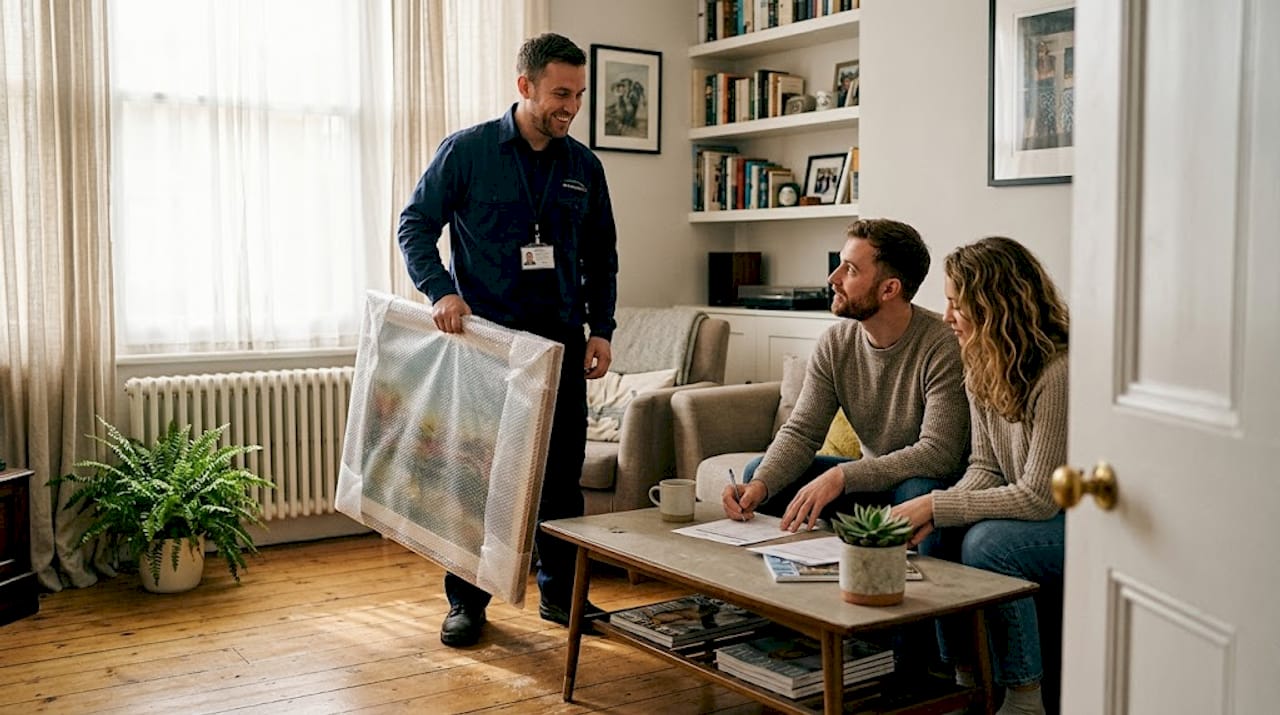
Delivery timelines should be clearly stated in your contract. Most bespoke pieces take between four and eight weeks from brief to delivery, though larger or more complex works can take longer. Your artwork may arrive ready to hang or require professional installation, particularly for oversized canvases, multi-panel works, or pieces with specialist framing.
Here is what to expect and prepare for after ordering:
- Packaging and shipping. Quality providers use specialist packaging to protect artwork in transit. Ask in advance how the piece will be packaged and which courier will be used.
- Installation support. For larger works, professional installation may be offered or recommended. Do not attempt to hang heavy or fragile pieces without the right fixings.
- Hybrid solutions. Some buyers blend custom and ready-made artwork across a space, and as noted in guidance on fine art acquisition logistics, hybrid approaches can work well when managed with experienced advisors.
- Aftercare instructions. Ask your artist or provider for cleaning and maintenance guidance specific to the materials used. Oil paintings, watercolours, and prints each require different care.
- After-sale support. A reputable artist or studio will remain available for questions after delivery, including advice on framing, lighting, and long-term preservation.
Research consistently shows that clear communication around delivery and aftercare is one of the strongest drivers of customer satisfaction. Whether you are creating personalised artwork for a home or sourcing commercial wall art for a professional project, the post-delivery experience shapes how you feel about the piece long term.
80% of customers report higher satisfaction when delivery timelines and aftercare instructions are communicated clearly before the artwork arrives.
Why bespoke artwork is a smarter investment than ready-made pieces
With the logistics covered, it is worth stepping back to consider why bespoke artwork stands apart, not just practically, but in terms of genuine long-term value.
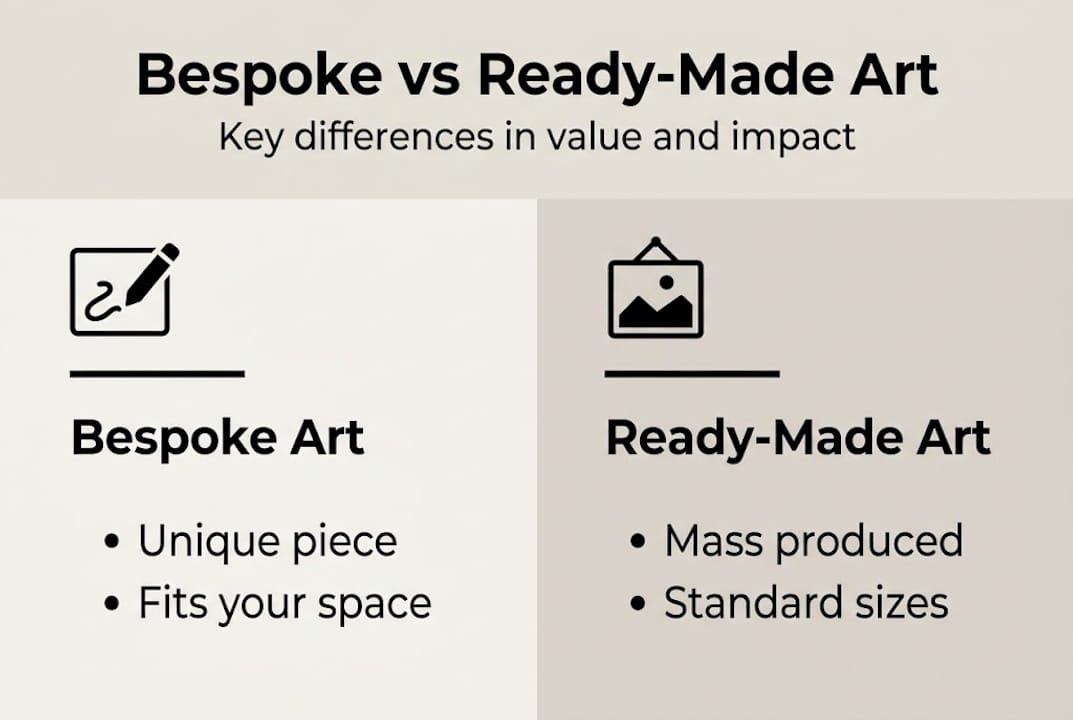
Mass-market prints are designed to appeal to as many people as possible, which means they often connect deeply with none of them. A bespoke piece, by contrast, is built around your specific taste, space, and story. That connection does not fade. In fact, it tends to deepen over time as the artwork becomes part of how you experience your home or workspace every day.
Custom pieces also carry conversation value that off-the-shelf art simply cannot replicate. When someone asks about a painting on your wall and you can explain its origin, its meaning, and the process behind it, that is a fundamentally different experience to pointing at a print bought from a generic catalogue. Understanding how to personalise artwork advantages extend beyond aesthetics helps make the case for commissioning rather than browsing.
There is also a financial argument. Well-made bespoke work from a reputable artist is less likely to date, more likely to retain value, and can even appreciate over time. The process of commissioning builds a genuine relationship between you and the creative, making the final piece something with real provenance and personal significance.
Where to find your perfect bespoke wall art
Now that you are ready for your own bespoke piece, connecting with the right service is straightforward. At Frame the World, we make the commissioning process as simple and enjoyable as possible, from your first enquiry through to delivery. Our bespoke artwork service is designed for both homeowners and design professionals, with a range of customisable styles, formats, and sizes to suit any interior. Whether you are drawn to the quiet beauty of wabi sabi wall art or prefer the richness of handmade oil paintings, our team is here to help you find or create exactly the right piece. Get in touch and let us bring your vision to life.
Frequently asked questions
How long does it usually take to receive bespoke artwork?
Most bespoke pieces take between 4 and 8 weeks from initial brief to delivery, depending on complexity and artist availability. Your agreed timeline should always be documented in the contract.
Can I request multiple changes to the artwork?
Typically, 1 to 2 rounds of revisions are included as standard in contracts; additional changes may incur extra costs, so use your revision rounds thoughtfully.
Who owns the copyright for commissioned bespoke artwork?
Unless your contract states otherwise, the artist retains copyright and you receive a licence to display the work. Always clarify this before signing.
Are deposits for bespoke artwork refundable?
Non-refundable deposits are standard practice in commissioned art, covering the artist’s time and materials from the outset.
How are delivery and aftercare handled for bespoke artwork?
Reputable artists and studios arrange secure delivery and provide aftercare guidance specific to the materials used; delivery and aftercare terms should always be confirmed in your agreement before work begins.


Leave a comment
This site is protected by hCaptcha and the hCaptcha Privacy Policy and Terms of Service apply.