

TL;DR:
- Decorative prints, especially nature-inspired ones, significantly improve mental well-being and create focal points.
- Choosing the right style, scale, and personalized art enhances emotional impact and interior coherence.
- Start with an emotionally resonant print and design your space around it for more intentional interiors.
Decorative prints are doing far more work in your home than you might realise. Most people choose them after everything else is decided, as a final flourish once the furniture is arranged and the paint has dried. Yet the evidence tells a very different story. Biophilic prints reduce depression and anxiety symptoms significantly over twelve months, suggesting that what hangs on your walls is quietly shaping how you feel every single day. This guide will show you exactly why decorative prints matter, which types work best for specific goals, and how to select, scale, and personalise them for genuinely transformative results.
Table of Contents
- How decorative prints transform spaces
- Evidence-based design: Why print selection matters
- Style and scale: Maximising impact with the right print
- Personalisation and practical application
- A new mindset: Why prints are a designer’s power tool
- Discover unique prints for your next project
- Frequently asked questions
Key Takeaways
| Point | Details |
|---|---|
| Boost wellbeing | Nature-inspired prints can reduce stress and improve mood, supported by scientific evidence. |
| Define your style | Decorative prints personalise spaces and reflect unique tastes, making rooms more inviting. |
| Maximise impact | Choosing the right print size, style, and placement transforms a space’s look and feel. |
| Easy personalisation | Custom and personal prints foster emotional connection and help make a home truly yours. |
How decorative prints transform spaces
The word “decorative” is doing a disservice here. It suggests something pleasant but essentially passive, a bit like a cushion or a candle. In reality, the right print can anchor a room’s entire emotional register, turning an anxious, cluttered atmosphere into something calm and purposeful. That is not a small claim, and it is not merely the opinion of enthusiastic interior stylists.
Research consistently shows that nature-inspired and biophilic imagery, art that incorporates leaves, water, botanicals, and organic forms, produces measurable psychological benefits. Nature prints reduce depression and anxiety by up to 78% when experienced regularly in a living environment. That figure tends to stop people in their tracks, and rightly so. It reframes the act of choosing wall art as something closer to a health decision than a styling exercise.
Beyond wellbeing, prints serve clear functional roles in interior design. A bold, large-format print placed above a sofa immediately creates a focal point, pulling the room together and giving the eye somewhere to rest. Prints also define zones in open-plan spaces without needing physical dividers. A gallery wall in a reading corner signals that this area is for quiet and focus, even in a busy household.
“Art is not what you see, but what you make others see.” This principle applies directly to how a well-chosen print communicates feeling before a single word is spoken in a room.
The statistics support how widely this is already understood. 68% of consumers integrate personal art collections into their living spaces, making it one of the most common forms of home personalisation. Yet many still treat it as an afterthought rather than a design priority.
Here is a quick summary of what decorative prints genuinely achieve when chosen well:
- Mood regulation: calm, energise, or comfort depending on subject and palette
- Focus and productivity: biophilic imagery reduces mental fatigue in home offices
- Personal expression: communicates personality before guests even sit down
- Style coherence: ties together furniture, textiles, and colour schemes
- Zone definition: signals purpose and atmosphere in open layouts
For more inspiration on creating standout interiors with prints or understanding how to elevate your space with prints, both are worth exploring as starting points.
Evidence-based design: Why print selection matters
Knowing that prints affect mood is one thing. Knowing which prints to choose for a specific outcome is far more useful. This is where evidence-based interior design becomes genuinely practical rather than theoretical.
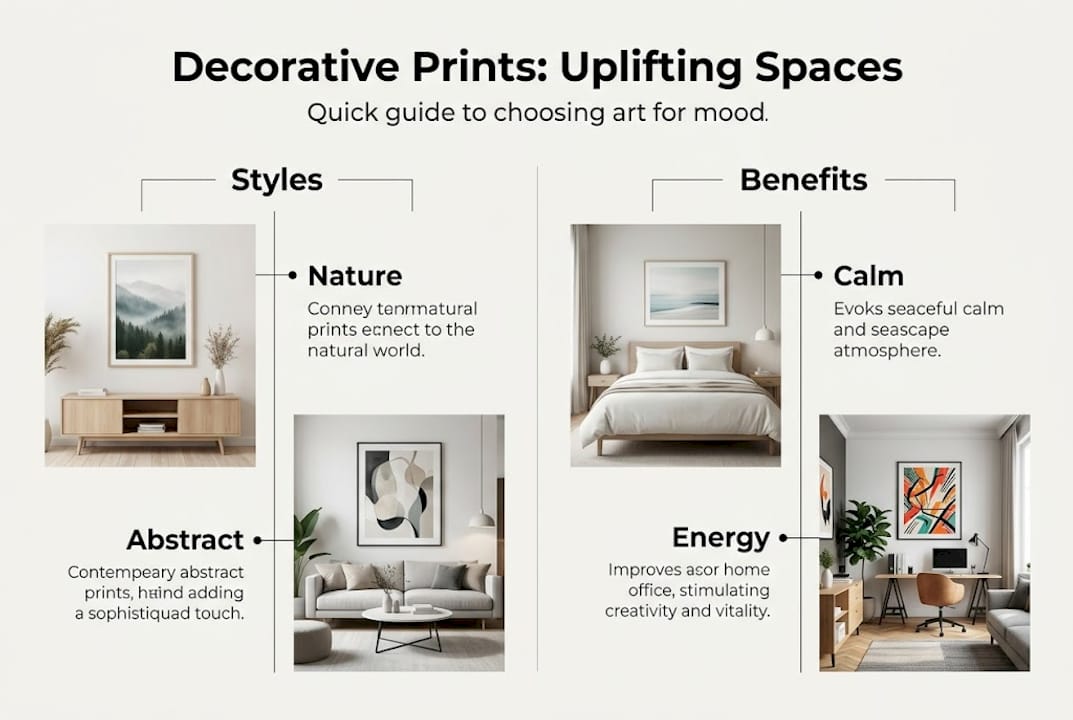
Nature and biophilic prints are the most thoroughly researched category. Studies show that nature prints outperform urban and generic imagery for stress reduction by 15 to 30%, which is a meaningful margin. Botanical illustrations, landscape photography, and organic abstract forms all fall within this category and are currently among the strongest performers for bedrooms, home offices, and living rooms.
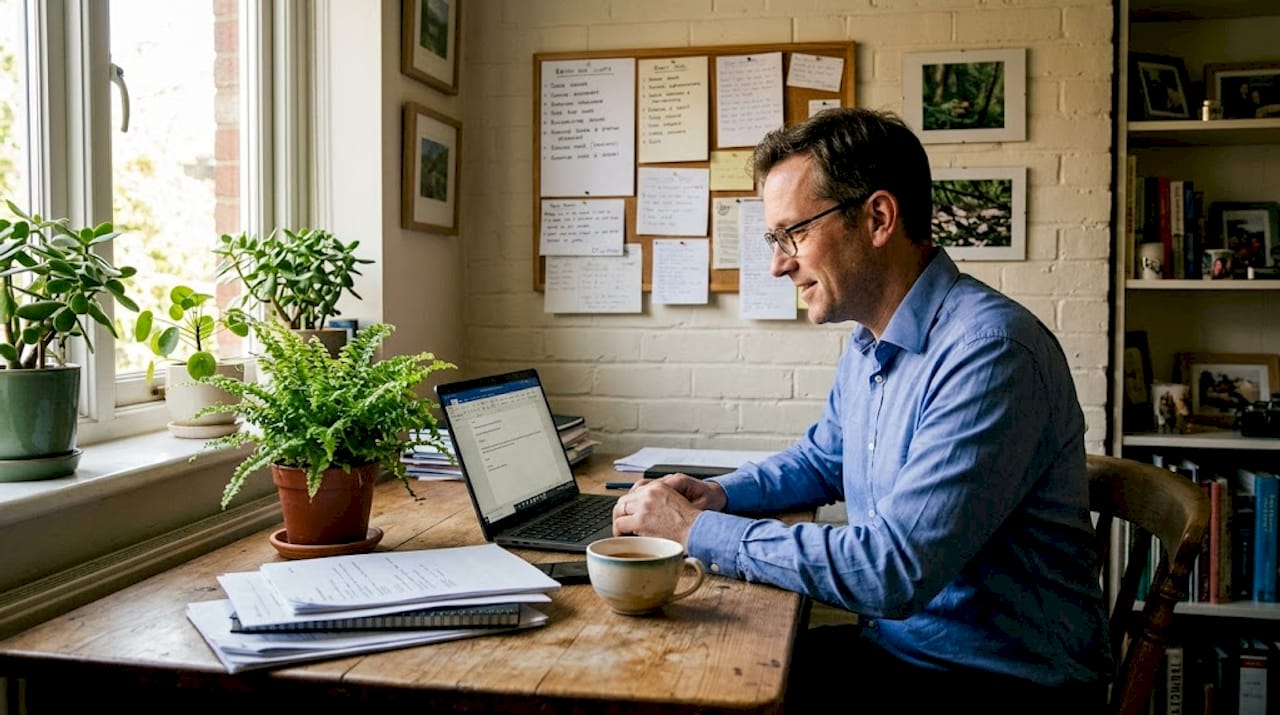
Abstract prints offer different benefits. Bold geometric or expressive abstract work can energise a space and stimulate creative thinking, making it well-suited to studios, dining rooms, or social areas. The risk is in scale and execution. A small abstract print on a large wall looks tentative rather than intentional. When exploring print trends for 2026, oversized abstract formats are consistently recommended for impact.
Minimalist prints are often misunderstood. People assume that less detail means less impact. In fact, a single well-composed minimalist piece in the right setting can be the most arresting thing in a room. The danger is the opposite of what most expect: minimalist wall art fails most often when it is undersized, poorly lit, or placed in a room that is already visually sparse.
Comparison of print styles by mood and use case:
| Print style | Best rooms | Mood effect | Common pitfall |
|---|---|---|---|
| Nature/biophilic | Bedroom, office | Calm, restorative | Too small to read clearly |
| Abstract/expressive | Studio, dining room | Energising, stimulating | Clashes with busy décor |
| Minimalist/line art | Living room, hallway | Clean, modern | Disappears in large spaces |
| Pop/graphic | Kitchen, playroom | Playful, bold | Can overwhelm the room |
| Urban/architectural | Study, loft | Sophisticated, sharp | Feels cold without warmth |
Pro Tip: Before buying any print, photograph your wall in natural and artificial light at different times of day. Colours shift dramatically, and a print that looks warm in the shop can appear cold and flat on a north-facing wall at dusk.
Steps for matching print type to your mood goal:
- Define the emotional outcome you want (calm, inspired, energised, comforted)
- Identify the dominant light quality in the room (natural, warm artificial, cool LED)
- Choose a subject category based on the research (nature for calm, abstract for energy)
- Select a palette that either complements or deliberately contrasts the existing scheme
- Test scale with a paper template before committing to purchase
Style and scale: Maximising impact with the right print
Subject and style get most of the attention when people choose prints. Scale, placement, and format are consistently underestimated, and they are just as important. A beautiful print in the wrong size or position will not deliver the impact it is capable of.
Oversized prints are strongly recommended by interior designers for creating bold focal points, particularly in living rooms and hallways. The reason is simple: a large print commands attention and eliminates the visual clutter of multiple smaller pieces fighting for space. One confident statement beats six tentative ones every time.
For smaller spaces and urban homes, the format matters enormously. Canvas prints suit urban interiors particularly well because they are lightweight, easy to reposition, and do not require heavy fixings. In a rented city flat, that flexibility is genuinely valuable.
Pro Tip: The most common mistake in print placement is hanging art too high. The centre of a print should sit at roughly eye level, around 145 to 152 centimetres from the floor, regardless of ceiling height. In dining rooms, drop it slightly lower so the art is visible when seated.
Factors to consider when selecting size and placement:
- Wall dimensions: measure the wall and aim for art that covers 60 to 75% of the available width
- Furniture layout: anchor prints above key pieces such as sofas or beds, with a gap of 15 to 20 centimetres
- Lighting: side lighting or a dedicated picture light brings out texture and depth
- Viewing distance: very detailed prints need space to be appreciated; bold, simple prints work well in corridors
- Room proportion: tall, narrow prints suit high-ceilinged rooms; wide horizontals ground low-ceilinged spaces
For specific guidance, the resources on planning large scale art and urban wall art ideas offer detailed, room-by-room advice. If you want to understand why scale alone transforms a room, the case for oversized prints for impact is made very clearly with real examples.
Personalisation and practical application
Choosing the right style and scale matters enormously, but the prints that tend to resonate most deeply are those with a personal connection. This is not nostalgia talking. There is a real psychological dimension to displaying art that reflects who you are or where you have been.
Personal and custom art strengthens the sense that a space is genuinely yours rather than borrowed from a catalogue. As noted earlier, 68% of consumers already incorporate personal art into their homes, which suggests the instinct is widespread even if the execution is sometimes uncertain.
The challenge for many people is knowing how to commission something bespoke without it feeling complicated or expensive. In practice, it is a straightforward process when you know what to ask for. A good guide on creating personalised artwork walks through the key decisions clearly.
Steps to commission or personalise a decorative print:
- Identify a subject, location, or visual theme with personal meaning (a city skyline, a botanical from a family garden, a favourite colour story)
- Gather reference images and note which styles, palettes, and formats appeal to you
- Set a clear brief including dimensions, format (canvas, framed, unframed), and the room it is intended for
- Review proofs or sketches carefully, focusing on how the piece will read at a distance
- Once delivered, allow time to live with it before deciding on final placement
Pro Tip: The most visually rich interiors mix commissioned or personal pieces with curated purchased prints. Aim for roughly one third personal art and two thirds carefully selected prints. This balance keeps things cohesive while still telling a genuine story.
Avoiding over-clustering is equally important. Many people feel that more art means more personality, but a wall crammed with frames dilutes the impact of every individual piece. Restraint is its own form of curation. For inspiration on what bespoke work can look like in practice, bespoke artwork examples and the broader guide to personalising your artwork are both worth a look.
A new mindset: Why prints are a designer’s power tool
Here is the uncomfortable truth about how most people approach wall art: they treat it as punctuation rather than language. The furniture is chosen, the paint colour is settled, the rug is ordered, and then, almost as an afterthought, someone says “we should probably get something for the walls.” At that point the prints have to fit what already exists rather than shaping what could be.
The designers who consistently produce the most memorable interiors tend to do the opposite. They start with an emotionally resonant image, a print that captures exactly how the room should feel, and build outward from there. Colours are drawn from it. Textures respond to it. The whole scheme gains coherence because it has a clear emotional centre.
This is not an abstract or impractical idea. It is a genuine shift in process, and it is available to homeowners just as much as to professionals. Choosing a print that moves you first, then designing with prints in mind as the foundation, produces results that feel considered and intentional rather than assembled. The print stops being the finishing touch. It becomes the starting point.
Discover unique prints for your next project
Everything covered in this guide points towards one practical next step: finding prints that genuinely suit your space, your mood goals, and your sense of identity. At Frametheworld, the collections are organised to make that process as direct as possible. Whether you are drawn to the quiet, organic textures of Wabi Sabi wall art or want something bold and energising from the colourful wall art collection, there is a starting point that fits. For homeowners or designers with a specific vision, the option to commission a custom print means your walls can tell exactly the story you have in mind, at exactly the scale and format your space demands.
Frequently asked questions
Do decorative prints really affect mood and wellbeing?
Yes. Nature-inspired prints reduce depression and anxiety symptoms measurably over time, making print selection a genuine wellbeing consideration rather than a purely aesthetic one.
What makes decorative prints better than plain walls?
Prints create visual interest, define zones, and deliver psychological benefits that plain walls simply lack, from mood regulation to a stronger sense of personal identity in a space.
Is large-scale wall art suitable for small homes?
Absolutely. Canvas prints suit urban and compact spaces particularly well because they are lightweight, flexible, and create strong visual impact without overcrowding a room.
How can I personalise decorative prints for my home?
Many services, including Frametheworld, offer custom-commissioned prints where you specify the subject, palette, size, and format, ensuring every piece is genuinely meaningful to the people living with it.


Leave a comment
This site is protected by hCaptcha and the hCaptcha Privacy Policy and Terms of Service apply.