

Strategic artwork installations in commercial developments deliver foot traffic increases of up to 47% alongside measurable improvements in tenant productivity and property valuations. Yet many developers still view art as optional decoration rather than a core investment strategy. This guide examines the evidence-backed impacts of targeted artwork programmes and provides actionable frameworks for integrating art into your development projects to maximise both commercial returns and occupant well-being.
Table of Contents
- The transformative impact of artwork in developments
- Why artwork is an investment, not an expense
- How artwork shapes user well-being and productivity
- Best practices: Integrating art into your development project
- Common pitfalls and how to avoid them
- Elevate your development with curated artwork
- Frequently asked questions
Key Takeaways
| Point | Details |
|---|---|
| Artwork drives value | Strategic art installations can boost property values, attract visitors, and help developments stand out in a crowded market. |
| Well-being and productivity | Quality artwork reduces stress and can increase productivity for occupants by up to 32 percent. |
| ROI is tangible | Investment in artwork offers measurable returns, including faster lease-ups and premium tenants. |
| Integration is critical | Success depends on involving experts early and designing art selections for each space’s function and audience. |
The transformative impact of artwork in developments
Recent research demonstrates that strategic art installations increase foot traffic by 30-47% and reduce crime by 28% in commercial developments. These aren’t marginal gains—they represent fundamental shifts in how spaces perform and how communities engage with them.
Consider Wilton Park’s transformation. After integrating public art installations, the development attracted 1.1 million visitors with 77% community value agreement. What was previously underutilised space became a thriving destination, demonstrating how thoughtful artwork placement converts cold environments into magnetic community hubs.
Properties with strategic art installations saw foot traffic increases of 30-47%, transforming underperforming spaces into high-value destinations.
The mechanics behind these results involve careful consideration of artwork type, placement, and context. Different types of wall art serve distinct functions—wayfinding in complex buildings, identity anchoring in lobbies, or atmosphere creation in residential common areas. Understanding the value of artwork requires examining both immediate spatial impacts and long-term asset appreciation.
| Metric | Before Art Installation | After Art Installation | Improvement |
|---|---|---|---|
| Foot Traffic | Baseline | +30-47% | Significant increase |
| Crime Incidents | Baseline | -28% | Notable reduction |
| Community Engagement | Low | 77% positive | Strong approval |
| Visitor Numbers | Limited | 1.1M annually | Substantial growth |
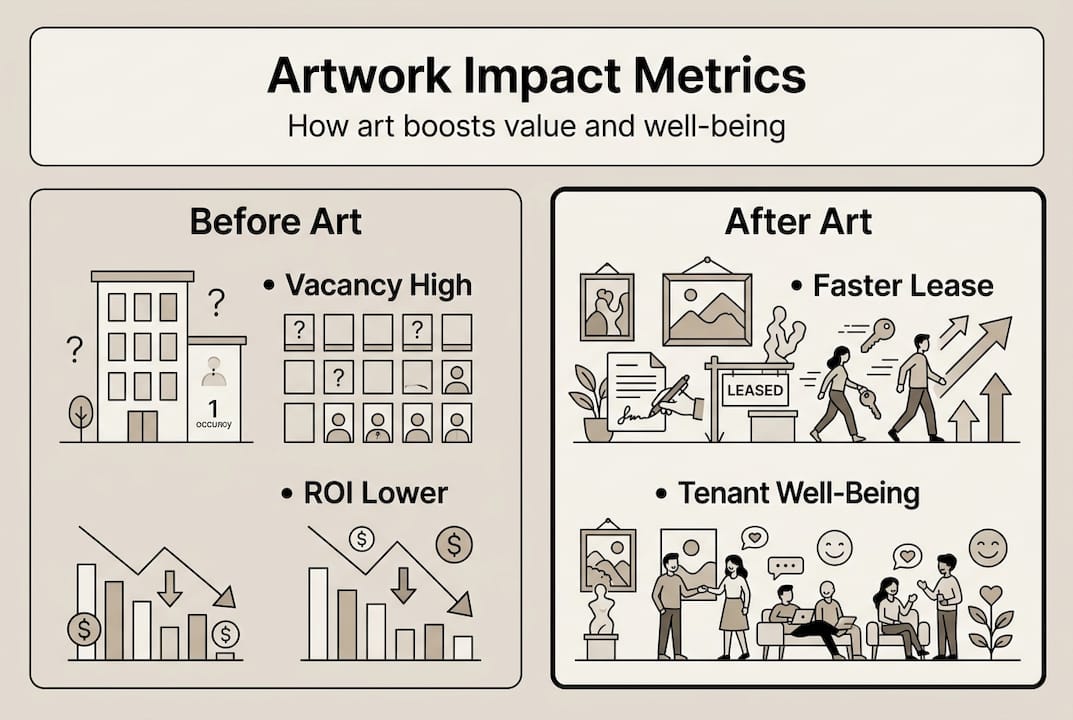
Large scale art benefits extend beyond aesthetics. Monumental installations create memorable landmarks that enhance navigation, establish brand identity, and generate social media engagement—all contributing to measurable commercial outcomes.
Why artwork is an investment, not an expense
Unlike standard fixtures that depreciate immediately, artwork appreciates over time when properly selected and maintained. This fundamental difference repositions art from operational expense to capital investment with tangible returns.
The Wynwood district provides compelling evidence. Public art drove faster lease-ups, higher rents, and premium tenants, transforming a neglected warehouse area into one of Miami’s most valuable commercial zones. Developers who integrated art early captured significantly higher returns than those who treated it as afterthought decoration.
Government models validate this approach. The GSA allocates 0.5% of construction costs specifically for site-specific art in federal buildings, recognising that this investment enhances property performance and longevity. This benchmark provides useful guidance for private developments seeking optimal allocation ratios.
| Investment Type | Initial Cost | Depreciation | Tenant Impact | Payback Period |
|---|---|---|---|---|
| Standard Landscaping | Medium | High | Moderate | 3-5 years |
| Technology Features | High | Very High | Moderate | 2-3 years |
| Strategic Artwork | Medium | Negative (appreciates) | High | 2-4 years |
| Generic Amenities | Low-Medium | High | Low | 5-7 years |
The financial logic becomes clearer when examining art in show homes. Properties featuring curated artwork sell faster and command premium pricing because buyers immediately perceive elevated quality and lifestyle potential. This same principle applies across commercial, residential, and mixed-use developments.
Pro Tip: Establish competitive selection processes with professional panels including architects, artists, and community representatives. This approach maximises long-term asset value whilst avoiding the popularity contest pitfall that often produces mediocre results.
The benefits of custom wall art extend to brand differentiation. Bespoke installations create unique identity markers that distinguish your development from competitors, supporting premium positioning and tenant retention.
How artwork shapes user well-being and productivity
Research demonstrates that artwork in developments enhances well-being and boosts productivity by up to 32%. These aren’t subjective improvements—they’re measurable outcomes that directly impact tenant satisfaction, retention rates, and ultimately, your bottom line.
The Evidence-Based Design (EBD) methodology provides the framework for achieving these results. Rather than selecting art based on personal preference, EBD uses research to match artwork types with specific psychological and physiological outcomes. Nature imagery reduces anxiety in healthcare settings. Abstract patterns stimulate creativity in office environments. Cultural references build community connection in residential developments.
Nature imagery significantly reduces anxiety and stress levels, particularly in healthcare facilities and high-pressure office environments where occupant well-being directly impacts performance.
Consider these tangible benefits of strategically curated artwork:
- Reduced staff stress and burnout in workplace environments, leading to lower turnover costs
- Improved patient outcomes in healthcare facilities through calming visual environments
- Enhanced cognitive performance in educational and office settings via stimulating yet non-distracting installations
- Stronger community identity in residential developments through locally relevant artistic themes
- Better wayfinding and navigation in complex buildings using art as memorable landmarks
The practical application varies by context. Quiet zones in offices benefit from art for mindfulness—serene landscapes or abstract compositions that encourage mental restoration. Hospital corridors require carefully selected imagery that reduces patient anxiety whilst supporting staff morale during long shifts. Residential lobbies need artwork that creates immediate emotional connection, signalling quality and care.
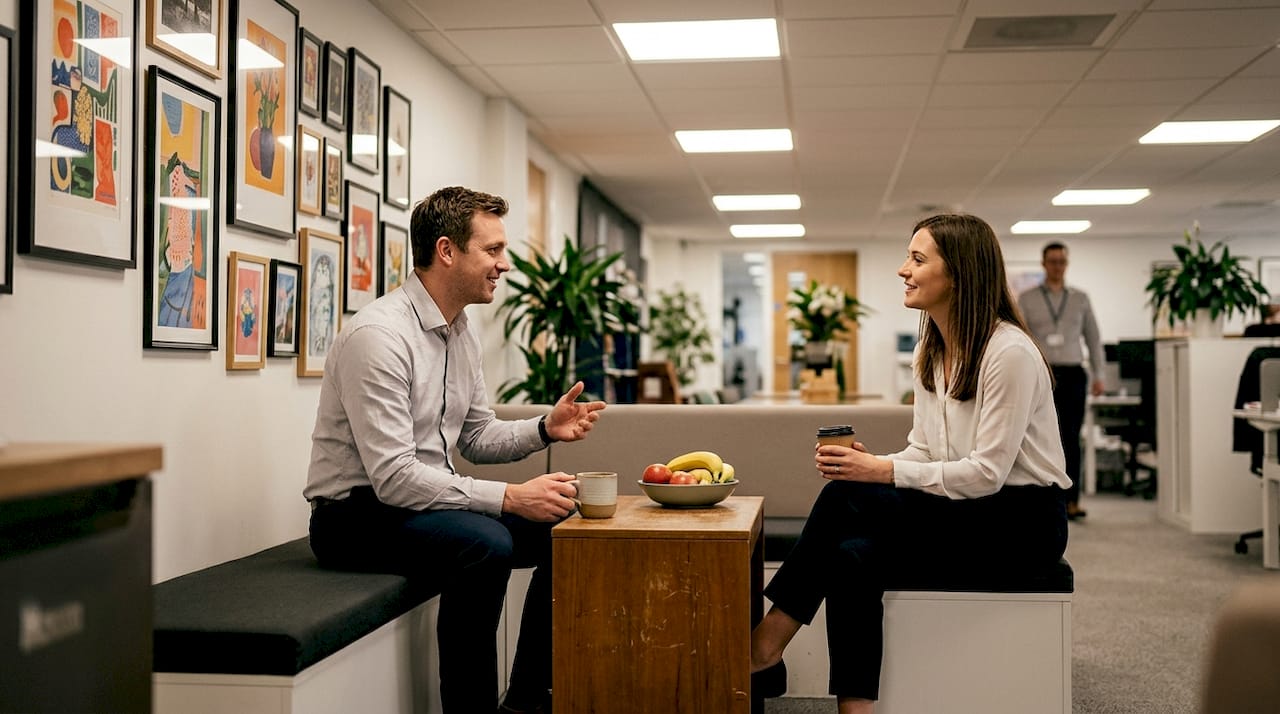
Understanding the role of art in interior design means recognising that artwork functions as environmental programming. You’re not simply decorating walls—you’re engineering psychological responses that shape how people experience, use, and value your spaces.
Best practices: Integrating art into your development project
Successful art integration requires systematic planning from project inception through long-term maintenance. Follow this framework to maximise impact whilst avoiding common pitfalls:
-
Engage art consultants during initial design phases, not after construction completes. Early involvement allows artwork to inform architectural decisions, lighting design, and spatial planning.
-
Establish clear objectives and metrics for what you want artwork to achieve—whether that’s wayfinding, brand identity, well-being enhancement, or community engagement.
-
Allocate appropriate budget using the GSA’s 0.5% guideline as a starting benchmark, adjusting based on project scale and objectives.
-
Create selection panels combining architectural expertise, artistic knowledge, and community representation to balance professional curation with local relevance.
-
Implement competitive selection processes that attract high-calibre artists whilst maintaining quality standards and avoiding popularity contests.
-
Plan for installation logistics including structural requirements, lighting, security, and maintenance from the outset.
-
Develop maintenance protocols ensuring artwork remains in optimal condition throughout the building’s lifecycle.
The mechanics of effective integration involve using competitive selection with panels that include architects and community stakeholders, then applying EBD principles for targeted impacts. This structured approach prevents the ad-hoc decision-making that typically produces disappointing results.
Pro Tip: Engage intermediaries or specialist art consultants who understand both artistic vision and development realities. These professionals bridge the gap between creative ambition and practical implementation, ensuring projects deliver on both aesthetic and commercial objectives.
Context-specific considerations matter enormously. Healthcare environments require calming nature imagery selected through evidence-based guidelines. High-traffic lobbies need durable installations that function as wayfinding anchors. Residential developments benefit from art that tells a brand story, creating emotional resonance with target demographics.
The importance of early artist collaboration cannot be overstated. When artists participate from design inception, they create integrated solutions that enhance architecture rather than merely decorating finished spaces. This collaborative approach produces the most impactful and enduring results.
Even constrained spaces benefit from thoughtful planning. Strategies for art in small spaces can transform cramped areas into memorable features that enhance perceived value throughout your development.
Common pitfalls and how to avoid them
Even well-intentioned art programmes fail when developers overlook critical implementation details. Understanding these common mistakes helps you avoid expensive corrections and disappointing outcomes.
Major pitfalls include:
- Commissioning artwork too late in the development process, forcing compromises on placement, scale, and integration
- Selecting generic or culturally inappropriate art that fails to resonate with target audiences or worse, causes offence
- Underestimating durability requirements in high-traffic areas, leading to premature deterioration and replacement costs
- Neglecting maintenance planning, resulting in faded, damaged, or outdated installations that detract from property value
- Prioritising cost over quality, producing mediocre results that fail to deliver expected returns
- Ignoring Evidence-Based Design principles, selecting art based on personal preference rather than research-backed outcomes
Real-world examples illustrate these risks. Multicultural residential developments have faced tenant backlash over artwork featuring imagery offensive to specific cultural groups—problems easily avoided through proper consultation. Office lobbies featuring underwhelming generic prints fail to create the premium impression necessary for attracting quality tenants.
Healthcare environments require particular care. Calming nature views prove most effective, whilst abstract or unsettling imagery can increase patient anxiety. High-traffic lobbies need durable, professionally installed pieces that function as wayfinding anchors rather than delicate works requiring constant maintenance.
The solution involves prioritising expert review at every phase. Engaging art consultants early and using competitive selection processes ensures professional standards throughout planning, acquisition, installation, and maintenance.
When choosing wall art types, consider longevity alongside immediate impact. Trendy styles may date quickly, whilst timeless approaches maintain relevance and value over decades.
Elevate your development with curated artwork
FrameTheWorld specialises in sourcing and commissioning artwork specifically designed for property developments. Whether you need statement pieces for commercial lobbies, cohesive collections for residential common areas, or bespoke installations that tell your brand story, we provide solutions tailored to your project’s unique requirements.
Our approach combines artistic expertise with practical understanding of development realities. We help you define objectives, establish appropriate budgets, select artists or artworks that align with your vision, and manage installation logistics from concept through completion. The result is artwork that enhances both immediate appeal and long-term asset value.
Explore our Wabi Sabi wall art collection for developments seeking understated elegance and timeless appeal. For projects requiring unique solutions, our custom print service creates bespoke pieces scaled and tailored to your specific spaces. Developments targeting vibrant, energetic atmospheres benefit from our colourful paintings collection, featuring works that create immediate emotional impact.
We understand that successful artwork integration requires balancing aesthetic vision with commercial objectives, cultural sensitivity with creative ambition, and immediate impact with enduring value. Let us help you transform your development through strategically curated artwork that delivers measurable returns.
Frequently asked questions
What measurable ROI does artwork offer in property developments?
Strategic art installations increase foot traffic by up to 47% and reduce crime by 28%, whilst driving faster lease-ups with premium tenants. These impacts translate directly to enhanced property valuations and improved commercial performance.
How does artwork impact tenant well-being and productivity?
Research demonstrates that workplace art boosts productivity by up to 32% through reduced stress and enhanced environmental quality. Evidence-Based Design principles allow targeted selection for specific psychological outcomes.
When should art consultants be involved in a project?
Engage art consultants during initial design phases for optimal integration and impact. Early involvement allows artwork to inform architectural decisions, lighting design, and spatial planning rather than functioning as afterthought decoration.
Is there a standard budget guideline for art installations?
The GSA recommends allocating 0.5% of construction costs for site-specific art in federal buildings. This benchmark provides useful guidance for private developments, though optimal allocation varies based on project type and objectives.


Leave a comment
This site is protected by hCaptcha and the hCaptcha Privacy Policy and Terms of Service apply.