

Choosing the right art print size can feel overwhelming when you’re staring at a blank wall. You want something that enhances your room, not something that disappears into the background or dominates the space awkwardly. Understanding art print sizing transforms this challenge into an opportunity to create balanced, visually appealing interiors. This guide walks you through everything you need to know about selecting print dimensions that complement your walls, furniture, and overall design vision, whether you’re decorating a cosy bedroom or an expansive living area.
Table of Contents
- Key takeaways
- Understanding art print sizing and why it matters
- Common art print size categories and choosing based on room and wall
- How framing and placement affect perceived size and balance
- Practical steps to measure, select and arrange art prints by size
- Enhance your home with perfectly sized art prints from Frame the World
- Frequently asked questions
Key Takeaways
| Point | Details |
|---|---|
| Ideal print sizing | The right print size transforms a room from merely decorated to thoughtfully designed, establishing focal points and visual rhythm. |
| Proportion to furniture | Measure wall dimensions and ensure the print relates proportionally to furniture, typically spanning about two thirds to three quarters of the sofa width. |
| Viewing distance matters | Prints in spacious rooms can be bolder whilst those in corridors or intimate spaces benefit from more modest dimensions. |
| Room function matters | Living rooms may showcase statement pieces for impact, whereas bedrooms usually suit calmer smaller prints to promote relaxation. |
Understanding art print sizing and why it matters
Art print sizing refers to selecting dimensions that harmonise with your space proportions, furniture scale, and architectural features. When you choose a print that’s too small, it gets lost on the wall and fails to anchor the room visually. Conversely, an oversized print can overwhelm a space, making rooms feel cramped and unbalanced. Proper sizing impacts room balance and visual flow, which are essential for creating cohesive interiors.
Several factors influence your sizing decisions beyond simple wall measurements. Wall dimensions provide your starting point, but you must also consider furniture scale beneath or adjacent to the art. A print hanging above a sofa should relate proportionally to that furniture piece, typically spanning two thirds to three quarters of the sofa’s width. Viewing distance matters significantly because prints viewed from across a large room can handle bolder scales, whilst pieces in hallways or intimate spaces work better at modest dimensions.
Room function and style also guide your choices. Formal living rooms often benefit from statement pieces that command attention, whilst bedrooms typically call for calmer, smaller prints that promote relaxation. Architectural elements like ceiling height, window placement, and built-in features create natural boundaries that affect how art reads within the space.
Key factors affecting your sizing decisions include:
- Wall dimensions and available vertical and horizontal space
- Furniture scale and placement relative to art location
- Viewing distance from primary seating or traffic areas
- Room style and intended atmosphere
- Architectural features that frame or compete with artwork
- Natural and artificial lighting conditions
“The right print size transforms a room from merely decorated to thoughtfully designed, creating focal points that guide the eye and establish visual rhythm throughout the space.”
Pro Tip: Photograph your wall from the room’s main viewing angle, then digitally overlay different print sizes to preview how various dimensions will read in context before purchasing.
Common art print size categories and choosing based on room and wall
Art prints generally fall into three main categories that help simplify your selection process. Small prints range from A4 (21 × 29.7 cm or 8.3 × 11.7 inches) to A3 (29.7 × 42 cm or 11.7 × 16.5 inches), perfect for creating gallery walls, filling narrow spaces, or adding detail to compact rooms. Medium prints span A2 (42 × 59.4 cm or 16.5 × 23.4 inches) to A1 (59.4 × 84.1 cm or 23.4 × 33.1 inches), offering versatility for most residential applications. Large format prints start at A0 (84.1 × 118.9 cm or 33.1 × 46.8 inches) and beyond, delivering dramatic impact in spacious rooms and open layouts.
| Size category | Typical dimensions | Best suited rooms | Visual impact | Ideal placement |
|---|---|---|---|---|
| Small | 21-42 cm width | Hallways, bathrooms, small bedrooms | Intimate, detailed | Gallery walls, narrow spaces, grouped arrangements |
| Medium | 42-84 cm width | Bedrooms, dining rooms, home offices | Balanced, focal | Above furniture, feature walls, standard rooms |
| Large | 84+ cm width | Living rooms, open-plan areas, commercial spaces | Bold, commanding | Statement walls, high ceilings, spacious areas |
Matching print size to your room requires assessing several spatial relationships simultaneously. Start by measuring your wall width and height, then factor in furniture dimensions below the intended art location. A useful guideline suggests your print should occupy roughly 60 to 75 percent of the furniture width beneath it, creating visual connection without appearing disproportionate.
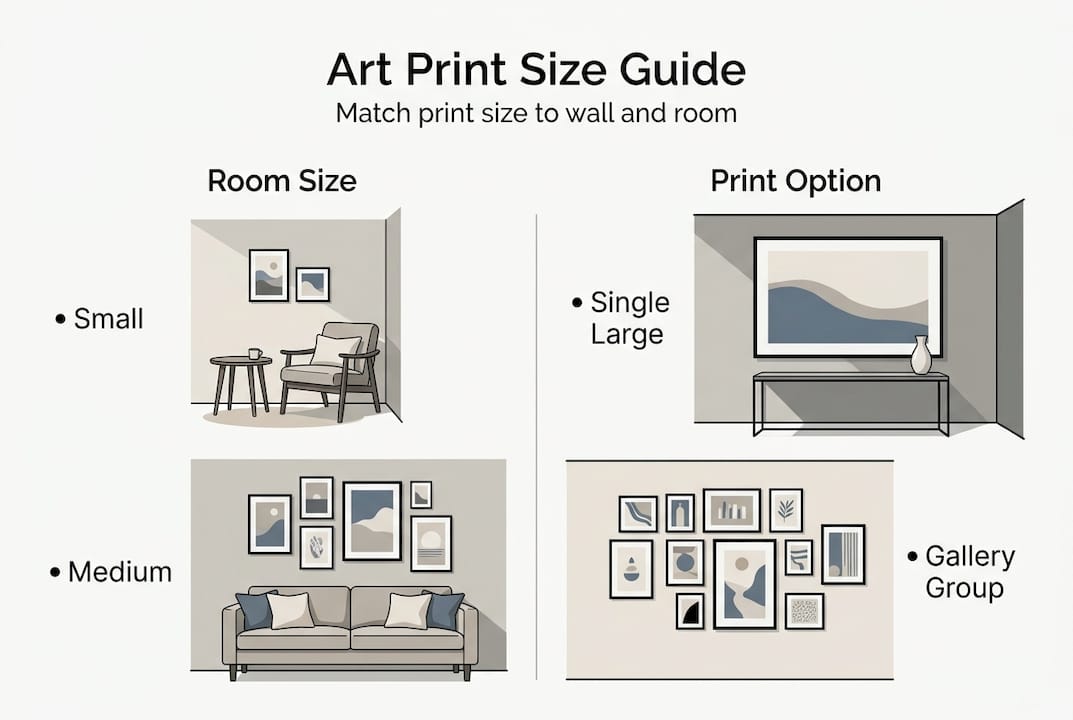
Room function significantly influences ideal sizing choices. Living rooms, being social spaces where people gather and converse, can accommodate larger prints that spark conversation and anchor seating arrangements. Hallways present unique challenges with limited wall width but often generous height, making vertical medium prints or grouped small prints excellent choices. Bedrooms benefit from calming, appropriately scaled art that doesn’t overwhelm the restful atmosphere, typically medium prints or thoughtfully arranged small collections.
Consider these key points when matching print size to room characteristics:
- Measure wall space accurately, accounting for architectural features and furniture clearance
- Calculate viewing distance from primary seating or traffic flow areas
- Assess ceiling height, as taller rooms can handle proportionally larger prints
- Evaluate natural light, which can make prints appear more or less prominent
- Consider room colour palette, as prints on contrasting walls read larger
Always measure your wall space twice and visualise scale before purchasing. Many retailers offer printable templates at actual size, or you can use painter’s tape to mark print dimensions directly on your wall. This simple step prevents costly sizing mistakes and helps you confidently commit to dimensions that will work beautifully in your space. Large format prints enhance spacious rooms and open layouts magnificently, whilst small and medium prints suit intimate or compact spaces where subtlety and detail matter more than bold statements.
Pro Tip: If your space is generous but you prefer smaller prints, group three to five pieces in a cohesive arrangement to create the visual weight of a single large piece whilst maintaining the intimacy of smaller artworks.
How framing and placement affect perceived size and balance
Framing choices dramatically influence how large or small a print appears on your wall, often more than you might expect. A wide, ornate frame adds substantial visual weight, making even a modest print feel more prominent and commanding. Conversely, a slim, minimal frame keeps attention focused on the artwork itself, maintaining an airy, unobtrusive presence. Frame colour plays an equally important role because dark frames create strong contrast against light walls, increasing perceived size, whilst light frames on light walls allow prints to blend more subtly into their surroundings.
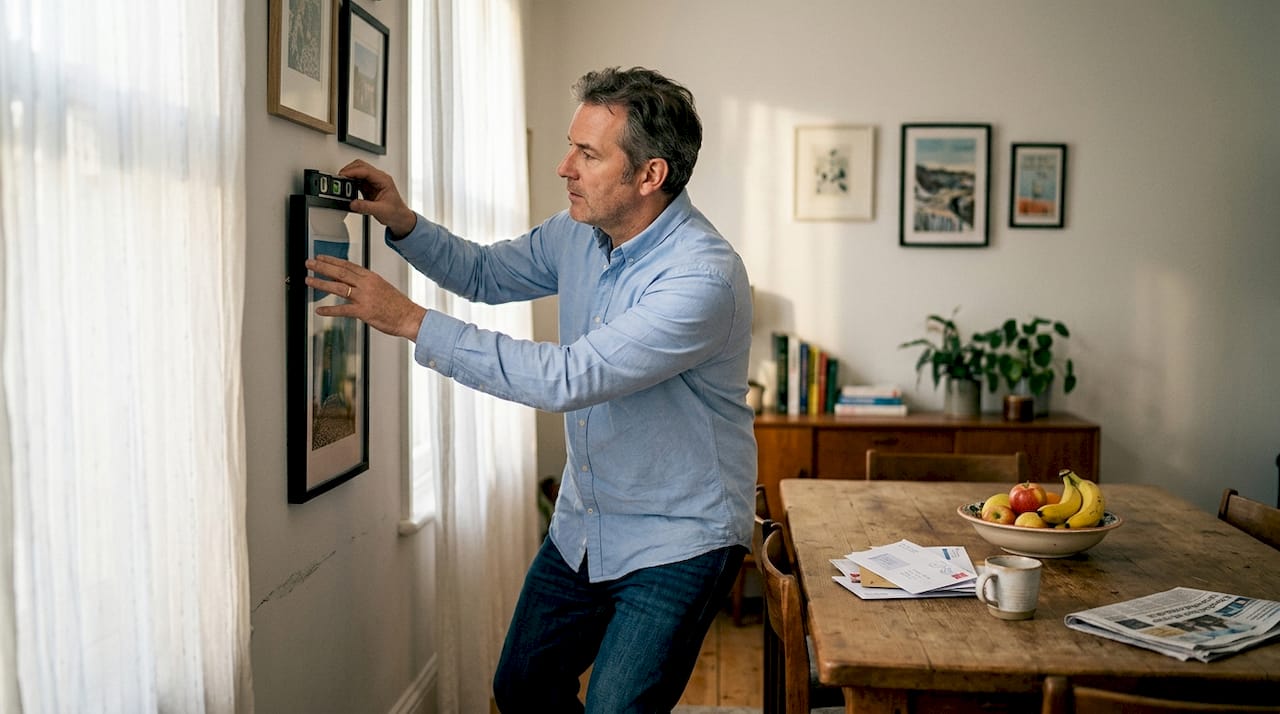
Matting, the border between artwork and frame, adds another dimension to size perception. A generous mat expands the overall framed piece dimensions whilst creating breathing room around the print, which can make the artwork feel more refined and gallery-like. However, this added border increases the total wall space required, so factor matting into your spatial calculations. Framing plays a crucial role in protecting prints and enhancing their impact in home décor, making it worth investing time in thoughtful frame selection.
Factors influencing how framing affects size perception include:
- Frame width and thickness, with wider frames adding visual heft
- Frame colour and finish, affecting contrast and prominence
- Matting width and colour, expanding perceived dimensions
- Frame style coherence with room décor, influencing how naturally art integrates
- Glass or acrylic covering, which can create reflections that alter appearance
Placement height and spacing fundamentally affect visual balance and how comfortably art integrates into your space. The standard recommendation positions artwork so its centre sits at eye level, typically 145 to 152 cm from the floor, though this varies based on ceiling height and viewer height. When hanging art above furniture, maintain 15 to 20 cm clearance between the furniture top and frame bottom to create visual connection without crowding.
Spacing between multiple prints in gallery arrangements requires careful attention to maintain cohesion. Generally, keep 5 to 10 cm between frames in grouped arrangements, maintaining consistent spacing throughout for a professional, intentional appearance. Tighter spacing creates a unified, almost singular visual mass, whilst wider spacing allows each piece to breathe independently whilst still relating to its neighbours.
Pro Tip: Use lighter frames in neutral tones to keep prints feeling airy and minimise the risk of overwhelming smaller rooms where visual weight accumulates quickly.
Good framing protects your investment whilst elevating aesthetic impact, making it a worthwhile consideration beyond pure decoration. Quality frames with proper backing and glazing preserve prints from environmental damage, ensuring your carefully sized artwork maintains its appearance for years. When you invest time in selecting the right print size, complementing that decision with appropriate framing completes the design equation and maximises your art’s contribution to your interior.
Practical steps to measure, select and arrange art prints by size
Approaching art print sizing systematically removes guesswork and builds confidence in your selections. Follow these steps to ensure your choices harmonise beautifully with your space:
- Measure your wall dimensions and note furniture placement, recording width, height, and any architectural features that affect available space.
- Consider room function and existing style, identifying whether the space calls for bold statements or subtle accents that support the overall design.
- Determine your desired focal point size based on viewing distance, using the guideline that prints should occupy 60 to 75 percent of underlying furniture width.
- Select your print size category from small, medium, or large options, matching dimensions to your measurements and room characteristics.
- Plan framing style and layout approach, deciding between single statement pieces or grouped arrangements, and selecting frames that complement without overwhelming.
This methodical approach ensures you account for all variables before committing to purchases. Planning wall art layout carefully ensures personalised, well-proportioned spaces that suit your style and functional needs.
| Room size | Recommended print dimensions | Placement notes |
|---|---|---|
| Small bedroom (3 × 3 m) | 40-60 cm width | Single medium print or pair of small prints above bed |
| Standard living room (4 × 5 m) | 70-100 cm width | Large print above sofa or grouped medium prints on feature wall |
| Hallway (1.2 × 4 m) | 30-50 cm width, vertical orientation | Series of small to medium prints creating gallery effect |
| Open-plan space (6 × 7 m) | 100+ cm width or multiple large prints | Statement piece on main wall or curated collection across multiple walls |
| Home office (3 × 3.5 m) | 50-70 cm width | Medium print at eye level from desk position |
Always measure twice before purchasing to avoid sizing disappointments. Use painter’s tape to outline your intended print dimensions directly on the wall, stepping back to view from multiple angles and seating positions. This visualisation technique reveals whether your planned size feels appropriate or needs adjustment. Take photographs of the taped outline from various room positions to review later with fresh perspective.
Arranging groups of prints creates dynamic impact on large walls or in open-plan areas where a single piece might feel insufficient. Gallery walls work beautifully when you maintain consistent spacing and cohesive framing, mixing print sizes strategically to create visual interest whilst maintaining overall balance. Start with your largest piece as an anchor, typically positioned slightly off-centre or at eye level, then arrange smaller prints around it in a balanced composition.
Maintaining balance with furniture prevents your walls from feeling crowded or disconnected from the room’s functional elements. Leave adequate space between art and adjacent doorways, windows, or built-in features to allow each element breathing room. Avoid hanging prints so close to furniture that they appear to sit directly on it, which creates visual tension rather than harmony.
Pro Tip: Always measure twice and use painter’s tape to visualise art size on walls before purchasing, allowing you to confidently commit to dimensions that will work beautifully in your specific space.
Enhance your home with perfectly sized art prints from Frame the World
Finding art prints in the perfect dimensions for your space becomes effortless when you explore Frame the World’s carefully curated collections. Our platform offers an extensive range of print sizes across diverse styles, making it simple to locate pieces that match your specific spatial requirements and design vision. Whether you need a bold statement piece for a spacious living room or an intimate print for a cosy reading nook, our size options accommodate every scenario.
For spaces with unique dimensions or specific design requirements, our custom print services provide tailored sizing solutions that fit your exact specifications. This flexibility ensures you never compromise on design intent due to standard size limitations. Browse our Wabi Sabi collection for minimalist pieces that bring calm sophistication to any room, or explore our vibrant Pop Art selection for bold prints that command attention in contemporary spaces. Frame the World serves both homeowners seeking affordable, impactful art and interior designers requiring reliable, professionally sized prints for client projects.
Frequently asked questions
What is the best way to measure my wall for art prints?
Measure the width and height of your available wall space using a tape measure, accounting for furniture placement and required clearance above and beside pieces. Use painter’s tape to mark your intended print dimensions directly on the wall, allowing you to visualise the scale from different viewing angles before committing to a purchase.
How do I choose art print size for small rooms?
Opt for small to medium prints that maintain a spacious feel rather than overwhelming limited wall space. Consider lighter frames and minimal layouts that create airiness in compact areas, avoiding dark, heavy frames that add visual weight and make rooms feel more confined.
Can I group multiple smaller prints instead of one large print?
Grouping smaller prints creates dynamic focal walls in large spaces whilst offering flexibility to rearrange over time. Arrange pieces with balanced spacing of 5 to 10 cm between frames and consistent framing styles for cohesion, following large space art solutions that create impact without single oversized commitments.
How does framing style influence the perceived size of an art print?
Wide or dark frames increase visual weight substantially, making prints appear larger and more commanding on your wall. Light or minimal frames keep prints feeling smaller and airier, which works beautifully in compact rooms or when you want artwork to integrate subtly. Frame selection impacts the overall presence significantly, sometimes as much as the print dimensions themselves.


Leave a comment
This site is protected by hCaptcha and the hCaptcha Privacy Policy and Terms of Service apply.