

Choosing the right frame for your treasured artwork can feel like navigating a maze of style, material, and preservation options. Each decision shapes not just how the piece looks but how well it stands the test of time and fits the character of your space. With expert guidance on frame selection, archival mounting, workspace setup, and proper hanging, you can create a truly cohesive and professional display that honours both the art and your interior vision. Bold frame anatomy and material selection makes all the difference.
Table of Contents
- Step 1: Assess Artwork and Select Suitable Frames
- Step 2: Choose Mounts and Materials for Best Presentation
- Step 3: Prepare Workspace and Gather Essential Tools
- Step 4: Assemble Artwork Securely within the Frame
- Step 5: Verify Quality and Hang Art with Care
Quick Summary
| Essential Insight | Clarification |
|---|---|
| 1. Choose the Right Frame | Match the frame style, colour, and material to complement the artwork while ensuring it remains the focal point of your interior design. |
| 2. Use Archival Mounting Materials | Select acid-free, archival-quality materials for mounting to prevent deterioration and protect artworks from environmental damage. |
| 3. Create an Organized Workspace | Set up a clean, spacious area with proper lighting and all essential tools within easy reach for a smooth framing process. |
| 4. Properly Secure Artwork in the Frame | Employ suitable mounting techniques and hardware to ensure the artwork is positioned securely and won’t shift or damage over time. |
| 5. Hang Art at Eye Level | Position the artwork for optimum viewing height, usually around 57-60 inches from the floor, and ensure it is protected from environmental factors. |
Step 1: Assess Artwork and Select Suitable Frames
Selecting the right frame transforms artwork from a simple image into a stunning visual statement. Your goal is to choose a frame that not only protects the artwork but also enhances its inherent beauty and complements your interior design.
The framing process requires careful consideration of multiple elements. Begin by examining the artwork’s characteristics, including its style, colour palette, and medium. Frame anatomy and material selection plays a crucial role in preserving and presenting your piece effectively.
Key factors to evaluate when selecting frames include:
- Artwork Style: Match the frame’s aesthetic to the piece’s character (modern, classic, rustic)
- Colour Harmony: Select frame colours that complement or subtly contrast with the artwork
- Material Quality: Consider wood, metal, or composite materials based on artwork type
- Conservation Requirements: Choose frames with UV-protective glass for valuable pieces
Professional framers recommend selecting frames that enhance rather than compete with the artwork’s visual narrative.
Size proportions matter significantly. The frame should neither overwhelm nor underwhelm the artwork. Generally, wider frames suit larger pieces, while more delicate artworks benefit from slimmer, more understated framing.
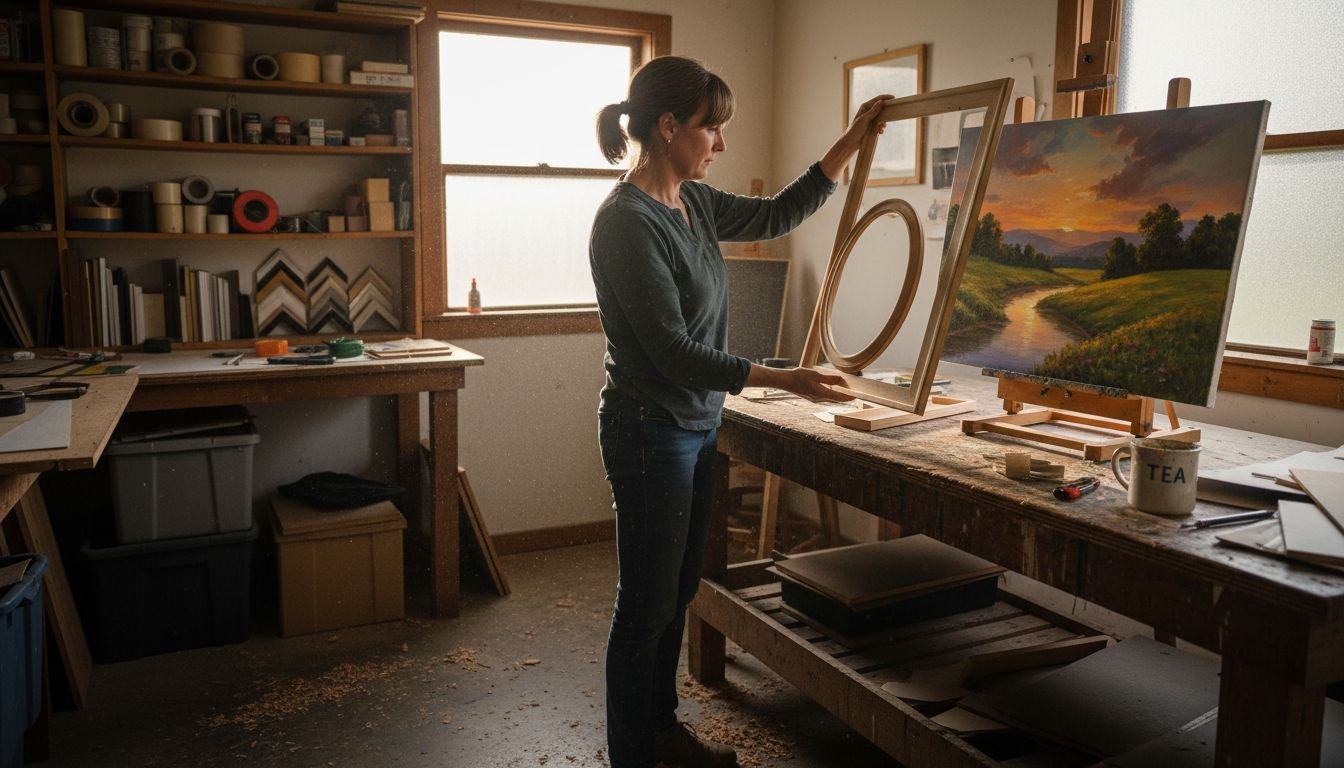
Here’s a comparison of common frame materials and their suitability for different artwork types:
| Frame Material | Ideal Artwork Type | Durability | Visual Effect |
|---|---|---|---|
| Solid Wood | Traditional paintings | Long-lasting | Warm, classic look |
| Aluminium | Modern prints | Highly durable | Sleek, contemporary |
| Composite | Posters, photos | Moderate | Versatile, budget-friendly |
| Moulded Resin | Decorative pieces | Good | Ornate, bold style |
Expert recommendation: Always view potential frames against the actual artwork in the intended display space to ensure perfect visual harmony.
Step 2: Choose Mounts and Materials for Best Presentation
Mounting your artwork involves more than simply displaying it - it’s about preserving its integrity and enhancing its visual impact. A well-chosen mount protects your artwork while creating a professional, refined presentation that elevates the entire piece.
Understanding archival mounting techniques is crucial for long-term artwork preservation. Professional framers recommend using acid-free, high-quality materials that prevent deterioration and protect delicate artworks from environmental damage.
Consider these critical mounting considerations:
- Material Selection: Choose acid-free, archival-grade mounting boards
- Colour Compatibility: Select mount colours that complement the artwork’s palette
- Preservation Techniques: Use non-invasive hinging methods
- Spacing: Create appropriate visual breathing room around the artwork
Professional conservators emphasise that proper mounting is as much about protection as it is about presentation.
Mount thickness and colour can dramatically influence how viewers perceive your artwork. Lighter mounts can make pieces appear larger and more prominent, while darker mounts create a more dramatic, focused effect. Neutral tones like ivory, cream, or soft greys often work best, allowing the artwork to remain the central focus.
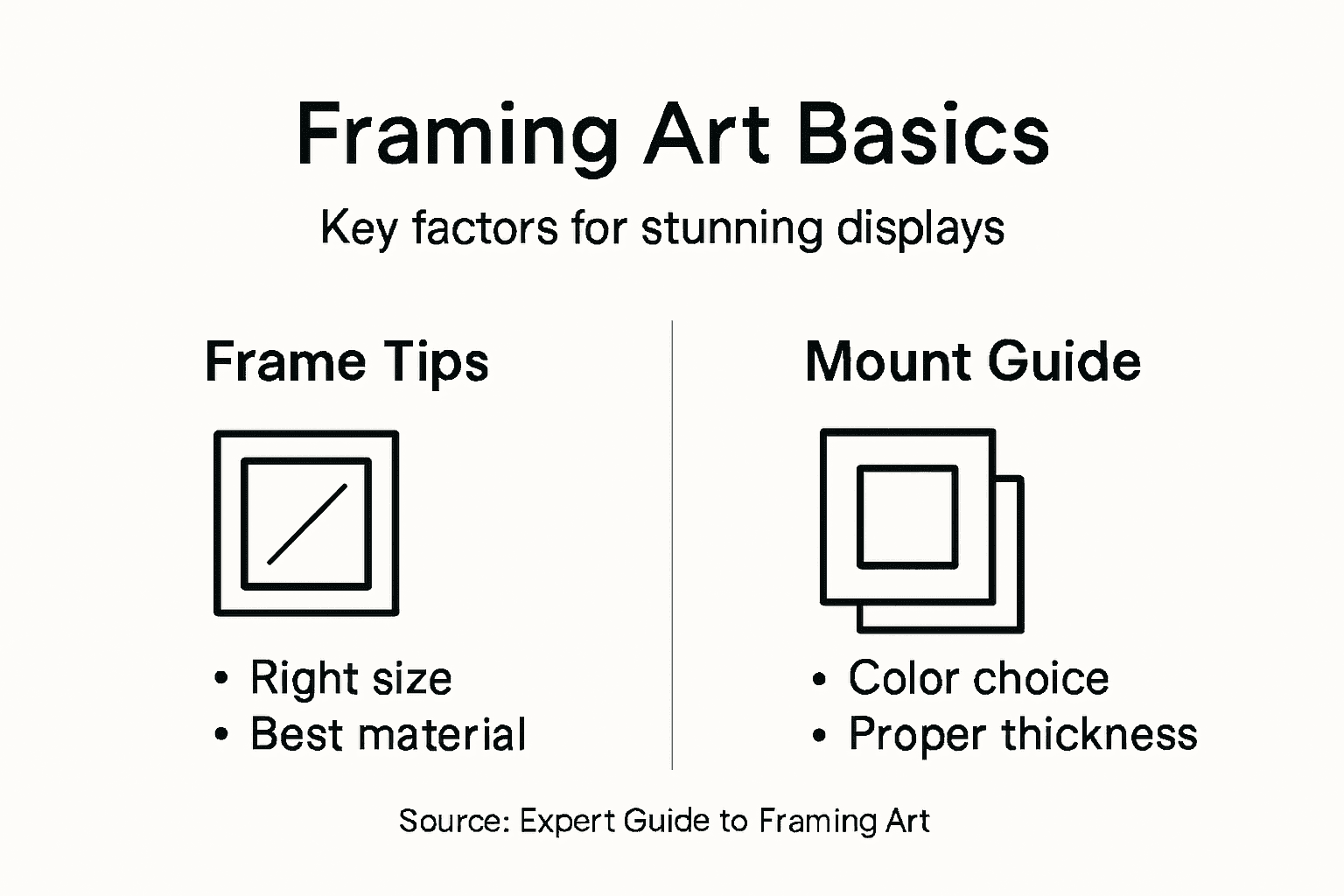
Below is a summary of how different mount colours affect artwork presentation:
| Mount Colour | Effect on Artwork | Best Used With |
|---|---|---|
| Ivory | Adds subtle highlight | Watercolours, drawings |
| Light Grey | Neutral enhancement | Photographs, minimal art |
| Black | Creates strong contrast | Colourful, graphic works |
| Cream | Softens overall look | Classic, delicate pieces |
Expert recommendation: Always use archival-quality materials and consult a professional framer if you’re dealing with valuable or delicate artworks.
Step 3: Prepare Workspace and Gather Essential Tools
Framing artwork demands precision, patience, and a well-organized workspace. Your preparation sets the foundation for a successful project, ensuring you have everything needed to create a professional-quality presentation.
Start by understanding the essential framing tools and workspace requirements. A clean, spacious area with good lighting is crucial for achieving accurate results and maintaining your artwork’s integrity.
Essential tools you’ll need include:
- Cutting Tools: Sharp scissors, precision knife, miter saw
- Measuring Equipment: Metal ruler, measuring tape
- Fastening Supplies: Framer’s tape, point driver, strong adhesives
- Protective Gear: Clean work gloves, dust mask
- Workspace Essentials: Large flat surface, good lighting
Professional framers know that proper tool preparation prevents costly mistakes and ensures consistent, high-quality results.
Organise your tools systematically before beginning. Arrange materials within easy reach, ensuring you can move smoothly between tasks without disrupting your workflow. Consider using a dedicated tray or magnetic strip to keep metal tools accessible and prevent misplacement.
Expert recommendation: Create a dedicated framing station with all necessary tools pre-arranged, minimising interruptions and maintaining your creative momentum.
Step 4: Assemble Artwork Securely within the Frame
Successfully mounting your artwork requires precision and care to ensure both aesthetic appeal and long-term preservation. Understanding artwork mounting techniques is crucial for protecting your piece and achieving a professional presentation.
The mounting process varies depending on your specific artwork and frame type. Different frames - such as tray frames with shadow gaps or traditional lip frames - demand unique approaches to securing your artwork.
Key mounting considerations include:
- Mounting Method: Choose technique based on artwork type
- Hardware Selection: Use appropriate mounting clips or hinges
- Positioning: Centre artwork precisely within frame
- Support: Ensure artwork is supported without tension
- Protection: Prevent damage during mounting process
Professional framers recommend flexible mounting techniques that accommodate potential humidity changes and prevent artwork stress.
Careful mounting involves gentle handling and strategic placement. For delicate artworks, consider using archival-grade mounting corners or professional hinging techniques that allow natural expansion and prevent permanent damage.
Expert recommendation: Always handle artwork with clean cotton gloves and work on a clean, soft surface to minimise potential damage during the mounting process.
Step 5: Verify Quality and Hang Art with Care
The final stage of your art framing journey involves carefully hanging your masterpiece while ensuring its long-term preservation and visual impact. Artwork display techniques require meticulous attention to environmental factors and precise installation.
Before hanging, conduct a thorough quality inspection of your framed artwork. Check for any loose mounting, potential frame damage, or imperfections that might compromise the piece’s integrity. Ensure all protective materials are correctly positioned and the artwork sits securely within its frame.
Critical hanging considerations include:
- Location Selection: Avoid direct sunlight and heat sources
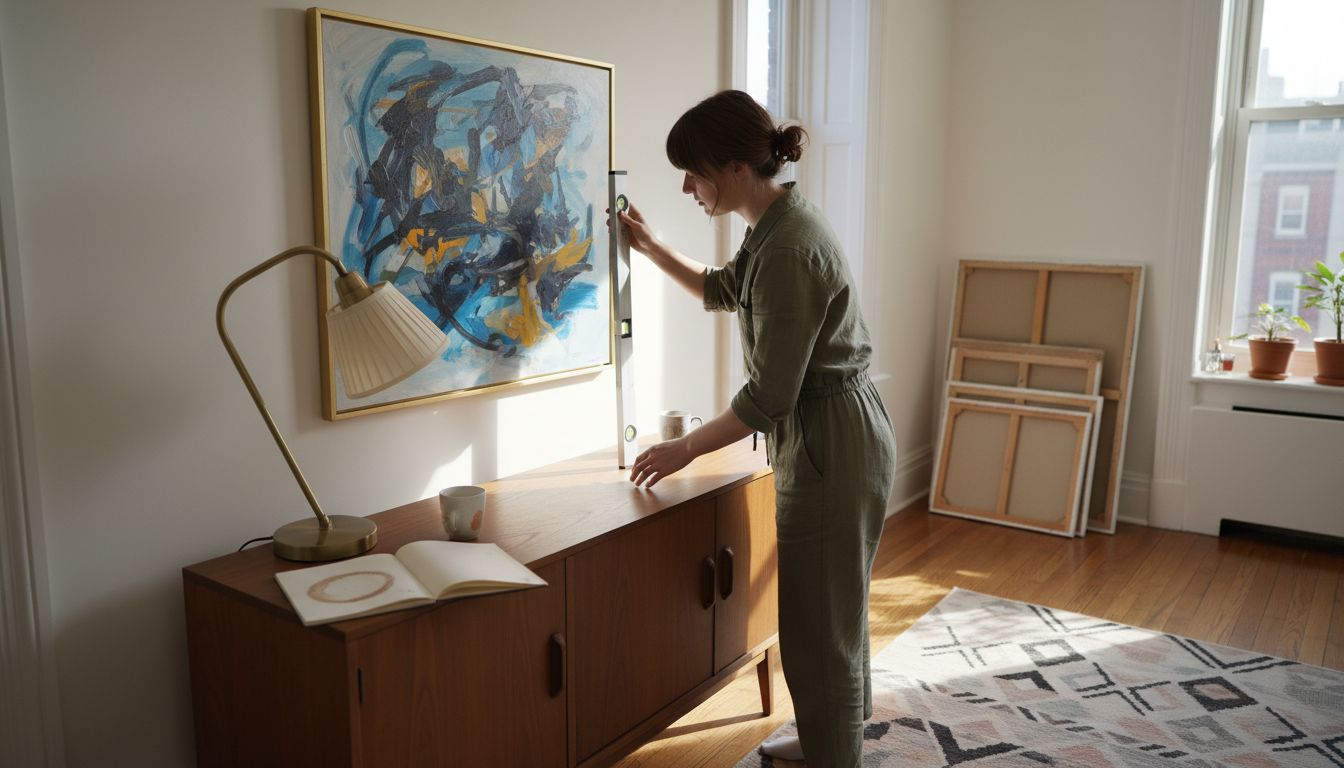
- Height Placement: Position at standard eye level (57-60 inches from floor)
- Weight Management: Use appropriate hanging hardware
- Environmental Protection: Maintain consistent temperature and humidity
- Regular Maintenance: Inspect artwork periodically for potential issues
Professional conservators emphasise that proper placement is as crucial as the framing process itself.
When mounting, use wall anchors appropriate to your wall type and artwork weight. Metal or wooden walls require different mounting techniques, so select hardware that provides maximum support without damaging your wall surface.
Expert recommendation: Always have a second person assist you during hanging to ensure precise alignment and prevent accidental damage.
Elevate Your Space with Expertly Framed Art from Frametheworld
Choosing the perfect frame and mount to enhance and protect your treasured artwork can be challenging. From selecting archival materials to ensuring the ideal colour harmony and size proportion, the framing process demands attention to detail and quality craftsmanship. The guide you just read highlights the importance of combining aesthetics with preservation to create stunning interiors that truly showcase your art.
At Frametheworld.co.uk, we understand these challenges and offer a curated selection of high-quality hand-painted artworks that are ready to grace your walls with elegance and style. Explore our Hand-Painted Modern Abstract Wall Art collection and discover pieces crafted to harmonise perfectly with your interior. If you seek vertical format pieces that make bold visual statements, our Vertical Wall Art – Hand-Painted Modern Art Pieces category provides a diverse range designed for impact. Stay inspired by browsing our New Arrivals – Fresh Hand-Painted Artworks to find unique creations that can be customised or purchased as they are.
Transform your interiors today by pairing expert framing knowledge with exceptional art from Frametheworld. Visit Frametheworld.co.uk now to explore how you can bring the perfect framed masterpiece into your home or project. Don’t wait to create the stunning visual environment your art deserves.
Frequently Asked Questions
How do I choose the right frame for my artwork?
To select the right frame, consider the artwork’s style, colour palette, and medium. Match the frame’s aesthetic to the piece’s character and ensure it complements your interior design.
What materials are best for mounting art?
Opt for acid-free, archival-grade mounting boards to protect your artwork from deterioration. These materials will maintain the piece’s integrity over time, which is crucial for valuable or delicate artworks.
What tools do I need for framing art at home?
Essential tools include sharp scissors, a precision knife, a metal ruler, and a strong adhesive for fastening. Organise these tools systematically in a dedicated workspace to ensure a smooth framing process.
How do I safely mount delicate artwork?
For delicate artworks, use archival-grade mounting corners or professional hinging techniques that allow for natural expansion. Always handle the artwork with clean cotton gloves and on a soft surface to prevent damage during the mounting process.
What are the key factors for hanging artwork properly?
Ensure your artwork is hung at eye level, typically 57-60 inches from the floor, and avoid placing it in direct sunlight. Use appropriate hanging hardware to support the weight of the piece securely.
How can I verify the quality of my framed artwork before hanging it?
Conduct a thorough inspection, checking for loose mounting, frame damage, and imperfections that may affect the piece’s integrity. Ensure all protective materials are correctly positioned and that the artwork sits securely within its frame.


Leave a comment
This site is protected by hCaptcha and the hCaptcha Privacy Policy and Terms of Service apply.