

Choosing the right frame for your artwork is not just about decoration. Many homeowners in busy urban spaces discover that art framing is a powerful way to both protect treasured pieces and create a cohesive interior style. With frames acting as a shield against dust, light, and moisture, the right choice can maintain your artwork’s integrity while elevating its visual presence in your home. This guide highlights how thoughtful framing serves practical needs and transforms art into a true statement.
Table of Contents
- What Is Art Framing and Why It Matters
- Framing Types and Their Unique Benefits
- How Frames Preserve and Protect Artworks
- Influence of Frames on Style and Ambience
- Choosing Frames: Mistakes to Avoid for Homeowners
Key Takeaways
| Point | Details |
|---|---|
| Importance of Art Framing | Art framing protects and enhances artwork, serving both aesthetic and preservation purposes. It transforms simple pieces into curated experiences that can retain value over time. |
| Selecting the Right Frame | The choice of frame should complement the artwork’s style and surroundings while ensuring protection against environmental factors. Professional advice is beneficial in making informed decisions. |
| Preservation Techniques | Utilising acid-free materials, UV-protective glazing, and secure mounting is essential for maintaining artwork integrity and longevity. Conservation framing offers the highest level of protection. |
| Common Framing Mistakes | Homeowners should avoid using non-archival materials and mismatched styles, as these can harm both the artwork’s visual appeal and its preservation. Seeking expert consultation can prevent costly errors. |
What Is Art Framing and Why It Matters
Art framing is a sophisticated technique of protecting and presenting artwork that transforms ordinary pieces into extraordinary visual statements. At its core, art framing involves carefully selecting materials and structures to showcase and safeguard artistic creations, serving both aesthetic and preservation purposes.
The primary function of art framing extends far beyond simple decoration. By creating a protective barrier, frames shield artworks from environmental threats such as dust, moisture, and harmful light exposure. Professional framing ensures that delicate pieces maintain their original integrity, preventing degradation and preserving their historical and artistic value.
Key aspects of art framing include:
- Selecting appropriate mounting materials
- Choosing frames that complement the artwork’s style
- Protecting against physical damage
- Enhancing visual presentation
- Maintaining artwork longevity
Art framing matters because it transforms artwork from a simple image into a curated experience. The right frame can elevate a piece’s perceived value, create visual harmony within a space, and protect the artwork for generations. By understanding framing techniques, homeowners can turn their art collections into meaningful, long-lasting investments.
Pro tip: Always consult a professional framer to understand the specific preservation needs of different artwork types and materials.
Framing Types and Their Unique Benefits
Art framing encompasses a diverse range of styles, each offering unique aesthetic and protective qualities for different types of artwork. Traditional framing approaches vary significantly depending on the piece’s material, size, and intended display context.
The most common frame types include:
- Wooden Frames: Classic and versatile, providing warmth and traditional elegance
- Metal Frames: Sleek and contemporary, ideal for modern art and minimalist spaces
- Shadowbox Frames: Designed for three-dimensional pieces and delicate artworks
- Conservation Frames: Specialised frames using archival materials to preserve artwork
- Floating Frames: Creating an illusion of artwork suspended within the frame
Each framing style serves a specific purpose beyond mere decoration. Wooden frames offer robust protection and can complement various interior design styles, while metal frames provide a clean, sophisticated look that enhances contemporary artwork. Shadowbox frames are particularly valuable for preserving delicate or textured pieces, creating depth and protecting intricate details from environmental damage.
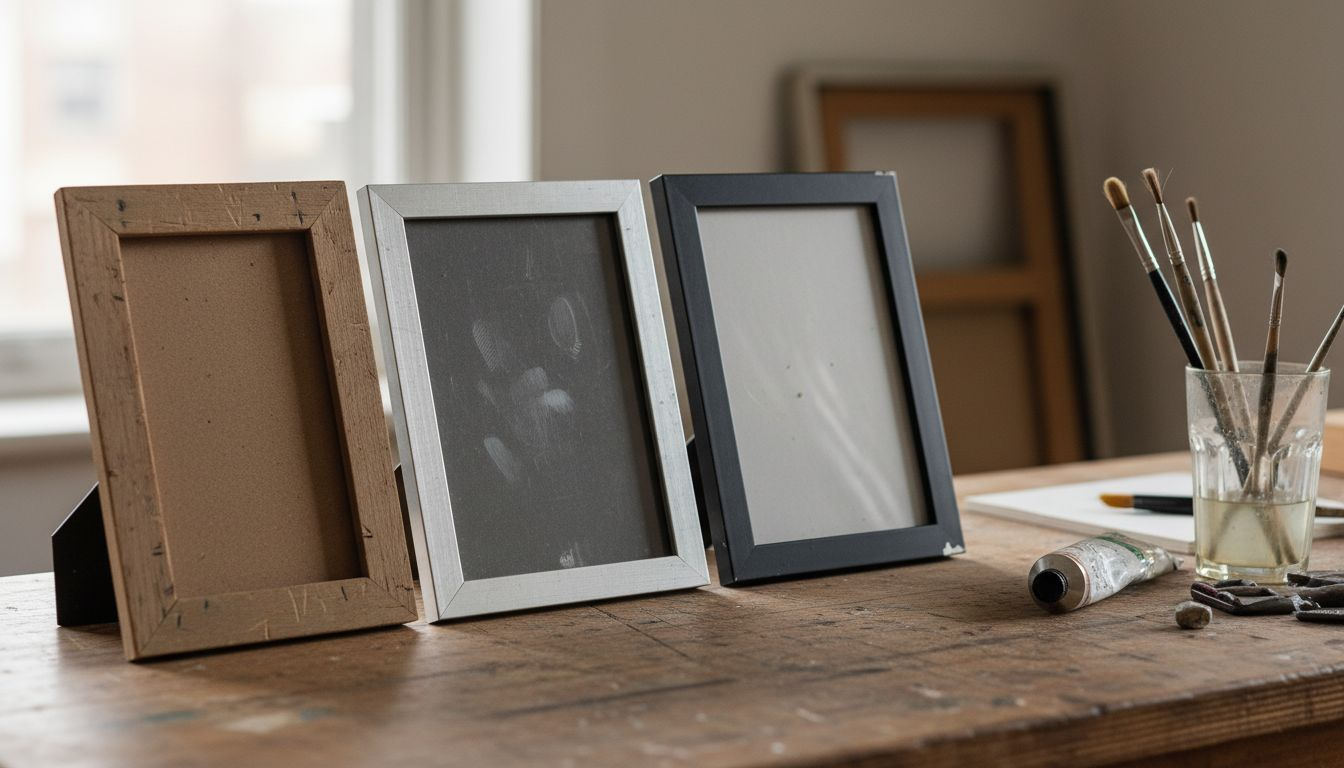
The selection of a frame goes beyond aesthetic considerations. Professional framers understand that the right frame can dramatically increase an artwork’s visual impact, protect its longevity, and integrate seamlessly with the surrounding décor. By carefully matching frame materials and styles to specific artworks, collectors can transform simple pieces into extraordinary focal points.
Here is a comparison of popular frame types and their ideal uses:
| Frame Type | Visual Character | Best For |
|---|---|---|
| Wooden | Warm, traditional | Classic art, mixed interiors |
| Metal | Sleek, modern | Contemporary art, minimalism |
| Shadowbox | Deep, protective | 3D or textured pieces |
| Conservation | Neutral, archival | Valuable, delicate works |
| Floating | Light, modern | Bold pieces, open display |
Pro tip: Consider the artwork’s colour palette, texture, and historical context when selecting a frame to ensure optimal visual harmony and preservation.
How Frames Preserve and Protect Artworks
Framing is far more than a decorative element; it is a critical preservation technique that shields artworks from environmental threats and ensures their longevity. Professional framing incorporates sophisticated protective strategies designed to combat the numerous risks that can degrade artwork over time.
Key preservation techniques include:
- Acid-Free Matting: Prevents chemical degradation
- UV-Protective Glazing: Blocks harmful light radiation
- Secure Mounting: Prevents warping and physical damage
- Breathable Backing: Manages humidity and prevents moisture buildup
- Sealed Edges: Blocks dust and environmental contaminants
Conservation framing represents the gold standard in artwork protection. Museums and serious collectors employ advanced techniques such as using archival-quality materials that create a stable microenvironment around delicate pieces. These specialised approaches go beyond simple protection, actively working to maintain the artwork’s original condition and prevent deterioration caused by light exposure, humidity fluctuations, and physical stress.
The science of preservation framing involves understanding the complex interactions between artwork materials and environmental factors. By selecting appropriate frames with carefully engineered protective elements, collectors can dramatically extend an artwork’s lifespan, preserving not just the physical piece but also its historical and aesthetic integrity.
Pro tip: Rotate displayed artworks periodically and use UV-filtering glass to minimise long-term light damage to your cherished pieces.
Influence of Frames on Style and Ambience
Frames are transformative design elements that dramatically shape room aesthetics, acting as silent storytellers that communicate style, mood, and personal taste. The right frame can elevate an artwork from a simple decoration to a powerful statement piece that anchors an entire room’s design narrative.
Frame styles can be categorised by their aesthetic impact:
- Ornate Frames: Convey elegance and classical sophistication
- Minimalist Frames: Create contemporary, clean visual environments
- Rustic Wooden Frames: Introduce warmth and organic texture
- Metallic Frames: Add industrial or modern design elements
- Floating Frames: Suggest lightness and modern simplicity
Interior design professionals understand that frames do more than display artwork; they create visual dialogues between the piece and its surrounding environment. The colour, thickness, and material of a frame can subtly shift a room’s perceived temperature, from cool and detached to warm and inviting. A thin black metal frame might introduce a sleek, minimalist tone, while an ornate gold frame can instantly inject a sense of luxury and historical depth.
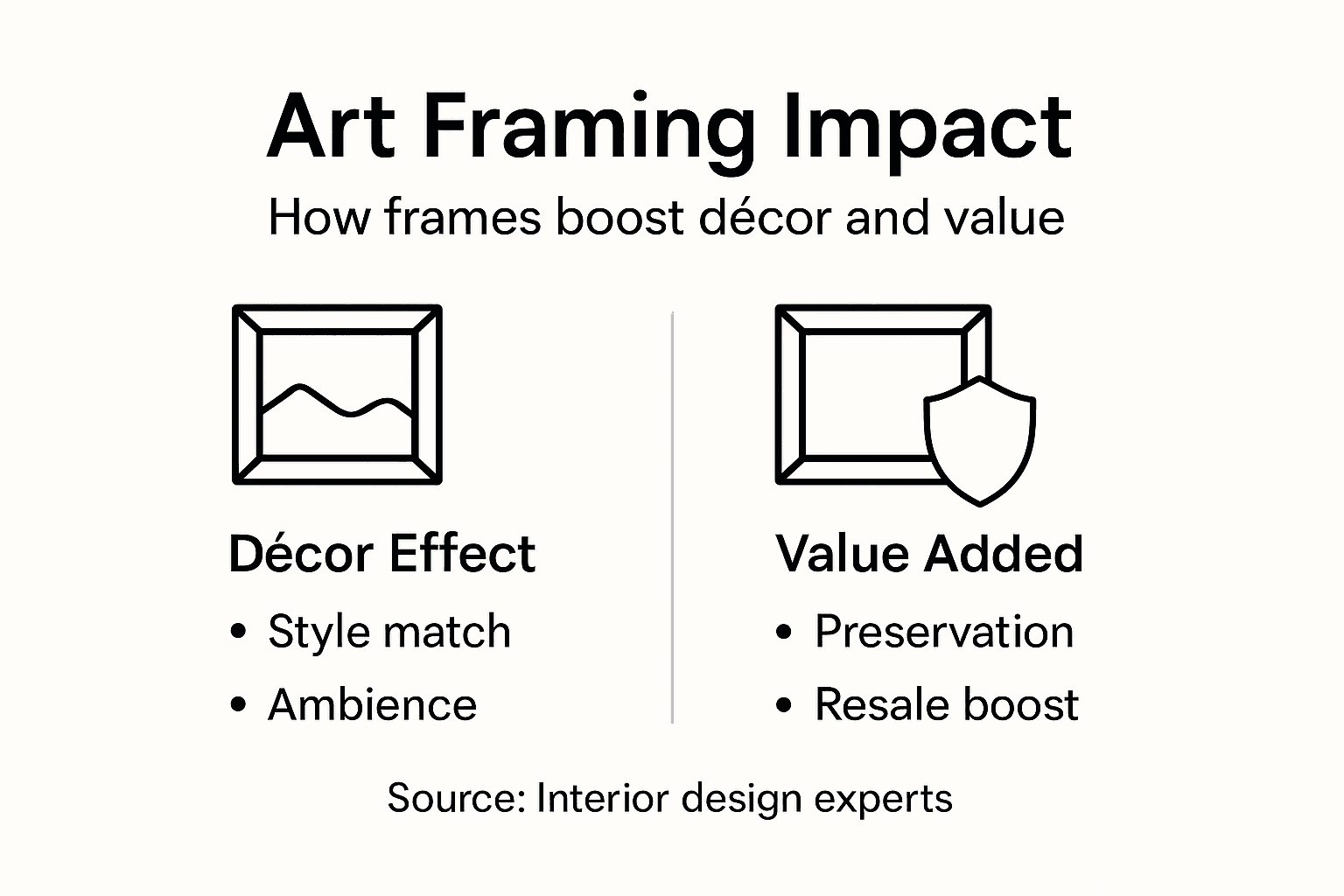
The psychological impact of framing extends beyond pure aesthetics. Frames can manipulate spatial perception, draw attention, and even influence emotional responses. A carefully chosen frame transforms artwork from a passive object into an active design element that engages with architectural lines, furniture styles, and colour palettes.
Pro tip: Select frames that create visual rhythm by echoing other design elements in your space, such as furniture lines or colour accents.
Choosing Frames: Mistakes to Avoid for Homeowners
Homeowners frequently encounter critical challenges when selecting art frames, with many unknowingly making decisions that can compromise both the artwork’s aesthetic appeal and long-term preservation. Common framing mistakes can significantly impact artwork quality, potentially reducing its visual impact and monetary value.
Key mistakes to avoid include:
- Ignoring Artwork Preservation: Selecting non-archival materials
- Mismatched Frame Styles: Choosing frames that clash with artwork or décor
- Incorrect Size Selection: Frames that overwhelm or underwhelm the piece
- Neglecting Environmental Factors: Using inappropriate frames for specific spaces
- Overlooking Professional Advice: Avoiding expert consultation
Professional framers understand that frames are more than decorative elements; they are critical protective structures that require careful consideration. The wrong frame can introduce multiple risks, such as accelerated artwork degradation, visual disharmony, and potential financial loss. A frame should complement the artwork’s inherent characteristics, enhancing its visual narrative without competing or overshadowing the piece.
Understanding the nuanced relationship between artwork, frame, and environment is crucial. Factors like humidity, light exposure, and room temperature can dramatically influence frame selection. Homeowners must consider not just aesthetic preferences but also the technical requirements of preservation and presentation.
This table summarises common framing mistakes and their long-term impact:
| Mistake | Potential Impact | Prevention Tip |
|---|---|---|
| Non-archival materials | Accelerated artwork ageing | Use acid-free options |
| Mismatched styles | Visual disharmony | Match décor and artwork |
| Incorrect size choice | Artwork appears awkward | Measure before buying |
| Neglecting environment | Increased damage risk | Consider room conditions |
| Avoiding expert input | Missed preservation needs | Consult a professional framer |
Pro tip: Always request material samples and conduct a visual compatibility test before finalising your frame selection.
Elevate Your Space with Expertly Framed Art from Frametheworld.co.uk
Understanding the impact of art framing on décor and the preservation of your cherished pieces is essential. Many homeowners face the challenge of selecting frames that protect artwork while enhancing its visual appeal. At Frametheworld.co.uk, we address these concerns by offering an extensive collection of hand-painted art, including inspiring options in our Vertical Wall Art – Hand-Painted Modern Art Pieces category. Our curated selections are designed not only to beautify your space but also to complement framing choices that add lasting value.
Explore the harmony between art and frame with our Bestselling Wall Art | Most Loved Hand Painted Canvas Art collection. Whether you seek bold statements or subtle enhancements, acting now ensures your home benefits from artworks that are both stylish and preserved with care. Begin your journey today by visiting Frametheworld.co.uk and discover bespoke solutions crafted to transform your environment with elegance and protection.
Frequently Asked Questions
What is the primary purpose of art framing?
Art framing primarily protects and presents artwork, serving both aesthetic and preservation functions while enhancing its overall value and longevity.
How does the choice of frame impact the artwork’s presentation?
The choice of frame significantly influences an artwork’s visual impact by complementing its style, enhancing the decor of the space, and creating visual harmony between the piece and its surroundings.
What are the benefits of using conservation frames?
Conservation frames use archival materials to prevent chemical degradation and protect delicate artworks from light damage, ensuring their longevity and preserving their historical value.
Why is it important to consult a professional framer?
Consulting a professional framer helps ensure that the artwork is preserved correctly in an appropriate frame, enhancing its aesthetic appeal and preventing potential damage from environmental factors.

Leave a comment
This site is protected by hCaptcha and the hCaptcha Privacy Policy and Terms of Service apply.