

Selecting the perfect artwork for your home or client project can seem overwhelming with so many choices available. The appeal of art prints lies in their ability to create multiple high-quality versions of a single piece while keeping the original artist’s vision intact. For both homeowners and interior designers in the United Kingdom, exploring the world of art prints opens up access to affordable, customisable wall art that brings style and personality into any space.
Table of Contents
- What Are Art Prints And Their Purpose
- Popular Types And Print Materials Explained
- Art Prints Versus Original Artwork: Key Comparisons
- Affordability, Flexibility, And Customisation Benefits
- Enhancing Interiors For Homes And Workspaces
Key Takeaways
| Point | Details |
|---|---|
| Art Prints Democratise Access | Art prints provide affordable alternatives to original artworks, making art more accessible to a broader audience. |
| Art Print Techniques Matter | Understanding different printmaking methods, such as lithographs and serigraphs, helps in appreciating the uniqueness and value of the prints. |
| Customisation Enhances Experience | Art prints allow for personalisation in terms of size, colour, and framing, enabling collectors to curate spaces that reflect individual tastes. |
| Art Prints vs. Originals | While art prints are reproductions, they maintain artistic integrity and can offer significant value, especially when signed and numbered by the artist. |
What Are Art Prints And Their Purpose
Art prints represent a fascinating method of artistic reproduction that transforms original artwork into accessible, shareable pieces. Printmaking techniques involve transferring images from a matrix like wood, metal, or glass onto paper using specialised pressure methods. This creative process allows artists to generate multiple versions of a single artwork while maintaining the core artistic vision.
Unlike simple photocopies, art prints are carefully crafted reproductions that involve intricate techniques such as lithographs, screenprints, and relief printing. Each print represents a deliberate artistic choice, with some variations like monoprints being uniquely embellished. Prints embody material transformations that reflect deeper social and conceptual artistic perspectives, extending far beyond mere mechanical reproduction.
The primary purposes of art prints include democratising art access, enabling wider distribution of artistic works, and providing affordable alternatives to original paintings. Artists utilise these techniques to reach broader audiences, allowing individuals who cannot purchase expensive original artworks to still enjoy and collect high-quality artistic representations. Prints also serve important archival and educational functions, preserving artistic expressions and making them available to museums, collectors, and art enthusiasts worldwide.
Pro tip: When selecting art prints, examine the printing technique and edition number to understand the artwork’s unique characteristics and potential collector’s value.
Popular Types And Print Materials Explained
Printmaking techniques encompass a diverse range of artistic methods, each with unique characteristics and creative possibilities. The primary print types include lithographs, serigraphs, and relief prints, each offering distinctive approaches to artistic reproduction. Lithographs utilise a complex chemical process involving greasy substances applied to stone or metal plates, creating intricate image transfers that capture remarkable detail and texture.
Serigraphy, commonly known as silkscreen or screenprinting, represents another fascinating print technique. This method involves pushing ink through a mesh screen with carefully designed stencils, allowing artists to create bold, layered images with vibrant colour combinations. Printmaking media classification distinguishes between different surface types, including relief prints with raised surfaces like woodcuts and linocuts, intaglio prints with incised surfaces such as etchings, and planographic prints like lithography.
Print materials extend beyond traditional paper, offering artists remarkable versatility. While paper remains the most common substrate, contemporary printmakers experiment with fabrics, canvas, specialised synthetic materials, and even unconventional surfaces. Creating multi-coloured prints requires exceptional technical skill, often involving sequential printing of multiple layers using different plates or screens. Professional artists typically number their limited edition prints and include personal signatures to authenticate and increase the artwork’s potential collector’s value.
For quick reference, here are the popular printmaking techniques, their distinguishing features, and typical materials:
| Technique | Key Characteristic | Common Materials |
|---|---|---|
| Lithograph | Chemical image transfer | Stone, metal plates, paper |
| Serigraph | Ink pushed through mesh | Fabric screens, stencils, fabric or paper |
| Relief Print | Raised surface printing | Woodblocks, linoleum, paper |
| Intaglio | Incised line printing | Metal plates, paper |
Pro tip: When collecting art prints, always examine the edition number and artist’s signature to understand the print’s rarity and potential long-term artistic significance.
Art Prints Versus Original Artwork: Key Comparisons
Museum art experts recognise significant distinctions between original artworks and art prints, challenging common misconceptions about their value and authenticity. Original artwork represents a unique, singular creation crafted directly by an artist’s hand, whereas art prints are carefully reproduced images that can still maintain substantial artistic integrity. This fundamental difference impacts pricing, collectability, and the overall artistic experience.
The technical nuances between original artwork and prints reveal fascinating complexities. Printmaking processes create what are known as “multiple originals” - prints made directly from the artist’s approved matrices like woodblocks or etching plates. These prints are not mere reproductions but legitimate artistic expressions, often signed and numbered by the artist to certify their authenticity. Unlike one-of-a-kind original paintings, limited edition prints offer art enthusiasts an accessible way to own professionally created artwork at a more affordable price point.
Key comparative factors include production method, tactile qualities, and artistic intent. Original artworks typically demonstrate unique textural variations, brush strokes, and material interactions that cannot be perfectly replicated. Art prints, while more standardised, can still capture remarkable detail and artistic essence through sophisticated printing techniques. Professional prints often employ high-quality materials and precise colour reproduction, making them attractive alternatives for those seeking beautiful, meaningful artwork without the substantial financial investment required for original pieces.
The table below highlights the core differences between original artwork and art prints for collectors and enthusiasts:
| Criterion | Original Artwork | Art Print |
|---|---|---|
| Uniqueness | One-of-a-kind piece | Multiple copies exist |
| Price Range | Often very expensive | More affordable options |
| Collectability | Highly sought-after | Favoured for accessibility |
| Artist Involvement | Directly hand-crafted | Artist supervises production |
| Authentication | Signed, single unique work | Signed, numbered editions |
Pro tip: Always examine the edition number, artist’s signature, and printing technique when purchasing art prints to ensure you’re acquiring a high-quality, authentic artistic reproduction.
Affordability, Flexibility, And Customisation Benefits
Mass customisation technologies have revolutionised the art print market, offering unprecedented opportunities for personalisation and creative expression. Modern digital platforms enable consumers to transform artwork selection from a passive experience into an interactive journey of personal design. This democratisation of art allows individuals to curate spaces that genuinely reflect their unique aesthetic preferences, breaking traditional barriers of art acquisition.
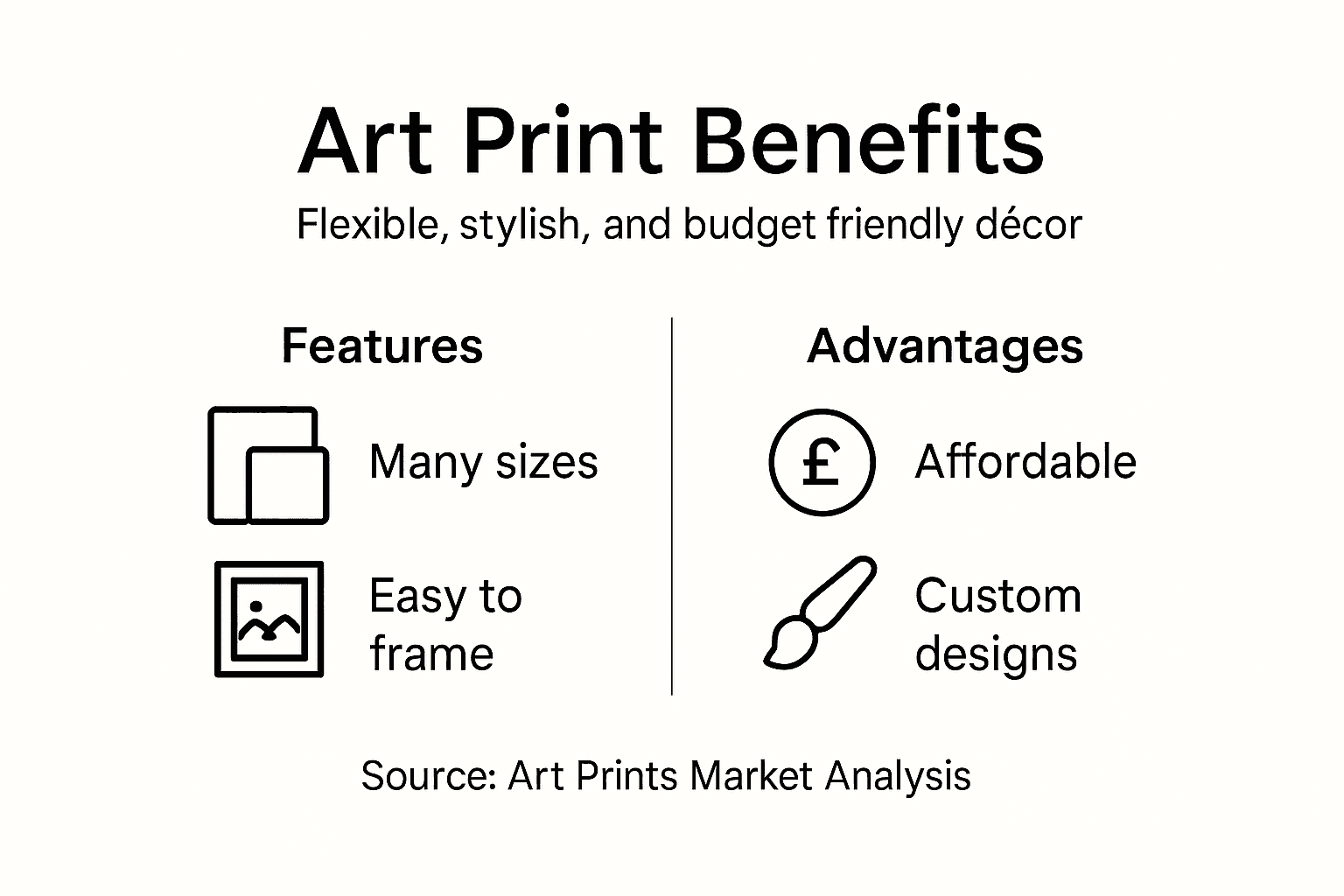
Monotype printmaking techniques exemplify the remarkable flexibility inherent in contemporary art print production. Unlike traditional artwork acquisition, art prints provide multiple avenues for customisation - from selecting specific colour palettes and dimensions to choosing frame styles and mounting options. This adaptability means art enthusiasts can effortlessly match artwork to existing interior design schemes, personalise gifts, or create cohesive visual narratives across different spaces.
The economic advantages of art prints are particularly compelling for budget-conscious art lovers. While original artworks can command astronomical prices, limited edition prints offer high-quality artistic expressions at a fraction of the cost. Contemporary printing technologies ensure remarkable colour fidelity and detail, allowing consumers to acquire museum-quality artwork that looks sophisticated and professional without requiring significant financial investment. The ability to experiment with different styles, rotate artwork seasonally, and update home decor becomes wonderfully accessible through art print platforms.
Pro tip: Consider requesting digital proofs or small samples before committing to larger art print purchases to ensure colour accuracy and aesthetic compatibility with your space.
Enhancing Interiors For Homes And Workspaces
Decorating with art prints transforms living and working spaces into dynamic, personalised environments that reflect individual narratives and aesthetic sensibilities. Art prints offer an extraordinary opportunity to curate spaces that tell stories, evoke emotions, and create visual interest beyond mere decoration. By strategically selecting artworks, individuals can craft immersive environments that communicate personal identity, professional character, and emotional depth.
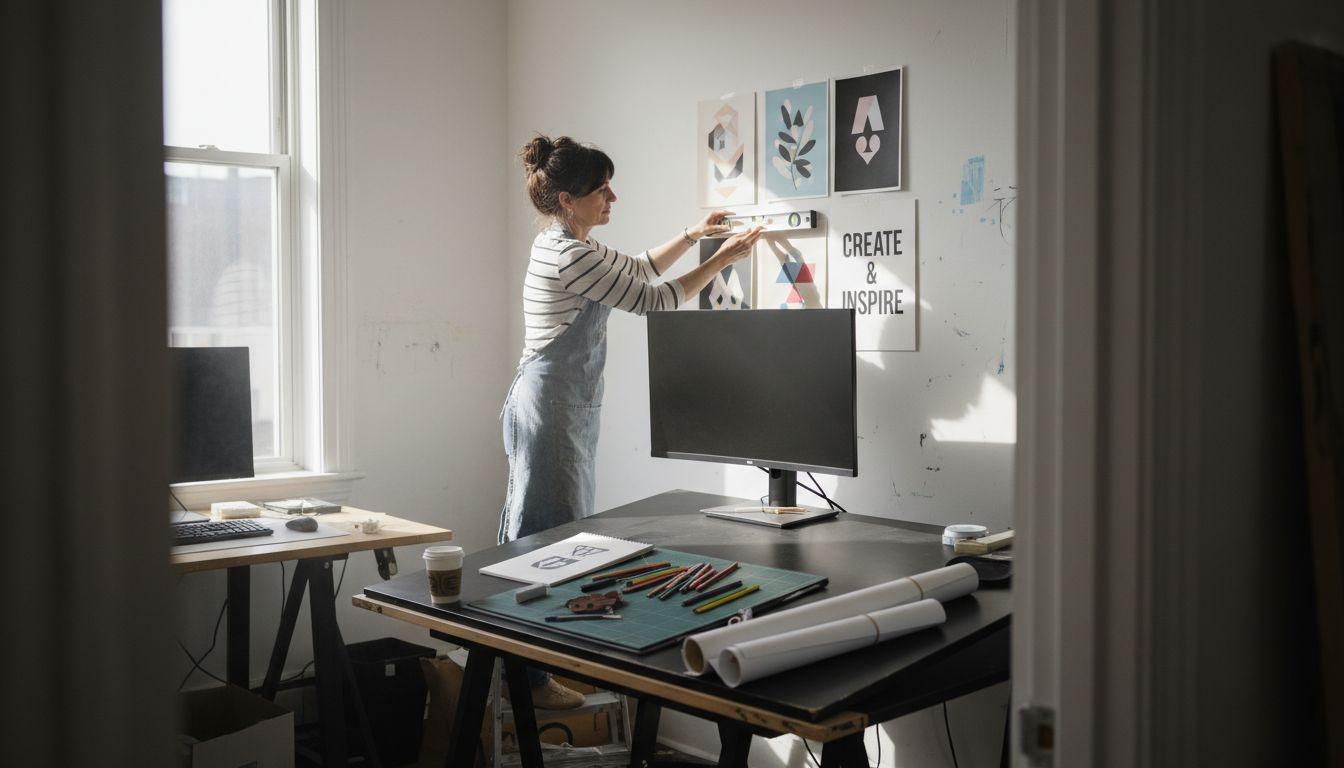
Hybrid workspace design increasingly recognises the psychological impact of visual surroundings on productivity and well-being. Art prints play a crucial role in bridging professional functionality with personal comfort, especially in contemporary work-from-home and flexible office environments. By introducing carefully chosen artworks, spaces can simultaneously feel professionally curated and intimately personal, supporting mental focus and creative inspiration.
The versatility of art prints allows for remarkable spatial transformation across different interior contexts. In home settings, prints can create focal points, establish mood, and complement existing design elements. In professional environments, they can represent organisational culture, stimulate creative thinking, and provide visual breaks that reduce workplace stress. Different art styles - from minimalist geometric prints to vibrant abstract compositions - can be strategically deployed to enhance spatial character, creating nuanced visual landscapes that adapt to changing aesthetic preferences and functional requirements.
Pro tip: Experiment with gallery wall arrangements using art prints of varying sizes and complementary colour palettes to create dynamic, visually engaging interior spaces.
Discover Stylish, Flexible, and Affordable Art Prints for Your Space
Many readers face the challenge of finding high-quality art that brings personality and style without the expense of original artworks. This article highlights key pain points such as the need for affordability, flexibility, and the ability to customise prints to suit personal or professional interiors. Concepts like limited edition numbering, printmaking techniques, and the value of artist signatures show the importance of authenticity and collector appeal even in reproductions.
At Frametheworld.co.uk, we understand these concerns and provide a curated selection of art prints that combine artistic integrity with versatility. Whether you seek lithographs, serigraphs, or relief prints, our platform offers customisation options that allow you to tailor prints by size, style, and framing to perfectly complement your home or workspace. Enjoy the confidence of investing in pieces that are both accessible and professionally crafted.
Ready to elevate your interiors with art that reflects your unique taste without compromising on quality or budget? Explore our range of high-quality wall art and decorative prints today and experience the ease of personalising timeless designs for a sophisticated look. Don’t wait to transform your space—visit Frametheworld.co.uk now to find your perfect art print.
Frequently Asked Questions
What are art prints?
Art prints are artistic reproductions created using various printmaking techniques, allowing artists to share their work through affordable, accessible pieces while maintaining the original artistic vision.
How do art prints differ from original artwork?
Original artwork is a unique creation made directly by an artist, while art prints are reproductions that can exist in multiple copies. Art prints can still hold substantial artistic value and may be signed and numbered by the artist.
What advantages do art prints offer for home and workspace décor?
Art prints provide stylish, flexible, and affordable décor options that can enhance the atmosphere of homes and workspaces. They allow for personal expression and can be easily customised to match existing interior design schemes or seasonal changes.
How can I choose the right art print for my space?
Consider the printing technique, edition number, and colour palette of the art print. Additionally, think about the theme and style that resonate with your personal aesthetic to ensure the artwork complements your environment.


Leave a comment
This site is protected by hCaptcha and the hCaptcha Privacy Policy and Terms of Service apply.