
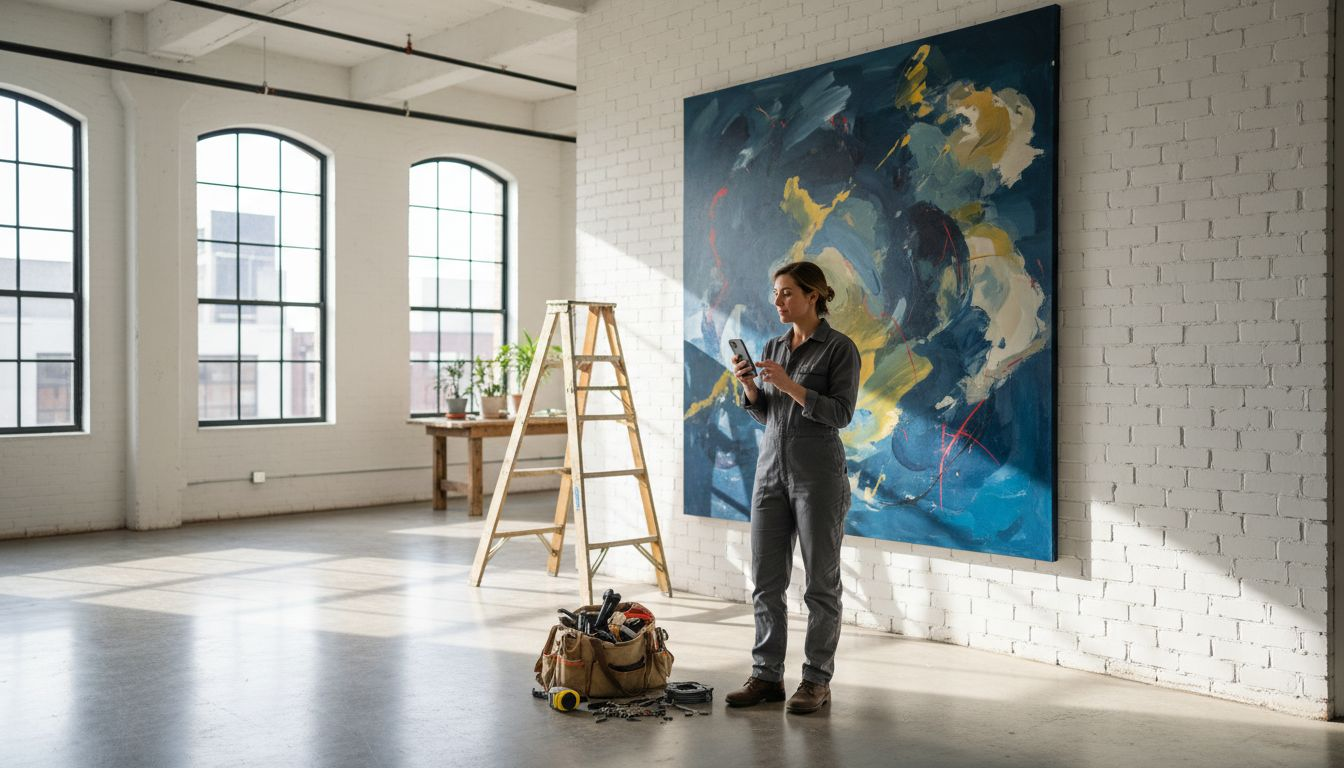
Choosing art for your home can go far beyond picking a simple picture for the wall. Large format art adds a dramatic touch, using size and scale as an expressive language that completely changes how a room looks and feels. This style offers homeowners powerful ways to fill empty space and create striking visual impact. Discover how large format art transforms everyday living areas into personal statements through bold design and tailored customisation.
Table of Contents
- What Is Large Format Art? Definition And Origins
- Popular Styles And Mediums In Large Format
- Customisation And Sizing For Any Space
- Installation, Display, And Practical Challenges
- Costs, Risks, And Common Pitfalls To Avoid
Key Takeaways
| Point | Details |
|---|---|
| Definition of Large Format Art | Large format art refers to artworks significantly larger than conventional sizes, challenging traditional display norms and altering viewer experiences. |
| Popular Mediums and Their Impact | Common mediums include oil, acrylic, digital prints, and mixed media, each offering distinct aesthetic qualities and influencing spatial interactions. |
| Customisation is Key | Effective custom sizing and understanding architectural context are crucial for ensuring large artworks harmonise with their intended spaces. |
| Installation and Financial Considerations | Professional installation and comprehensive financial planning are essential to mitigate risks and enhance the longevity of large format art investments. |
What Is Large Format Art? Definition and Origins
Large format art represents a bold artistic approach where scale becomes a primary aesthetic and emotional language. These expansive artworks deliberately challenge traditional display conventions by transforming spatial perceptions and viewer interactions. Experimental exhibition practices have historically driven this artistic movement, pushing boundaries of physical presence and engagement.
At its core, large format art refers to artworks significantly larger than conventional sizes, typically exceeding standard framing dimensions. These pieces range from oversized paintings and photographic prints to immersive installations that occupy entire walls or rooms. The defining characteristic is not just physical size, but the intentional use of scale to create dramatic visual impact and emotional resonance.
The origins of large format art can be traced to several key artistic developments:
- Late 20th-century experimental art movements challenging traditional gallery spaces
- Architectural and design influences expanding visual representation possibilities
- Technological advancements enabling high-quality production of massive artworks
- Minimalist and conceptual art traditions emphasising spatial relationships
Preservation research has also revealed fascinating technical challenges in mounting and displaying these substantial artworks, highlighting the complex intersection of artistic vision and practical considerations.
Pro tip: When selecting large format art, consider not just the artwork’s visual appeal, but how its scale will interact with and transform your specific architectural space.
Popular Styles and Mediums in Large Format
Large format art encompasses an extraordinary range of artistic styles and mediums, each offering unique visual and emotional experiences. Artists explore diverse materials that transform traditional artistic expressions into immersive, expansive experiences. The scale of these artworks fundamentally changes how viewers perceive and interact with visual narratives.
The primary mediums used in large format art include:
-
Painting:
- Oil paintings known for rich colour depth and longevity
- Acrylic works prized for vibrancy and quick drying times
- Watercolour techniques offering translucent, light-infused compositions
-
Printmaking:
- Screenprinting for bold, graphic large-scale designs
- Digital printing enabling photorealistic massive reproductions
- Lithography providing intricate, textured large format pieces
-
Mixed Media:
- Combining photography with paint or digital manipulation
- Incorporating textile and sculptural elements
- Using unconventional materials like metal, glass, and industrial composites
Each medium brings distinctive characteristics to large format art, allowing artists to experiment with texture, colour, and spatial dynamics. The choice of medium dramatically influences the artwork’s visual impact, emotional resonance, and interaction with architectural spaces.

Here is a quick comparison of popular large format art mediums and their advantages:
| Medium | Visual Impact | Durability | Notable Challenge |
|---|---|---|---|
| Oil Painting | Deep colours, classic richness | Excellent, lasts decades | Heavy, hard to transport |
| Acrylic | Vibrant, contemporary feel | Highly durable | Surface glare under lighting |
| Digital Print | Precise, photorealistic detail | Depends on substrate | Prone to fading if untreated |
| Mixed Media | Unique textures, layered effects | Varies by materials | Complex preservation needs |
| Screenprint | Bold, graphic visual statements | Stable with quality ink | Sensitive to moisture |
Contemporary large format art often blends traditional techniques with cutting-edge technologies, creating hybrid forms that challenge conventional artistic boundaries. Digital tools now enable artists to conceptualise and produce massive artworks with unprecedented precision and complexity.
Large format art transforms spaces by turning walls into canvases of storytelling and emotional expression.
Pro tip: When selecting large format artwork, consider how the medium’s inherent qualities will complement your specific interior design and lighting conditions.
Customisation and Sizing for Any Space
Large format art is not a one-size-fits-all solution, but rather a nuanced approach to transforming spaces through carefully considered dimensions and presentation. Custom sizing strategies play a crucial role in ensuring artworks harmonise perfectly with architectural environments, balancing visual impact and spatial proportions.
When selecting large format art, key considerations include:
-
Architectural Context:
- Wall height and width
- Existing room proportions
- Natural and artificial lighting conditions
- Furniture placement and room layout
-
Sizing Options:
- Standard sizes (24x36 inches)
- Bespoke custom dimensions
- Gallery-style panoramic formats
- Multi-panel installations
-
Technical Specifications:
- Image resolution
- Aspect ratio matching
- Framing preferences
- Mounting techniques
Professional image preparation standards emphasise the importance of high-resolution formats and precise dimensional planning to achieve optimal visual clarity and impact.
Customisation transforms art from a mere decoration to a strategic design element that communicates personality and enhances spatial dynamics.
Contemporary large format art solutions offer unprecedented flexibility, allowing homeowners to commission pieces that precisely fit their unique spaces. Digital technologies and advanced printing techniques enable remarkable precision in artwork creation, ensuring that every piece can be tailored to specific architectural requirements.
Pro tip: Measure your space meticulously and use painter’s tape to visualise potential artwork dimensions before making a final selection.
Installation, Display, and Practical Challenges
Large format art requires meticulous planning and expertise during installation, presenting a complex array of logistical and technical challenges. Mounting and display techniques demand sophisticated approaches to preserve artwork integrity and ensure optimal visual presentation.
Key installation challenges include:
-
Structural Considerations:
- Wall load-bearing capacity
- Appropriate hanging mechanisms
- Structural reinforcement requirements
- Weight distribution techniques
-
Environmental Factors:
- Humidity and temperature control
- Protection from direct sunlight
- Minimising dust and potential damage
- Vibration and movement mitigation
-
Technical Preparation:
- Professional site assessment
- Precise measurement protocols
- Specialised handling equipment
- Conservation-grade mounting materials
Expert installation strategies emphasise the importance of comprehensive planning and specialised equipment to manage complex artwork deployment.
Large format art installation is a delicate balance between artistic vision and technical precision.
Modern installation techniques have evolved dramatically, incorporating advanced technologies like lightweight rigid support panels and precision mounting systems. These innovations address traditional challenges associated with transporting, handling, and preserving expansive artworks.
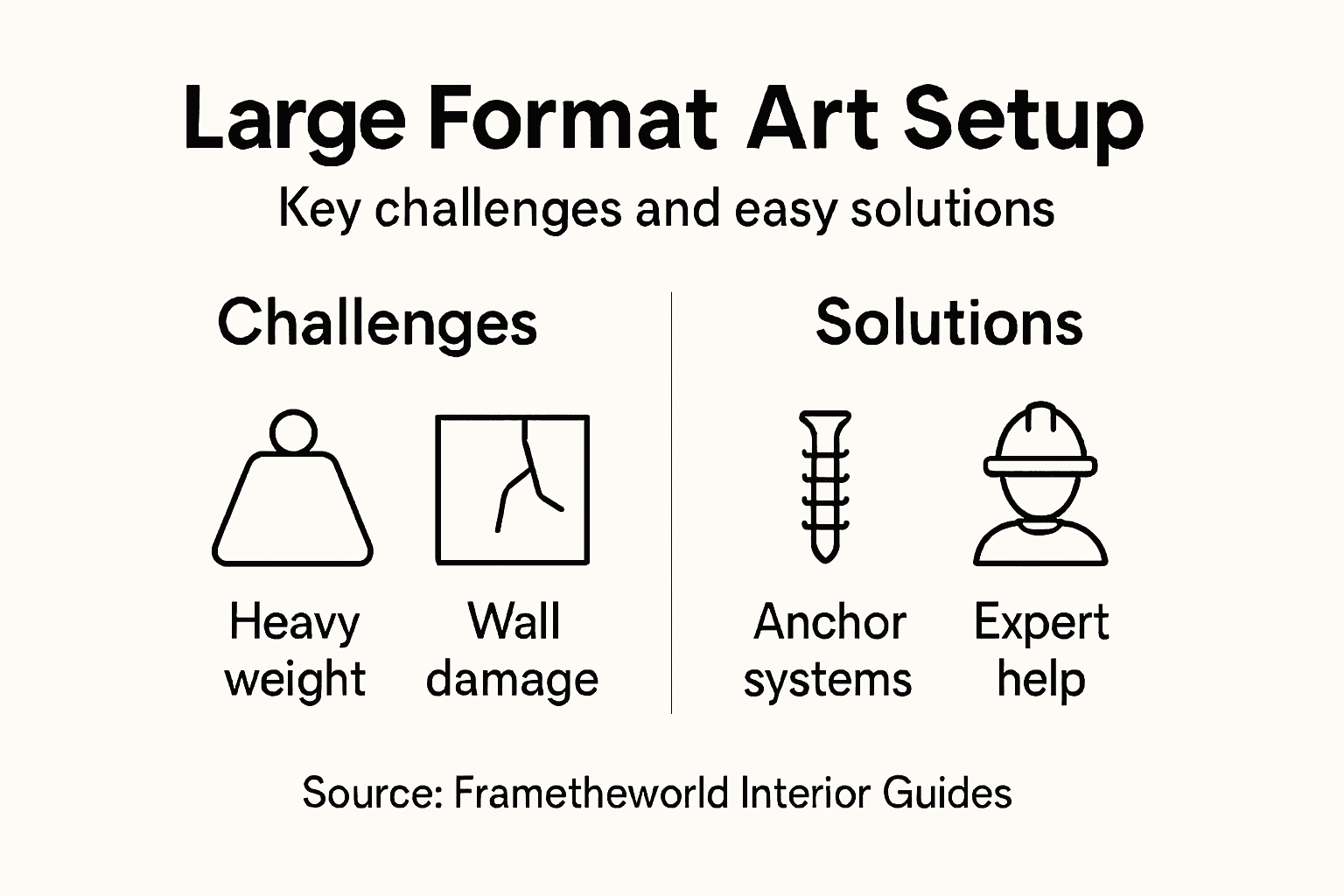
Pro tip: Always consult professional art installers who understand the nuanced requirements of large format artwork preservation and display.
Costs, Risks, and Common Pitfalls to Avoid
Large format art represents a significant investment that requires careful financial and strategic planning. Art market pricing dynamics reveal complex considerations that extend far beyond simple monetary transactions.
Key financial risks and potential pitfalls include:
-
Purchase Risks:
- Overvaluing artwork during market peaks
- Limited resale opportunities
- Authentication and provenance challenges
- Potential depreciation
-
Investment Considerations:
- Market volatility
- High transaction costs
- Illiquidity of large art pieces
- Complexity of art valuation
-
Collector Challenges:
- Preservation and maintenance expenses
- Professional installation costs
- Insurance and transportation complexities
- Long-term storage requirements
Global art market research highlights the unpredictable nature of art investments, emphasising the need for thorough due diligence and expert consultation.
Art is not just a purchase; it’s a nuanced financial and emotional investment requiring strategic thinking.
Contemporary art collecting demands sophisticated understanding beyond aesthetic appreciation. Potential buyers must navigate intricate market dynamics, understanding that large format artworks represent both emotional and financial commitments.
The following table outlines major cost factors and risks unique to investing in large format art:
| Cost Factor | Why It Matters | Risk if Overlooked |
|---|---|---|
| Professional Appraisal | Ensures fair value and authenticity | Risk of overpaying or fakes |
| Installation Services | Protects artwork, prevents damage | Expensive mistakes or accidents |
| Long-Term Insurance | Covers theft, damage, or loss | Losses not recovered financially |
| Climate Control | Preserves condition and value | Artwork deterioration, lost value |
| Resale Complexity | Large pieces harder to sell | Illiquid investment |
Pro tip: Always obtain independent professional appraisals and documentation before purchasing significant art pieces to mitigate financial risks.
Elevate Your Space with Custom Large Format Art from Frametheworld
Transforming your environment with large format art demands careful attention to scale, medium, and installation challenges as highlighted in the article. Whether you face difficulties in finding artwork that perfectly fits your architectural space or worry about preserving the visual and emotional impact of oversized pieces, Frametheworld offers tailored solutions. Our platform allows you to explore a vast selection of high-quality wall art with options for custom sizing and bespoke commissions, making it easier to overcome common pitfalls such as mismatched proportions or installation complexities.
Experience the power of large format art to redefine your interiors with seamless precision. Visit Frametheworld to browse collections designed for substantial impact or create your own statement piece that suits your unique space. Start your journey today and bring bold, transformative art to your walls with expert support every step of the way.
Frequently Asked Questions
What is large format art?
Large format art refers to artworks that are significantly larger than conventional sizes, typically exceeding standard framing dimensions. This includes oversized paintings, photographic prints, and immersive installations that engage viewers through their scale.
What are some popular mediums used in large format art?
Common mediums include oil and acrylic painting, printmaking techniques like screenprinting and digital printing, and mixed media that combines various materials, such as photography and textiles. Each medium offers unique characteristics that influence visual impact and emotional resonance.
How can I choose the right size for large format art in my space?
Consider the architectural context, including wall height, room proportions, and existing furniture layout. Custom sizing options are available, allowing for bespoke dimensions that enhance the artwork’s visual impact while harmonising with the environment.
What are the installation challenges associated with large format art?
Key installation challenges include ensuring that the wall can bear the artwork’s weight, selecting appropriate hanging mechanisms, and protecting the artwork from environmental factors such as humidity and sunlight. Professional installation is often recommended to handle these complexities.


Leave a comment
This site is protected by hCaptcha and the hCaptcha Privacy Policy and Terms of Service apply.