
TL;DR:
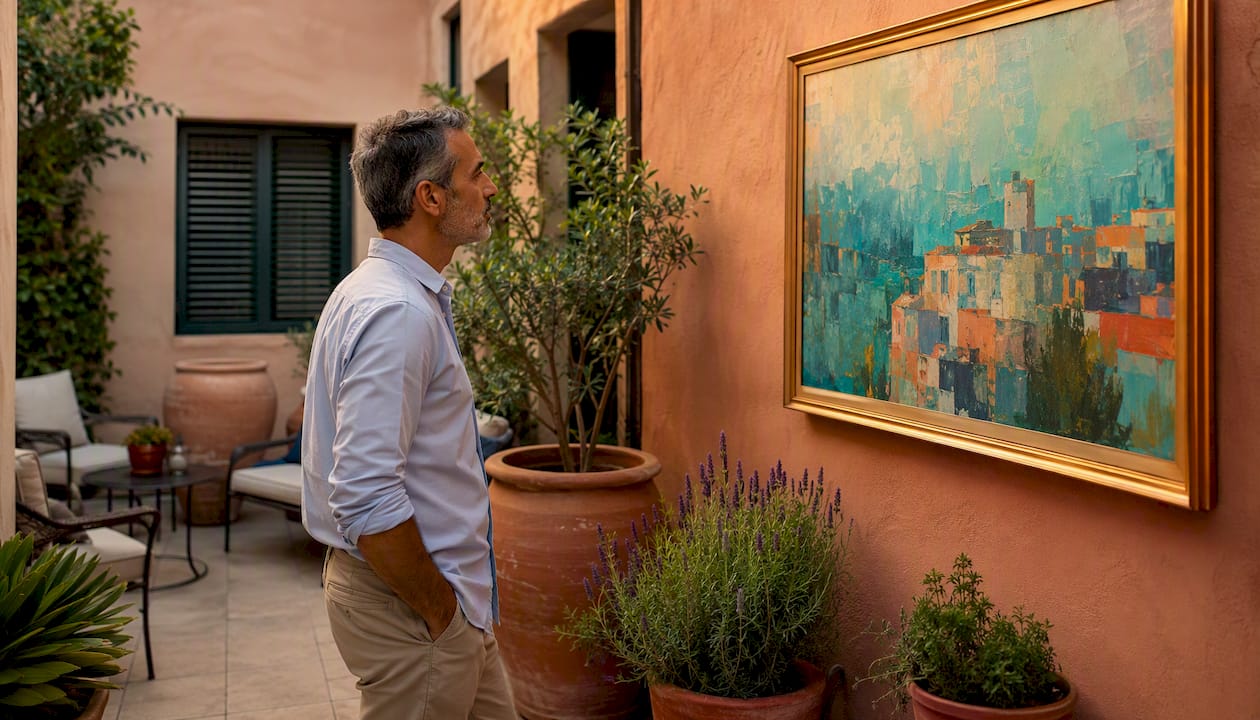
- Commissioning textured, hand-painted art in UK rental homes enhances visual impact and supports placemaking. Selecting the right art size, material, and placement behind key furniture maximizes marketing and tenant engagement. Bespoke commissions offer lasting differentiation, especially for premium properties and communal spaces.
For most UK rental homes, commissioning bespoke, hand-painted, textured wall art gives the strongest combination of durability, placemaking impact, and marketing return. The Association for Rental Living recommends embedding art from the outset of build-to-rent projects, and UK planning policy supports community art contributions through section 106 obligations. Frametheworld offers both ready-made collections and fully bespoke commissions suited to rental contexts.
“Art is what makes a place truly memorable. It’s what people Instagram. It’s what they tell their mates about. It’s the landmark they use when giving directions.” — Martyn Evans, Creative Director, Landsec
Your single most useful next step: commission one mid-sized textured original (60–90 cm wide) for the room that features in your listing’s hero photograph.
- Choose hand-painted, textured originals for premium lets and BTR communal spaces
- Use framed canvas prints for high-turnover or student lets where replacement cost matters
- Brief every commission around the hero photo location first, dimensions second
- Allow 4–8 weeks lead time for a bespoke piece; 1–2 weeks for ready-made
Table of Contents
- Why does bespoke art matter in rental homes?
- Which types of artwork work best in rental properties?
- How do you size and place art in rental rooms?
- What materials and finishes make art rental-proof?
- How do you commission bespoke hand-painted art in the UK?
- How do you install and secure art in rental properties?
- Which art suits each rental type?
- What evidence supports investing in art for rental properties?
- Key takeaways
- Why I think most landlords are still underinvesting in art
- Commission or buy rental art from Frametheworld
- Useful sources and further reading
Why does bespoke art matter in rental homes?
Art in rental properties is not a styling afterthought. Market commentary consistently links curated visual décor to stronger enquiry rates and higher perceived rental value. For short-let hosts, that translates directly into booking conversion. For BTR operators, it shapes whether a development feels like a community or a corridor.
The ARL is explicit: narrative-driven commissions create a distinct identity, reduce planning friction, and support resident acquisition and retention. Developers commissioning local artists across multiple sites shift perception from generic to authentic, which improves both marketing and resident engagement. That is a portfolio-level return on a relatively modest line item.
“Buildings alone don’t create legacy. Places do. And places need art to make them feel richer, warmer… odder. To give them moments of delight and surprise.” — Martyn Evans, Landsec
Pro Tip: Place your strongest original artwork on the wall directly behind the main seating or bed — the exact position a wide-angle listing camera captures. A textured piece here adds depth and shadow that flat prints simply cannot replicate on screen.
For curating art in commercial spaces, the same principle applies: the piece the camera sees first is the piece that sells the space.
Which types of artwork work best in rental properties?
Not all art survives rental use equally. Here is how the main options compare.
- Textured oil and impasto originals: The strongest photographic performers. Real brushwork casts small shadows under camera lighting, giving listings genuine visual depth. Practitioners consistently note this effect in short-term rental photography, though it is observational evidence rather than a formal study.
- Hand-painted abstracts on heavy canvas: Durable, cleanable, and versatile across interior styles. A 400gsm canvas with a quality stretcher bar resists warping and handles the humidity fluctuations common in rented flats.
- Limited-edition giclée prints: A sensible choice for budget-conscious landlords or high-turnover lets. They lack the photographic stopping power of originals but hold up well when properly framed.
- Framed canvases with acrylic glazing: Lighter than glass, shatter-resistant, and easier to rehang between tenancies. Good for communal corridors and stairwells.
- Robust mirror panels: Not strictly art, but they serve a similar visual function in narrow hallways and add perceived space. Choose frameless or metal-framed options that cannot splinter.
Textured originals create a 3D quality on camera that flat prints cannot match — this is why short-term rental hosts increasingly favour hand-painted pieces for their hero-shot walls.
When to choose a bespoke commission over a print: if the let commands a premium price, if the property is in a competitive short-let market, or if you are fitting out BTR communal spaces where placemaking is part of the planning offer. For a standard long-term let on a tight budget, a well-framed limited-edition print does the job.
How do you size and place art in rental rooms?
Sizing errors are the most common mistake landlords make. A piece that is too small reads as an afterthought; one that is too large overwhelms a modest room.
- Living room sofa wall: art width should be 50–75% of the sofa’s width. For a standard 200 cm sofa, that means a piece 100–150 cm wide, or a triptych spanning the same total width with 5 cm gaps between panels.
- Bedroom headboard wall: match art width to the headboard, not the full wall. A 150 cm king headboard suits a single piece 120–140 cm wide, or two panels of 55–60 cm each.
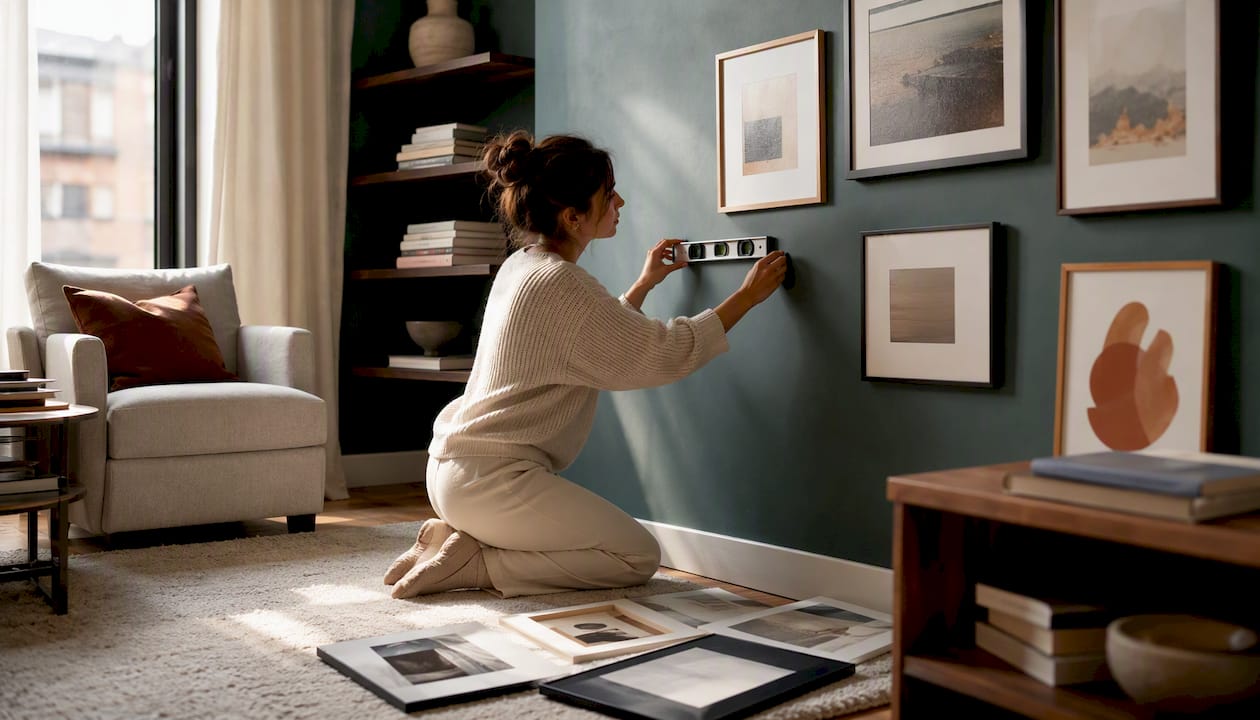
- Hang height: centre the artwork at 145–150 cm from the floor in standard rooms. Drop to 135 cm above a sofa or bed so the piece relates visually to the furniture below it.
- Communal corridors: use a series of consistently sized pieces (e.g. 50 × 70 cm) at regular intervals rather than a single large work. This creates rhythm without requiring precise alignment.
- Gallery walls: keep outer edges within a notional rectangle; maintain 5–8 cm gaps between frames for a considered, not chaotic, arrangement.
Commissioning brief checklist for placement:
- Room dimensions (width × height × depth)
- Wall colour and finish
- Primary furniture piece the art will relate to (sofa, bed, dining table)
- Hero photo wall: yes/no
- Natural light direction and any glare risk
- Preferred orientation (landscape, portrait, square)
For a detailed art display arrangement guide, Frametheworld’s blog covers hang templates for every common room type.
What materials and finishes make art rental-proof?
| Material | Durability | Cleaning tolerance | Best use |
|---|---|---|---|
| Heavy canvas (400gsm+) | High | Damp cloth, mild soap | Living rooms, bedrooms |
| Textured oil/impasto | High | Dry dust only; no moisture | Hero walls, premium lets |
| Acrylic on canvas | High | Damp cloth | High-turnover lets |
| Giclée print, framed | Medium | Frame wipe only | Budget lets, corridors |
| Metal/aluminium print | Very high | Damp cloth, most cleaners | Communal spaces, bathrooms |
| Laminated paper print | Low | Surface wipe only | Short-term staging only |
Strong frames and robust canvases cost more initially but reduce long-term replacement frequency in rental contexts — a point worth making to any landlord who balks at the upfront price.
Maintenance checklist:
- Dust textured originals monthly with a dry, soft brush; never use a damp cloth on impasto
- Wipe acrylic and metal prints with a barely damp microfibre cloth between tenancies
- Inspect frames and hanging hardware at every tenancy change; tighten D-rings and replace picture wire showing kinks
- Re-glaze or re-frame prints every 3–5 years if UV-protective acrylic yellows
One practical note on insurance: inform your landlord insurance provider that original artworks are present and request a named-item extension if individual pieces exceed £500 in value. Include all art in the tenancy inventory with photographs and purchase receipts.
How do you commission bespoke hand-painted art in the UK?
The commissioning process is straightforward once you know the steps. Typical UK lead times: small pieces (up to 50 × 50 cm) take 2–4 weeks; medium pieces (50–100 cm) take 4–6 weeks; large or multi-panel works take 6–10 weeks.
- Write a brief covering room dimensions, wall colour, furniture, hero photo need, preferred style, and budget.
- Request a sketch or mood board from the artist or studio — most suppliers provide this within 3–5 working days.
- Approve the composition in writing before painting begins.
- Painting and drying: allow 1–3 weeks depending on medium; oils need longer drying time than acrylics.
- Framing: add 5–10 working days for a custom frame; ready-made frames are faster.
- Delivery and installation: courier delivery for smaller pieces; white-glove installation for large or heavy works.
Typical UK price bands (bespoke hand-painted, unframed):
- Small (up to 50 × 50 cm): £150–£400
- Medium (50–100 cm): £400–£900
- Large (100 cm+): £900–£2,500+
Factors that shift cost upward: impasto or mixed-media texture, multi-panel format, rush turnaround, and bespoke colour matching to an existing interior scheme. For guidance on choosing artwork for new developments, Frametheworld’s guide covers brief templates and developer-specific considerations.
Quick commissioning brief template:
- Room and wall dimensions
- Wall colour (RAL or paint brand reference if known)
- Style reference (e.g. Wabi Sabi, abstract, Pop Art)
- Orientation and preferred size
- Budget and deadline
- Hero photo wall: yes/no
How do you install and secure art in rental properties?
Fixings are where landlords most often cut corners, and where damage claims originate.
- Plasterboard walls: use hollow-wall anchors rated to at least double the artwork’s weight; a 5 kg canvas needs a fixing rated to 10 kg minimum.
- Masonry walls: rawl plugs and screws are reliable; use a stud finder or cable detector before drilling.
- Communal spaces: consider professional installation for any piece over 10 kg or mounted above head height; document the installer’s method for building management records.
- Anti-theft options: tamper-resistant security screws on frames deter opportunistic removal; concealed hanging cables with locking brackets work well in corridors.
- Photographic inventory: photograph every piece in situ before a tenancy begins and attach images to the inventory. This protects both landlord and tenant.
Landlord consent and documentation: include art in the tenancy inventory as a named item with condition notes. For BTR communal spaces, confirm with the building’s management company whether fixings require prior written approval — many leases require this for anything penetrating a shared wall.
Which art suits each rental type?
| Rental type | Recommended art | Rationale |
|---|---|---|
| Premium short-let (STR) | Textured originals, hand-painted abstracts | Photographic impact; commands higher nightly rate |
| Standard long-term let | Framed giclée prints, acrylic on canvas | Durable, affordable, easy to replace |
| Student let | Metal prints, laminated framed prints | Withstands high turnover; low replacement cost |
| BTR communal spaces | Narrative commissions, local artist murals | Placemaking, planning benefit, resident identity |
| Serviced apartments | Hand-painted canvases, bold Pop Art | Memorable, photographable, brand-consistent |
For art in communal spaces, rotating the collection every 12–18 months sustains resident engagement and gives the development a reason to communicate with its community.
BTR operators should note that developers using local commissioned works across portfolios consistently report stronger resident engagement and a more distinctive identity than those relying on generic prints.
What evidence supports investing in art for rental properties?
The business case is well-documented across planning, development, and lettings commentary.
“Public art might be one of the smartest investments we can make in a scheme.” — Martyn Evans, Creative Director, Landsec
- Visual décor and curated art are linked to measurably better enquiry rates and higher perceived rental value in market commentary.
- The ARL recommends integrating art early in the design and planning process to de-risk planning objections and strengthen community links.
- UK planning policy allows local authorities to require public art contributions as part of section 106 agreements for larger developments — making early commissioning a planning asset, not just a design choice.
- Developers commissioning local artists report that the resulting works become neighbourhood landmarks, driving footfall and making the address more memorable.
For portfolio-level ROI on artwork in developments, Frametheworld’s guide covers the evidence in more detail. Before-and-after listing photography is the most direct way to demonstrate impact: shoot the hero wall before installation and again after, then compare engagement metrics on the listing.
Key takeaways
Bespoke, hand-painted textured art gives UK rental homes the strongest combination of photographic impact, durability, and placemaking value when commissioned for the hero photo wall.
| Point | Details |
|---|---|
| Choose the hero wall first | Commission or buy for the wall your listing camera captures — this single decision drives the most marketing return. |
| Match material to tenancy type | Use textured originals for premium lets; metal or acrylic prints for high-turnover student and standard lets. |
| Size to furniture, not the wall | Art width should be 50–75% of the sofa or headboard width; hang centre at 145–150 cm from the floor. |
| Allow realistic lead time | Bespoke commissions take 4–8 weeks; budget £400–£900 for a medium hand-painted piece in the UK. |
| Frametheworld for commissions | Frametheworld offers bespoke hand-painted commissions, the Wabi Sabi textured collection, and bold Pop Art pieces suited to rental contexts. |
Why I think most landlords are still underinvesting in art
The conventional wisdom is that rental art should be cheap and replaceable. Buy a few prints, hang them straight, move on. That logic made sense when lettings were a volume game. It makes less sense now, when a short-let listing competes against hundreds of near-identical flats and a BTR development needs to justify its service charge.
What most landlords miss is that the art investment is not really about the art. It is about the photograph. A single textured original on the hero wall changes how a room reads on a phone screen. It adds shadow, depth, and a sense that someone with taste made decisions here. That perception shifts enquiry rates before a prospective tenant has read a single word of the listing.
The same logic applies at scale. Developers who treat art as a planning obligation to discharge as cheaply as possible end up with generic prints that nobody notices. Developers who commission local artists end up with pieces people photograph, share, and use as landmarks. One approach costs marginally less upfront. The other builds an address.
The practical shortcut: brief for the photograph first. Decide which wall the camera will face, choose the art for that wall, and let everything else follow. Scale, style, and budget decisions become much clearer once the hero shot is the anchor.
Commission or buy rental art from Frametheworld
Frametheworld offers three clear routes for landlords and hosts. The Wabi Sabi collection brings hand-painted textured abstracts with the impasto depth that photographs well in listing shots, available to buy and ship without a commission lead time. The Pop Art collection suits serviced apartments and short-lets targeting younger tenants who want character over neutrality. For BTR communal spaces or premium lets where a generic piece will not do, Frametheworld takes bespoke commissions: submit a brief with your room dimensions, wall colour, and style reference, and the team responds with a proposal. Request a quote directly on the website to get started.
Useful sources and further reading
- Association for Rental Living: art in BTR — the ARL’s case for embedding art in BTR projects from the planning stage, with guidance on community integration and resident acquisition.
- Planning obligations (section 106) — GOV.UK — the primary UK planning reference for public art and community benefit contributions in larger developments. Consult your local planning officer for site-specific requirements.
- BDonline / Landsec: “Buildings alone don’t create legacy” — practitioner quotes from Martyn Evans (Landsec) and others on art as place-making investment.
- Multifamily Executive: Cortland’s local art strategy — case reporting on portfolio-wide commissioned art programmes and their effect on resident engagement.
- World Business Outlook: visual décor and rental value — market commentary on the link between curated décor and enquiry rates.
- Decoart: art and property aesthetics — practical guidance on framing, materials, and durability for rental contexts.
- Lei Kol Art: originals for short-term rentals — practitioner guidance for STR hosts on photographic impact and placement of original works.
- Frametheworld portfolio and case studies: contact Frametheworld directly for before-and-after project images and commissioning case studies relevant to your property type.
- BTR communal commissions: for larger schemes, engage your local planning officer early to establish whether a public art contribution is expected as part of the planning offer.


Leave a comment
This site is protected by hCaptcha and the hCaptcha Privacy Policy and Terms of Service apply.