

Choosing the right wall art can feel daunting when every room in your British home seems to ask for a different touch of style. Striking the balance between personality and harmony means weighing up your space, décor, and emotional atmosphere. This guide walks you through assessing your home’s unique features, defining your design story, and uncovering personalised wall art options that showcase your taste while seamlessly integrating with your interiors.
Table of Contents
- Step 1: Assess Your Space And Interior Style
- Step 2: Define Your Wall Art Theme And Mood
- Step 3: Select Suitable Size And Format Options
- Step 4: Explore Customisation And Bespoke Solutions
- Step 5: Review Placement And Verify Visual Impact
Summary of Insights
| Key Takeaway | Clear Explanation |
|---|---|
| 1. Assess space and style carefully | Evaluate your room’s dimensions, colour scheme, and furniture to select complementary art. |
| 2. Define art theme and mood | Choose artwork that reflects the emotional atmosphere you wish to create within your space. |
| 3. Select appropriate size and format | Tailor the size and format of your art to fit and enhance the spatial dynamics of your room. |
| 4. Explore customisation options | Personalise your artwork to better reflect your aesthetic, using custom sizes, colours, or unique designs. |
| 5. Review placement for impact | Ensure proper placement of art to enhance visual appeal and create a curated look in your space. |
Step 1: Assess your space and interior style
Choosing wall art requires a strategic approach that considers both your physical environment and personal aesthetic. Understanding how your space’s architecture, colour palette, and existing décor interact will guide your art selection process.
Start by conducting a thorough visual survey of your room. Measure your available wall spaces precisely, noting dimensions and considering key factors like natural light, wall colour, and existing furniture arrangements. Different rooms demand different art approaches - a minimalist living room might suit large, statement pieces, while a busy hallway could benefit from a carefully curated gallery wall.
To streamline your selection, consider these critical assessment criteria:
- Measure wall dimensions accurately
- Analyse the existing colour scheme
- Evaluate natural and artificial lighting
- Consider furniture placement and style
Architectural elements play a significant role in art selection. High ceilings might accommodate larger, vertically oriented pieces, while compact spaces could require more delicate, smaller artworks. Wall Art Selection Guide provides additional insights into matching art with architectural styles.
Matching wall art to your interior style is about creating harmony, not just filling empty spaces.
Understand your aesthetic language. Contemporary spaces might favour abstract or minimalist pieces, while traditional interiors could benefit from classical or representational art. Your wall art should feel like a natural extension of your home’s existing character.
Here’s a quick reference for matching art styles to interior themes:
| Interior Style | Recommended Art Types | Key Visual Impact |
|---|---|---|
| Contemporary | Abstract, minimalist | Clean lines, modern aesthetics |
| Traditional | Classic, representational | Timeless, formal ambience |
| Rustic/Industrial | Textured, narrative-driven | Cosy, grounded atmosphere |
| Eclectic/Playful | Mixed media, bold prints | Energy and expressive detail |
Expert Advice: Consider creating a digital mood board to visualise how potential art pieces will interact with your existing interior design before making a final selection.
Step 2: Define your wall art theme and mood
Transforming your living space through wall art requires a thoughtful approach to creating a cohesive aesthetic narrative that reflects your personal style and emotional landscape. The art you choose should not merely decorate walls but communicate a deeper narrative about your home’s character and your individual sensibilities.
Begin by exploring the emotional resonance you want to create within each room. How Art Shapes the Mood of a Room suggests that different artistic styles can dramatically influence psychological perception and atmosphere. Consider the emotional temperature you wish to establish:
- Calm and serene environments (blues, minimalist landscapes)
- Energetic and vibrant spaces (bold abstracts, warm colours)
- Sophisticated and elegant settings (monochromatic photography, classic portraits)
- Playful and eclectic rooms (mixed media, contemporary prints)
Art is not just decoration - it’s a silent storyteller that communicates your interior’s deepest emotional language.
Think strategically about thematic cohesion. Your chosen artwork should harmonise with your existing interior design elements, creating a seamless visual dialogue. Contemporary minimalist interiors might favour clean, geometric pieces, while rustic or traditional spaces could benefit from more textured, narrative-driven artworks.
Consider your artwork’s potential to serve as a focal point or to complement existing design elements. Some pieces will demand attention, while others will provide subtle background depth. Understand your room’s visual dynamics and select art that either anchors or enhances the existing aesthetic.
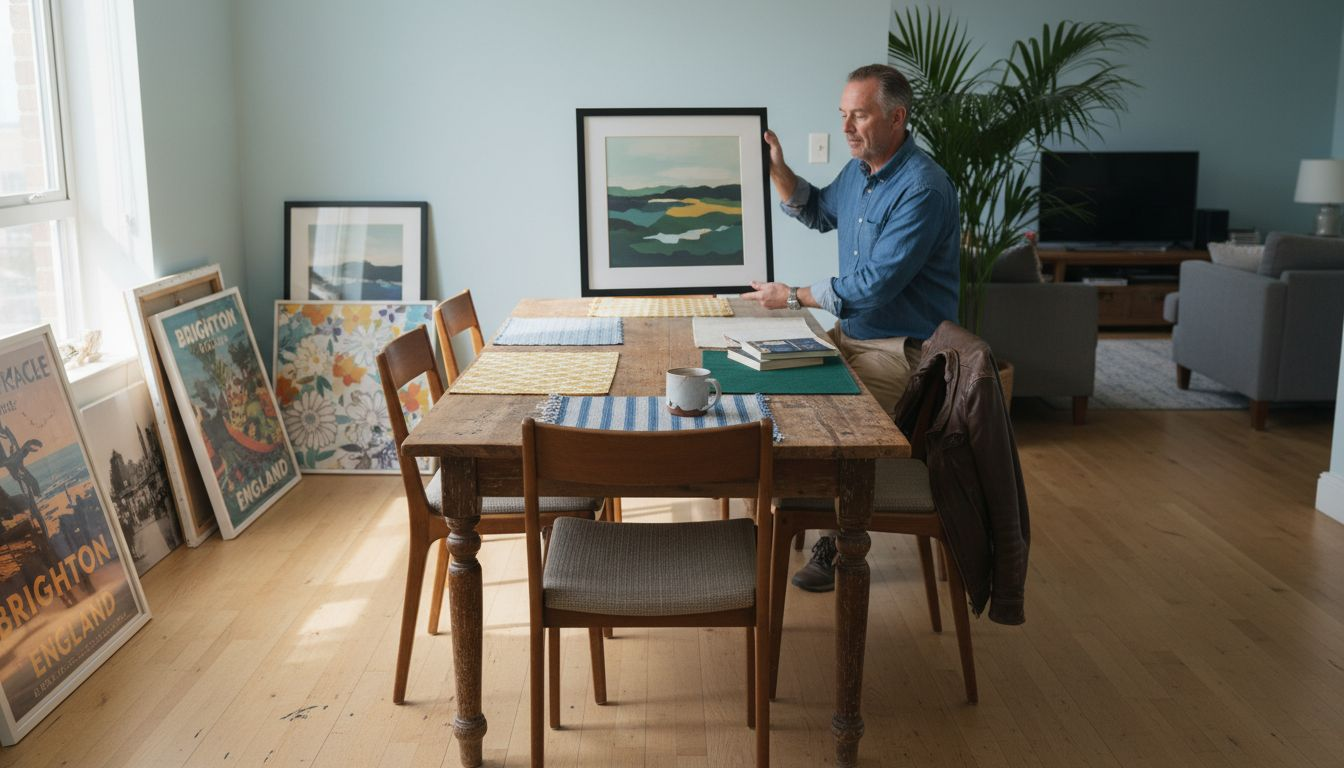
Expert Advice: Collect inspirational images from design magazines and digital platforms to develop a clear vision of your desired artistic theme before making final selections.
Step 3: Select suitable size and format options
Choosing the right size and format for wall art is a nuanced process that can dramatically transform your living space. Wall art trends for 2026 suggest that thoughtful selection goes beyond mere decoration, serving as a strategic design element that communicates your personal aesthetic.
Understand the fundamental principles of art sizing and placement. Your artwork should complement, not compete with, existing room elements. Consider these key guidelines for selecting appropriate sizes:
- Small spaces (less than 1m wide): 30-60cm artwork
- Medium spaces (1-2m wide): 60-90cm artwork
- Large walls (over 2m wide): 90-150cm statement pieces
- Gallery walls: Mix of varying sizes (20-60cm)
The right artwork size creates visual balance, anchoring your room’s design narrative.
Explore diverse format options that add texture and depth to your space. Contemporary interiors are moving beyond traditional framed prints, embracing more dynamic presentations. Experiment with mixed media that includes canvas prints, metal installations, textile hangings, and three-dimensional art pieces that create visual intrigue.
Consider how different formats interact with your room’s architectural elements. High ceilings might accommodate vertical panoramic pieces, while compact spaces benefit from clustered smaller artworks or slim, elongated formats that create an illusion of expanded space.
The following table summarises how art format choices affect room perception:
| Format Type | Best Room Use | Perceived Effect on Space |
|---|---|---|
| Large, vertical art | High ceilings | Adds grandeur, emphasises height |
| Clustered small art | Compact/awkward walls | Creates visual interest, adds depth |
| Panoramic pieces | Wide spaces | Stretches perception, balances width |
| 3D/mixed media | Feature walls | Adds texture, draws attention |
Expert Advice: Use painter’s tape to outline potential artwork sizes on your wall, helping you visualise proportions before making a purchase.
Step 4: Explore customisation and bespoke solutions
Personalising wall art transforms a generic space into a uniquely expressive environment that reflects your individual narrative. While standard art collections offer convenience, bespoke solutions provide an opportunity to create truly meaningful visual statements that resonate with your personal aesthetic.
Customisation encompasses multiple approaches to making art distinctly yours. Consider these avenues for creating personalised artwork:
- Colour customisation to match existing room palettes
- Size adaptations for specific wall dimensions
- Personal photograph transformations
- Commissioned original artwork
- Mixed media interpretations
Bespoke art is not just decoration - it’s a personal storytelling medium that captures your unique essence.
Engaging with alternative design platforms can unlock innovative customisation possibilities. Professional artists and digital platforms now offer sophisticated tools that enable you to modify existing designs or create entirely original pieces tailored to your specific vision.
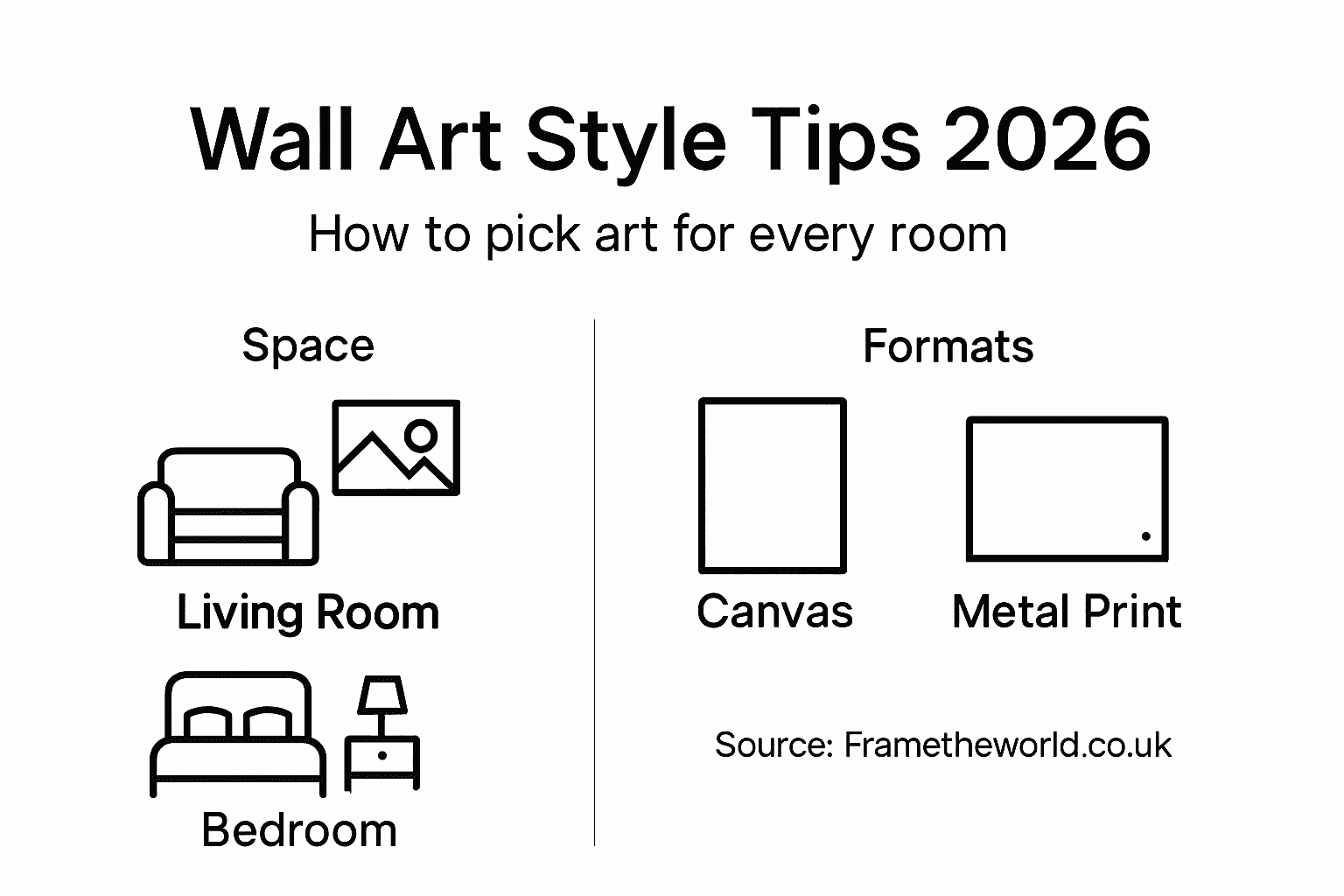
The most successful bespoke art solutions blend technical precision with creative interpretation. Communicate your vision clearly with artists or designers, providing mood boards, colour swatches, and specific contextual details about your space to ensure the final piece harmonises perfectly with your interior design.
Expert Advice: Request digital mockups or scaled representations of customised art before final production to visualise how the piece will integrate with your existing décor.
Step 5: Review placement and verify visual impact
The final stage of selecting wall art involves a meticulous evaluation of placement and visual harmony. Expert wall art placement strategies reveal that successful art integration requires more than simply hanging a piece on the wall.
Carefully consider these critical placement principles to ensure optimal visual impact:
- Vertical centering relative to furniture
- Maintain 60-75% wall space coverage
- Consistent spacing in gallery arrangements
- Align with eye-level viewing perspectives
- Consider room function and lighting conditions
Perfect art placement transforms a room from decorated to curated.
Precision matters when positioning artwork. Measure and mark carefully before making any permanent installations, using tools like laser levels or painter’s tape to ensure accurate alignment. Pay special attention to the relationship between your art and surrounding furniture, ensuring the piece feels integrated rather than awkwardly positioned.
Lighting plays a crucial role in enhancing your artwork’s visual appeal. Natural and artificial light can dramatically alter how colours and textures are perceived, so experiment with different lighting angles to highlight your chosen pieces most effectively.
Expert Advice: Take photographs of your proposed art placement and review them digitally to gain an objective perspective on the visual composition.
Discover the Perfect Wall Art to Elevate Your Stylish Home in 2026
Choosing the right wall art can feel overwhelming when trying to balance space, mood, and personal style. This article highlights key challenges such as selecting appropriate sizes, matching art to your interior theme, and ensuring ideal placement. Whether you seek calm minimalism or vibrant statement pieces you understand that wall art is not just decoration but a powerful storyteller of your home’s personality and atmosphere.
At Frametheworld.co.uk, we make finding that perfect artwork simple and inspiring. Explore our curated collections like Vertical Wall Art – Hand-Painted Modern Art Pieces designed to complement contemporary spaces or browse Wall art 2 piece – Unique Wall Art for Modern Interiors for harmonised, bold arrangements. Our platform also offers bespoke customisation options that let you personalise size, colour, and style so your art fits flawlessly with your interior vision.
Ready to transform your rooms with meaningful art that speaks to you? Start your journey today at Frametheworld.co.uk and discover how effortless it is to choose pieces that bring balance, emotion, and style into your home.
Frequently Asked Questions
How do I assess my space before choosing wall art?
Start by measuring your wall dimensions and evaluating your existing colour scheme, furniture placement, and lighting conditions. This will help you understand what size and style of art will best complement your space. Take detailed notes and create a visual survey of your room to guide your selection process.
What themes and moods should I consider when selecting wall art?
Consider the emotional atmosphere you want to create in each room, such as calm, vibrant, or sophisticated. Choose art that aligns with these feelings and complements your existing decor for a cohesive narrative. List down the desired moods for each room to guide your artistic choices.
How do I choose the right size and format for my wall art?
Determine the appropriate size of artwork based on your wall space: for small spaces, aim for 30-60 cm pieces, while large walls can accommodate art up to 150 cm or more. Experiment with different formats, such as framed prints or 3D pieces, to add depth to your space. Measure and mark potential sizes on your wall to visualise proportions effectively.
Should I consider customisation options when selecting wall art?
Yes, customisation allows you to tailor your artwork to better fit your personal aesthetic and your home’s colour palette. Explore options for colour, size adjustments, and commissioned pieces to create a unique visual statement. Create a mood board to communicate your vision clearly when discussing customisation with artists.
What placement strategies should I follow for optimal art display?
Ensure that your artwork is centred vertically above furniture and covers about 60-75% of the wall space for balance. Allow consistent spacing in gallery arrangements and ensure pieces are aligned with eye-level viewing perspectives. Use tools like painter’s tape to mark potential placements before making them permanent, ensuring a curated appearance in your room.


Leave a comment
This site is protected by hCaptcha and the hCaptcha Privacy Policy and Terms of Service apply.