

Selecting wall art that feels fresh and modern in 2026 can be overwhelming. With countless styles, colours, and materials to choose from, homeowners and interior designers often struggle to identify which trends will elevate their spaces without feeling dated. This article explores the five most popular wall art trends for 2026, offering clear guidance on how to choose pieces that align with contemporary interiors. By understanding these key movements in colour, texture, sustainability, and personalisation, you can confidently refresh your walls with art that reflects current design thinking whilst expressing your unique aesthetic.
Table of Contents
- How To Choose Wall Art That Fits Modern 2026 Interiors
- Vibrant And Colourful Wall Art: Making A Bold Statement
- Abstract And Textured Wall Art With A Wabi-Sabi Influence
- Custom And Personalised Wall Art: Expressing Individuality
- Sustainable And Eco-Friendly Wall Art Choices For 2026
- Explore Top Wall Art Collections For 2026 At Frametheworld
- Frequently Asked Questions
Key takeaways
| Point | Details |
|---|---|
| Vibrant colour dominates | Bold jewel tones and saturated hues create energising focal points in modern interiors |
| Wabi-sabi textures rise | Imperfect, hand-painted abstract art inspired by Japanese aesthetics brings tactile depth |
| Customisation matters | Bespoke wall art tailored to personal colour schemes and themes is increasingly popular |
| Sustainability influences choices | Eco-friendly materials and ethical production methods shape purchasing decisions |
| Texture adds dimension | Layered, textured pieces provide visual and physical interest beyond flat prints |
How to choose wall art that fits modern 2026 interiors
Selecting wall art for 2026 requires evaluating several key criteria that align with contemporary design principles. Start by considering colour harmony. Colour palettes are predicted to dominate wall art in 2026, so choose pieces that either complement your existing scheme or provide intentional contrast. Rich jewel tones, earthy neutrals, and unexpected pops of saturated colour are particularly relevant this year.
Sustainability has become a non-negotiable factor for many buyers. Look for art created with recycled materials, natural pigments, and non-toxic finishes. These choices reflect environmental awareness whilst often delivering superior aesthetic quality. The production process matters too, seek out artists and suppliers who prioritise ethical practices and transparency.
Personalisation offers another avenue for creating truly distinctive interiors. Custom wall art allows you to specify exact dimensions, colour matches, and thematic elements that resonate with your personal story. This approach ensures your art feels integral to your space rather than generic or mass-produced.
Texture plays an increasingly important role in 2026 wall art trends. Moving beyond flat prints, consider pieces with visible brushstrokes, layered paint, or mixed media elements. These tactile qualities add depth and visual interest that photographs simply cannot capture.
Pro Tip: Layer different textures and finishes within a single room to create sophisticated visual dialogue. Pair a heavily textured abstract piece with smoother, more refined works to achieve balanced contrast.
When evaluating potential pieces, consider these factors:
- Does the colour palette enhance or clash with your existing furnishings?
- Are the materials and production methods aligned with your values?
- Does the scale suit your wall space without overwhelming or underwhelming?
- Will the style remain personally meaningful beyond short-term trends?
Vibrant and colourful wall art: making a bold statement
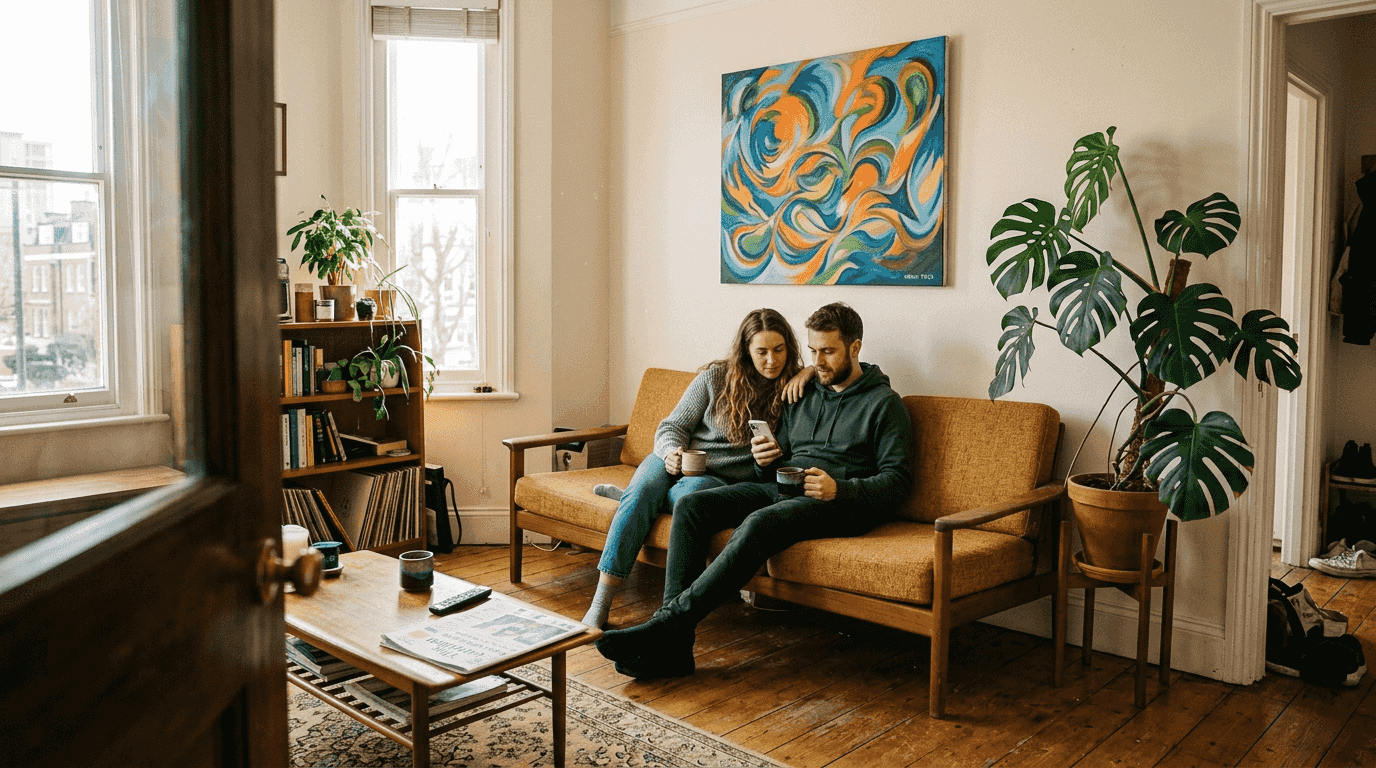
Bold, vibrant wall art has emerged as a defining trend for 2026, transforming neutral spaces into dynamic, personality-driven environments. This movement embraces saturated hues, jewel tones like emerald and sapphire, and unexpected colour combinations that energise interiors. Rather than safe, muted palettes, homeowners are increasingly drawn to art that commands attention and establishes clear focal points.
Bold vibrant hand-painted canvas art is rising in popularity, particularly pieces featuring expressive brushwork and layered paint application. These works often draw inspiration from pop art, abstract expressionism, and contemporary street art movements. The hand-painted quality ensures each piece carries unique variations and authentic artistic character that mass-produced prints lack.
Vibrant wall art works exceptionally well in modern, minimalist interiors where it provides necessary visual warmth and personality. It also suits eclectic spaces that celebrate colour and pattern mixing. The key lies in balancing the intensity, a single large vibrant piece can anchor a room, whilst multiple smaller works require careful curation to avoid visual chaos.
Consider these aspects when incorporating colourful wall art:
- Advantages: Creates instant focal points, injects energy and optimism, allows personal expression, works across various interior styles when properly scaled
- Considerations: Requires thoughtful colour coordination with furnishings, may overwhelm very small spaces, bold choices demand confidence in long-term appeal
- Best placements: Living rooms, dining areas, home offices, and entryways where impact matters most
The rise of vibrant wall art reflects a broader cultural shift towards celebrating individuality and rejecting the sterile minimalism that dominated previous years. Homeowners now seek art that sparks conversation and reflects their authentic tastes rather than following prescriptive design rules.
Abstract and textured wall art with a wabi-sabi influence
The Japanese philosophy of wabi-sabi, which finds beauty in imperfection and impermanence, has profoundly influenced 2026 wall art trends. Wabi-sabi wall art represents hand-painted abstract texture and imperfection, celebrating organic forms, natural materials, and the marks of authentic creation. This aesthetic stands in deliberate contrast to digitally perfect prints and commercial reproductions.
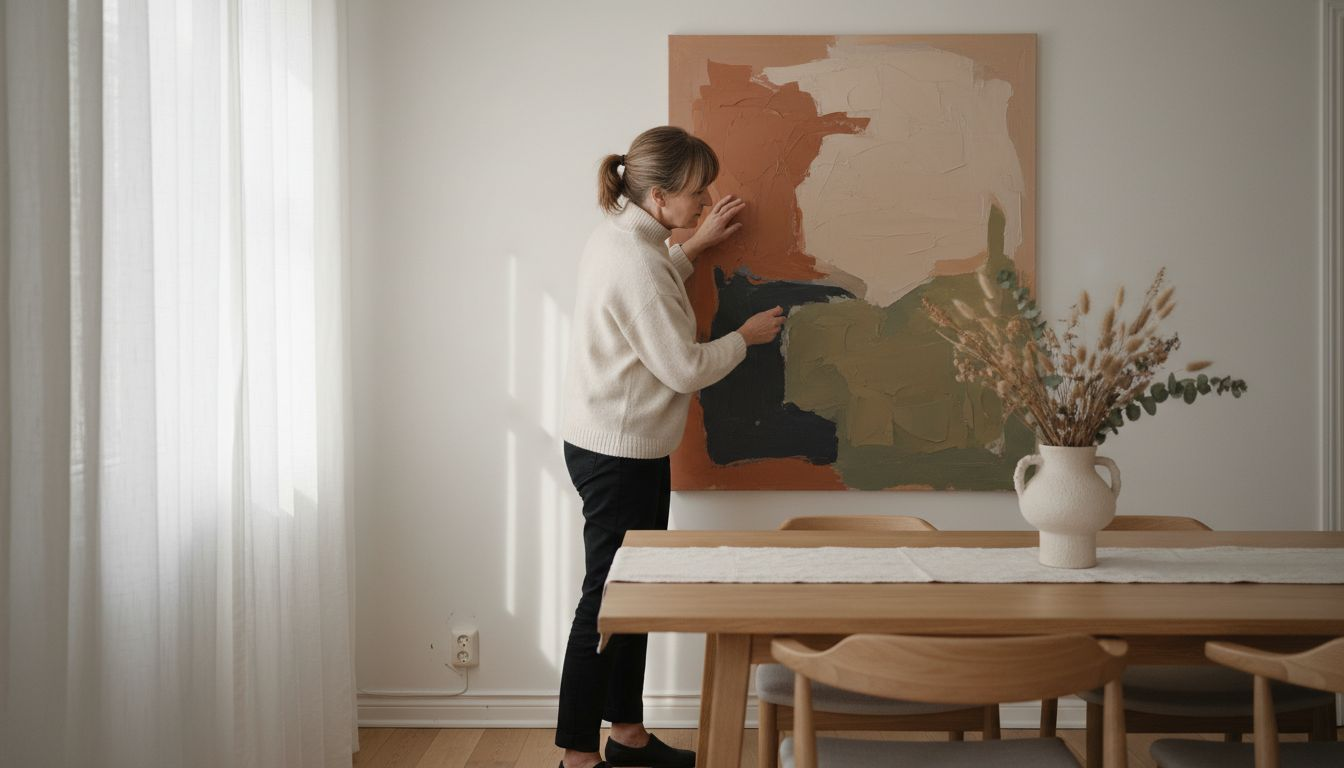
Wabi-sabi pieces typically feature visible brushstrokes, irregular edges, muted earth tones, and layered textures that invite closer inspection. Artists working in this style often use natural pigments, textured oils, and mixed media incorporating organic materials like sand, clay, or plant fibres. The resulting works feel grounded, meditative, and deeply connected to natural processes.
This trend particularly resonates in minimalist, Scandinavian, and Japanese-inspired interiors where simplicity and authenticity are valued. The textured surfaces create subtle visual interest without overwhelming clean-lined spaces. They also introduce tactile dimensionality that encourages viewers to appreciate art as physical object rather than mere image.
Pro Tip: Position wabi-sabi pieces where natural light can graze across their textured surfaces throughout the day, revealing shifting shadows and depth that enhance their meditative quality.
Key characteristics of wabi-sabi wall art:
- Embraces asymmetry and organic irregularity
- Features muted, earthy colour palettes
- Showcases visible creative process and materials
- Evokes calm, contemplative atmospheres
- Pairs beautifully with natural materials like wood, stone, and linen
| Aspect | Traditional Abstract | Wabi-Sabi Abstract | | — | — | | Finish | Often polished, uniform | Deliberately imperfect, varied | | Colour approach | Bold or controlled palettes | Earthy, muted, natural tones | | Surface quality | Smooth or consistently textured | Irregular, tactile, layered | | Philosophy | Expression or decoration | Appreciation of impermanence |
Custom and personalised wall art: expressing individuality
Custom wall art has moved from niche luxury to mainstream expectation in 2026, driven by homeowners’ desire for spaces that reflect their unique stories and aesthetic preferences. There is an increasing demand for bespoke wall art in 2026, as buyers recognise that truly cohesive interiors require art tailored to specific colour schemes, dimensions, and thematic elements.
Personalised art offers distinct advantages over ready-made pieces. You can specify exact colours to match existing furnishings, request particular sizes to fit awkward wall spaces, and incorporate meaningful imagery or themes that resonate with your personal narrative. This level of control ensures your art feels integral to your interior design rather than an afterthought.
Commissioning custom wall art follows a straightforward process:
- Identify your specific requirements including size, colour palette, style preferences, and thematic direction
- Research artists or platforms offering customisation services that align with your aesthetic and budget
- Communicate your vision clearly through reference images, colour samples, and detailed descriptions
- Review initial concepts or sketches and provide constructive feedback
- Approve final designs before production begins
- Receive your unique piece and install it with confidence that it perfectly suits your space
Custom art particularly benefits homes with challenging colour schemes, unusual wall dimensions, or specific design narratives. It also appeals to those seeking meaningful art that tells personal stories, whether through abstract interpretations of significant places, custom colour palettes reflecting family heritage, or bespoke compositions celebrating important relationships.
The investment in custom work often proves worthwhile, as pieces created specifically for your space typically deliver greater long-term satisfaction than generic alternatives. They become conversation pieces that guests notice and remember, adding distinctive character that mass-produced art cannot replicate.
Sustainable and eco-friendly wall art choices for 2026
Sustainability has evolved from optional consideration to essential criterion for many art buyers in 2026. Sustainable wall art is gaining popularity in home decor as consumers increasingly prioritise environmental impact alongside aesthetic appeal. This shift reflects broader cultural awareness about consumption patterns and their ecological consequences.
Sustainable wall art encompasses several key features. Artists use recycled or reclaimed materials for canvases and frames, natural or low-impact pigments and dyes, non-toxic finishes and sealants, and ethical sourcing for all components. Production methods minimise waste, energy consumption, and harmful emissions whilst supporting fair labour practices.
The benefits extend beyond environmental considerations:
- Healthier indoor air quality through elimination of volatile organic compounds
- Support for ethical artistic practices and fair compensation
- Often superior longevity due to quality materials and craftsmanship
- Unique aesthetic qualities from natural materials and traditional techniques
- Alignment of home decor choices with personal values
When evaluating sustainability claims, look for transparency about materials and processes. Reputable artists and suppliers readily share information about their sourcing, production methods, and environmental commitments. Certifications for organic materials, recycled content, or carbon-neutral production provide additional verification.
| Feature | Conventional Wall Art | Sustainable Wall Art | | — | — | | Canvas materials | Virgin cotton or synthetic | Recycled, organic, or reclaimed | | Pigments | Petroleum-based, synthetic | Natural, plant-based, low-impact | | Finishes | Often contain VOCs | Non-toxic, water-based, natural | | Longevity | Variable quality | Typically higher due to materials | | Environmental impact | Higher carbon and waste | Minimised through conscious choices |
Sustainable art need not compromise aesthetic appeal. Many contemporary artists working with eco-friendly materials produce stunning work that competes favourably with conventional pieces whilst offering the added satisfaction of responsible consumption.
Explore top wall art collections for 2026 at Frametheworld
Now that you understand the key wall art trends shaping 2026 interiors, exploring curated collections makes finding the perfect pieces straightforward. Frametheworld offers carefully selected ranges that reflect these contemporary movements, from wabi-sabi wall art celebrating imperfect beauty to vibrant pop art that energises modern spaces.
Each collection showcases hand-painted, high-quality pieces created by skilled artists who understand current design thinking. Whether you seek bold colour statements, textured abstracts, or calming natural palettes, these curated selections simplify the discovery process whilst ensuring quality and authenticity.
For those requiring precise customisation, custom print services allow you to tailor artwork to your exact specifications. This flexibility ensures your wall art integrates seamlessly with your interior vision, delivering the personalised touch that makes spaces truly distinctive and memorable in 2026.
Frequently asked questions
What are the most popular wall art colours in 2026?
Jewel tones dominate 2026 wall art trends, particularly emerald green, sapphire blue, and burnt orange. These rich, saturated colours create striking focal points whilst maintaining sophistication. Earthy neutrals like terracotta, warm grey, and natural beige also remain popular for those seeking calmer palettes. These colours influence mood significantly, with vibrant tones energising spaces and muted earth tones promoting relaxation and grounding.
How does wabi-sabi wall art differ from other abstract styles?
Wabi-sabi wall art embraces imperfection, asymmetry, and the visible marks of creation as essential aesthetic elements rather than flaws to minimise. It uses natural materials, muted earth tones, and irregular textures to celebrate authenticity and impermanence. This contrasts sharply with polished abstract styles that pursue visual perfection, bold colour statements, or geometric precision. Wabi-sabi prioritises meditative quality and connection to natural processes over decorative impact alone.
Can I customise wall art to match my home’s colour scheme?
Yes, custom wall art allows precise specification of colours, sizes, themes, and compositional elements to suit your exact requirements. This ensures perfect harmony with existing furnishings, architectural features, and personal aesthetic preferences. Customisation enhances design cohesion whilst enabling personal expression through meaningful imagery or colour palettes that reflect your individual story. The process typically involves collaborating with artists or platforms to communicate your vision and approve designs before production.
What materials indicate a sustainable wall art piece?
Look for recycled or organic canvas, natural pigments derived from plants or minerals, non-toxic water-based finishes, and frames made from reclaimed or sustainably harvested wood. Sustainable pieces often feature transparent sourcing information and may carry certifications for organic content or carbon-neutral production. Artists committed to sustainability readily share details about their materials and processes, demonstrating genuine environmental consideration rather than superficial marketing claims.


Leave a comment
This site is protected by hCaptcha and the hCaptcha Privacy Policy and Terms of Service apply.