
TL;DR:
- Personalising artwork enhances home ambiance by reflecting personal stories and emotional goals.
- Practical methods include canvas prints, laser engraving, UV printing, and AI-assisted digital design, each suited to different spaces and needs.
- Authentic personal connection is key, as art that rooted in memories and feelings creates meaningful impact over trend-driven choices.
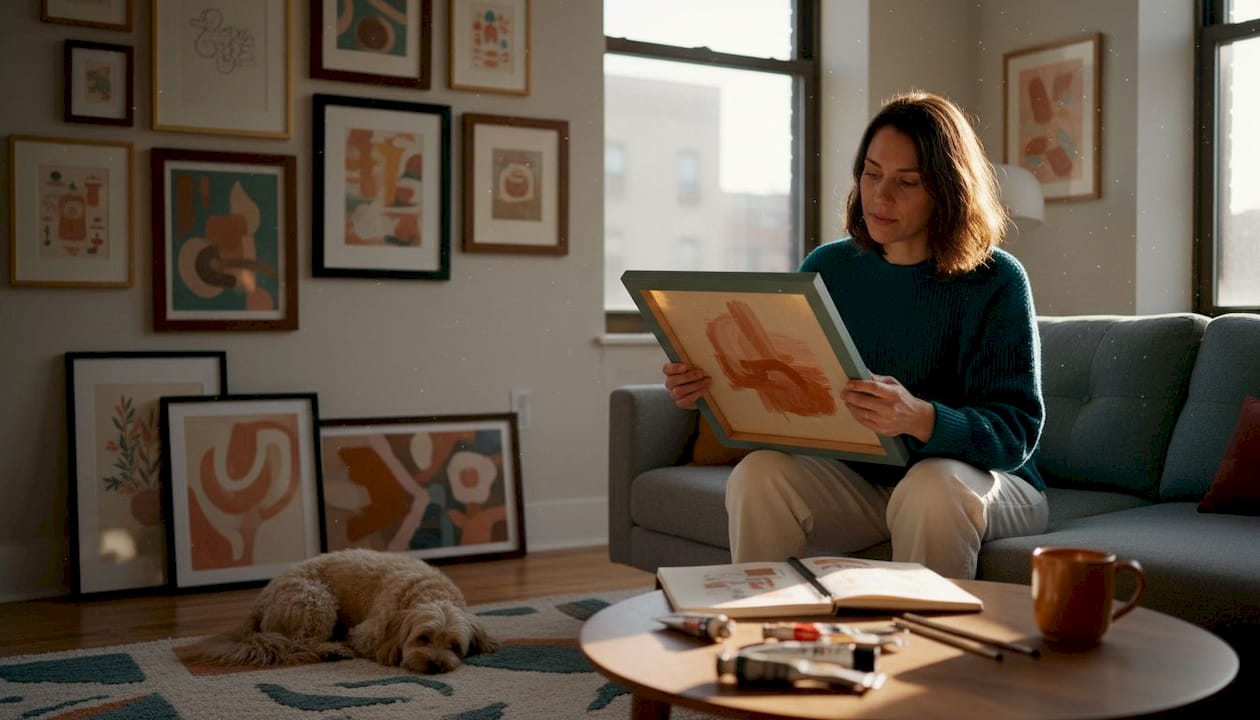
Walking into a room filled with mass-produced prints you’ve seen in every catalogue and showroom is a quietly deflating experience. It signals effort without intention. The good news is that personalising artwork has never been more accessible, whether you’re a homeowner wanting one meaningful piece above the sofa or an interior designer sourcing bespoke art for a full project. This article walks you through the practical options available, from hands-on techniques to cutting-edge digital methods, and helps you decide which approach fits your goals, your space, and your budget.
Table of Contents
- Consider your goals for personalising artwork
- Explore hands-on customisation techniques
- Integrate digital and AI-assisted art personalisation
- Compare options: Which way to personalise suits you?
- What most miss about personalising artwork: The authentic connection
- Bring your personalised art vision to life
- Frequently asked questions
Key Takeaways
| Point | Details |
|---|---|
| Define your purpose | Start by clarifying what you want your personalised artwork to express before choosing a method. |
| Technique matters | Hands-on customisation like canvas and engraving gives tactile impact, while AI expands creative options affordably. |
| Compare before choosing | Evaluate personalisation options for durability, cost, and style to match your space and needs. |
| Authenticity is key | The most lasting bespoke art is deeply tied to your story or identity, not just visual trends. |
Consider your goals for personalising artwork
Before you choose a technique or commission a piece, you need to understand what you want the artwork to do. That might sound obvious, but most people skip this step entirely and jump straight to browsing images. The result is often a beautiful print that somehow feels disconnected from the room it lives in.
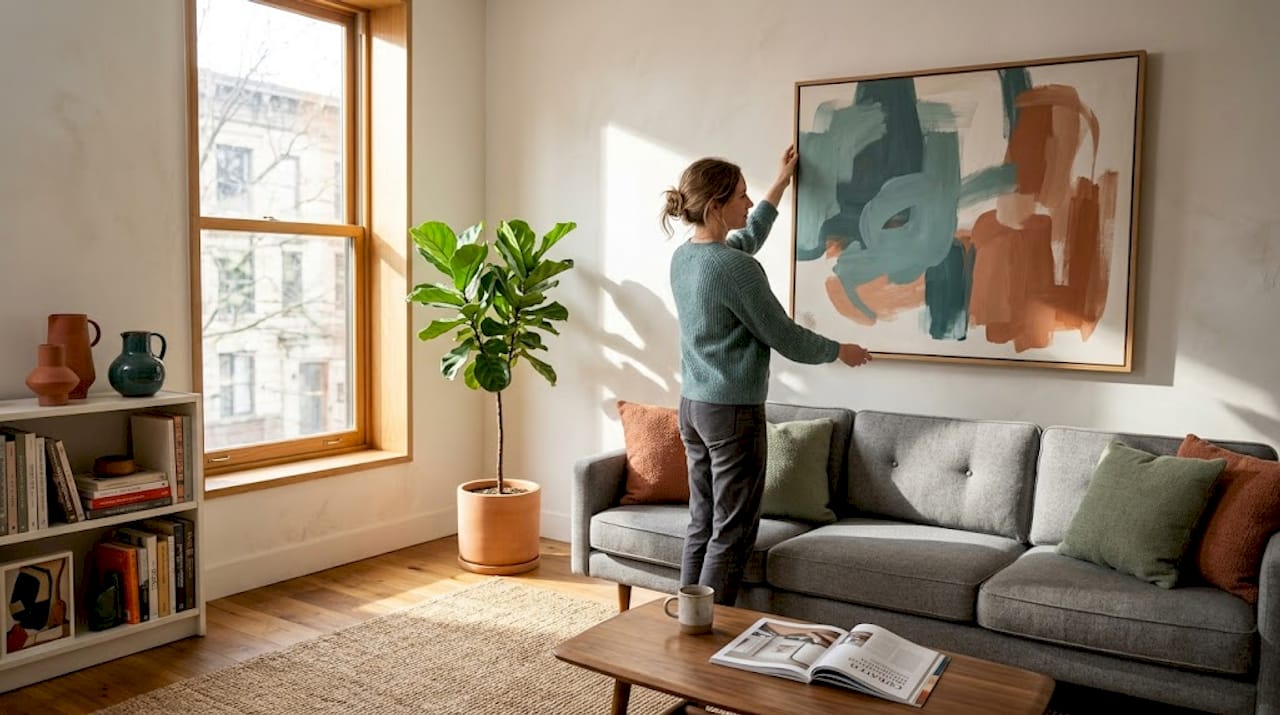
Artwork personalisation can enhance a sense of belonging and elevate home atmosphere, but only when the intention behind the piece is clear from the start. Ask yourself whether you’re trying to create a focal point, set a particular mood, or tell a story about who you are. These are three very different briefs that will lead to very different outcomes.
Here are the key considerations before you start:
- Focus: Are you drawn to a specific theme, such as travel, family, nature, or architecture?
- Ambience: Should the artwork feel calm and contemplative, bold and energising, or warm and nostalgic?
- Story: Does the piece need to reflect a personal memory, cultural heritage, or shared experience?
- Room function: A bedroom calls for a different emotional register than a hallway or home office.
- Scale of statement: Some rooms benefit from a single striking bespoke piece; others suit a layered gallery arrangement with subtler personal touches.
When personalising artwork for your home, the most successful results come from matching the emotional tone of the art to the lived experience of the space. A kitchen that doubles as a family gathering spot, for example, often responds beautifully to playful, colourful custom prints. A reading nook benefits from something quieter and more introspective.
Pro Tip: Before commissioning or ordering, spend a week photographing the room at different times of day. Notice what the light does, what colours appear, and how the space feels. Let that inform your brief rather than just picking something you liked online.
Explore hands-on customisation techniques
Once you’ve clarified your goals, it’s time to look at the practical methods available. The world of hands-on customisation has expanded enormously in recent years, and each technique brings a distinct visual quality and suitability for different spaces.
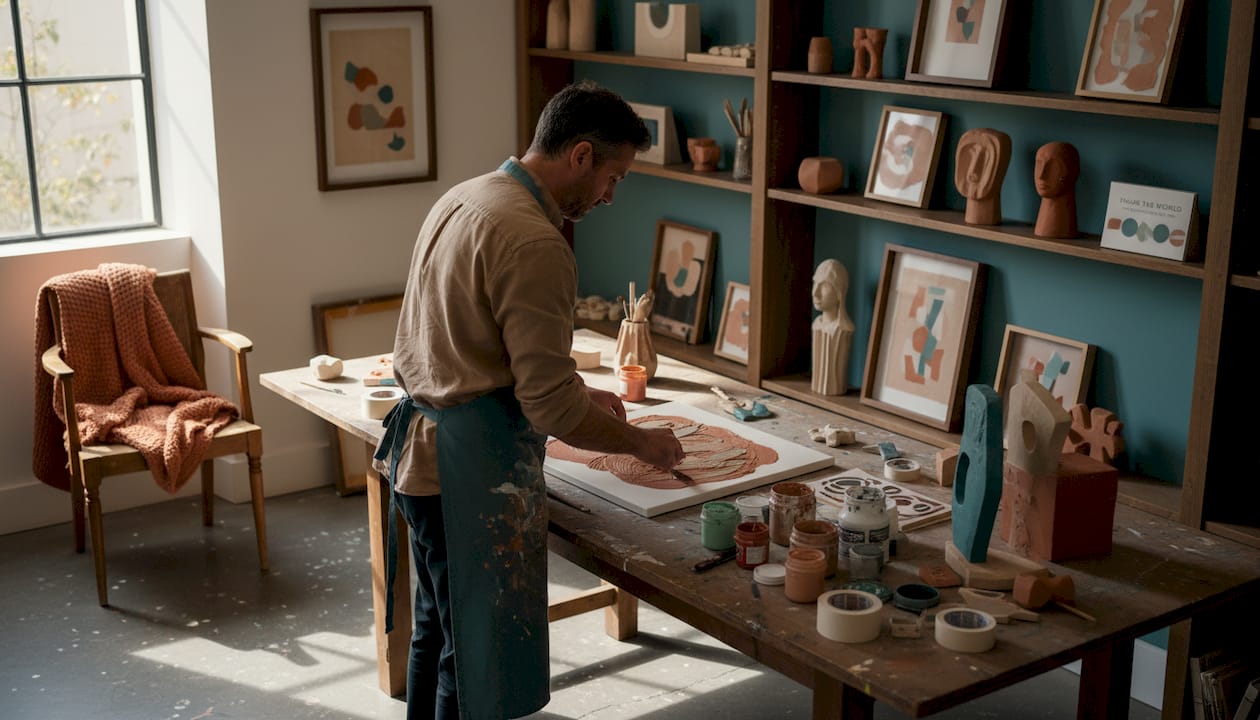
The three most widely used methods today are custom canvas printing, laser engraving, and UV printing. According to technical analysis, printing techniques for personalisation such as custom canvas, laser engraving, and UV printing each offer distinct finishes and durability profiles. Understanding the differences helps you match the method to the space.
Here’s how to think through each one:
-
Custom canvas prints: The most popular choice for residential interiors. Your photograph, illustration, or artwork is printed directly onto stretched canvas with archival inks, producing a tactile, gallery-quality finish. Canvas works well in living rooms, master bedrooms, and dining spaces. It tolerates moderate humidity, resists fading under indirect light, and feels warm in a way that paper prints simply do not.
-
Laser engraving: Ideal for decorative items, wooden panels, and mixed-media wall installations. Laser engraving cuts with extraordinary precision, allowing initials, coordinates, meaningful phrases, or abstract patterns to be etched into wood, acrylic, or metal. The result has a handcrafted quality that photographs cannot replicate. Best suited to hallways, studies, and commercial reception areas.
-
UV printing: A more advanced technique that uses ultraviolet light to cure ink directly onto a rigid surface, including glass, metal, or stone tile. The finish is crisp, colourfast, and incredibly durable. UV-printed panels work particularly well in bathrooms, kitchens, and hospitality spaces where moisture resistance matters.
“The choice of surface and printing method is not just technical. It shapes how a viewer feels standing in front of the piece. Canvas invites you closer; laser engraving makes you want to touch it; UV-printed glass keeps you at a respectful distance.”
For bespoke artwork examples that show how these techniques come together in real interiors, it’s worth looking at finished projects across different styles before committing to a method. Each technique also has distinct care requirements. Canvas benefits from occasional light dusting and should be kept away from direct sunlight. Laser-engraved wood may need periodic conditioning with a light oil to maintain its depth of colour. UV-printed panels are arguably the easiest to maintain, requiring only a wipe-down with a soft cloth.
Integrate digital and AI-assisted art personalisation
Modern technology has opened up a genuinely new category of personalisation that didn’t exist at any meaningful scale even five years ago. AI-assisted art tools now allow homeowners and designers to generate original artwork from text descriptions, personal photographs, or mood boards, then refine those outputs with professional artists for a truly bespoke result.
The most promising development is the AI hybrid model. Artist-friendly AI methods allow for instant concepts refined by hand, combining diffusion models for text-to-image personalisation with the judgement and skill of a human creator. This means you can describe your ideal artwork in plain language, see dozens of variations in minutes, and then work with an artist to develop the strongest concept into something genuinely unique.
Alongside the established methods, AI design ideas for home interiors are proving especially useful for clients who struggle to articulate their vision. Instead of trying to explain a feeling, you feed the tool a few reference images and a brief description, and it generates a starting point that can be discussed, adjusted, and ultimately produced.
| Method | Turnaround time | Typical cost range | Best use case |
|---|---|---|---|
| AI concept only | Hours | Low | Mood boarding, early design stages |
| AI + artist refinement | Days to weeks | Mid | Bespoke residential commissions |
| Fully human bespoke | Weeks to months | High | Premium residential or commercial |
| Ready-to-print digital | Hours | Very low | Budget-conscious personalisation |
Key advantages of the digital and AI-assisted route include:
- Speed: Initial concepts are available almost immediately, which is invaluable for fast-moving interior design projects.
- Iteration: You can test colour palettes, compositions, and styles without committing to a physical product.
- Accessibility: People who don’t have a strong visual vocabulary can use descriptive language to generate meaningful starting points.
- Personalisation depth: AI tools can incorporate specific elements, such as a favourite location rendered in a particular painterly style, in ways that were previously only possible with a skilled commission.
These personalisation trends for 2026 reflect a broader shift in how people relate to art in their homes. The expectation is no longer simply that artwork looks good. The expectation is that it means something.
Pro Tip: When briefing an AI-assisted artwork service, save time by preparing three reference images: one that captures the colour palette you love, one that shows a composition style you respond to, and one that reflects the emotional feeling you want in the room. A strong brief produces dramatically better results than a vague one.
Compare options: Which way to personalise suits you?
With all the options laid out, the decision comes down to your priorities. Cost, durability, design flexibility, and how much personal involvement you want in the creative process all play a role. Since over 150 methods have emerged in the personalised art space since 2024 alone, the choice can feel overwhelming without a framework for narrowing it down.
| Approach | Cost | Durability | Design flexibility | Time investment |
|---|---|---|---|---|
| Custom canvas print | Mid | High | High | Low |
| Laser engraving | Mid to high | Very high | Medium | Medium |
| UV printing | High | Very high | High | Medium |
| AI concept only | Low | Depends on output | Very high | Very low |
| AI + artist refinement | Mid | Depends on output | Very high | Low to medium |
| Fully human commission | High to very high | Depends on medium | Maximum | High |
Here are some situational recommendations to guide your final decision:
- Busy families with children: Custom canvas print. Durable, replaceable if damaged, and available in a wide range of personal photographs and custom illustrations.
- Interior designers on a tight deadline: AI-assisted concept with professional refinement. Fast turnaround without sacrificing originality.
- Homeowners with a strong sentimental focus: Laser engraving or fully human commission. The tactile quality and unmistakable handcraft of these methods carry emotional weight that digital prints can’t always match.
- Commercial or hospitality spaces: UV printing. The resistance to wear, moisture, and light degradation makes it the practical choice for high-traffic environments.
- Budget-conscious buyers: Digital personalisation with a quality print-on-demand service. The barrier to entry is low, and the results can be genuinely impressive when the source image and colour brief are strong.
When reviewing the art trends for homeowners, one pattern is consistent across all of them: the shift from decoration to expression. Personalised artwork is no longer a niche preference. It’s becoming the baseline expectation for interiors that feel considered and complete.
What most miss about personalising artwork: The authentic connection
Here’s the uncomfortable truth that most guides on this topic avoid: choosing the right technique is the easy part. The harder challenge is ensuring the artwork you commission or create actually means something to you, not just something that looks as if it should.
We’ve seen this pattern repeatedly. Clients spend hours comparing printing methods, agonising over canvas weight and ink formulations, and then commission a piece based on a trending aesthetic they found on social media. Two years later, it’s in the spare room. The technique was flawless. The emotional connection never existed.
The role of authentic art personalisation in shaping how a home feels to live in is consistently underestimated. Artwork that reflects a genuine personal story, a place visited, a colour that has followed you through different homes, a pattern inherited from a grandparent’s wallpaper, creates a quiet charge in a room that purely trend-driven choices never manage.
Our perspective is that personalisation should begin with memory and feeling before it reaches technique and format. Ask yourself: what would I miss if this piece disappeared tomorrow? If the honest answer is “not much,” you haven’t found the right subject yet. The method is secondary.
This also applies to designers working for clients. The best brief you can give an artist or a digital platform is a story, not a mood board. “This is where my client spent every childhood summer” will produce something more resonant than “relaxed coastal with neutral tones” every time. The tools are sophisticated enough now to translate genuine human experience into compelling visual art. The question is whether you give them the raw material to work with.
Bring your personalised art vision to life
Understanding the options is one thing. Taking the next step toward art that genuinely reflects you or your client requires a platform that combines quality, flexibility, and real expertise. At Frame the World, our custom print service is built for exactly this moment: when you know what you want but need the right partner to realise it. Whether you’re drawn to the organic calm of Wabi Sabi wall art or the bold energy of pop art wall art, our collections offer a starting point, and our customisation options take you beyond it. We work with both private homeowners and professional designers, ensuring every piece arrives ready to make a lasting impression.
Frequently asked questions
Which customisation method is most durable for busy homes?
Canvas is resistant to UV exposure and humidity, making custom canvas prints the most practical choice for high-traffic family homes. Laser-engraved and UV-printed pieces also offer excellent longevity when placed appropriately.
Can AI-generated art really be unique to my home?
Yes. AI hybrid methods allow for one-off designs or personal photo adaptations that are then refined by human artists, ensuring the final piece is genuinely original and specific to your space.
Is personalising artwork expensive compared to ready-made décor?
The cost varies enormously depending on the method and scale. Digital and AI-assisted options have over 150 methods available at a wide range of price points, making personalisation accessible at virtually every budget. Hands-on techniques such as engraving and fully human commissions cost more but deliver something truly one-of-a-kind.
How do I choose which room to personalise with artwork?
Prioritise rooms where you spend the most time and where you want to feel most at home, typically living areas, bedrooms, and entryways. These spaces benefit most from art that carries personal meaning and creates a strong first impression.
Are there styles better suited for personalisation?
Abstract, pop art, and mixed-media styles are particularly popular for customisation because they translate personal colour preferences and imagery fluidly. That said, almost any style from botanical prints to portraiture can be made deeply personal with the right brief and approach.


Leave a comment
This site is protected by hCaptcha and the hCaptcha Privacy Policy and Terms of Service apply.