
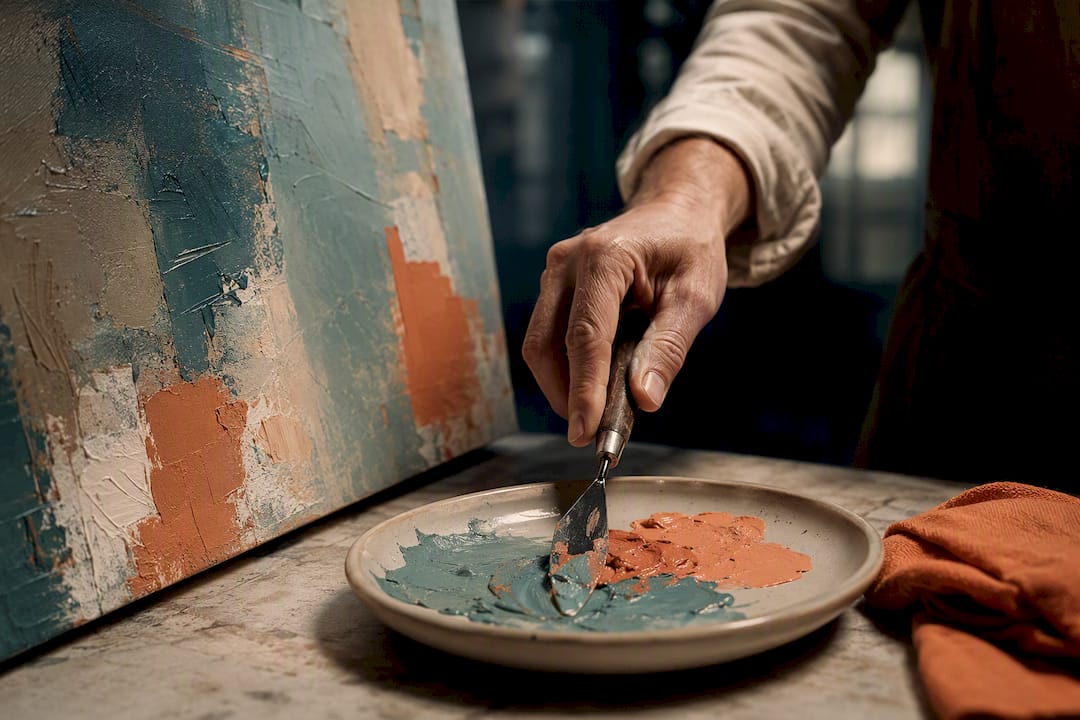
Commissioning an abstract painting gets you a hand-made, one-off artwork tailored to your space and palette, built through a staged process rather than bought off a shelf. The next step is simple: write a concise brief covering size, colour direction and deadline, then send it to an artist or through a commissioning platform. Expect a deposit, a concept stage, a couple of review points, and delivery once you’ve signed off the final piece.
TL;DR:
- Detailed briefs with specific measurements, color samples, and reference images help secure accurate quotes and prevent misunderstandings.
- Typical costs start from a few hundred pounds for small pieces up to several thousand for large, established artist works, with 30-50% deposits required upfront.
- Choosing an artist based on consistent style and past commission experience predicts better outcomes than selecting solely on portfolio imagery.
- Medium choice, such as oil or acrylic, impacts drying time, texture, and sheen, which should align with room lighting and display preferences.
- A clear, written contract covering scope, timeline, payments, rights, and delivery reduces disputes and ensures expectations are met.
Table of Contents
- How does commissioning an abstract painting work step by step?
- What should you include in your commission brief?
- How much does a commissioned abstract painting cost?
- How do you choose the right artist for your commission?
- Which materials and formats suit abstract commissions?
- What should your commission contract cover?
- How does Frametheworld support bespoke abstract commissions?
- Why collaboration is the whole point of commissioning
- Start your commission with Frametheworld
- Sources
How does commissioning an abstract painting work step by step?
The process runs in a predictable sequence, whether you’re working with an independent artist or a platform that manages the relationship for you.
- Enquiry and quote. You send your brief; the artist responds with pricing, a rough timeline and sometimes a couple of clarifying questions.
- Deposit and contract. Most artists ask for a deposit before starting, commonly between 30% and 50% of the total price, confirmed in a short written agreement.
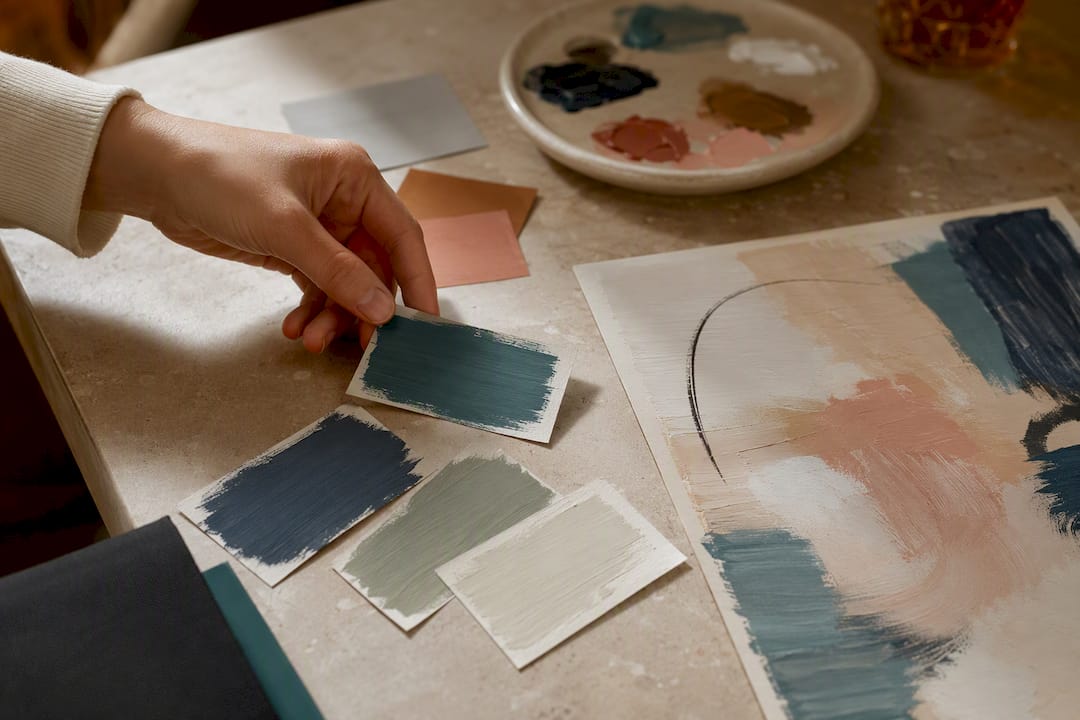
- Concept stage. The artist produces sketches, colour studies or a small sample so you can see direction before committing to the full canvas. This step matters more than people expect. Screens distort colour constantly, and a physical swatch or study prevents nasty surprises when the finished piece arrives.
- Work-in-progress reviews. You’ll typically get photo updates at agreed milestones, with a set number of revision rounds built into the contract.
- Final approval and delivery. Once you sign off, you pay the balance, and the artist varnishes, packs and ships or installs the piece.
This staged structure exists because effective commissions rely on regular milestones and client feedback to keep the finished work aligned with what the buyer actually wanted.
What should you include in your commission brief?
A vague brief produces vague quotes and slow back-and-forth. A tight one gets you an accurate price on the first reply.
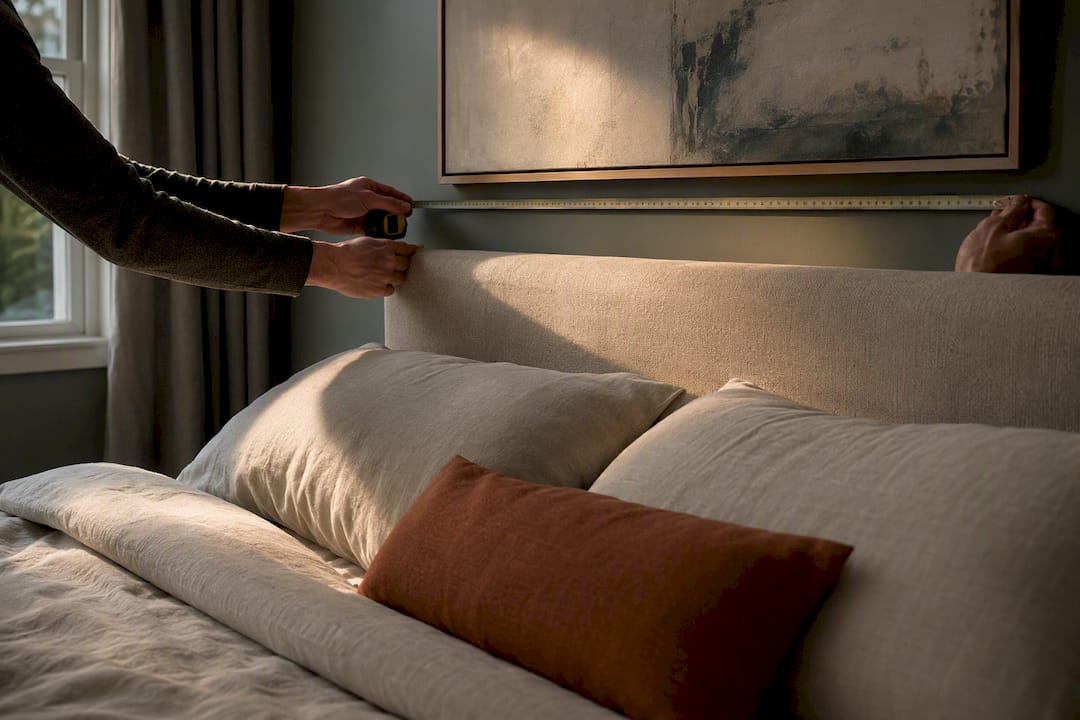
- Exact wall dimensions and orientation, ideally with a photo of the space or a taped outline showing where the canvas will hang.
- Colour direction, including swatches, paint chips or fabric samples rather than just words like “warm” or “moody”.
- Reference images of styles or artists you admire, and just as usefully, what you want to avoid.
- Preferred medium and finish, plus whether you want a frame, floating frame or gallery-wrapped canvas.
- Budget range and any hard deadline, along with delivery or installation constraints (lift access, stairwells, room height).
A properly detailed brief should give the artist size, colour preference, references and budget up front, which cuts weeks off the quoting stage.
Pro Tip: State what you don’t want as clearly as what you do. Ruling out specific colours or motifs prevents far more misunderstandings than describing your ideal outcome alone.
How much does a commissioned abstract painting cost?
Price depends on five factors: the artist’s experience and reputation, the size of the canvas, the medium used, how complex the composition is, and whether framing is included.
Small commissioned pieces can start in the low hundreds, while larger, statement-scale works from established artists commonly run into several hundred to several thousand pounds, depending on scale and reputation.
Payment structures follow a fairly consistent pattern across the industry:
- A deposit of 30% to 50% is standard before work begins, with the balance due on completion.
- Rush timelines, extra revision rounds beyond the agreed limit, and specialist packing for oversized or fragile pieces often carry additional charges.
- Ask for an itemised quote that separates the base painting fee from framing, shipping and any rush surcharge, so nothing gets bundled into a vague lump sum.
If a quote arrives as a single number with no breakdown, ask for one and consider expert advice on interior styling & home staging to plan the perfect display placement. It’s a fair question and any professional artist will expect it.
How do you choose the right artist for your commission?
Start with the portfolio, not the price list. You’re looking for an artist whose existing body of work already leans towards what you want, not one favourite piece that stands apart from everything else they make.
- Scan for consistency. Does the artist have multiple abstract pieces in a style close to your brief, not just one lucky outlier?
- Check scale experience. An artist who mostly paints small studio pieces may not have handled a 2 metre statement canvas before.
- Look for commission history. Testimonials, before-and-after process shots, or evidence of past client projects tell you more than a polished bio.
- Ask direct questions early. How many revisions are included? Will you get progress photos? Who handles shipping and insurance?
Prioritise the artist’s overall style over a single striking image that caught your eye on Instagram. Consistency predicts outcome far better than a one-off.
Which materials and formats suit abstract commissions?
Medium changes both the look and the practicalities of your painting. Oil dries slowly, often over weeks, and gives richer blending and depth, which suits large gestural or textural abstracts. Acrylic dries fast, works well for crisp colour-blocking, and tends to be more forgiving for tight deadlines. Mixed media, combining paint with texture paste or collage elements, adds physical dimension but needs more careful handling.
- Canvas depth affects whether the piece needs a frame or hangs as a ready-to-display gallery wrap.
- Varnish protects the surface and affects sheen, satin or gloss.
- Room light should factor into your decision before the brief goes out. Strong natural light suits matte finishes; dimmer rooms often benefit from gloss varnish that catches available light.
Read more on the trade-offs in oil versus acrylic painting, and check the framing guide before deciding on a finish.
What should your commission contract cover?
A written contract protects both sides and heads off most disputes before they start.
- Scope and schedule: exactly what’s being painted, in what size, by which date.
- Price and payment terms: deposit amount, balance trigger, and any surcharges for changes.
- Revision limits: how many rounds of feedback are included before extra charges apply.
- Ownership versus reproduction rights: buying the physical painting doesn’t automatically transfer copyright, so state clearly whether the artist retains rights to reproduce the image.
- Delivery and insurance: who pays if the piece is damaged in transit, and whether professional packing is included.
A written agreement covering revisions, timeline and payment reduces the chance of disagreement after the final piece arrives. If the finished work deviates materially from the brief, raise it immediately and refer back to the agreed scope rather than the final invoice.
Pro Tip: Keep every email and reference image sent during the brief stage. If a dispute arises later, that trail is usually more useful than the contract itself.
How does Frametheworld support bespoke abstract commissions?
Frametheworld offers hand-painted abstract pieces with customisation across size, colour and finish, alongside curated collections you can browse for direction before you commit to a bespoke brief.
- Browse existing abstract collections to identify a style close to what you want.
- Submit a brief through the commission enquiry with your dimensions, palette and budget.
- Receive a managed quote covering production, packing and delivery.
For inspiration on how a commissioned piece might work in your space, the guide on why abstract art suits homes and the piece on why commission artwork are both worth a read before you write your brief.
Why collaboration is the whole point of commissioning
People often approach a commission wanting total control over the result, then feel disappointed when the painting doesn’t look exactly like their mental image. That’s backwards. The value in commissioning is what the artist brings that you couldn’t have specified yourself. Write a tight brief, pick a style you genuinely respond to, then leave room for interpretation. Lennard writes on art buying and interior decoration, focusing on practical guidance for private buyers and design professionals.
— Lennard
Start your commission with Frametheworld
There are independent artists and commissioning platforms out there, each with their own contracts and timelines to manage yourself. Some commissioning platforms remove that legwork by providing a managed quote, production, packing and delivery handled end to end, with no separate shipping arrangement or insurance chase on your part.
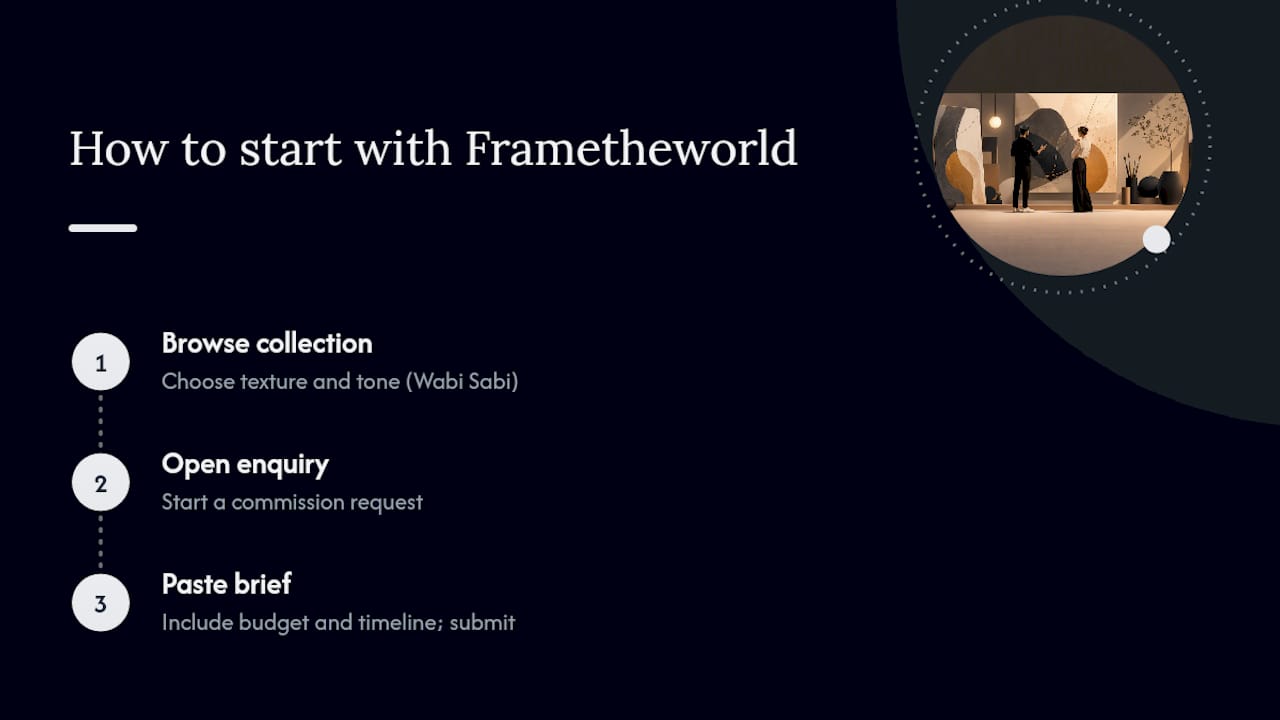
Three steps to get moving: browse the Wabi Sabi wall art collection for texture and tone, open a commission enquiry, then paste in your brief with budget and timeline attached. Frametheworld handles production, packing, shipping and support from there, so your only job is approving the work at each milestone.
Sources
- Practical advice: commissioning (PublicArtOnline)
- How to commission an artist: step-by-step guide (Molly Frantzen)
- Art commissions guide (Upwork)

Leave a comment
This site is protected by hCaptcha and the hCaptcha Privacy Policy and Terms of Service apply.