

TL;DR:
- Commissioned art involves creating a bespoke piece through a collaborative process based on a client’s specific vision. It requires clear planning, a detailed brief, and formal agreements on rights and deadlines to ensure a successful outcome. Choosing an artist whose style aligns with your goals and maintaining open communication are key to achieving a meaningful and personalized artwork.
Commissioned art is one of those terms that sounds straightforward until you actually try to explain it. Most people assume it simply means buying a painting from an artist. It does not. When you commission a piece of art, you are purchasing a creative process rather than an object that already exists. You are directing something into existence. This guide breaks down the commissioned art definition, explains the process from first conversation to final delivery, covers your legal rights, and gives you the practical knowledge to work with artists confidently, whether you are decorating a home or sourcing a statement piece for a commercial space.
Table of Contents
- Key takeaways
- What is commissioned art?
- The commissioned artwork process
- Why commission art rather than buy ready-made?
- Copyright, rights, and formal agreements
- How to commission art successfully
- My take on commissioning art
- Discover bespoke art at Frametheworld
- FAQ
Key takeaways
| Point | Details |
|---|---|
| Commissioning means ordering, not buying | You are paying for an artwork to be created to your specifications, not selecting a pre-made piece. |
| Early-stage approval matters most | Agreeing on sketches and composition early prevents costly and time-consuming changes later. |
| Copyright stays with the artist by default | Unless a written agreement transfers rights, the creator retains copyright even after you pay. |
| A clear brief protects both parties | Specific references, dimensions, and style notes reduce misunderstandings throughout the process. |
| Commissions offer genuine personal value | Bespoke artworks reflect your vision, suit your space, and carry emotional weight that ready-made prints rarely achieve. |
What is commissioned art?
The clearest way to understand commissioned art is this: you are not choosing from what already exists. You are asking an artist to make something that does not yet exist, built around your vision, your space, and your brief. Merriam-Webster defines the commissioned artwork as one “ordered to be made in exchange for payment,” with the commissioned portrait as the classic example.
That definition sounds simple, but the implications are substantial. A commissioned artwork involves a back-and-forth creative relationship. You bring the concept, the context, and the requirements. The artist brings the skill, the medium, and the execution. Neither party is passive.
Commissions can span almost every medium and format: oil on canvas, watercolour, digital illustration, sculpture, printmaking, photography, and beyond. A commission might be a family portrait in a realistic style, an abstract piece designed around your living room’s colour palette, or a large-scale mural for a commercial interior. The defining characteristic is not the medium. It is the fact that commissioning art begins with a client’s request, not the artist’s spontaneous output.
“Commissioned art is not simply art for sale. It is art made to order, shaped by the relationship between the person who envisions it and the person who makes it real.”
This distinction matters practically. When you buy a print off a shelf, you are making one decision: do you like this? When you commission a piece, you are making dozens of decisions across weeks or months, in collaboration with a skilled professional. That is a different kind of investment, and it deserves proper preparation.
The commissioned artwork process
Understanding the steps involved removes most of the anxiety first-time commissioners feel. The process is more structured than many people expect, and that structure protects you.
-
Define your concept. Before you contact any artist, get clear on what you want. Think about subject matter, size, colour palette, intended location, and mood. The more specific you can be, the more effectively an artist can respond to your brief. Collect references: images, photographs, swatches, or examples of work you admire.
-
Find and approach the right artist. Match the artist’s existing style to your vision rather than expecting them to work entirely outside their strengths. Review portfolios carefully. A step-by-step commissioning process should include reviewing the artist’s terms, checking booking availability, and confirming category-based pricing before any formal agreement.
-
Prepare your brief. A strong brief includes dimensions, medium preference, subject description, colour guidance, deadline, and intended use of the artwork. Attach reference images. Ambiguity at this stage creates problems later.
-
Agree on sketches and early approvals. This is the stage most buyers underestimate. Clarifying composition at sketch stage prevents costly changes during production. Do not rush past early drafts to get to the “real” artwork. The sketch is where your money is protected.
-
Formalise the agreement. Before the artist begins full production, both parties should sign a written contract covering payment schedule, revision allowances, delivery format and timeline, and rights ownership. This is not bureaucratic excess. It is essential for both sides.
-
Final production and delivery. The artist completes the piece, and you approve the final work before delivery or payment of any outstanding balance. Discuss in advance whether you will receive a physical original, a high-resolution digital file, or both.
Pro Tip: Ask your artist to send progress photographs at key production stages, not just at sketch and final. This keeps you connected to the process and makes final approval far less stressful.
Public commissions, such as Portland’s 2026 public art call with a defined $10,000 budget and specific submission requirements, demonstrate how professional commissioning frameworks work: structured timelines, clear budgets, and defined deliverables. Private commissions benefit from exactly the same clarity, even at a much smaller scale.
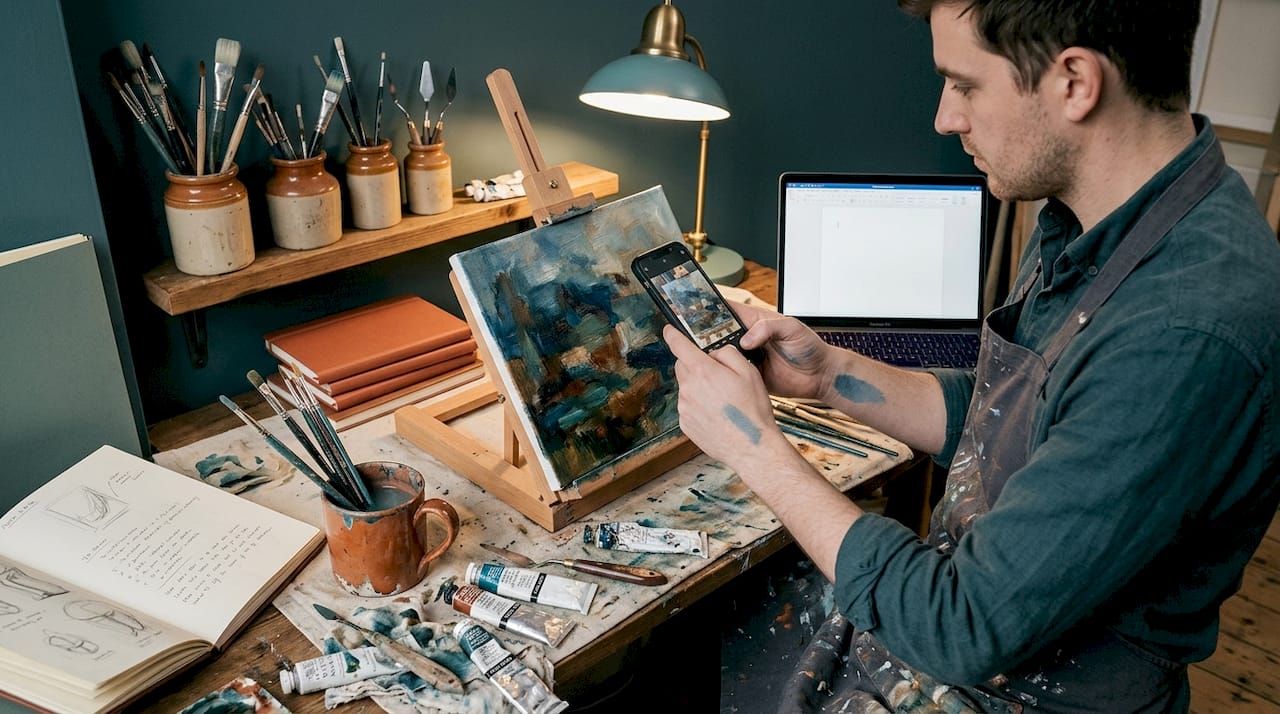
Why commission art rather than buy ready-made?
Buying an existing artwork is faster and often cheaper. So why go through the commissioning process? Because the benefits of commissioned art go well beyond aesthetics. Consider what a bespoke piece actually offers you:
- A truly unique result. No one else owns the same work. A commissioned work created specifically for you reflects your vision rather than someone else’s creative output sold to the broadest possible market.
- Precise fit for your space. You specify the dimensions, orientation, and colour palette. The artwork is designed around your room, not squeezed into it.
- Creative collaboration. You are a co-author of the work in a meaningful sense. Many buyers find this process deepens their connection to the finished piece in a way that buying off a shelf never does.
- Direct support for artists. Commissions represent some of the most financially significant work an independent artist undertakes. Your investment goes directly to a creator rather than a retailer’s margin.
- Emotional and long-term value. Bespoke art often carries personal significance, making it more likely to be kept, loved, and passed on. That is a different kind of worth compared to a mass-produced decorative print.
For practical guidance on approaching personalised pieces, Frametheworld’s guide on custom art for your space covers how to think about matching art to your interior before commissioning begins.
Copyright, rights, and formal agreements
This is the area where most commissioned art relationships go wrong, not because either party is dishonest, but because both assume the wrong default.
Here is the truth: paying for a commissioned artwork does not automatically give you the copyright. Work-for-hire doctrine requires both a statutory fit (the work must fall into one of nine specific legal categories) and a written agreement signed before the work begins. Without both conditions being met, the artist retains copyright regardless of how much you paid.
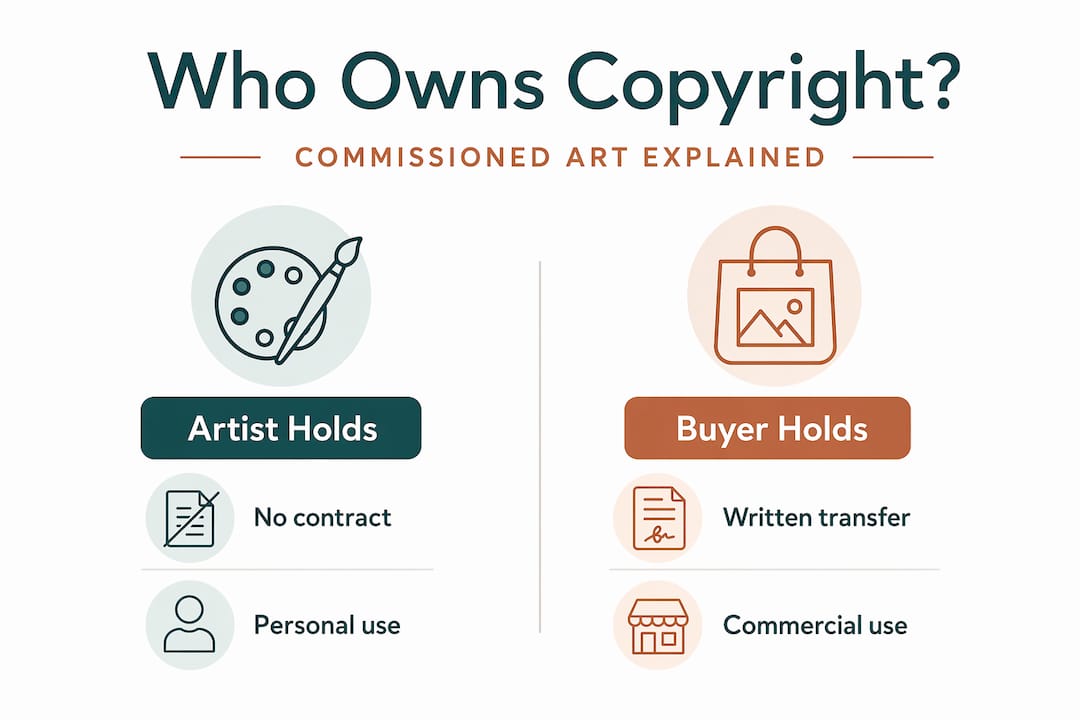
| Scenario | Who holds copyright |
|---|---|
| Commission paid, no written agreement | Artist retains copyright by default |
| Written rights transfer signed before work begins | Buyer holds copyright as specified |
| Work-for-hire agreement signed, statutory category met | Buyer holds copyright |
| Verbal agreement only | Artist retains copyright, regardless of payment |
What does this mean practically? If you commission a portrait and want to reproduce it on merchandise, in marketing materials, or across digital channels, you need a written rights transfer clause in your contract before the artist picks up a brush. Assuming you own full reproduction rights because you commissioned and paid for the piece is a very common and potentially expensive mistake.
Pro Tip: For any commission involving commercial use, such as branding, product imagery, or public display, have a solicitor review your agreement before signing. The cost of a brief review is negligible compared to the cost of a rights dispute.
Understanding these boundaries also protects artists. Many buyers are not attempting to exploit creators; they simply do not know the rules. Knowing them in advance keeps the relationship professional and respectful from the start.
How to commission art successfully
Getting the most from a commission comes down to preparation and communication. Here is what actually makes the difference:
- Choose an artist whose existing work you already admire. Do not commission an artist and then ask them to paint in a style completely foreign to their portfolio. You will both end up frustrated. The best commissions come from matching an artist’s strengths to your vision.
- Write a detailed brief. Include dimensions, medium, subject, intended location, colour references, and any non-negotiables. Attach three to five reference images to illustrate your visual direction.
- Agree on revision rounds upfront. Most professional artists include one or two revision rounds. Know what is included before you start, and respect the artist’s time if you exceed those rounds.
- Discuss pricing transparently. Commissioned artwork pricing varies enormously by medium, size, artist experience, and usage rights. Get a written quote and understand what it includes before work begins.
- Use a contract every time. Even for smaller commissions between friends, a simple written agreement outlining scope, timeline, revisions, payment, and rights prevents misunderstandings.
For buyers exploring how personalised artwork fits their home, thinking through the brief before approaching any artist is time well spent.
Pro Tip: When gathering references, include examples of what you do not want alongside what you do. Artists find “not this” just as useful as “yes, this” when understanding your taste.
My take on commissioning art
I’ve watched a lot of commissioning relationships go sideways, and the cause is almost never the artwork itself. It’s the conversation that didn’t happen early enough.
What I’ve found is that buyers consistently underestimate how much the sketch stage matters. They treat it as a formality, a quick nod before the real work begins. In my experience, it is the most important conversation in the entire process. If you are not certain about the composition at sketch stage, you will not be certain at the final stage either. The piece will not feel like yours. The artist will sense it. Nobody wins.
I’ve also seen the copyright misunderstanding cause genuine distress in otherwise positive commissioning experiences. A buyer falls in love with the piece, pays gladly, and then discovers they cannot reproduce it without returning to the artist for separate licensing. That is not a dishonest outcome. It is a predictable one if you did not address rights at the outset.
What actually works better than any formal theory is a genuine conversation before the brief. Not emails with attachments, but a call or a meeting where you talk about what you actually want the artwork to do in your life or your space. Artists are not mind readers. But good ones are extraordinarily skilled at translating a real conversation into visual form, if you give them the material to work with.
The buyers who get the best results are not the ones with the most detailed briefs. They are the ones who treat the commission as a collaboration from the first moment, staying curious about the artist’s perspective rather than directing every decision.
— Lennard
Discover bespoke art at Frametheworld
If this guide has made you curious about commissioning or finding art that genuinely fits your space, Frametheworld is a strong place to start exploring. The platform offers curated collections across styles and media, from richly textured impasto and palette knife paintings to highly detailed realistic hand-painted masterpieces, making it easy to identify the style direction that suits your vision before approaching any artist. Frametheworld also supports custom and bespoke requests for both private buyers and professional interior projects, so whether you are looking for a starting point or a finished commission, there is a practical route forward here.
FAQ
What is the commissioned art definition?
Commissioned art is artwork created to order for a specific client in exchange for payment, rather than a pre-existing piece purchased off the shelf. The client provides a brief, and the artist produces a bespoke work based on those requirements.
How do I start the process of commissioning art?
Start by defining your concept clearly: subject, size, medium, colour palette, and intended use. Find an artist whose existing portfolio aligns with your vision, prepare a written brief with reference images, and agree on terms before any work begins.
Does commissioning art give me the copyright?
Not automatically. By default, the artist retains copyright even after you pay for a commission. To transfer copyright or reproduction rights, you need a written agreement signed before the work is created.
How long does a commission typically take?
Timelines vary widely depending on the medium, scale, and the artist’s schedule. A small digital commission may take one to two weeks; a large oil painting commission may take several months. Always agree on a timeline in writing before work begins.
What types of art can be commissioned?
Almost any medium or format can be commissioned, including oil painting, watercolour, digital illustration, sculpture, printmaking, and mixed media. The type you choose should match both your aesthetic vision and the intended location or use of the finished piece.



Leave a comment
This site is protected by hCaptcha and the hCaptcha Privacy Policy and Terms of Service apply.