
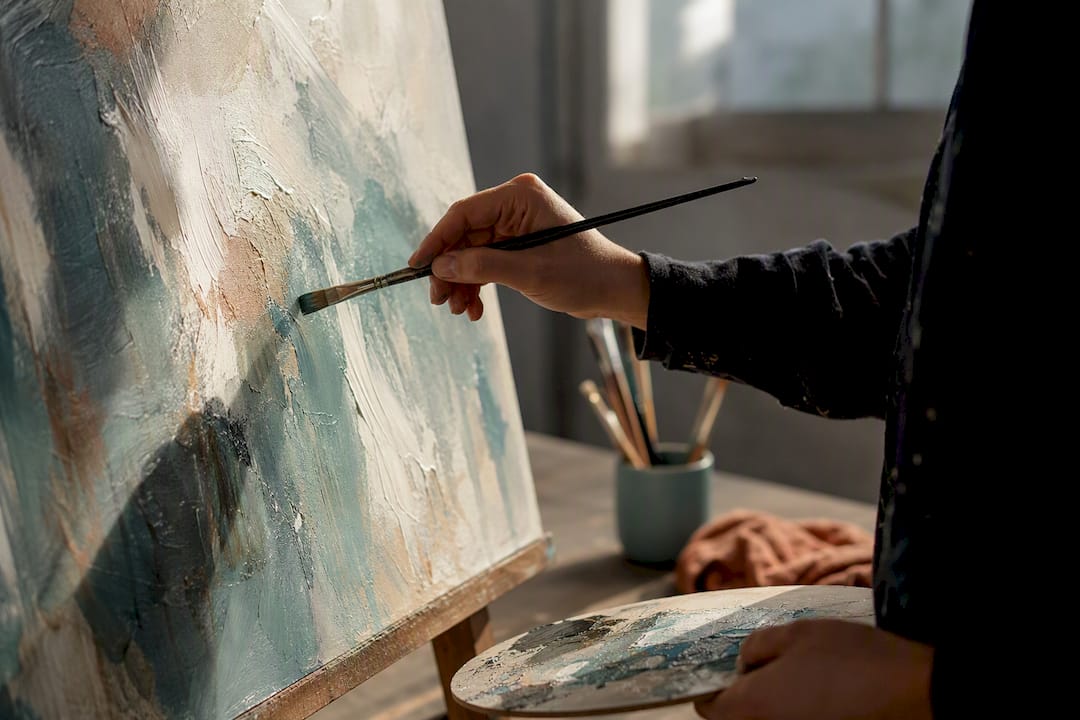
Art commissions can vary widely in price depending on size, medium, and other factors, with small pieces generally less expensive and large, site-specific canvases significantly more costly. Size, medium, and the artist’s reputation move that figure more than anything else. Before requesting quotes, measure your wall and have a rough budget range in mind; that step will help you better evaluate prices.
TL;DR:
- Small commissions typically cost between £40 and £150, with faster turnaround times and limited revision opportunities.
- Mid-sized artworks for homes usually fall within £800 to £3,000, depending on medium, detail, and artist reputation.
- Large or site-specific projects often exceed £3,000, driven by scale, installation logistics, and specialized delivery needs.
- Artist reputation can significantly influence price, with gallery-represented artists adding a 30 to 50 percent commission on top.
- Contracts should specify payment schedules, revision limits, delivery, and licensing rights to prevent misunderstandings and control costs.
Table of Contents
- How much do art commissions cost in the UK?
- What actually drives the price of a commission?
- How do deposits and payment schedules work?
- How to brief an artist without inflating your costs
- How long does a commission take from brief to installation?
- What should the contract cover?
- Can you commission bespoke art on a tighter budget?
- Why Frametheworld built its commissioning process around clarity
- Ready to commission your own piece?
- Sources
How much do art commissions cost in the UK?
Art commission cost in the UK splits into three rough tiers, and knowing which one you’re shopping in saves a lot of wasted back-and-forth with artists.
Small commissions, think digital illustrations or modest paper-based pieces, often start around £40 to £150. They’re quick to produce and forgiving on revisions, which keeps the price down.
Mid-size commissions cover the bulk of home and office requests: a hand-painted canvas for a living room or reception area. These typically run £800 to £3,000, depending on medium, detail, and the artist’s standing.
Large or site-specific commissions, such as those for hotel lobbies, stairwells, or boardrooms, often exceed average prices due to scale, logistics, and installation requirements. An oversized canvas may require special delivery arrangements or equipment, which can add to the overall cost beyond the painting itself.
- Small pieces: £40 to £800, quick turnaround, limited revisions
- Mid-size canvases: £800 to £3,000, the most common bracket for homes
- Large or site-specific work: £3,000 and up, driven by scale and access
Prices for art commissions may vary by location, often reflecting differences in studio costs and local demand. A useful benchmark: oil paintings and highly detailed works commonly exceed £1,000, while a simple abstract acrylic piece in a similar size might come in at half that.
What actually drives the price of a commission?
Every quote breaks down into the same handful of variables, and understanding them lets you negotiate on the right lever instead of just asking for a discount.
- Size and surface area: doubling the dimensions of a canvas doesn’t just double the paint; it often doubles the working hours too.
- Medium and materials: oil demands more drying time and technique than acrylic, and mixed media (resin, texture paste, fabric) adds material cost on top of labour.
- Artist reputation and market tier: an established name with gallery representation will price well above an emerging artist doing comparable technical work.
- Complexity and specialist technique: photorealism, fine detail, or unusual textures (think heavy impasto or layered wabi sabi finishes) take longer and cost more.
- Site-specific installation: awkward stairwells, narrow doorways, or high ceilings can add crane hire or specialist fitting to the final bill.
Reputation is the least predictable variable of the five. Two artists working in the same medium, at the same size, can differ by hundreds of pounds simply because one has a waiting list and the other doesn’t. Gallery-represented artists also typically build in a 30 to 50% commission that the gallery takes on top, which is worth asking about if you’re quoted through a gallery rather than direct.
How do deposits and payment schedules work?
Almost every UK artist or studio will ask for money upfront before touching a brush, and there’s a good reason for it.
- Deposit: expect to pay 30 to 50% of the total price before work begins. This covers materials and protects the artist against a client walking away mid-project.
- Staged payments: for larger commissions, a third payment sometimes falls at the halfway or concept-approval stage.
- Final balance: the remainder is due on completion, delivery, or installation, whichever the contract specifies.
Beyond the painting itself, budget for the extras that catch buyers out:
- Framing: typically £60 to £250 depending on size and finish.
- Professional transport: £40 to £200 for local courier work, more for oversized pieces needing specialist handling.
- Insurance: worth asking whether transit cover is included or charged separately.
- VAT: most UK-based sole-trader artists sit below the VAT registration threshold, but studios and larger suppliers may add VAT to the invoice, so check before you sign.
Ask for a quote that separates labour, materials, and logistics into distinct lines. A single lump sum makes it impossible to see where your money is actually going, and it makes comparing two artists’ quotes almost meaningless.
How to brief an artist without inflating your costs
A vague brief is the single biggest cause of scope creep, and scope creep is where budgets quietly double.
- Give precise wall dimensions and viewing distance. A piece designed to be seen from six feet away needs different detail levels than one glimpsed from across a lobby.
- State your budget band and timeline upfront. Artists can tailor complexity to fit a number; they can’t guess it.
- Note any installation constraints, stairwells, lift access, ceiling height, so the artist can flag extra costs before starting, not after delivery.
- Separate the non-negotiables from the flexible elements. Colour palette and general mood might be fixed; exact composition could be left to the artist’s judgement.
- Agree revision rounds in writing, including how many are included and what extra changes cost.
Industry practice favours briefs that describe purpose and atmosphere rather than dictate every detail, giving the artist room to apply their own expertise while still meeting the room’s needs. For a practical walkthrough of the measuring and planning stage, Frametheworld’s step-by-step guide to bespoke wall art covers the groundwork in more detail.
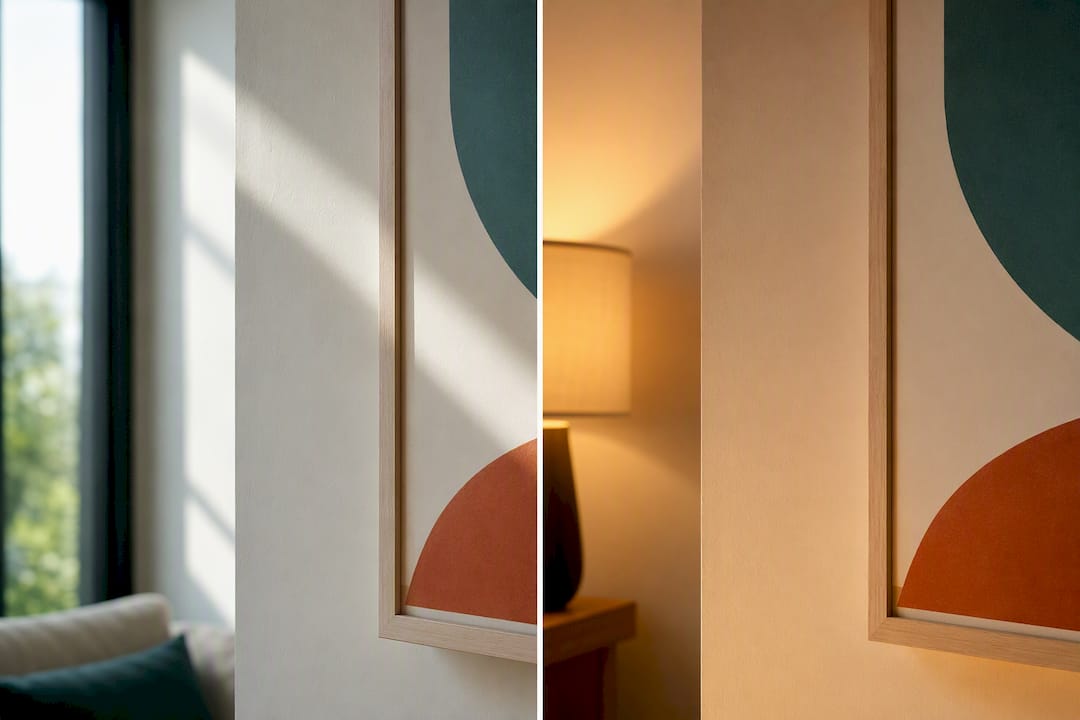
Pro Tip: Bring a photo of the wall in natural daylight and one under your usual lighting. Artists working from a single well-lit photo often misjudge how a colour will read in the room, and that mistake is expensive to fix after delivery.
How long does a commission take from brief to installation?
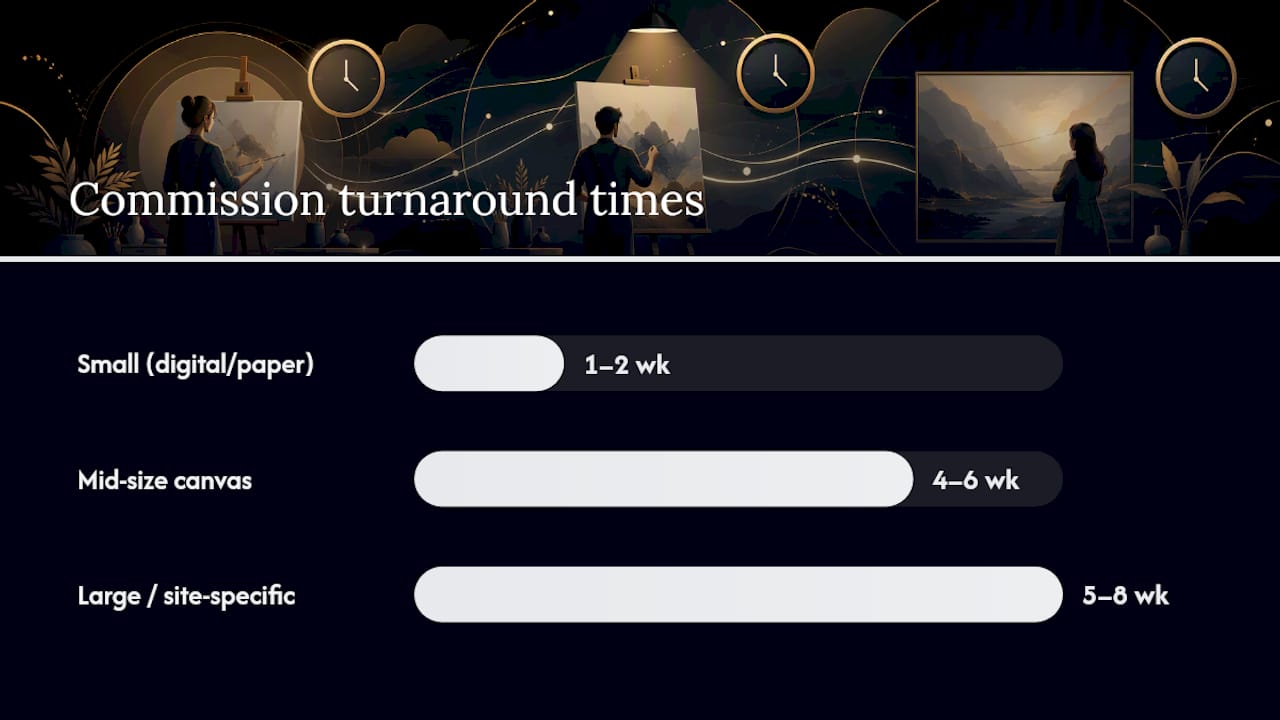
Turnaround depends heavily on scale. A small digital or paper piece might land within a week or two. A mid-size canvas usually takes four to six weeks once the brief is confirmed. Large or site-specific commissions commonly run five to eight weeks, Frametheworld’s own stated window for site-specific UK projects, once you account for concept approval, painting time, and installation planning.
Sensible milestones to build into any timeline:
- Concept sketch or mock-up approval
- A progress check-in partway through painting
- Final sign-off before delivery
- Installation date, confirmed against access requirements
Rush requests almost always carry a premium, sometimes 20% or more, because they force an artist to reorder their schedule around one client. For interior designers and developers coordinating a fit-out date, early collaboration with the artist reduces the risk of a late delivery clashing with handover photography or client walkthroughs.
What should the contract cover?
A written agreement isn’t a formality here; it’s what stops a misunderstanding from becoming a dispute. Before any deposit changes hands, make sure the contract sets out:
- Payment schedule and cancellation terms, including what happens to the deposit if either side pulls out.
- Revision rounds, how many are free, and the rate for anything beyond that.
- Copyright and reproduction rights, particularly important if the piece will appear in marketing photography or a commercial development’s promotional material.
- Delivery, insurance, and installation responsibilities, so it’s clear who’s liable if the piece is damaged in transit.
Frametheworld provides a copy-ready commission contract, including AI clauses, that covers these points directly, useful as a template even if you’re commissioning independently.
Can you commission bespoke art on a tighter budget?
Yes, and the trade-offs are more manageable than most buyers expect.
- Choose a smaller original or a high-quality print rather than a large one-off canvas; the visual impact per pound is often better.
- Limit revision rounds from the outset, a precise brief upfront removes most of the need for changes later anyway.
- Use standard framing sizes or arrange local installation yourself to cut courier costs.
- Consider emerging artists or limited-edition runs, which deliver strong quality at a fraction of established-name pricing.
If you’re set on an abstract style specifically, Frametheworld’s guide to commissioning an abstract painting breaks down how style choice itself affects the final price.
Pro Tip: If you’re working with an interior scheme that already includes patterned textiles or abstract rug designs, send the artist those references early. It’s far cheaper to match a painting to an existing rug than to repaint after the fact because the tones clash.
Why Frametheworld built its commissioning process around clarity
We built our commissioning tools because the biggest cost overruns we saw weren’t about paint or canvas, they were about missing information. A site-specific commission runs smoothest when dimensions, budget, and timeline are agreed before the brush touches canvas. Our copy-ready contract, including AI clauses, exists to protect both sides once work begins. Measure your wall, decide your budget band, and set a realistic timeline before requesting a quote.
— Lennard
Ready to commission your own piece?
If you’ve read this far, you already know the variables that shape an art commission cost UK-wide, size, medium, and reputation, so the next useful step is seeing what a finished piece actually looks like. Frametheworld’s Wabi Sabi Wall Art collection showcases hand-painted abstract canvases built around texture and imperfection, and every piece in it can be adapted into a bespoke commission sized to your wall.
Before reaching out, have three things ready: your wall dimensions, a rough budget band, and your ideal delivery window. That’s enough for a meaningful first quote, no guesswork required on either side. From there, request a quote through the Wabi Sabi collection page and start the conversation about your specific space.
Sources
- What to Expect When Commissioning Bespoke Contemporary Artwork
- Art pricing in the UK (2026 guide)
- Bespoke art for interior designers and architects | CommissionIt
- Commissioned Art Pieces UK Guide 2025: Costs, Platforms & How to Order Custom Art - Fine Home Decor

Leave a comment
This site is protected by hCaptcha and the hCaptcha Privacy Policy and Terms of Service apply.