

TL;DR:
- Professional framing uses conservation-grade materials to protect artwork from deterioration.
- Custom framing extends artwork’s lifespan and enhances visual appeal compared to ready-made options.
- Proper framing is essential for preserving valuable and personal pieces over decades.
A frame is easy to overlook. Most people buy one off the shelf, slide their print in, and hang it on the wall without a second thought. But within a few years, that same print may be yellowing at the edges, fading near the window, or warping from humidity. The truth is, the frame you choose does far more than hold your artwork in place. It either protects your investment or quietly destroys it. This article explains what professional framing actually involves, when it becomes non-negotiable, and how the right approach can transform both the longevity and the visual impact of your wall art.
Table of Contents
- What makes professional framing different
- Why ready-made frames aren’t enough for most art
- How professional framing protects and preserves art
- How professional framing elevates décor and home value
- A professional perspective: what most homeowners and designers overlook
- Where to find expert framing for your art
- Frequently asked questions
Key Takeaways
| Point | Details |
|---|---|
| Superior art protection | Professional framing shields your artwork from UV light, dust, and humidity, significantly extending its life. |
| Custom fit for any piece | Every artwork, regardless of size or shape, gets a frame that fits perfectly without cropping or visible gaps. |
| Elevated aesthetics | Expert framers help ensure your art complements both the artwork itself and your interior décor. |
| Long-term value | Investing in professional framing preserves and can enhance both sentimental and financial value over time. |
What makes professional framing different
Walk into any professional framing studio and the first thing you notice is the range of materials on offer. This is not about aesthetics alone. The materials used in professional framing are chosen specifically to protect artwork from the forces that degrade it over time.
Conservation-grade materials like acid-free mounts, UV-protective glazing, and archival backings prevent fading, discolouration, and acid damage caused by UV light, humidity, and airborne pollutants. Standard frames from a high street shop use none of these. Their backing boards are often made from regular cardboard, which contains acids that migrate directly into the paper of your artwork over time.
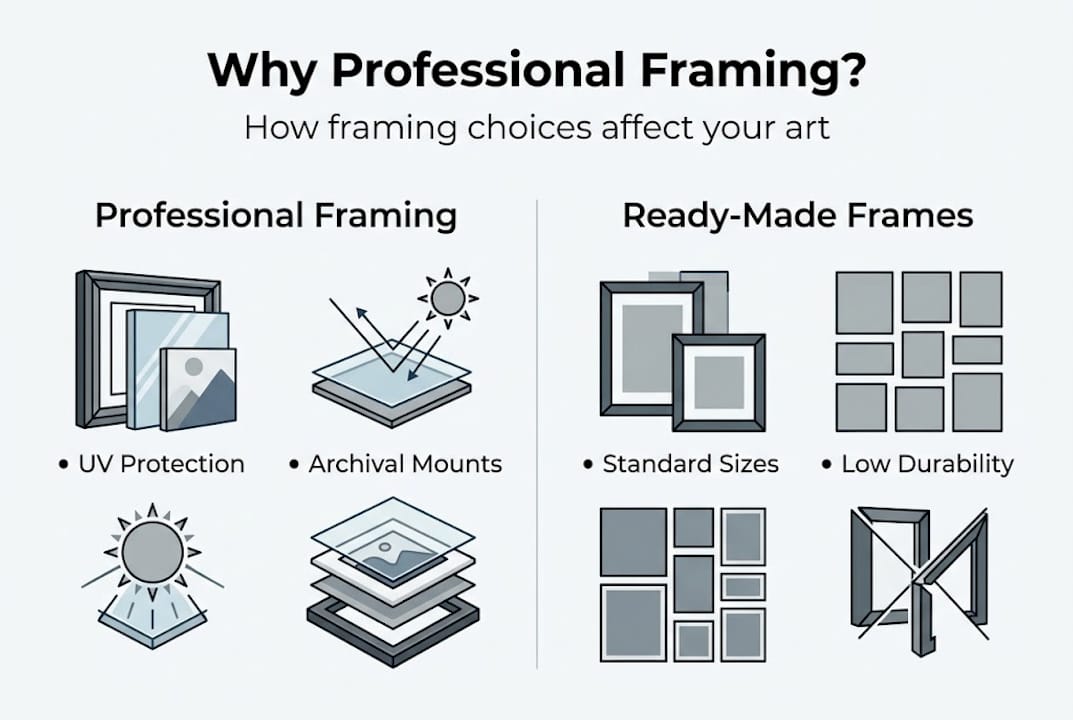
Beyond materials, the methodology matters. Key techniques include precise measurement of the artwork, use of picture mounts to create a buffer between the art and the glass, reversible mounting methods, and sealed dust backings. Reversible mounting is particularly important for heirlooms or original works, as it means the piece can be removed later without damage.
For a closer look at how the process works from start to finish, the framing process master guide on our blog walks through every stage in detail.
| Feature | DIY or ready-made | Professional framing |
|---|---|---|
| Mount material | Standard card | Acid-free, archival |
| Glazing | Basic glass or plastic | UV-filtering glass |
| Fit | Standard sizes only | Custom to the millimetre |
| Mounting method | Tape or glue | Reversible fixings |
| Backing | Cardboard | Sealed archival board |
| Lifespan of art | Years | Decades |
Key benefits of professional framing at a glance:
- Acid-free mounts stop chemical migration into the artwork
- UV glass filters out the wavelengths most responsible for fading
- Custom fit eliminates gaps, pressure points, and movement inside the frame
- Reversible methods preserve the option to restore or re-frame in the future
Pro Tip: Even an inexpensive decorative print benefits from conservation mounting. The frame may cost more than the print itself, but you are protecting the visual quality of your wall for years to come.
Why ready-made frames aren’t enough for most art
Ready-made frames have their place. For a temporary display, a child’s drawing on the fridge, or a low-cost poster in a rental flat, they do the job. But for anything you genuinely care about, the limitations become serious quite quickly.
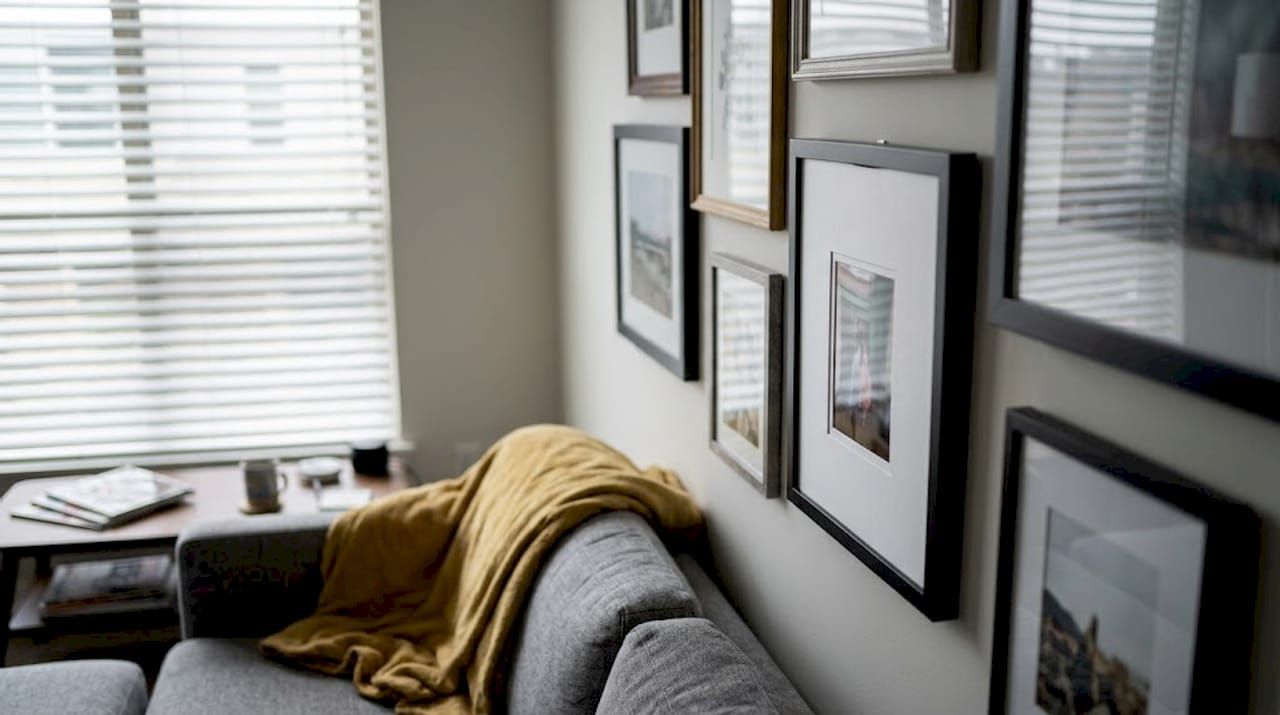
The most immediate problem is fit. Ready-made frames cannot accommodate non-standard sizes, which means artwork either gets cropped or sits loosely inside the frame with visible gaps. Both outcomes damage the visual presentation and, in the case of loose fit, allow the piece to shift and flex with changes in temperature and humidity.
The long-term risks are harder to see but more damaging. Ready-made frames cost between £10 and £50, while professional custom framing starts at around £45 and can exceed £500 for larger or more complex pieces. That price difference reflects a genuine difference in materials and outcomes. Cheap frames cause fading, acid burn along the edges, and eventual devaluation of the artwork itself.
Understanding the art framing impact on long-term value is something many homeowners only discover after the damage is done. The custom framing benefits for UK homes go well beyond aesthetics.
“Professional framing is like Savile Row tailoring for your art. Off-the-peg might fit well enough, but bespoke fits perfectly and lasts a lifetime.”
Here is a straightforward comparison to help you decide:
| Factor | Ready-made | Professional custom |
|---|---|---|
| Cost | £10 to £50 | £45 to £500+ |
| Fit | Standard sizes only | Any size, to the millimetre |
| Material quality | Basic | Conservation-grade |
| Aesthetic impact | Generic | Tailored to artwork and room |
| Long-term preservation | Poor | Excellent |
When is ready-made acceptable?
- Temporary displays with no sentimental or financial value
- Rental properties where you do not want to invest heavily
- Reproductions that you plan to replace within a year or two
- Children’s art or casual prints used for short-term decoration
How professional framing protects and preserves art
Preservation is where the real argument for professional framing is made. It is not just about looking good on the wall. It is about what the frame does invisibly, every single day.
Conservation mounting means the artwork is held in place without adhesives touching its surface. For heirlooms, original works, or archival documents, reversible techniques are essential. Oil paintings, for example, need to breathe and should never be glazed. Delicate documents require condition assessment before any framing decision is made.
The frame itself acts as a microclimate. A well-sealed professional frame slows the exchange of moisture between the artwork and the surrounding air, reducing the risk of warping, mould, and cockling in paper-based works.
UV-protective glazing is one of the most powerful tools available. Standard glass blocks almost no UV radiation. Conservation glass can block up to 99% of harmful rays, dramatically slowing the fading process in prints, watercolours, and photographs.
The custom wall art benefits extend into how the piece ages in your home over decades, not just how it looks on the day you hang it.
Key preservation techniques used by professionals:
- Reversible mounting using conservation hinges or corners
- Spacers to keep paper art away from the glass surface
- Sealed backing boards to block dust, insects, and humidity
- UV-filtering glazing to slow light-induced fading
- Condition assessment for fragile or high-value pieces before framing begins
Pro Tip: Never allow paper-based art to touch the glass directly, regardless of how inexpensive the piece is. Condensation forms on the inside of glass, and direct contact causes permanent sticking, mould, and surface damage.
How professional framing elevates décor and home value
Protection matters enormously, but the visual transformation that professional framing delivers is equally powerful. The right frame does not just contain the artwork. It extends it into the room.
Expert guidance on mouldings, colours, and widths bridges the artwork and the surrounding décor in a way that off-the-shelf frames simply cannot achieve. A thin, dark wood frame reads entirely differently from a wide, gilded one, even around the same print.
The general principle from experienced framers is that the frame should suit the artwork first, then the room. Subtle, minimal frames tend to work best for most contemporary art. Ornate mouldings suit period pieces or traditional interiors. Bold, chunky frames make a statement in modern spaces with clean lines.
For interior designers, the ability to specify custom sizing is transformative. An unusual wall, a narrow corridor, or an oversized feature wall all demand frames that cannot be found in any catalogue. Bespoke sizing means the artwork fits the space rather than the space accommodating the artwork.
Our expert guide to framing art covers the design decisions in detail, from mount colour to moulding profile.
Design considerations worth thinking about:
- Frame width relative to the size of the artwork and the wall space around it
- Colour harmony between the frame, the mount, and the dominant tones in the room
- Finish (matte, gloss, metallic, natural wood) and how it interacts with your lighting
- Mount depth and whether a double mount adds the visual weight the piece needs
Pro Tip: When consulting a professional framer, bring a photograph of the room on your phone and, if possible, a fabric or paint swatch. The more context you provide, the more precisely they can match the frame to your space.
A professional perspective: what most homeowners and designers overlook
Here is something we have observed consistently: people tend to reserve professional framing for pieces they consider valuable. A limited-edition print gets the full treatment. A favourite photograph or a painting bought at a local market gets a £15 frame from a supermarket.
This thinking gets it backwards. The pieces that carry personal meaning, the ones you actually live with and look at every day, are precisely the ones that deserve proper care. A faded, yellowed print in a cheap frame does not just look worse over time. It subtly diminishes the room around it and, more importantly, the memory or feeling it was meant to hold.
We have seen the difference side by side: a print framed professionally fifteen years ago, still vibrant and crisp, next to an identical print in a standard frame that has gone dull and brown at the edges. The contrast is striking.
Our expert framing advice consistently points to reversible methods, microclimates, and visual harmony as the details most people never consider until something goes wrong. The cost of doing it properly the first time is always lower than replacing or restoring a damaged piece later.
Where to find expert framing for your art
With a clear understanding of why professional framing matters, the next step is finding a solution that matches your artwork, your space, and your ambitions.
At Frametheworld.co.uk, we work with both private homeowners and professional interior designers across the UK. Our custom print framing service allows you to specify exactly what you need, from moulding profile and mount colour to glazing type and backing. Whether you are framing a single statement piece or curating a full gallery wall, we can help you get it right.
If you are looking for inspiration, our wabi sabi wall art collection is a strong starting point for calm, considered interiors. Get in touch for tailored advice or a quotation.
Frequently asked questions
What is conservation-grade framing and why is it important?
Conservation-grade framing uses acid-free mounts and UV-protective glazing to prevent fading, yellowing, and lasting damage to your artwork. It is the standard used for any piece you want to preserve beyond a few years.
When should I use a professional framer instead of doing it myself?
Opt for professional framing for any piece with sentimental, financial, or artistic value that you want to preserve or display at its best. Ready-made frames are only suitable for temporary or low-value art.
Will professional framing really extend the life of my art?
Yes. Archival methods used by professionals prevent the most common causes of deterioration, including fading, warping, and acid burn, preserving your artwork for decades with proper care.
How much more does professional framing cost compared to ready-made frames?
Ready-made frames start at around £10, while professional custom framing typically begins at £45 and can exceed £500 depending on size, materials, and glazing choice.
Can professional framers handle unusually sized or large artwork?
Yes. Professionals can create frames to millimetre precision, making them the only practical option for non-standard, oversized, or unusually proportioned pieces.


Leave a comment
This site is protected by hCaptcha and the hCaptcha Privacy Policy and Terms of Service apply.