

TL;DR:
- Sustainable art sourcing involves selecting artworks and materials that minimize environmental impact and support fair labor practices. Major institutions use frameworks like the Bizot Green Protocol to reduce energy and waste, guiding responsible collection practices. Truly sustainable art combines verified eco-friendly materials with enduring conceptual value, emphasizing longevity over trends.
Sustainable art sourcing is the practice of acquiring art and art materials with minimal environmental impact, ethical consideration, and enduring value. In the art world, this concept is often called responsible sourcing or ethical procurement, and it extends well beyond choosing recycled paper or non-toxic paint. It covers the full chain from raw material extraction to finished artwork, including how pieces are transported, displayed, and preserved. Institutions such as Getty, LACMA, and MOCA have formalised this through frameworks like the Bizot Green Protocol, proving that eco-friendly art sourcing is no longer a niche concern. For home collectors and design enthusiasts, understanding these principles is the first step toward making purchases that genuinely reflect your values.
What is sustainable art sourcing and why does it matter?
Sustainable art sourcing is defined as the deliberate selection of artworks and materials that prioritise environmental responsibility, fair labour, and long-term cultural value throughout the entire supply chain. The term covers both what art is made from and how it reaches you, including production methods, packaging, shipping distances, and the working conditions of everyone involved.
The concept matters because the art industry carries a larger environmental footprint than most collectors realise. Exhibitions alone generate significant waste through temporary construction, single-use fabrication materials, and energy-intensive climate control systems. When you apply sustainable art practices to your own collecting, you reduce demand for those resource-heavy processes at every level of the market.
Ethical art sourcing also addresses the human side of production. Pigments, canvases, and framing materials often travel through complex global supply chains where labour conditions and environmental standards vary widely. Choosing verified, responsibly sourced art means your purchase supports producers who meet fair standards, not just those who offer the lowest price.
How major art institutions practise responsible sourcing
The most instructive models for sustainable art sourcing come from major cultural institutions, which have the scale and resources to test what actually works. Getty, LACMA, MOCA, and the Hammer Museum have each committed to climate action through a collective framework that treats sustainability as a whole-systems challenge, not a single-department initiative.
The Bizot Green Protocol is the key framework here. It sets flexible environmental parameters for temperature and humidity in galleries, allowing institutions to reduce energy consumption without compromising artwork preservation. MOCA adopted these expanded ranges specifically to cut the energy cost of climate control, which is one of the largest sources of emissions in any museum building. The Hammer Museum applied Bizot Green Guidelines directly to exhibition design, targeting sustainable temporary construction, fabrication choices, and event logistics.
What makes these programmes significant for private collectors is the principle they demonstrate: sustainability involves operations, not just materials. The same logic applies when you source art for your home. Consider the packaging, the courier distance, and whether the framing materials come from certified suppliers, not just whether the artwork itself is made from recycled content.
- Waste reduction targets for exhibition builds and deinstallations
- Energy-efficient climate control using Bizot Protocol parameters
- Sustainable logistics, including consolidated shipping and reduced air freight
- Supplier audits covering both environmental and labour standards
Pro Tip: When researching a gallery or print studio, ask directly whether they follow any recognised sustainability framework. Institutions that can name a specific protocol, such as the Bizot Green Guidelines, are far more credible than those offering vague commitments to being “eco-friendly”.
Material sustainability versus conceptual sustainability in art
There are two distinct dimensions to sustainable art sourcing, and conflating them leads to shallow decisions. Material sustainability refers to the physical inputs: recycled fibres, biodegradable pigments, FSC-certified timber for frames, ocean plastics repurposed as sculptural media, or locally quarried stone that avoids long-distance transport emissions. Artists use ocean plastics and discarded industrial waste to create works with genuine environmental meaning, not just green credentials on a label.
Conceptual sustainability goes deeper. It asks whether an artwork is designed to endure in meaning and resist the fashion-driven obsolescence that drives so much unnecessary consumption. A 2026 essay in Daily Sabah draws this distinction clearly, arguing that endurance and meaning matter as much as recycled materials when assessing whether art is truly sustainable.
“Sustainability in art is not just about recycling. It is about creating artworks that endure in meaning and resist fashion-driven obsolescence.” — Daily Sabah, 2026
This distinction has real consequences for collectors. An artwork printed on recycled stock but designed to follow a passing trend will likely be discarded within a few years, generating waste regardless of its material origins. An artwork made from conventional materials but chosen for its timeless composition, emotional resonance, and quality craftsmanship may last generations. The most responsible approach combines both: verified sustainable materials and a deliberate choice to resist the replace-and-discard cycle that disposable consumer culture encourages.
The emotional and social dimensions matter here too. Art that connects to a specific place, community, or cultural tradition carries inherent longevity because its meaning is rooted in something beyond trend. Local artists, regional craft traditions, and works with clear provenance all carry this quality.
How to verify sustainable art materials and sourcing claims
Verification is where responsible sourcing becomes concrete. Certifications are the starting point, but they are signals, not guarantees. The three most relevant schemes for art and framing materials are FSC (Forest Stewardship Council) for timber and paper products, GOTS (Global Organic Textile Standard) for fabric-based works and textiles, and OEKO-TEX for processed materials free from harmful substances. Understanding FSC and PEFC certification is particularly useful when evaluating framing timber and paper stocks, since these are the most common materials in wall art production.
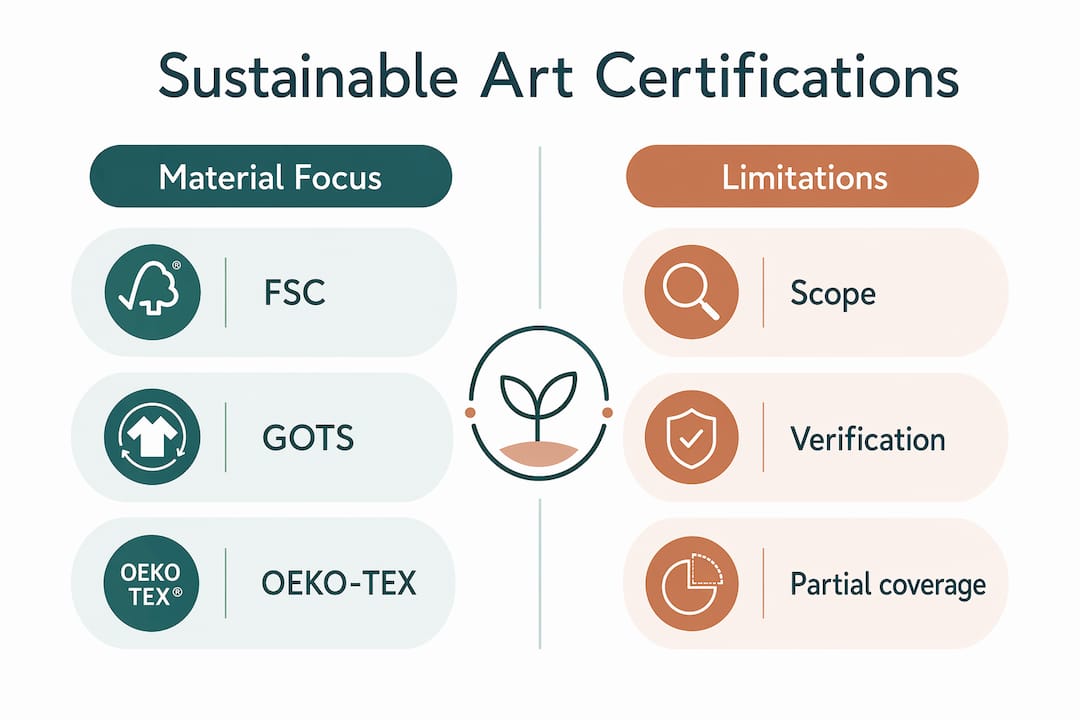
Certificates and logos alone are insufficient. A 2026 maker’s guide advises that batch certificates and chain-of-custody documentation are the real proof of compliance, and that buyers should request this paperwork rather than accepting a logo at face value. Chain-of-custody documentation traces a material from its certified source through every stage of processing to the finished product. Without it, a certification mark on packaging tells you very little.
Here is a practical verification process for sourcing sustainable art:
- Ask for the certificate scope. A supplier’s FSC certificate may cover only certain product lines. Confirm that the specific item you are buying falls within the certified scope.
- Request batch certificates. These link a specific production run to a certified source. Reputable suppliers provide them without hesitation.
- Use supplier questionnaires. A short written questionnaire covering material origins, labour practices, and waste management reveals far more than a brochure.
- Audit continuously. Certifications expire and supply chains change. Continual verification is more reliable than a one-off check at the point of first purchase.
- Prioritise local sourcing. Reducing transport distance cuts emissions and simplifies the verification chain. A local printmaker using regional paper suppliers is easier to audit than an overseas manufacturer.
| Certification | What it covers | Limitation |
|---|---|---|
| FSC | Timber, paper, and board from responsibly managed forests | Covers forestry only, not downstream processing |
| GOTS | Organic textile fibres from farm to finished product | Applies to textiles; not relevant for hard materials |
| OEKO-TEX Standard 100 | Harmful substance testing for processed materials | Tests the product, not the supply chain practices |
Pro Tip: When buying framed prints or original works, check the framing materials separately from the artwork itself. Frames often contain MDF, adhesives, or finishes that carry their own environmental footprint, and these are rarely covered by the artwork’s sustainability credentials.
What are the benefits of sustainable art sourcing?
The benefits of sustainable art sourcing operate on three levels: environmental, ethical, and personal. Understanding all three helps you make the case for responsible choices, both to yourself and to others.

On the environmental side, the gains are direct. Choosing art made from recycled, local, or certified materials reduces the demand for virgin resource extraction. Selecting suppliers who consolidate shipments and avoid air freight cuts transport emissions. Opting for professional framing with archival materials extends the life of a piece, reducing the frequency of replacement and the waste that comes with it.
The ethical dimension is equally significant. Ethical sourcing builds trust through transparency about labour practices and material origins. When you buy from a maker who publishes their supply chain information and holds current certifications, your purchase supports fair wages and safe working conditions at every stage of production. This is what distinguishes genuine ethical art sourcing from greenwashing.
For collectors, the personal benefits are compelling:
- Long-term value. Art chosen for endurance rather than trend holds its aesthetic and financial worth over time.
- Reduced consumption guilt. Verified sustainable purchases align spending with values, which research consistently links to greater satisfaction.
- Stronger provenance. Documented sourcing adds to an artwork’s story and, in some cases, its resale value.
- Mindful collecting. Applying sustainability criteria naturally slows impulse buying and encourages more considered, meaningful acquisitions.
Sustainable art resists disposable consumer culture and provides enduring emotional and financial value. That is not a marketing claim. It is the logical outcome of choosing quality, provenance, and meaning over novelty.
How to source sustainable art for your home
Applying these principles at home is more straightforward than it sounds. The key is building a short checklist that you apply consistently, rather than trying to evaluate every possible variable on each purchase.
Start with eco-friendly art materials and provenance. Ask where the work was made, what it is made from, and whether the supplier can provide certification documentation. For prints, confirm the paper stock and inks. For original works, ask about the artist’s sourcing practices.
Consider the framing as carefully as the artwork itself. Professional framing with archival-quality materials protects the piece for decades and eliminates the need for replacement. Acid-free mounts, UV-protective glazing, and sustainably sourced timber mouldings are the standard to look for.
Think about placement and longevity together. Art chosen to suit a specific wall, room, and light condition is far less likely to be replaced than a piece bought impulsively. Measuring your space, understanding the colour palette, and selecting a work that genuinely fits your aesthetic reduces the churn that drives unnecessary consumption.
Finally, resist trend-led purchasing. The most sustainable art decision you can make is to buy something you will still want in twenty years. Classic compositions, quality materials, and works with personal meaning outlast seasonal trends without any additional environmental effort.
Key takeaways
Sustainable art sourcing combines verified materials, ethical supply chains, and a deliberate commitment to endurance over trend-driven consumption.
| Point | Details |
|---|---|
| Definition is broad | Sustainable art sourcing covers materials, labour, logistics, and conceptual longevity, not just recycled content. |
| Institutions lead by example | Getty, LACMA, MOCA, and the Hammer Museum use the Bizot Green Protocol to reduce energy use and exhibition waste. |
| Verification requires documentation | Certifications like FSC and GOTS need supporting batch certificates and chain-of-custody paperwork to be meaningful. |
| Conceptual sustainability matters | Art chosen for endurance and meaning resists the replace-and-discard cycle regardless of its material origins. |
| Home collectors can act now | Applying a short sourcing checklist, prioritising professional framing, and avoiding trend-led purchases makes a measurable difference. |
Why I think sustainable art sourcing is misunderstood
Most conversations about sustainable art stop at materials. People ask whether the paper is recycled or whether the ink is water-based, tick those boxes, and consider the job done. In my experience, that approach misses the larger point entirely.
The most wasteful thing a collector can do is buy art they will discard in three years. A piece printed on virgin paper but chosen with genuine care, hung in the right space, and professionally framed to last a generation has a far smaller lifetime footprint than a “sustainable” print bought on impulse and replaced when the trend shifts. Conceptual sustainability, the idea that art should endure in meaning, is not a philosophical abstraction. It is the most practical environmental argument for buying less and choosing better.
What I find genuinely encouraging is the shift I see in how collectors talk about their purchases. There is a growing appetite for provenance, for knowing where something came from and who made it. That curiosity is the foundation of responsible sourcing. Once you start asking those questions, the certifications and documentation follow naturally. The harder shift is cultural: moving from art as decoration to art as a considered, lasting investment in your environment and values.
The institutions are ahead of most private buyers on this. The Bizot Green Protocol is not a marketing exercise. It is a serious operational commitment that costs money and requires genuine change. Private collectors do not need to match that scale, but the underlying principle applies equally: treat every sourcing decision as part of a longer chain of responsibility.
— Lennard
Explore sustainable wall art with Frametheworld
Frametheworld offers collections built with quality and longevity at their core, making responsible sourcing straightforward for home collectors and interior professionals alike. The Wabi Sabi wall art collection features hand-painted abstract textures that embody conceptual sustainability: timeless compositions designed to endure rather than follow seasonal trends. For bolder spaces, the Pop Art collection brings responsibly sourced, hand-painted works with lasting visual impact. Frametheworld also offers bespoke framing options using archival-quality materials, so the pieces you choose are protected for the long term. Browse the full range at frametheworld.co.uk and find art that reflects both your aesthetic and your values.
FAQ
What is sustainable art sourcing in simple terms?
Sustainable art sourcing is the practice of acquiring art and art materials in ways that minimise environmental harm, support fair labour, and prioritise long-term value over disposable consumption.
What certifications should I look for when sourcing sustainable art?
FSC covers timber and paper, GOTS covers organic textiles, and OEKO-TEX confirms processed materials are free from harmful substances. Always request batch certificates alongside any logo to confirm the specific product is covered.
Is conceptual sustainability as important as using eco-friendly materials?
A 2026 analysis in Daily Sabah argues that endurance and resistance to fashion-driven obsolescence are as significant as material choices. Art chosen for lasting meaning reduces consumption over time regardless of what it is made from.
How do major institutions approach sustainable art sourcing?
Getty, LACMA, MOCA, and the Hammer Museum follow the Bizot Green Protocol, which sets flexible climate parameters to reduce energy use and applies sustainability criteria to exhibition construction, logistics, and supplier selection.
How can I verify that an artwork is genuinely sustainably sourced?
Ask the supplier for chain-of-custody documentation, batch certificates, and a clear statement of which certification scope covers the specific product. Vague claims without supporting paperwork are a reliable indicator of greenwashing.



Leave a comment
This site is protected by hCaptcha and the hCaptcha Privacy Policy and Terms of Service apply.