
TL;DR:
- Research confirms that art in wellness spaces lowers cortisol, reduces anxiety, and improves mood through physiological mechanisms. Different types of art, such as passive biophilic images, immersive multisensory environments, and participatory activities, serve distinct wellness goals and contexts. Evidence-based selection and strategic integration of art significantly enhance mental health outcomes beyond aesthetic considerations.
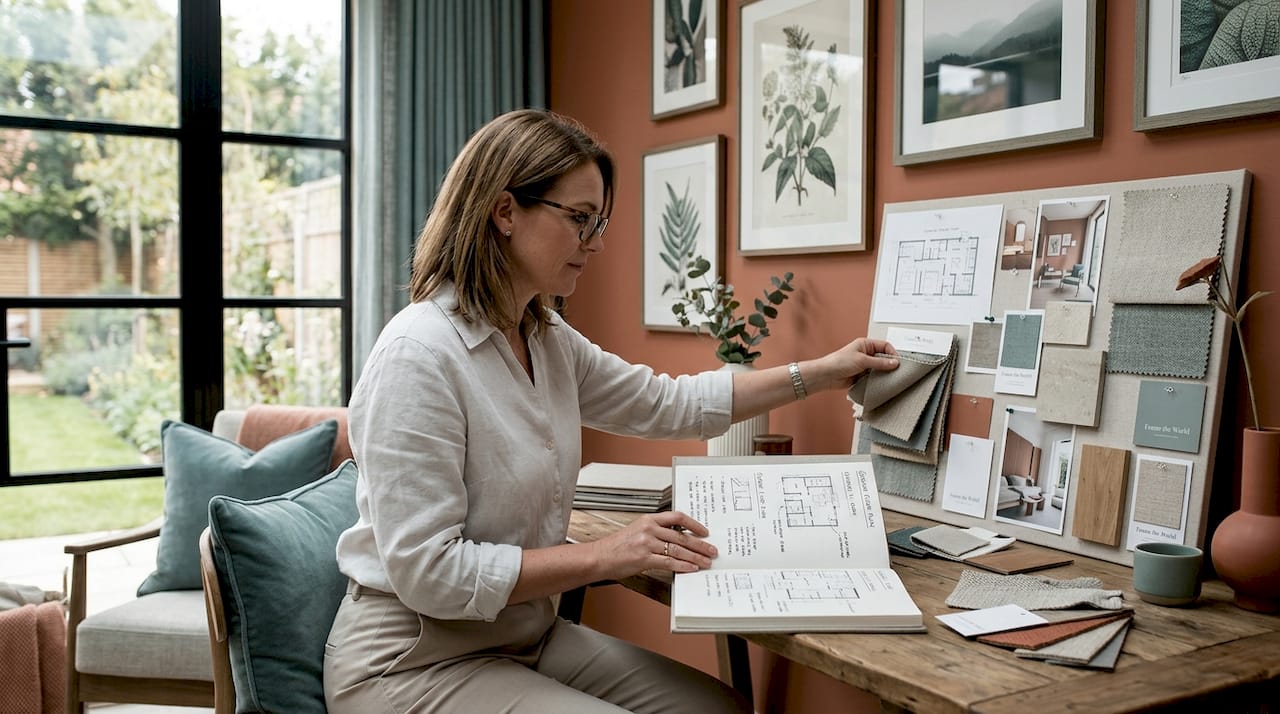
The role of art in wellness spaces is the intentional use of creative and visual interventions to produce measurable improvements in mental, emotional, and physical health. This is not decoration for its own sake. Research published in 2025 and 2026 confirms that art in clinical, community, and domestic settings reduces cortisol, lowers anxiety, and improves mood through specific physiological mechanisms. Whether you are a wellness professional specifying a treatment room, an interior designer working on a health-focused brief, or a homeowner redesigning a living space, the evidence now gives you a clear framework for making art choices that genuinely work.
What does the science say about art’s impact on wellness?
Art’s impact on wellness is no longer a matter of opinion. Peer-reviewed studies now document specific physiological and psychological outcomes from art interventions across clinical and community settings.
The most striking recent evidence comes from multisensory environments. Healthcare workers using Recharge Rooms in 18 US hospitals reported a 59.1% reduction in self-reported stress immediately after sessions. These rooms combined video nature projections, silk plants, essential oil diffusers, low lighting, and nature sounds, available around the clock. That figure tells you something important: when art is integrated with complementary sensory inputs, the effect on stress is not marginal. It is substantial and rapid.
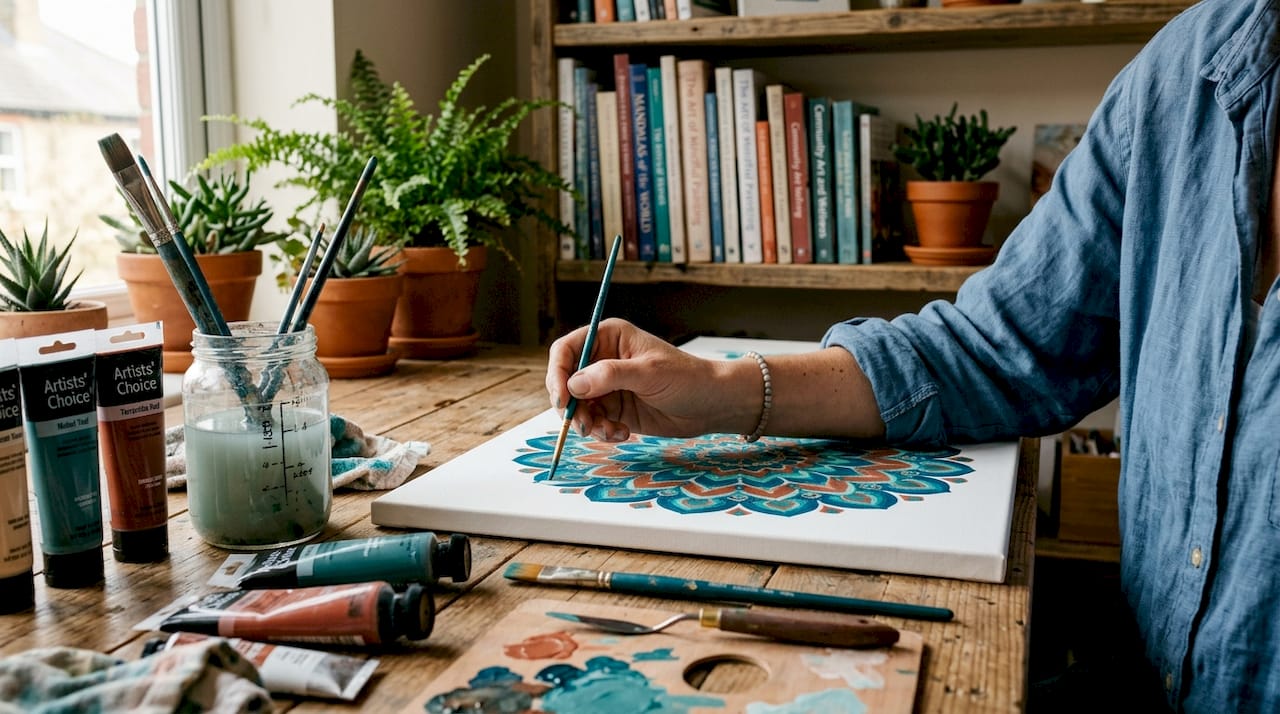
Participatory art produces equally measurable results. A randomised controlled trial with 90 patients found that mandala colouring reduced cortisol and anxiety within 15 minutes before coronary angiography. This is a high-anxiety clinical context, and a structured creative activity produced statistically significant changes in both physiological and psychological stress markers. The implication for wellness professionals is direct: low-demand creative activities belong in pre-treatment and recovery spaces.
Longitudinal evidence is just as compelling. A 12-month study of urban residents found that biophilic art environments produced cortisol reductions that accounted for 23% of depression symptom improvements and 31% of anxiety symptom improvements. These are not short-term mood lifts. They reflect sustained physiological change linked to the art environment itself.
Community-level outcomes reinforce this picture. Participants in the Art Pharmacy programme, an arts-based social prescribing initiative, showed meaningful and sustained improvements in WHO-5 wellbeing scores over time. Personalised arts engagement, maintained over months, produced lasting mental health benefits. This matters for anyone designing a wellness programme rather than a single intervention.
How do different art types function in wellness environments?
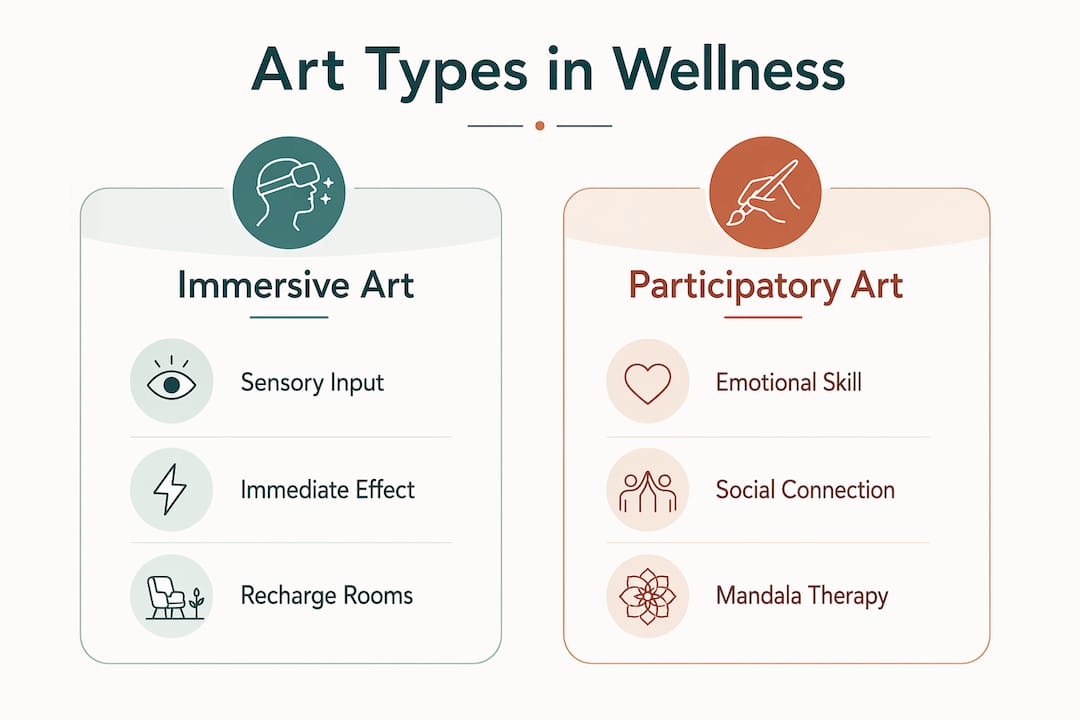
Not all art works the same way in a wellness setting. The mechanism, the timeline, and the appropriate context differ significantly depending on whether you are using passive visual art, immersive multisensory environments, or participatory creative activities.
| Art type | Primary mechanism | Best context | Time to effect |
|---|---|---|---|
| Passive visual art (e.g. nature prints) | Restorative attention, parasympathetic activation | Waiting areas, corridors, bedrooms | Minutes to hours |
| Immersive multisensory environments | Rapid affect regulation via combined sensory inputs | Break rooms, treatment suites, clinics | Immediate (under 30 minutes) |
| Participatory art (e.g. mandala colouring, group workshops) | Emotional regulation, social connection, habit formation | Therapy rooms, community spaces, home studios | 15 minutes to long-term |
Passive art works through restorative design theory. Nature imagery, soft organic forms, and biophilic compositions reduce cognitive load and allow the nervous system to recover. The key word here is restorative: the art should ask nothing of the viewer. Complexity, visual noise, or confrontational imagery undermines this effect entirely.
Immersive environments go further by layering sensory inputs. The healing art strategies used in the Recharge Rooms study combined art with lighting, scent, and sound to create a coherent sensory experience. The result was immediate affect regulation, which makes this format ideal for contexts where rapid recovery is the goal, such as staff break rooms in hospitals or pre-treatment waiting areas.
Participatory art operates differently. It builds emotional regulation skills over time and creates social connection through shared creative experience. The WHO/Europe 2026 guidance specifically identifies arts-based approaches as tools for psychosocial processing and community building, not merely aesthetic enrichment. Group art workshops in wellness centres or community health settings serve this function directly.
Pro Tip: When specifying art for a wellness space, ask first whether the goal is rapid stress relief or sustained wellbeing. The answer determines whether you need passive biophilic art, an immersive installation, or a participatory programme. These are not interchangeable.
Immersive vs participatory art: which works better?
The honest answer is that immersive and participatory art solve different problems, and the best wellness spaces use both strategically.
Immersive environments deliver immediate mood improvement without requiring effort from the user. This is their primary advantage. A healthcare worker entering a Recharge Room does not need to engage cognitively. The environment does the work. For acute stress situations, high-turnover clinical settings, or spaces where users arrive already depleted, this is the right choice.
Participatory art requires engagement, but that engagement is precisely what generates its deeper benefits. Structured activities like mandala colouring are particularly effective because they provide enough cognitive focus to interrupt anxious thought patterns without demanding creative skill. The RCT evidence confirms that structured colouring reduces physiological and perceived stress rapidly, even in high-anxiety clinical contexts. Open-ended creative tasks, by contrast, can increase anxiety in people who feel they lack artistic ability.
Practical considerations also differ between the two formats:
- Immersive installations require significant upfront investment in technology, lighting, and spatial design. They suit hospitals, dedicated wellness centres, and high-budget residential projects.
- Participatory programmes are lower cost to implement and can be adapted for almost any setting, from a GP waiting room to a corporate wellness space to a home studio corner.
- Passive biophilic art sits between the two in cost and complexity. A curated selection of nature-based prints, placed thoughtfully in a restorative environment, delivers measurable benefits at a fraction of the cost of a full immersive installation.
For homeowners and smaller wellness practices, the practical path is clear. Start with high-quality passive art aligned with restorative design principles, add structured participatory elements where space and programme allow, and consider immersive upgrades only when budget and setting justify them.
How to select and integrate art for maximum wellness benefit
Selecting art for a wellness space requires a different decision-making process than selecting art for general interior design. Aesthetics matter, but they are secondary to function. The role of art in interior design for wellness contexts demands that every piece earns its place through evidence-based criteria.
Follow this sequence when specifying or curating art for a wellness environment:
- Define the primary wellness goal. Acute stress relief, sustained mood improvement, social connection, and psychosocial processing each call for different art types. Clarify this before selecting anything.
- Prioritise biophilic and nature-based imagery. The biophilic art evidence is the strongest available for passive interventions. Nature scenes, organic forms, and soft botanical compositions support parasympathetic activation and measurable cortisol reduction.
- Match cognitive demand to context. High-anxiety spaces need low-demand visual triggers. Mandala-inspired patterns, soft gradients, and simple organic forms work. Busy abstract compositions or visually complex photography do not.
- Layer sensory elements where possible. Even without a full immersive installation, you can combine art with complementary lighting, natural materials, and acoustic design to amplify the restorative effect.
- Design for belonging as well as calm. Community art, locally sourced work, and pieces that reflect the identities of the people using the space build social connection. The Art Pharmacy evidence shows that personalised, culturally resonant arts engagement produces sustained wellbeing improvements that generic art selections do not.
- Review placement as carefully as selection. Art placed at eye level in a resting position, in spaces with natural light, and without visual competition from adjacent elements performs better than the same piece poorly positioned.
Pro Tip: For art and mindfulness applications specifically, choose pieces with a single focal point and minimal visual noise. The viewer’s eye should be able to rest without effort. This is the visual equivalent of a slow breath.
The importance of art in healing environments is also social. Spaces that feel generic or institutional undermine the psychological safety that effective wellness design requires. Art that reflects care, intention, and quality signals to users that their wellbeing is taken seriously. That signal is itself therapeutic.
Key takeaways
Art in wellness spaces produces measurable physiological and psychological benefits when selected and integrated according to evidence-based design principles, not aesthetic preference alone.
| Point | Details |
|---|---|
| Science backs art in wellness | Studies show cortisol reductions, anxiety decreases, and sustained WHO-5 wellbeing improvements from art interventions. |
| Art type determines outcome | Passive, immersive, and participatory art each serve distinct wellness goals and suit different contexts. |
| Biophilic art leads the evidence | Nature-based art aligned with restorative design produces the strongest longitudinal mental health outcomes. |
| Low-demand activities reduce acute stress | Structured activities like mandala colouring lower cortisol within 15 minutes in high-anxiety settings. |
| Design for belonging, not just calm | Personalised and community-connected art produces sustained wellbeing improvements that generic selections cannot match. |
Why I think we are still underusing art in wellness design
Most wellness spaces I encounter treat art as the last line item on the budget. It gets selected after the furniture, after the lighting, after the flooring. That ordering is backwards, and the research now makes that clear.
What strikes me most about the 2025 and 2026 studies is how specific the mechanisms are. We are not talking about art making people feel vaguely better. We are talking about cortisol deltas, parasympathetic activation, and WHO-5 score trajectories. These are the same metrics used to evaluate pharmaceutical interventions. The fact that a curated biophilic print or a 15-minute colouring session can move these markers is not a soft finding. It is a clinical one.
The challenge I see most often in practice is the gap between what the evidence recommends and what designers and wellness professionals actually specify. Biophilic design principles are well understood in theory, but in practice, spaces still fill up with generic abstract prints that do nothing for stress recovery. The Recharge Rooms research is a useful corrective here. It shows that the combination matters as much as any individual element. Art, light, scent, and sound working together produce effects that art alone cannot.
My honest recommendation is to treat art selection as a clinical decision, not a decorative one. Bring the same rigour to it that you would bring to any other element of a wellness programme. Work with artists and suppliers who understand restorative design, and push back on any brief that treats art as an afterthought. The evidence is now strong enough to justify that position.
— Lennard
Explore art collections designed for wellness spaces
Frametheworld offers curated collections that align directly with the restorative and mood-enhancing principles covered in this article. The Wabi Sabi wall art collection brings together hand-painted abstract textures and organic imperfection, qualities that support parasympathetic activation and low-demand visual engagement. For spaces where energy and mood uplift are the goal, the Pop Art collection offers bold, hand-painted pieces that shift the emotional register of a room immediately. Both collections are available in a range of sizes and formats, with bespoke options for professional wellness and interior design projects. Browse the full range at Frametheworld to find pieces suited to your specific wellness brief.
FAQ
What is the role of art in wellness spaces?
The role of art in wellness spaces is to produce measurable improvements in mental, emotional, and physical health through purposeful visual and creative interventions. Research confirms specific outcomes including cortisol reduction, anxiety relief, and sustained wellbeing improvements.
Does biophilic art actually reduce stress?
Yes. A 12-month longitudinal study found that biophilic art environments produced cortisol reductions accounting for 23% of depression improvements and 31% of anxiety improvements in urban residents. Nature-based imagery supports parasympathetic activation through restorative design mechanisms.
How does participatory art differ from passive art in wellness settings?
Passive art works through restorative attention and requires no effort from the viewer, making it ideal for waiting areas and recovery spaces. Participatory art, such as mandala colouring, builds emotional regulation skills and social connection over time, with evidence showing cortisol reductions within 15 minutes in clinical settings.
Can art therapy in health spaces replace clinical treatment?
Art therapy and arts-based interventions are evidence-based complements to clinical treatment, not replacements. The Art Pharmacy programme showed sustained WHO-5 wellbeing improvements, and the WHO/Europe 2026 guidance recommends arts integration as part of public health responses alongside conventional care.
What type of art works best in a home wellness space?
Biophilic and nature-based art with low visual complexity works best for home wellness environments. Pieces with a single focal point, organic forms, and soft colour palettes support stress recovery and are consistent with biophilic decor principles shown to benefit psychological wellbeing in domestic settings.


Leave a comment
This site is protected by hCaptcha and the hCaptcha Privacy Policy and Terms of Service apply.