

TL;DR:
- Art theme selection involves choosing a central concept or mood that guides artistic and interior design choices. It provides coherence, emotional depth, and personal resonance, helping to create spaces that feel meaningful and cohesive. Using tools like the 3-2-1 Framework and avoiding superficial or trend-driven themes ensures lasting relevance and authenticity in interior aesthetics.
Art theme selection is the intentional choice of a central concept or mood that shapes artistic expression and interior aesthetics. In design and fine art circles, this process is often called thematic curation. Understanding what is art theme selection means recognising it not as a rigid rule, but as a flexible creative framework that guides every decision, from the colours on your walls to the prints you choose for your living room. Whether you are a homeowner refreshing a space or a designer working on a client brief, getting this process right makes the difference between a room that feels considered and one that simply feels busy.
What is art theme selection and why does it matter?
Art theme selection is defined as choosing a core conceptual framework that provides meaning and context to artwork. It acts as a flexible structure that inspires creativity rather than prescribing a literal outcome. Think of it as the invisible thread connecting every piece in a room, whether that is a shared mood, a recurring colour family, or a consistent emotional tone.

The importance of art themes in interior design cannot be overstated. Without a guiding theme, even individually beautiful artworks can clash and create visual noise. A well-chosen theme gives a space coherence and tells a story. It also makes the practical decisions, such as which print to buy or which frame to choose, considerably easier because you have a clear reference point.
Art themes operate on two levels. The first is visual: colour harmony, composition, and the quality of light within the works. The second is conceptual: the mood, symbolism, and personal resonance a theme carries. Both levels must align for a theme to feel genuinely satisfying over time.
What criteria guide effective art theme selection?
Choosing a theme that works long term requires looking beyond surface appeal. The most effective art theme selection process evaluates both visual and emotional criteria simultaneously.
Visual essentials to assess:
- Value and contrast: Does the artwork create a clear light-to-dark range that gives the eye somewhere to travel?
- Colour harmony: Do the works share a palette or at least a tonal family? Colour harmonies and light quality separate amateur from professional aesthetic cohesion.
- Composition: Are the shapes and forms within the works complementary when displayed together?
- Edge quality: Hard edges create energy; soft edges create calm. A theme built around one or the other sets a consistent emotional register.
- Light quality: Warm light suggests intimacy; cool light suggests clarity and space.
Emotional and conceptual factors:
- Personal connection: Does the theme reflect something you genuinely care about?
- Symbolic depth: Can the theme carry multiple layers of meaning as you live with it?
- Narrative potential: Does it tell a story that evolves across multiple works?
Pro Tip: Stop looking at what an artwork depicts and start asking how it makes you feel. Shifting from “I like boats” to “I like the feeling of open, quiet space” opens up a far richer pool of works to choose from.
Coherence across a space matters as much as the quality of individual pieces. A room where every work shares a mood but varies in subject matter often feels more sophisticated than one where every piece depicts the same literal object.
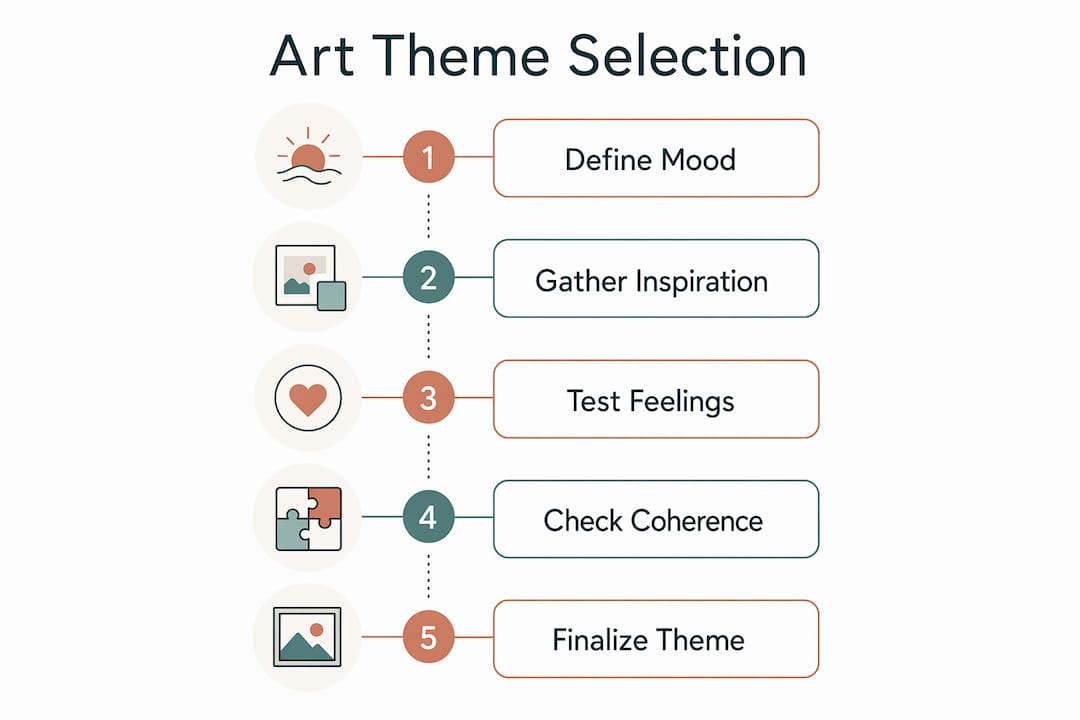
How do the 3-2-1 framework and theme generators help?
Practical tools exist to make the art theme selection process faster and more personal. Two of the most useful are the 3-2-1 Framework and random theme generators.
The 3-2-1 framework explained
The 3-2-1 Framework guides you through a structured self-reflection in three steps:
- Pick 3 favourite artworks from the past 12–18 months, whether pieces you own, have saved online, or simply admire.
- Find 2 shared qualities between them. These might be emotional (melancholy, joy, tension) or visual (muted tones, strong geometry, organic texture).
- Distil to 1 defining word. This word becomes your creative North Star. Every future purchase or commission is tested against it.
This method produces more personal and higher-quality results than chasing current trends because it draws directly from your own aesthetic history. Reviewing favourite artworks over a defined period reveals recurring patterns you may not have consciously noticed.
How theme generators compare
| Method | Best For | Limitation |
|---|---|---|
| 3-2-1 Framework | Personal, long-term theme clarity | Requires existing art references |
| Random theme generator | Overcoming creative blocks quickly | May lack personal resonance |
| Trend-based selection | Staying current with design movements | Themes date quickly |
Random theme generators offer conceptual hooks alongside 5–6 signature elements such as colour palettes or recurring motifs. They reduce blank-canvas paralysis and help uninspired creators find a starting point rapidly. The limitation is that a randomly generated theme may not carry personal meaning, which affects long-term satisfaction.
Pro Tip: Use a theme generator to spark ideas, then run those ideas through the 3-2-1 Framework to test whether they genuinely resonate with your own aesthetic history.
Well-tested thematic starting points reduce confusion and vague ideas by providing structure that creates freedom rather than limitation. Structure is not the enemy of creativity. It is the condition that makes creativity possible.
What pitfalls should you avoid when choosing art themes?
The most common mistake in art theme selection is choosing a theme because it looks attractive rather than because it means something. This produces spaces that feel pleasant but empty.
“Avoid selecting ‘too pretty’ or superficial subjects. Themes with grit or challenge sustain creative passion and provide depth for long projects.” Student Art Guide
Common pitfalls and how to avoid them:
- Choosing for trends over truth. A theme built around what is fashionable this season will feel dated within two years. Themes rooted in personal experience create authenticity and long-term satisfaction.
- Picking a theme that is too literal. A theme of “cats” is a category, not a concept. A theme of “quiet domesticity” or “the tension between wildness and order” is a concept that can sustain dozens of works.
- Ignoring symbolic depth. The best themes carry layers of meaning that reveal themselves over time. Ask what your chosen theme says about how you see the world.
- Selecting without testing. Live with a theme idea for a week before committing. Pin images, collect references, and see whether your enthusiasm holds.
Abstract moods or vibes such as “domestic stillness” or “neon and rain” offer greater flexibility and richer exploration than literal subject-based themes. They allow mood, palette, and lighting to guide your choices rather than forcing you to find works that all depict the same thing.
Authentic themes also sustain creative interest over time. A homeowner who selects art around a theme of “the tension between nature and industry” will find that theme still generating new discoveries five years later. A homeowner who selects art because it matches the sofa will find themselves bored within months.
How does art theme selection enhance home interiors?
Intentional theme selection transforms a collection of individual artworks into a coherent interior statement. The role of art in personalising spaces is well established: art communicates identity, sets emotional tone, and anchors the mood of a room.
How themes improve interior spaces:
- Aesthetic tone: A theme of Wabi Sabi, for example, signals acceptance of imperfection and natural materials. Every piece reinforces that message.
- Emotional atmosphere: Warm, textured works create intimacy. Cool, geometric works create clarity and focus. A consistent theme ensures these effects are cumulative rather than contradictory.
- Colour palette alignment: Art themes and interior colour schemes should speak the same language. Incorporating trending colour palettes into your theme selection keeps a space feeling current without sacrificing personal meaning.
- Scale and format coherence: A theme also guides decisions about size and format. A theme of urban energy suits large-format, high-contrast works. A theme of quiet reflection suits smaller, more intimate pieces.
Pro Tip: When selecting art for a room, identify the single dominant emotion you want a visitor to feel within ten seconds of entering. Let that emotion define your theme before you look at a single artwork.
For commercial spaces, theme selection carries additional weight. Curating art for commercial environments requires themes that communicate brand values while remaining accessible to a broad audience. The principles are the same: coherence, emotional intention, and personal (or brand) authenticity.
Online resources and curated collections make theme coherence more achievable than ever. Browsing by style, mood, or colour family allows you to test a theme across multiple works before committing. Selecting art by style promotes harmony and cohesion in ways that piece-by-piece impulse buying rarely achieves.
Key takeaways
Art theme selection works best when it combines personal emotional resonance with clear visual criteria, producing spaces that feel coherent, meaningful, and genuinely yours.
| Point | Details |
|---|---|
| Define your theme conceptually | Choose a mood or concept, not a literal subject, for greater depth and flexibility. |
| Use the 3-2-1 Framework | Analyse three favourite works, find two shared qualities, distil to one defining word. |
| Prioritise personal resonance | Themes rooted in personal experience outlast trend-driven choices by years. |
| Align art with interior mood | Match your theme to the emotional atmosphere you want a room to create. |
| Avoid superficial choices | Themes with depth and challenge sustain long-term interest; pretty-but-empty themes do not. |
Why i think most people approach art theme selection backwards
Lennard’s perspective
Most homeowners I speak with start by looking at art and then try to find a theme. That is the wrong order entirely. The theme should come first, even if it is just a single word scrawled on a notepad. Everything else follows from that.
The other mistake I see constantly is confusing a theme with a style. “Minimalist” is a style. “The feeling of arriving home after a long journey” is a theme. One tells you what something looks like. The other tells you what it means. The best interiors I have encountered are built around meaning, not aesthetics.
I also think people are too afraid of getting it wrong. Themes evolve. The word you choose today might shift in two years as your life changes, and that is not failure. That is the art working as it should, growing with you. Start somewhere specific, commit to it long enough to learn from it, and trust that the process of choosing will teach you more about your own taste than any trend report ever could. The art personalisation process is not a one-time decision. It is an ongoing conversation between you and your space.
— Lennard
Bring your chosen theme to life with Frametheworld
Once you have identified your theme, the next step is finding works that genuinely embody it. Frametheworld offers curated collections organised by theme, style, and mood, making it straightforward to test your chosen concept across multiple pieces before committing. If your theme calls for texture and imperfection, the Wabi Sabi wall art collection delivers hand-painted abstract works that embody exactly that spirit. For bolder, more energetic themes, the Pop Art and urban cityscape ranges offer high-contrast works with genuine visual presence. Frametheworld also provides bespoke options for homeowners and designers who need a piece built precisely around a specific theme, colour palette, or scale requirement.
FAQ
What are art themes in simple terms?
An art theme is the central concept or mood that connects a body of work or a curated interior space. It acts as a guiding idea rather than a strict rule, giving coherence to individual pieces.
How do i start the art theme selection process?
Begin by collecting images of artworks you genuinely love, then look for two or three recurring qualities across them. That pattern is the foundation of your theme.
Can a room have more than one art theme?
A single dominant theme produces the most coherent result, though sub-themes can exist within it. Multiple competing themes typically create visual confusion rather than richness.
How do i avoid choosing a theme that dates quickly?
Themes based on personal experience and emotional meaning age far better than trend-driven choices. Abstract moods outlast literal subject matter as a thematic foundation.
What is the difference between an art theme and an art style?
A style describes how something looks, such as minimalist or expressionist. A theme describes what it means or how it makes you feel. Strong interiors are built on themes; style is the vehicle that delivers them.

Leave a comment
This site is protected by hCaptcha and the hCaptcha Privacy Policy and Terms of Service apply.