
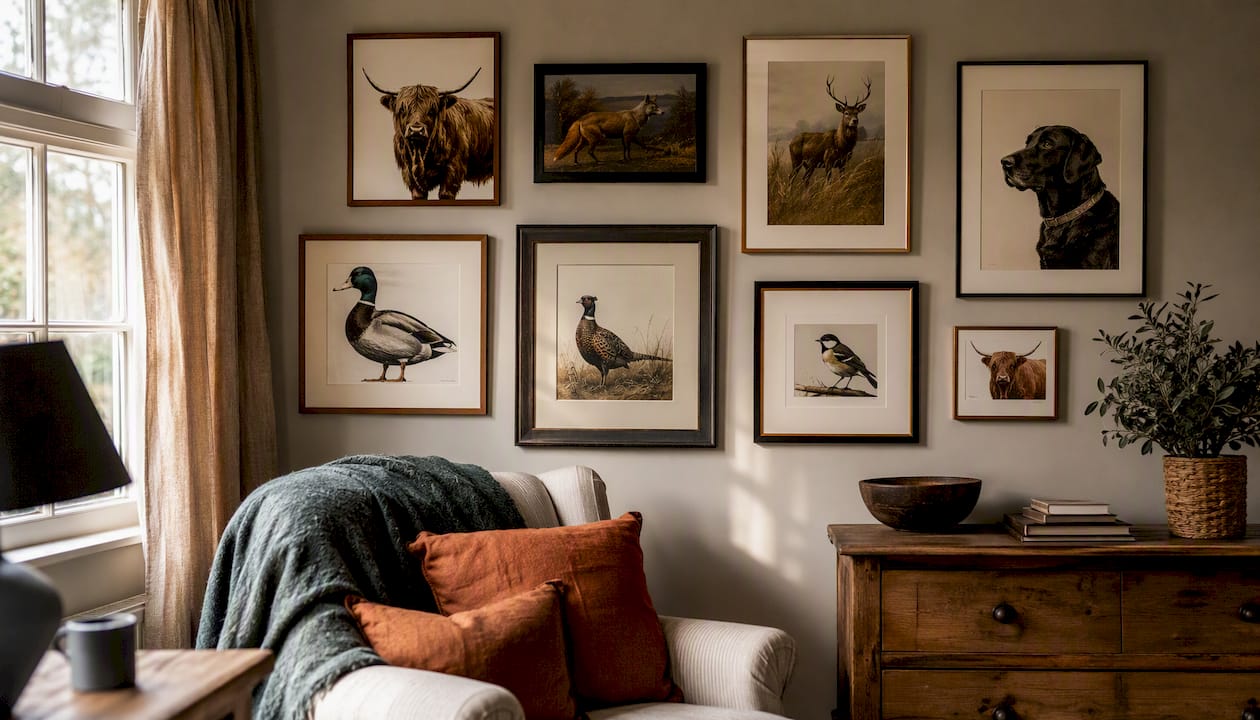
The ten animal art print themes that work best for UK home décor are: wildlife and safari, pets, birds, marine life, insects, vintage natural history, nursery and children’s, abstract and colourful, botanical-fauna hybrids, and monochrome line art. Start by picking one dominant theme that suits your largest room, then choose a print size that fills a substantial portion of the wall space above your main piece of furniture. Frametheworld offers bespoke and ready-made options across all of these themes, with custom sizing built in.
- Wildlife and safari
- Pets (dogs, cats, horses)
- Birds (botanical-style and photographic)
- Marine life
- Insects and botanicals
- Vintage natural history
- Nursery and children’s
- Abstract and colourful
- Botanical-fauna hybrids
- Monochrome and minimal line art
Key takeaways
Animal art prints work best when the theme, artistic treatment, and format are chosen together to suit the specific room rather than selected independently.
| Point | Details |
|---|---|
| Start with the room, not the animal | Match the print’s palette and mood to your existing scheme before choosing a subject. |
| Match style to theme | Vintage natural history suits engraved illustration; nursery prints work best in watercolour or simplified line art. |
| Size to furniture | A print or group should span most of the furniture width beneath it; use paper mockups before ordering. |
| Check credentials before buying | Confirm giclée or archival labelling, artist attribution, edition details, and the seller’s returns policy. |
| Frametheworld for bespoke options | Custom sizing, hand-painted commissions, and framing consultation available for any animal theme. |
Table of Contents
- Which animal art print themes suit which rooms?
- How artistic style changes the mood and the price
- Which print formats and framing options work best?
- How to mix themes and arrange a gallery wall
- What to check before you buy an animal print in the UK
- Where UK buyers can find animal prints
- An editorial perspective on choosing animal art for UK homes
- Frametheworld’s hand-painted and bespoke animal art
- Sources
Which animal art print themes suit which rooms?
Each theme carries a distinct mood, and matching that mood to a room’s function is what separates a considered interior from a random collection of prints.
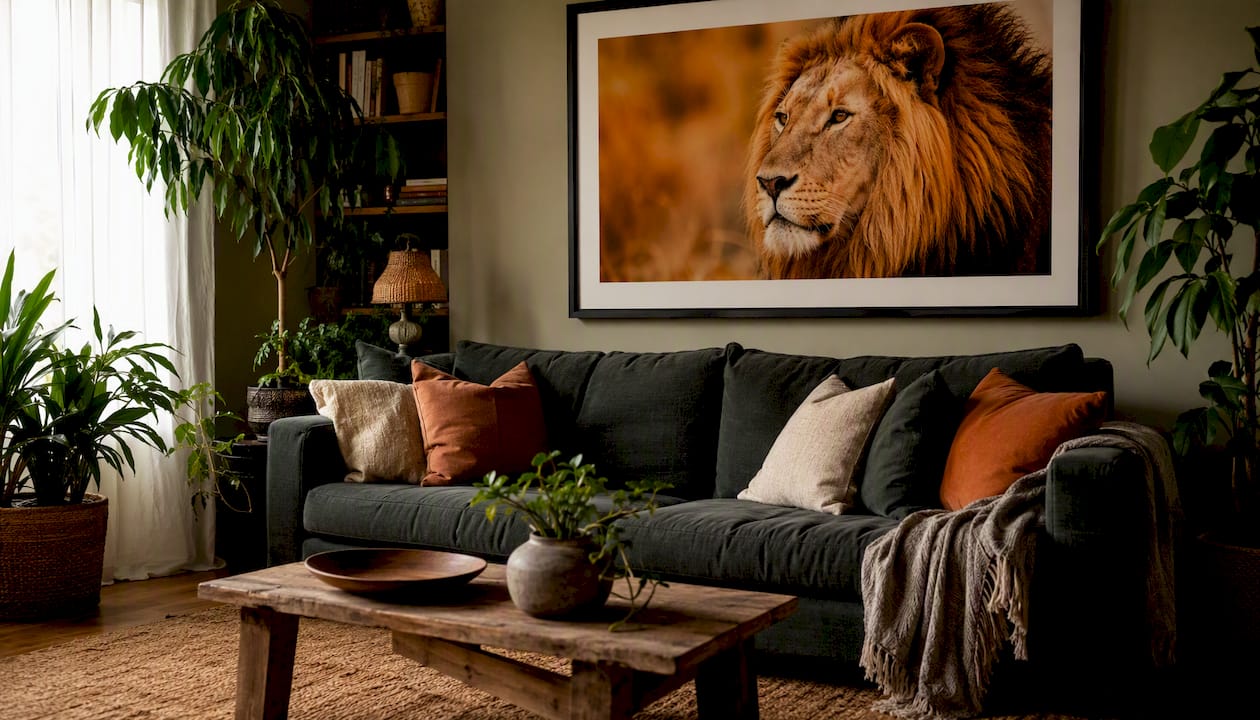
Wildlife and safari prints bring warmth and drama. Ochre, burnt sienna, and dusty green dominate. A large-format lion or elephant photograph reads confidently above a living room sofa; a smaller watercolour giraffe works well in a hallway. Pinterest mood boards consistently group safari prints with warm neutrals and natural textures, which reflects how buyers actually style them at home.
Pets are the most commercially varied category. Retailers organise pet prints by species precisely because demand is so specific: a dog owner wants their breed, not a generic hound. The range spans Victorian oil-painting reproductions to flat-colour modern illustration. A bedroom or home office suits a portrait-style pet print; a kitchen works well with a looser, more playful treatment.
Birds sit comfortably in almost any room. Botanical-style bird prints (think hand-painted finches on branch studies) suit dining rooms and bedrooms. Photographic birds of prey carry enough graphic weight for a living room feature wall. Colour palettes range from muted sage and cream to vivid tropical plumage.
Marine life prints feel fresh and calm. Watercolour jellyfish or illustrated octopus prints work particularly well in bathrooms and coastal-style bedrooms. Deep navy and teal palettes make them easy to coordinate with linen and natural wood.
Insects are an underrated choice. A framed beetle study or a linocut moth reads as genuinely sophisticated in a study or library. Vintage entomological illustration is the most popular treatment, though modern minimal line drawings of bees and dragonflies are gaining ground in kitchens and utility rooms.
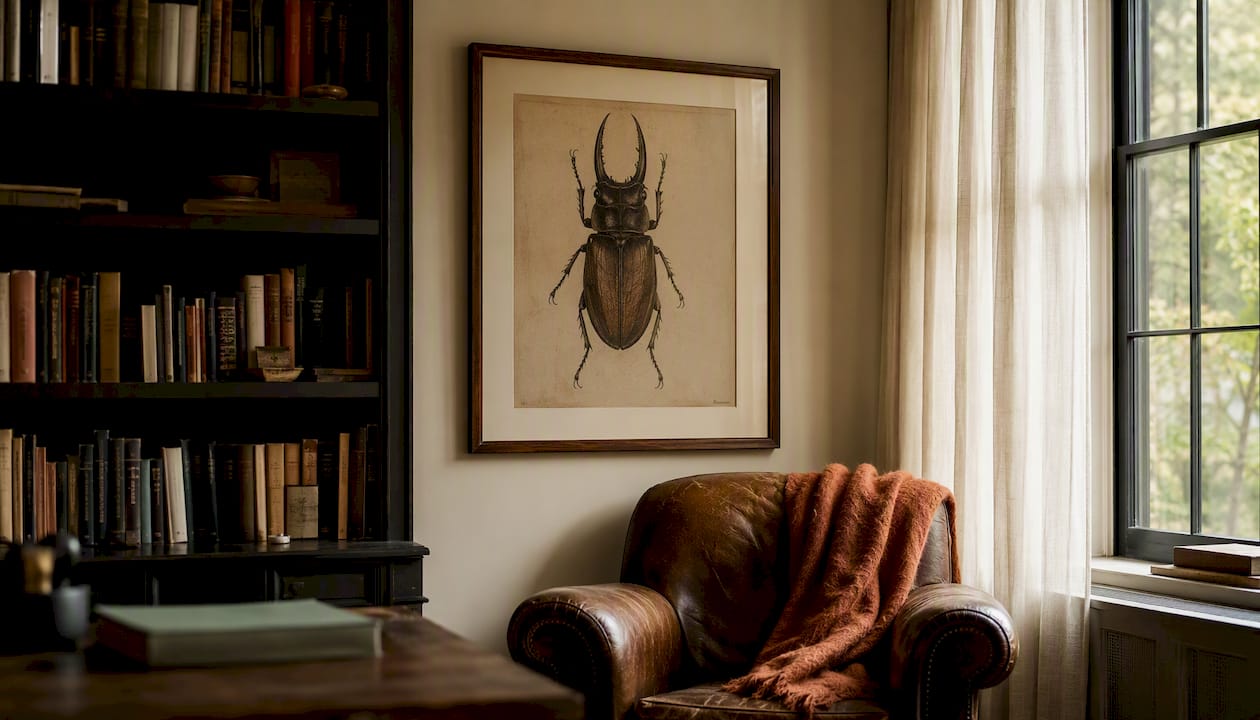
Vintage natural history prints draw on the tradition of 18th and 19th-century scientific illustration: engraved plates, hand-coloured specimens, and meticulous detail. Sepia and aged-cream palettes make them easy to mix. A hallway or staircase gallery wall built around natural history prints looks considered without requiring a designer’s eye.
Nursery and children’s prints favour simplified shapes, flat colour, and friendly faces. Jungle safari multi-packs are a popular and affordable route: six-print unframed sets marketed specifically for children’s rooms show how established this market is. Watercolour and line-art treatments dominate; avoid anything with fine detail that loses legibility at small sizes.
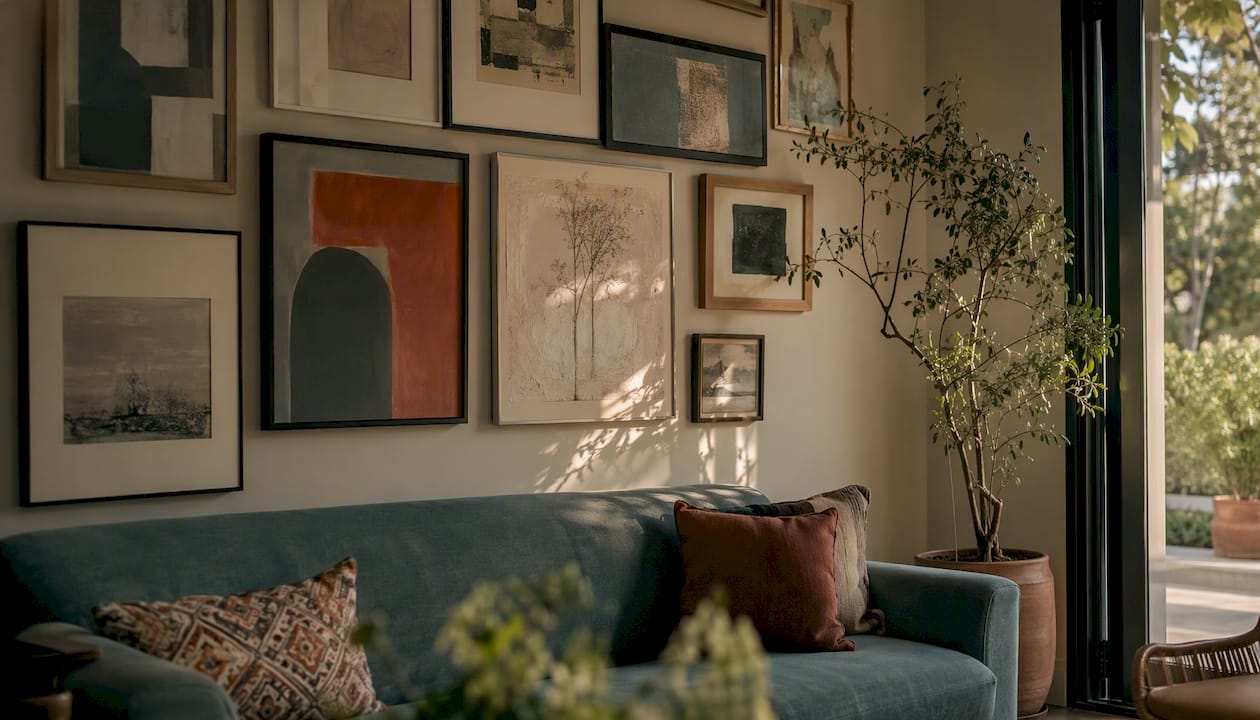
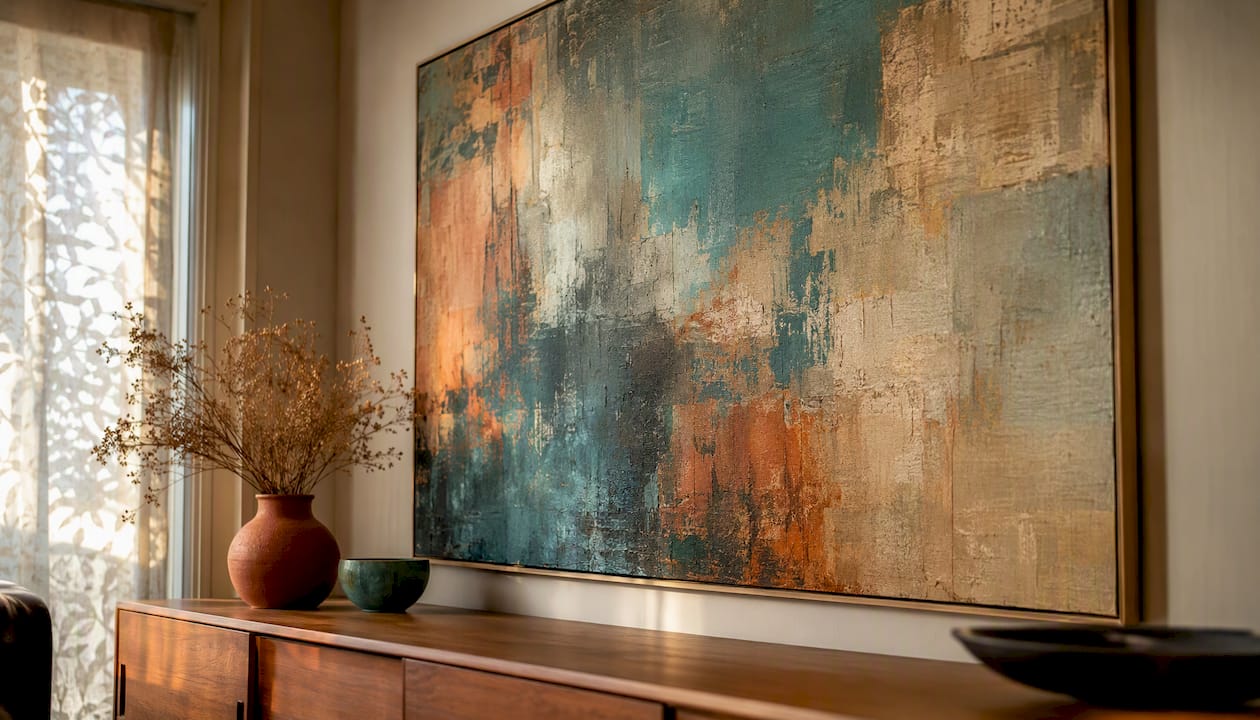
Abstract and colourful animal prints take the animal as a starting point rather than a subject. A bold geometric fox or a painterly abstract horse in cobalt and terracotta functions more as colour art than wildlife art, which makes it easier to integrate into a contemporary living room without committing to a naturalistic theme.
Botanical-fauna hybrids combine animal subjects with plant studies in a single composition. A hummingbird among tropical leaves, or a fox in a woodland setting, gives you two themes for the price of one and tends to feel more layered than a plain animal portrait. These work particularly well in dining rooms and conservatories.
Monochrome and minimal line art is the most versatile category. A single-line drawing of a whale or a geometric deer in black on white fits almost any room and any existing colour scheme. It is also the easiest theme to mix with other prints without creating visual noise. For a wall art selection guide that covers placement and pairing, Frametheworld’s resource is worth bookmarking.
How artistic style changes the mood and the price
The same animal subject treated differently produces a completely different object. A photographic print of a red fox is documentary and precise. The same fox as a linocut becomes graphic and bold. As a watercolour, it softens into something almost decorative. As an abstract, it becomes primarily about colour and form.
Key style indicators and what they signal:
- Realistic photography: high detail, documentary mood, suits wildlife and bird themes; typically open-edition digital prints unless signed by the photographer
- Engraved or etched illustration: the language of vintage natural history; aged-cream or sepia tones; often reproduced from public-domain plates, so price reflects print quality rather than exclusivity
- Watercolour: soft edges, translucent colour, suits nursery, bird, and marine themes; original watercolours command a premium; giclée reproductions of watercolours are the most common mid-market option
- Linocut and woodblock: graphic, high-contrast, handmade feel; limited editions are genuinely limited because each block has a finite print run
- Minimal line art: clean, contemporary, works across almost all themes; usually open-edition digital prints at the lower price point
- Abstract and mixed media: contemporary and colour-led; hand-painted originals and bespoke commissions sit at the top of the price range
Practical value indicators to look for:
- Giclée on the label means archival-quality inkjet printing on acid-free paper or canvas; it is the standard for fine-art reproductions
- Archival matte paper is the most common giclée substrate for animal prints; it holds fine detail without glare
- Edition size: a numbered limited edition (e.g. 1/50) carries more value than an open edition; hand-finished details (a brushstroke of gold leaf, a hand-signed margin) add further distinction
- Open edition simply means unlimited copies; perfectly appropriate for decorative prints, but do not pay limited-edition prices for one
Vintage natural history prints use engraved illustration almost exclusively. Nursery prints favour simplified line art or watercolour. Wildlife photography is almost always open-edition. Knowing this helps you calibrate what a fair price looks like before you buy.
Which print formats and framing options work best?
Format and finish affect how a print reads in a room as much as the image itself.
| Format | Best for | Typical finish | Notes |
|---|---|---|---|
| Paper giclée | All themes | Archival matte or fine-art cotton rag | Highest colour fidelity; frame with UV glass |
| Canvas (stretched or rolled) | Wildlife, abstract, pets | No glaze needed | Suits large-scale feature pieces; avoid bathrooms |
| Archival poster | Nursery, minimal line art | Satin or gloss | Budget-friendly; frame with acrylic rather than glass for safety in children’s rooms |
| Fine-art print on cotton rag | Vintage natural history, birds | Matte | Closest to original print feel; conservation mounting recommended |
For sizing, a common recommendation is that a print or group of prints should span most of the width of the furniture beneath it. A sofa of average width calls for artwork that covers a large portion of the width beneath it. Frametheworld’s art print sizing guide walks through the mockup method in detail: cut newspaper to your intended print dimensions and tape it to the wall before ordering.
Framing choices matter more than most buyers expect. A natural oak or light ash frame suits botanical-fauna hybrids and bird prints. A black metal frame sharpens minimal line art and abstract pieces. A white or off-white frame keeps vintage natural history prints feeling period-appropriate without looking fussy. For conservation mounting, ask your framer about acid-free matting and UV-filtering glass, particularly for giclée prints you intend to keep long-term. Frametheworld’s framing guide covers glazing options and when conservation mounting is worth the extra cost. For a broader view of how frame selection affects a room, that guide is a practical starting point.
How to mix themes and arrange a gallery wall
A gallery wall of animal prints looks intentional when it follows a few simple constraints. Here is a practical sequence:
- Choose an anchor print. Pick the largest or most visually dominant piece first. This sets the scale and mood for everything around it.
- Limit your colour range. Pull two or three colours from the anchor print and use them as a filter for every other piece you add. A safari anchor in ochre and terracotta should pull in prints that echo at least one of those tones.
- Decide on a frame style. Consistent frame width and material unifies mixed themes more reliably than matching subjects. Black frames across five different animal themes read as a collection; five different frame styles across five different themes reads as chaos.
- Test with paper mockups. Cut paper to each print’s dimensions, tape them to the wall, and live with the arrangement for a day before ordering. This is the single most effective way to avoid expensive mistakes.
- Leave breathing room. Negative space between prints is not wasted wall. A gap of 5–8 cm between frames is the standard for a gallery wall that feels curated rather than crowded.
Pro Tip: A single repeated colour tie, whether that is a consistent frame colour or one recurring tone in each print’s palette, is what makes a mixed-theme gallery wall look designed rather than assembled. You do not need matching subjects; you need a visual thread.
Mixing a vintage natural history insect print with a modern minimal whale line drawing works because both share a muted, neutral palette. Mixing a vivid abstract fox with a photographic eagle is harder, but a shared black frame makes it possible.
What to check before you buy an animal print in the UK
Buying checklist:
- Resolution and print quality: ask for the image resolution or PPI if buying a digital file; for ready-made prints, look for giclée or archival labelling
- Print type: giclée on acid-free paper or canvas is the standard for anything you intend to keep; poster-grade prints are fine for nurseries and temporary spaces
- Edition details: numbered limited edition, open edition, or artist’s proof; check whether the edition is genuinely limited or a marketing label
- Artist attribution and licensing: the artist’s name and copyright should be clearly stated; for vintage natural history prints, check whether the source plate is genuinely public domain
- Frame options: does the seller offer framing, or will you need a local framer? Factor framing cost into your budget from the start
- Production and UK shipping windows: standard UK e-commerce print orders typically ship within 3–7 working days; bespoke or hand-painted commissions run 2–6 weeks depending on complexity
- Returns policy: check whether framed prints are returnable; many sellers exclude custom or bespoke orders from standard returns
Typical price bands:
- Mass-produced posters (unframed): £5–£25; open edition, digital print, poster-grade paper
- Mid-market giclée prints (unframed): £30–£150; archival paper, often limited edition, artist-attributed
- Bespoke or hand-painted commissions: £150 upwards, depending on size and complexity; custom art prints offer the most control over palette, scale, and subject
Checking seller reviews on Trustpilot before purchasing is worth the two minutes it takes. Delivery experience and packaging quality are the most common pain points for print buyers, and review patterns reveal both quickly. For a broader case for why prints suit most home decorating projects, Frametheworld’s guide covers the practical advantages clearly.
Where UK buyers can find animal prints
The most effective shopping pathways depend on what you are looking for.
Museum shops and gallery online stores are reliable for vintage natural history and fine-art reproductions. The V&A, Natural History Museum, and Royal Botanic Gardens at Kew all sell licensed prints. Quality is consistent and provenance is clear.
Independent artists selling through their own websites or through platforms like Etsy offer the widest range of original treatments, from linocut to watercolour. Search using species plus technique: “heron linocut print UK” returns far more targeted results than “bird print.” Retailers that organise by species, as Ezen Designs does for cat-themed prints, demonstrate exactly why this specificity matters when browsing.
Curated e-commerce boutiques like Frametheworld offer hand-painted and bespoke options alongside ready-made collections, with custom sizing available. This is the most practical route when you need a specific size or palette that off-the-shelf prints do not cover.
Marketplaces (Etsy, Not On The High Street, Amazon) offer the broadest price range. Use filters: print type, size, shipping from UK, and custom commission option. Buying from UK-based sellers avoids customs charges and reduces delivery times.
Local framing shops often stock or can source prints, and the advantage is an in-person proof before you commit. Some offer scanning and printing services for digital files, which is useful if you have found an image you love but need it printed to a specific size.
For buyers considering anything outside the UK, factor in customs duties and potential delays. A UK-based seller or a platform with UK fulfilment removes that friction entirely.
An editorial perspective on choosing animal art for UK homes
Most buyers approach animal art prints the wrong way. They start with the animal they like and work backwards, which is how you end up with a technically lovely print that fights with everything else in the room. The better sequence is to start with the room’s existing palette and mood, then find an animal subject that fits within it.
The other thing people consistently underestimate is the difference that artistic treatment makes. A photographic print of a kingfisher and a linocut of the same bird are not interchangeable objects. One is documentary; the other is graphic design. Both are valid, but they belong in different rooms and suit different frames.
Bespoke commissions are less intimidating than they sound. At Frametheworld, the most common request is straightforward: a specific animal subject in a specific size and palette to match an existing room scheme. That is not a complicated brief. It is precisely what personalising artwork for your home is designed to solve, and the result is a piece that fits the space rather than a space that has been rearranged to accommodate a print.
Artist attribution, archival materials, and provenance are not optional extras. They are the baseline for anything you intend to live with for more than a few years.
Frametheworld’s hand-painted and bespoke animal art
For buyers who want something beyond the standard print-and-post route, Frametheworld offers hand-painted wall art and bespoke commissions across all the themes covered here. The practical difference: you specify the animal subject, size, colour palette, and finish, and the piece is made to those exact requirements rather than adapted from an existing product.
Two services are worth knowing about. First, custom sizing means you are not constrained by standard print dimensions. A narrow hallway or an unusually wide chimney breast can be accommodated without compromise. Second, framing consultation is available alongside the artwork order, so you leave with a complete, ready-to-hang piece rather than a rolled print and a separate trip to a framer.
Production timelines for bespoke commissions typically run 2–6 weeks. Browse the hand-painted wall art collection to see current examples, or contact Frametheworld directly to discuss a commission brief.
Sources
- Trustpilot
- 8 Animal prints theme ideas
- Animal (Cat) Theme Art Prints — Ezen Designs
- calmart Jungle Safari Animal Prints, Wall Art, 6 Pack, Unframed, Modern, Contemporary, Animal Theme, Waterproof, Landscape Orientation, Glossy Finish, Kids’ Room Decor, Safari Themed Party Decor

Leave a comment
This site is protected by hCaptcha and the hCaptcha Privacy Policy and Terms of Service apply.