
TL;DR:
- A statement art wall is a large, deliberate display of art that anchors a room and creates a focal point. It influences the atmosphere by reflecting the occupant’s inspiration and guiding furniture arrangement, with scale and placement being crucial factors. Homeowners and renters can create impactful walls using appropriately sized art, layout mock-ups, and non-permanent display methods.
A statement art wall is a deliberate, large-scale display of art or décor that anchors a room and defines its character. Unlike ordinary wall decoration, it commands attention the moment you enter a space. Interior designers refer to this concept as a “focal wall” or “feature wall,” and the art-specific version follows the same principle: one surface becomes the visual and emotional centre of the room. If you have ever walked into a living room and immediately noticed a single wall above everything else, you have seen what a statement art wall does.
What is a statement art wall and why does it matter?
A statement art wall is defined as a single wall treated as a primary design feature through the deliberate placement of art at a scale, style, and arrangement that draws the eye and anchors the room. The term is informal but widely used in residential interior design. The recognised industry equivalent is a “focal wall,” and the two phrases describe the same principle: one surface carries the visual weight of the entire room.
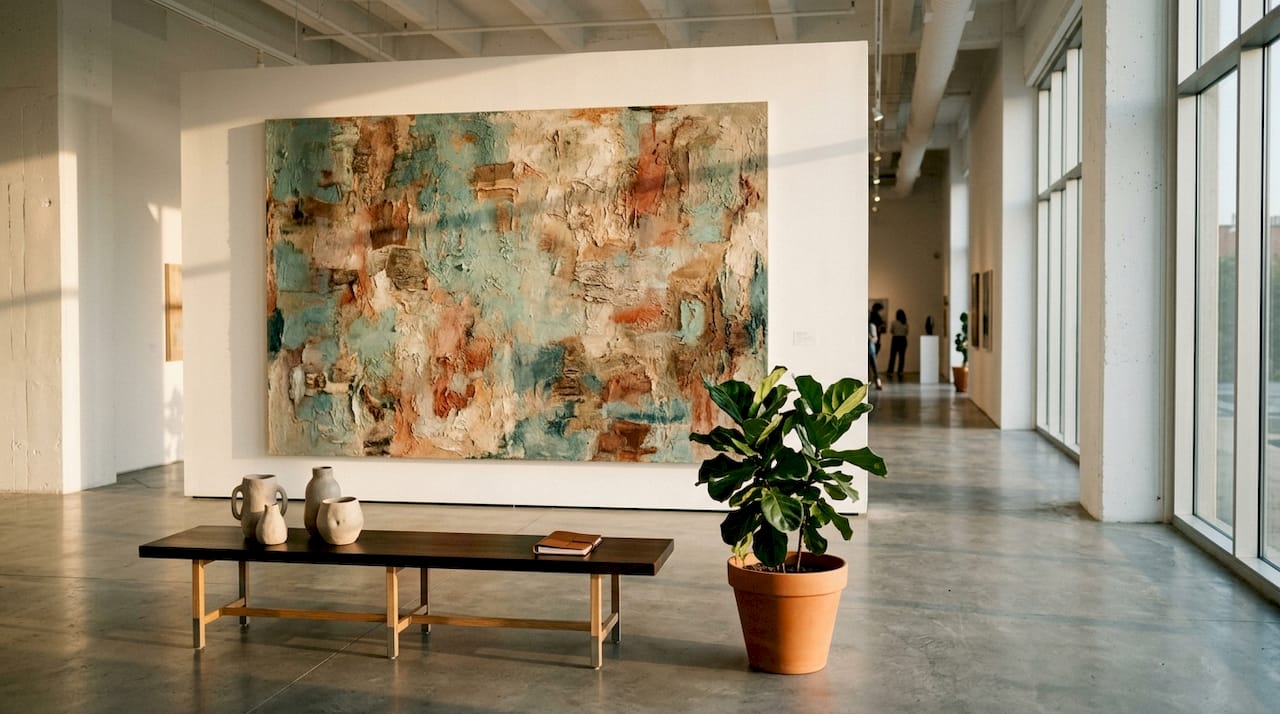
Statement art carries visual weight and becomes the focal point, influencing how a room is perceived and felt. That influence is not subtle. A bare wall reads as empty space; a well-composed statement wall reads as intention.
What separates a statement art wall from ordinary décor is scale, purpose, and placement working together. A single framed print hung at random does not qualify. A large canvas positioned deliberately above a sofa, or a curated gallery wall arrangement that fills a dining room wall with cohesion and personality, absolutely does. The distinction lies in whether the art organises the room or simply occupies it.
How does a statement art wall influence the atmosphere of a room?
The emotional impact of a statement art wall is direct and immediate. Statement art creates an experience and infuses a space with energy and identity. It acts as a design exclamation point, reflecting what inspires the occupant rather than simply matching the furniture.
Different art styles produce measurably different atmospheres:
- Abstract expressionism in deep blues and charcoals creates a calm, contemplative mood. It works well in bedrooms and reading rooms where stillness is the goal.
- Bold Pop Art in primary colours raises energy and signals confidence. It suits living rooms and open-plan kitchens where social activity is the norm.
- Botanical and landscape prints introduce a sense of the outdoors. They soften hard architectural lines and work particularly well in urban flats with limited natural light.
- Monochrome photography adds a sense of narrative and sophistication. It pairs well with minimalist interiors where each object earns its place.
- Textured or dimensional art creates depth that changes with the light throughout the day, making the wall feel alive rather than static.
Scale amplifies every one of these effects. A small print of a bold abstract painting reads as decoration. The same composition at 120 centimetres wide reads as architecture. The room organises itself around it.
A statement art wall does not just decorate a room. It gives the room a pulse, signalling what inspires the people who live there and making the space feel inhabited rather than merely furnished.
A statement wall also functions as a visual anchor. It tells the eye where to settle, which in turn guides how furniture is arranged and how guests move through the space. Rooms without a focal point feel directionless. Rooms with a strong statement wall feel resolved.
What are the key principles for selecting and placing statement art?
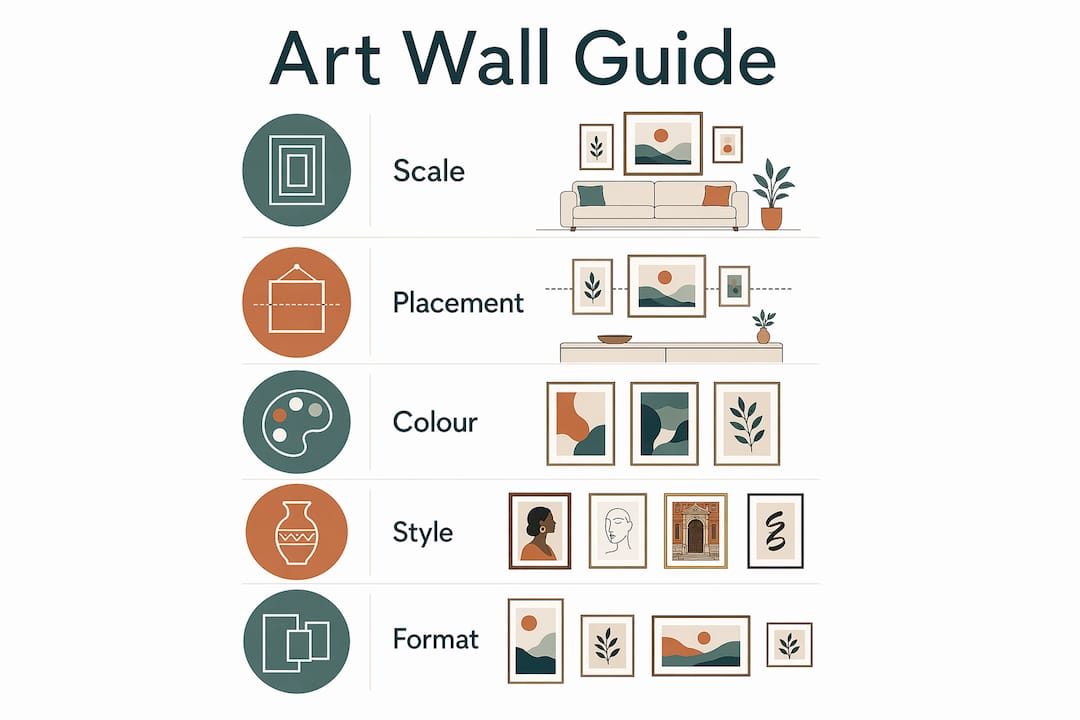
Selecting art for a statement wall requires decisions about scale, colour, style, and placement. Getting any one of these wrong undermines the others.
Scale and proportion
Statement art should cover 60–75% of the free wall space above key furniture. Artwork that covers less than 60% of the available space above a sofa or bed looks undersized and tentative. Artwork that exceeds 75% can feel oppressive. The 60–75% rule keeps the wall balanced and the art impactful.
Placement at eye level
Artwork is best positioned at eye level, typically with the centre of the piece 57–60 inches from the floor. That measurement is the standard used by most professional galleries and interior designers. It places the visual centre of the art at the average adult eye line, which feels natural and draws attention without effort.
Colour harmony and contrast
Colour palettes in statement art should either harmonise with the room’s existing colours or employ deliberate contrast for vibrancy. Using similar hues creates cohesion. Contrasting tones pull attention and add energy. Neither approach is wrong; the choice depends on whether you want the art to blend into the room’s mood or interrupt it productively.
Style alignment
The art style should speak to the room’s function and existing aesthetic. A minimalist interior benefits from art with strong negative space. An eclectic room can absorb more visual complexity. The art does not need to match the furniture; it needs to belong in the same conversation.
Here is a quick reference for matching art style to interior type:
| Interior style | Art approach that works | What to avoid |
|---|---|---|
| Minimalist | Large single canvas, monochrome | Busy gallery walls, ornate frames |
| Eclectic | Mixed media gallery wall | Overly uniform arrangements |
| Scandi/Wabi Sabi | Textured, organic, muted tones | High-gloss, primary colour pieces |
| Industrial | Metal art, photography, raw materials | Delicate florals, pastel palettes |
| Contemporary | Abstract, geometric, bold colour | Overly traditional or ornate styles |
Pro Tip: When balancing multiple pieces on a statement wall, lay them out on the floor first. Photograph the arrangement from above, then compare it to the wall dimensions before committing a single nail.
Which styles and forms can a statement wall take?
A statement wall does not have to mean one large canvas. The format you choose shapes the entire character of the wall.
Single large art piece. A single oversized canvas or print is the most direct approach. It creates instant impact and requires no curation beyond the initial selection. The risk is choosing a piece that is too small; when in doubt, go larger than feels comfortable.
Gallery wall. A gallery wall curated with consistent alignment can carry as much visual weight as a singular statement piece. The key is intention. Unified frames create order; deliberately mismatched frames create personality. Either works, but mixing the two without a clear logic creates clutter.
Dimensional and textured art. Dimensional art and sculptures add depth and tactile interest that flat canvases cannot replicate. A woven textile, a carved wooden panel, or a ceramic wall installation changes how the wall reads under different lighting conditions throughout the day.
The table below compares the main formats across key practical factors:
| Format | Visual impact | Flexibility | Best suited to |
|---|---|---|---|
| Single large canvas | Very high | Low (fixed choice) | Living rooms, bedrooms |
| Gallery wall | High | High (pieces can change) | Hallways, dining rooms |
| Dimensional/textured art | High | Medium | Feature walls, open-plan spaces |
| Mixed media arrangement | Medium to high | High | Eclectic, personal spaces |
Materials matter as much as format. Canvas prints feel warm and painterly. Metal art reflects light and suits industrial or contemporary spaces. Wood panels add organic warmth. Textiles soften acoustics as well as aesthetics, which makes them particularly useful in rooms with hard floors and high ceilings. When styling large wall art, the material choice should respond to the room’s existing surfaces, not fight them.
How can homeowners and renters create a statement art wall?
Planning a statement wall before buying anything saves time, money, and unnecessary holes in the plaster. Follow these steps:
- Choose the right wall. The best candidate is the first wall you see when entering the room, or the wall behind the main seating or sleeping area. Avoid walls broken up by multiple windows or doors.
- Measure accurately. Record the full wall dimensions and the dimensions of any furniture in front of it. Apply the 60–75% proportion rule to calculate the ideal art size or arrangement footprint.
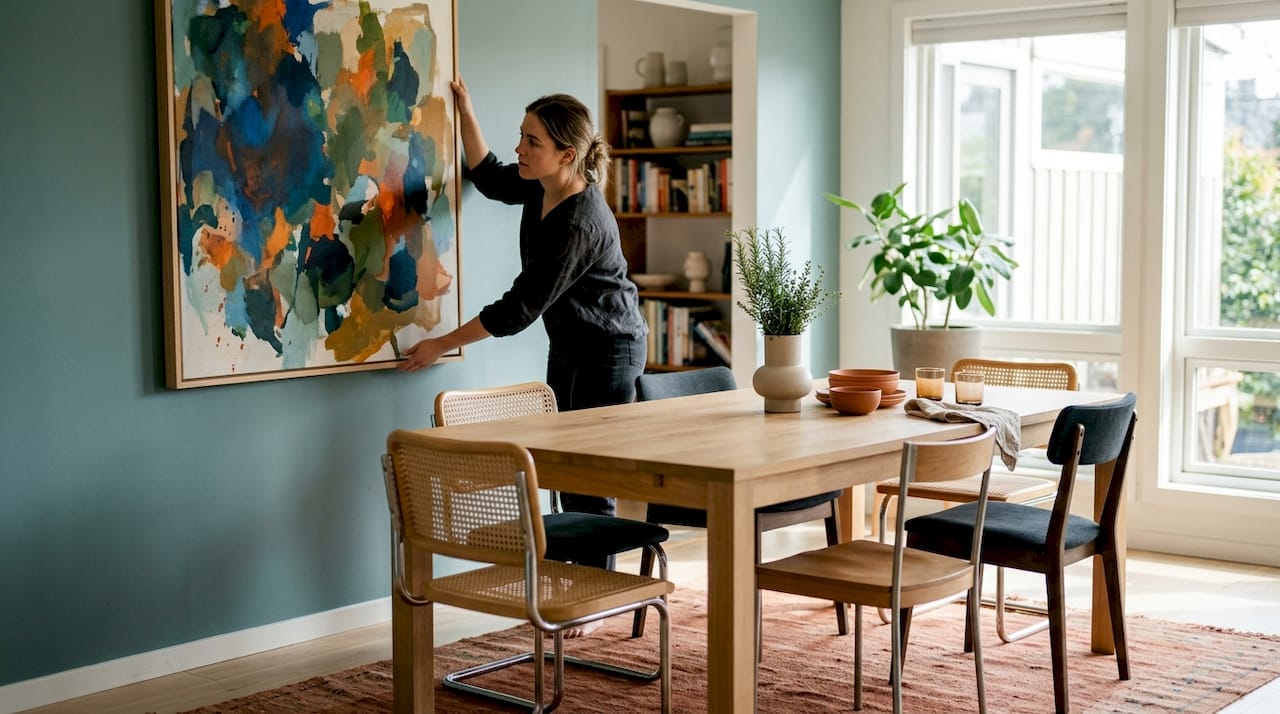
- Mock up the layout. Cut paper to the size of your intended art and tape it to the wall. Live with it for a day before committing. This step alone prevents the most common mistake: buying art that looks right in a shop but wrong in the room.
- Source the art. Options include original paintings, high-quality prints, commissions, and mixed media pieces. Prints offer the widest range at accessible price points. Commissions allow full personalisation. Frametheworld offers both ready-to-buy collections and bespoke options, covering styles from abstract texture to bold graphic work.
- Choose frames that serve the art. Framing options from minimalist to ornate affect how statement art presents and how it reads within the room. A thin black frame suits contemporary work. A deep box frame adds dimension to canvas prints. An ornate gilt frame signals grandeur and works in traditional or maximalist interiors.
- Balance the rest of the room. A strong statement wall works best when the remaining walls are kept relatively calm. Competing feature walls cancel each other out.
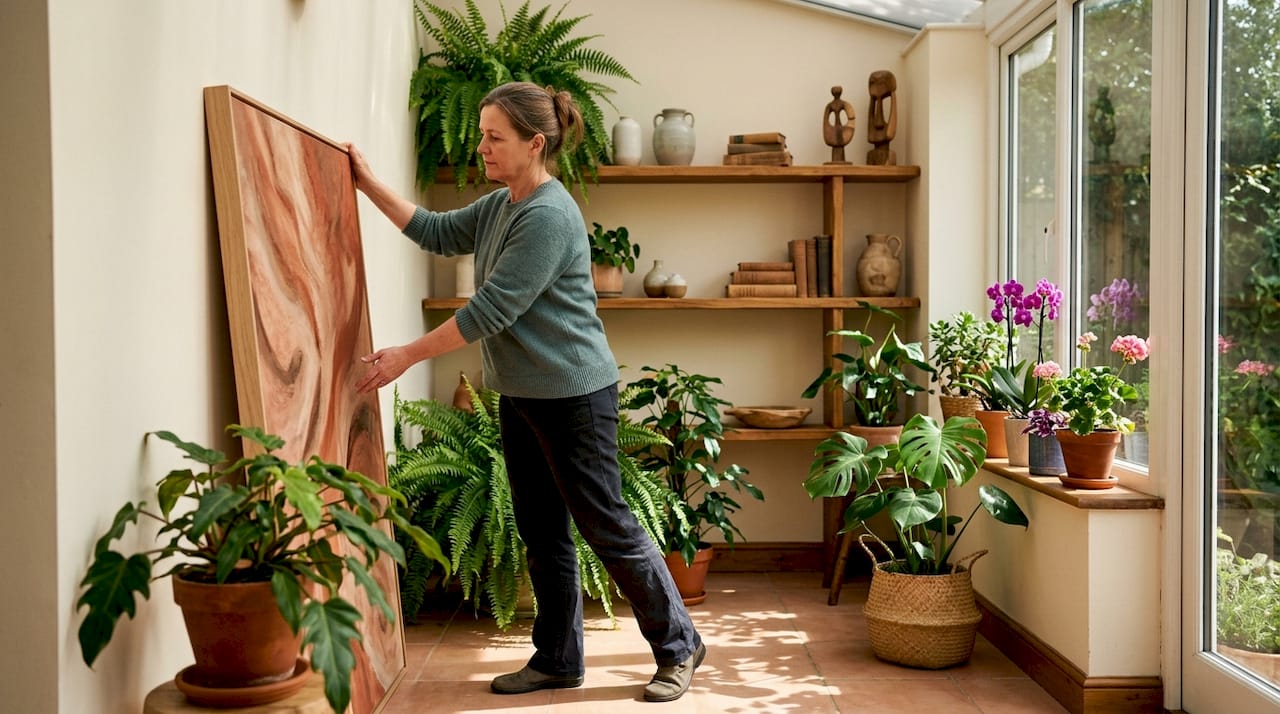
Renters face an additional constraint: they cannot always use nails or make permanent changes. Non-permanent methods such as leaning art against the wall, using adhesive hooks rated for the art’s weight, or building a temporary gallery wall with removable strips all create genuine impact without risking a deposit. Leaning a large canvas against a wall, for example, reads as intentional and relaxed rather than a compromise.
Pro Tip: For renters, a single large leaned canvas at floor level creates a strong statement with zero wall damage. Pair it with a low side table and a plant to anchor the arrangement.
Key takeaways
A statement art wall works because scale, placement, and colour work together to give a room a clear focal point and a defined character.
| Point | Details |
|---|---|
| Definition and purpose | A statement art wall is a focal wall where art anchors the room’s visual and emotional identity. |
| Proportion rule | Art should cover 60–75% of the free wall space above key furniture for balanced impact. |
| Eye-level placement | Centre the artwork 57–60 inches from the floor to match the natural adult eye line. |
| Format options | Single canvas, gallery wall, and dimensional art each create impact through different means. |
| Renter solutions | Leaning art and adhesive hooks allow full statement wall impact without permanent wall damage. |
Why statement walls are worth the commitment
The most common mistake I see is people buying art that is too small. They choose a piece they love, hang it on a large wall, and then wonder why the room still feels unresolved. The art is not the problem. The scale is. A piece that would be perfect at 100 centimetres wide often needs to be 150 centimetres wide to actually read as a statement in a standard living room.
The second mistake is treating the statement wall as the last decision rather than the first. When you choose the art first and build the room around it, the result feels considered. When you furnish the room and then try to find art that fits what is left, the wall always feels like an afterthought.
Trends in statement art shift quickly. Maximalist gallery walls dominated for years; now there is a strong move back towards single oversized pieces with texture and organic imperfection. My honest view is that trends are useful for inspiration but dangerous as a primary decision driver. A piece you genuinely respond to will outlast any trend cycle. A piece you chose because it was fashionable will feel dated within three years.
The rooms that stay interesting over time are the ones where the art reflects the person who lives there, not the year the room was decorated. Choose for resonance, not for the moment.
— Lennard
Frametheworld’s collections for your statement wall
Frametheworld offers two collections that suit statement walls particularly well. The Wabi Sabi wall art collection brings hand-painted abstract texture and organic imperfection to any wall, making it ideal for homeowners who want depth and warmth without visual noise. For those who want energy and colour, the bold Pop Art collection delivers hand-painted retro and contemporary pieces that command attention in living rooms and open-plan spaces. Both collections are available in multiple sizes, so you can apply the 60–75% proportion rule without compromise. Frametheworld also offers bespoke commissions for homeowners who want a piece made specifically for their wall dimensions and colour palette.
FAQ
What is the difference between a statement wall and a feature wall?
A feature wall is any wall treated differently from the others, often through paint or wallpaper. A statement art wall is a feature wall where the primary element is art rather than surface treatment.
How large should statement art be?
Statement art should cover 60–75% of the free wall space above the key furniture it sits behind. For a standard 200-centimetre sofa, that means art between 120 and 150 centimetres wide.
Can renters create a statement art wall?
Renters can use adhesive hooks, removable picture strips, or lean large canvases against the wall to create full statement wall impact without permanent fixings or wall damage.
How many pieces make a gallery wall feel cohesive?
A gallery wall works best with a clear alignment logic, either a shared frame style, a consistent colour palette, or a defined grid. Without one of these anchors, arrangements of more than five pieces tend to read as clutter.
Does the art style need to match the room’s existing décor?
The art does not need to match the décor exactly, but it should belong in the same conversation. A piece that shares at least one colour or material with the room’s existing palette will feel intentional rather than random.


Leave a comment
This site is protected by hCaptcha and the hCaptcha Privacy Policy and Terms of Service apply.