
TL;DR:
- Art in hospitality strategically shapes guest perception and enhances brand identity through immersive visual experiences. Incorporating curated and site-specific works early in design fosters emotional connection, authenticity, and long-term differentiation. Properly integrated art can boost revenue, social engagement, and guest loyalty while supporting premium pricing and storytelling.
Art in hospitality is defined as the deliberate integration of visual works into hotel and restaurant environments to shape guest perception, reinforce brand identity, and create emotional connection. Far beyond decoration, the role of art in hospitality is to transform a physical space into an immersive experience that guests remember, share, and return for. Properties from boutique guesthouses to global chains like The Hoxton and 21c Museum Hotels have proved that purposeful art curation directly influences how guests feel, how long they stay, and how much they spend. This guide gives hospitality professionals and interior designers a practical framework for using art as a strategic asset.
How art enhances guest experience and emotional connection
First impressions at a hotel form within 7 seconds, and a striking site-specific installation in the lobby does more work in that window than any amount of ambient lighting or premium flooring. That statistic carries a direct implication: art placed at the point of arrival is not a finishing touch but a primary conversion tool. Guests who feel an immediate emotional pull are more likely to share the space on social media, recommend the property, and book again.
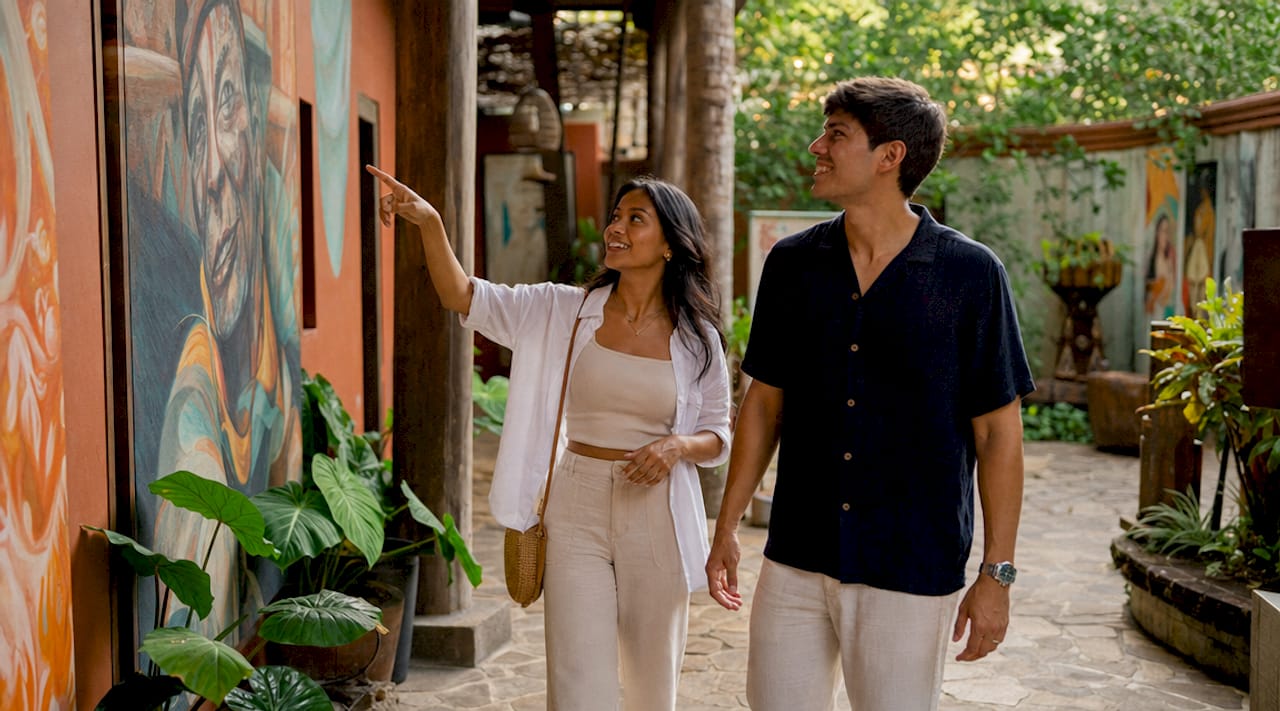
Visual art influences mood and perception through several well-documented psychological mechanisms. Colour temperature, scale, and subject matter all affect how relaxed, stimulated, or curious a guest feels within a space. Art shapes the visual experience and emotional guest connection in ways that furniture and finishes cannot replicate, because art carries narrative weight. A large-format abstract in warm ochres reads differently from a monochrome photographic series, and both communicate something specific about the property’s character.
The business case for investing in art is growing stronger. The Australian hotel market, where art-integrated experiential stays are accelerating, was valued at $14.8 billion in 2025 and is projected to exceed $21 billion by 2033. That growth is directly linked to shifting guest preferences towards properties that offer cultural and sensory depth rather than standardised comfort. Art is a primary driver of that differentiation.
Key benefits of art in hospitality spaces include:
- Emotional engagement: Site-specific works create a sense of place that generic prints cannot, encouraging guests to linger and connect with the environment.
- Social media reach: Instagrammable installations generate organic content from guests, extending a property’s marketing reach at no additional cost.
- Premium pricing support: Art provides cultural proof of a local story, which supports higher room rates and justifies premium food and beverage pricing.
- Staff pride: A well-curated environment raises the perceived quality of the entire operation, which affects how staff present themselves and interact with guests.
Pro Tip: Commission a local artist to create one signature piece for your entrance or bar area before investing in art across the whole property. A single, powerful work anchors the visual identity of the space and gives guests something specific to talk about.
Traditional decor vs. curated and interactive art: which approach works?
Not all art in hotel design delivers the same return. The table below sets out the key differences between the three main approaches hospitality professionals encounter.
| Approach | Characteristics | Strategic value |
|---|---|---|
| Traditional framed prints | Reproductions or generic photography hung for visual balance | Low. Provides ambience but rarely creates distinctiveness or guest conversation. |
| Curated original art | Original works selected to reflect brand story, locale, or design concept | High. Creates authenticity, supports premium positioning, and differentiates the property. |
| Interactive and site-specific installations | Bespoke works integrated with architecture; may involve digital or participatory elements | Very high. Drives social sharing, repeat visits, and media coverage. |
Traditional framed art is the default choice for many properties, particularly in budget and mid-scale segments. It fills wall space and provides visual warmth, but it rarely gives a guest a reason to stop, look, or feel anything specific. The risk is that it signals a lack of intentionality, which guests read as a proxy for the quality of the overall experience.
Curated art, by contrast, integrates with the architecture and brand story of a property. The Ace Hotel group built its entire visual identity around locally sourced, artist-led interiors. Each property feels rooted in its city precisely because the art is not interchangeable. That specificity is what guests pay for and what travel journalists write about.
Interactive installations take this further by inviting guest participation. A mural that guests can add to, a light installation that responds to movement, or a rotating artist residency programme all give guests a reason to return and a story to tell. Hotels embedding artists in residence transform hospitality into living cultural ecosystems, which sustains narrative and guest engagement far beyond a single stay.
Pro Tip: When briefing an artist for a site-specific commission, share your guest persona alongside the architectural drawings. The best hospitality art speaks to the person standing in front of it, not just the space around it.
How to implement an art strategy in hospitality design
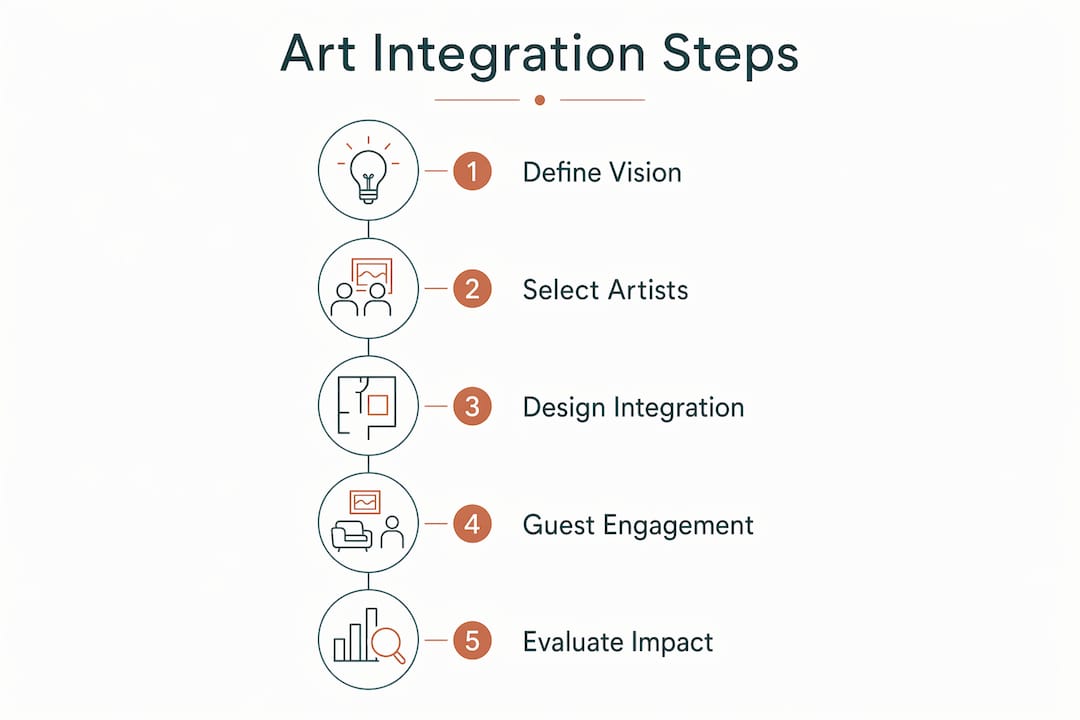
A coherent art strategy does not begin at the procurement stage. Integrating art early in the design process creates authentic sensory cohesion; late additions risk generic interiors that lack the narrative thread guests respond to. The following steps give you a practical sequence for embedding art from the outset.
-
Define the brand narrative first. Before selecting a single work, articulate what the property stands for, who it serves, and what emotional response you want guests to carry away. This narrative becomes the brief for every art decision that follows.
-
Engage local artists and cultural institutions early. Regional authenticity is the single most powerful differentiator available to a hospitality property. Partnering with local galleries, art schools, or individual artists grounds the property in its location and creates stories that guests and journalists can tell. You can explore art that tells a brand story as a starting point for thinking about narrative-led curation.
-
Map art to the guest journey. Consider each touchpoint: arrival, check-in, corridors, rooms, dining, spa, and departure. Each space has a different emotional function, and the art should reflect that. Arrival calls for impact; bedrooms call for calm or intrigue; dining spaces benefit from works that stimulate conversation.
-
Centralise the strategy for multi-location brands. Independent, uncoordinated art selection across franchise or chain properties dilutes brand integrity. A centralised art brief, maintained by a dedicated curator or art consultant, keeps the visual identity coherent while allowing local interpretation at each site.
-
Consider the financial dimension. Tangible artworks displayed in open areas for income-producing purposes may qualify as depreciating assets in certain jurisdictions, meaning art investment can carry tax advantages. Consult a specialist accountant familiar with hospitality assets before finalising your procurement budget.
What trends are shaping the future role of art in hospitality?
The hospitality sector is undergoing a fundamental shift in how it understands its own purpose. Industry leaders now define hospitality as an emotional state rather than a service transaction, and art is central to delivering that state. Several trends are accelerating this shift heading into 2026 and beyond.
-
Neuroaesthetics in design: Hospitality designers are increasingly drawing on neuroaesthetic research, which examines how specific visual stimuli affect brain activity and emotional response. Properties like Six Senses and Rosewood Hotels are commissioning works based on evidence about how colour, pattern, and scale influence guest wellbeing, not just aesthetic preference.
-
Cultural programming and art residencies: Ongoing collaboration with artists in residence turns hotels into sites of cultural production. The Fife Arms in Scotland and 21c Museum Hotels in the United States have demonstrated that a hotel functioning as a genuine cultural institution commands both higher rates and deeper guest loyalty.
-
Maximalism and material honesty: The 2026 design direction is moving away from the restrained minimalism that dominated the previous decade. Guests are responding to richness, texture, and layering. Wabi-sabi influenced works, hand-painted surfaces, and raw material finishes are appearing in properties from Tokyo to Lisbon as operators seek warmth and authenticity. You can see how these 2026 interior design trends are translating into commercial spaces.
-
Art as a revenue stream: Beyond its role in guest experience, art is becoming a direct revenue source. Some properties sell works on display, take commissions on artist sales, or charge for curated art tours. This transforms the art programme from a cost centre into a profit contributor.
The importance of art in tourism is also growing at a destination level. Guests increasingly choose locations partly on the basis of cultural and artistic offer, and properties that align with that motivation capture a disproportionate share of high-value travellers.
Key takeaways
Art in hospitality delivers measurable business value only when it is integrated as a foundational design element, not applied as a finishing layer after construction decisions have already been made.
| Point | Details |
|---|---|
| First impressions are formed in 7 seconds | Site-specific art at arrival points is a primary conversion tool, not a decorative afterthought. |
| Curated art supports premium pricing | Art that conveys local cultural narrative gives properties the proof points needed to justify higher rates. |
| Early integration prevents generic interiors | Commissioning art at the design stage creates sensory cohesion that late additions cannot replicate. |
| Multi-location brands need a centralised strategy | Uncoordinated art selection across sites dilutes brand integrity and confuses guest perception. |
| Art investment can carry financial benefits | In some jurisdictions, displayed artworks qualify as depreciating assets, adding a tax dimension to procurement decisions. |
Why art should never be the last decision on a hospitality project
I have reviewed enough hospitality interiors to know that you can tell within thirty seconds whether art was part of the original design conversation or added after the contractor handed over the keys. The difference is not subtle. When art comes last, it fills gaps. When it comes first, it defines the space.
The most memorable properties I have encountered share one characteristic: the art is inseparable from the architecture. At The Fife Arms in Braemar, the collection of over 800 works by artists including Pablo Picasso and Lucian Freud is not displayed in a hotel. It is the hotel. Guests do not visit and then notice the art. They visit because of the art. That is the standard worth aiming for, even at a fraction of the budget.
The practical lesson I would offer any designer or operator reading this is to resist the temptation to treat art as a budget line that gets trimmed when costs overrun. It is almost always the first thing cut and the last thing reinstated, which is precisely backwards. A single bespoke commission, properly placed and properly lit, does more for a property’s identity than ten thousand pounds spent on premium bathroom fittings that guests photograph once and forget. For those exploring art curation for commercial spaces, the principle holds across every category of hospitality property.
— Lennard
Bring your hospitality spaces to life with Frametheworld
Frametheworld offers hospitality professionals and interior designers access to hand-painted original works and curated collections built for commercial environments. The Wabi-sabi wall art collection delivers the textured, authentic warmth that resonates with guests seeking genuine sensory experiences, while the bold pop art range suits maximalist dining and bar spaces that need visual impact. Bespoke and customisation options are available for site-specific commissions, making it straightforward to source art that fits your brand narrative and spatial brief rather than working around what happens to be in stock.
FAQ
What is the role of art in hospitality?
Art in hospitality serves as a strategic tool for shaping guest perception, reinforcing brand identity, and creating emotional connection. It transforms physical spaces into immersive experiences that guests remember and return for.
How does art affect guest experience in hotels?
Visual art influences mood, length of stay, and social media behaviour. Site-specific installations create memorable moments that guests share online, extending a property’s marketing reach organically.
Why should art be integrated early in hotel design?
Integrating art at the design stage creates sensory cohesion across the whole property. Art added after construction is complete tends to fill gaps rather than define spaces, resulting in interiors that lack a coherent narrative.
What types of art work best in restaurant and hotel spaces?
Curated original works and site-specific commissions outperform generic prints in terms of guest engagement and brand differentiation. Interactive installations deliver the highest return through social sharing and repeat visits.
Can art investment offer financial benefits for hospitality businesses?
In certain jurisdictions, tangible artworks displayed in income-producing areas may qualify as depreciating assets, providing tax advantages. A specialist accountant familiar with hospitality assets can advise on eligibility.

Leave a comment
This site is protected by hCaptcha and the hCaptcha Privacy Policy and Terms of Service apply.