
TL;DR:
- Selecting art size involves following the 60–75% rule based on furniture or wall width, with the art center at 57–60 inches from the floor. Accurate measurements and visual tape checks help ensure the artwork complements the space and maintains balance. Proper sizing creates a cohesive room, avoiding common mistakes like choosing too small art or hanging it too high.
Selecting the right art size is a measurable process built on two core rules: artwork width should cover 60–75% of the furniture or wall it sits above, and the centre of the piece should hang at 57–60 inches from the floor. These are not decorating opinions. They are the standards used by gallery curators and interior designers to create rooms where art feels intentional rather than accidental. Whether you are working with a blank wall or hanging a piece above a sofa, knowing how to select art size correctly means the difference between a room that looks finished and one that feels slightly off.
How to measure your space for the right art size
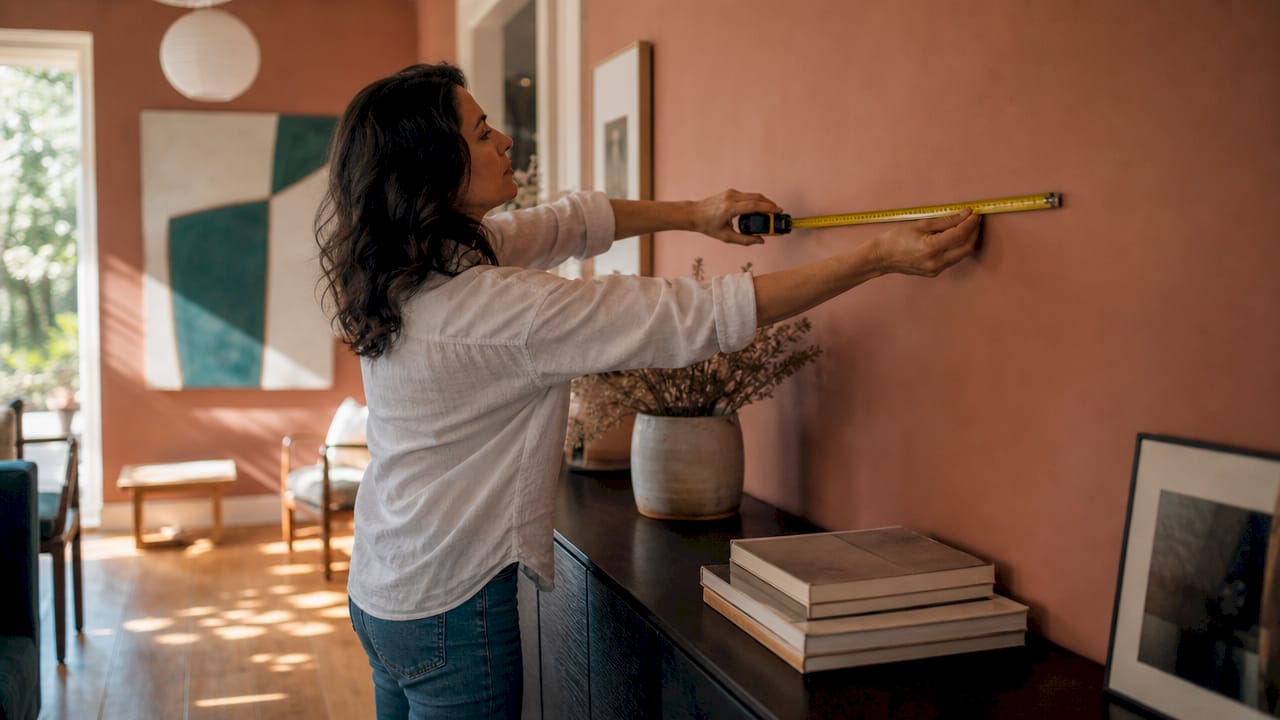
Measurement is the foundation of every good art sizing decision. Before you browse a single print or canvas, take a tape measure to the wall and the furniture beneath it.
What to measure and why it matters
Start with the wall width in the area where the art will hang. Write down the full width, then note any architectural features that reduce usable space, such as light switches, radiators, or door frames. For art above furniture, measure furniture width first, since this becomes your primary reference point for calculating the ideal artwork dimensions.
Wall height matters too. A ceiling at 2.4 metres calls for different proportions than one at 3 metres. Taller ceilings can carry larger, more vertical pieces without the room feeling crowded. Shorter ceilings benefit from horizontal formats that widen the visual field rather than drawing the eye upward.
Breathing room is the space between the artwork and the edges of the wall or nearby furniture. Art needs this margin to read as a deliberate choice rather than an afterthought. A general rule is to leave at least 15–20 cm of clear wall on each side of a single piece hung on an open wall.
Room type also shapes your measurement priorities:
- Living room: Measure the sofa or main seating width as your anchor point.
- Bedroom: Measure the bed frame or headboard width, including any bedside tables if the art spans the full bed area.
- Hallway: Measure the wall section between doors or architectural breaks. Hallways suit vertical formats due to their narrow proportions.
- Dining room: Measure the table length or the wall behind the main seating area.
Pro Tip: Tape off the measured dimensions directly on the wall using painter’s tape before you order anything. This gives you an immediate visual check of scale without spending a penny.
Calculating the ideal artwork dimensions
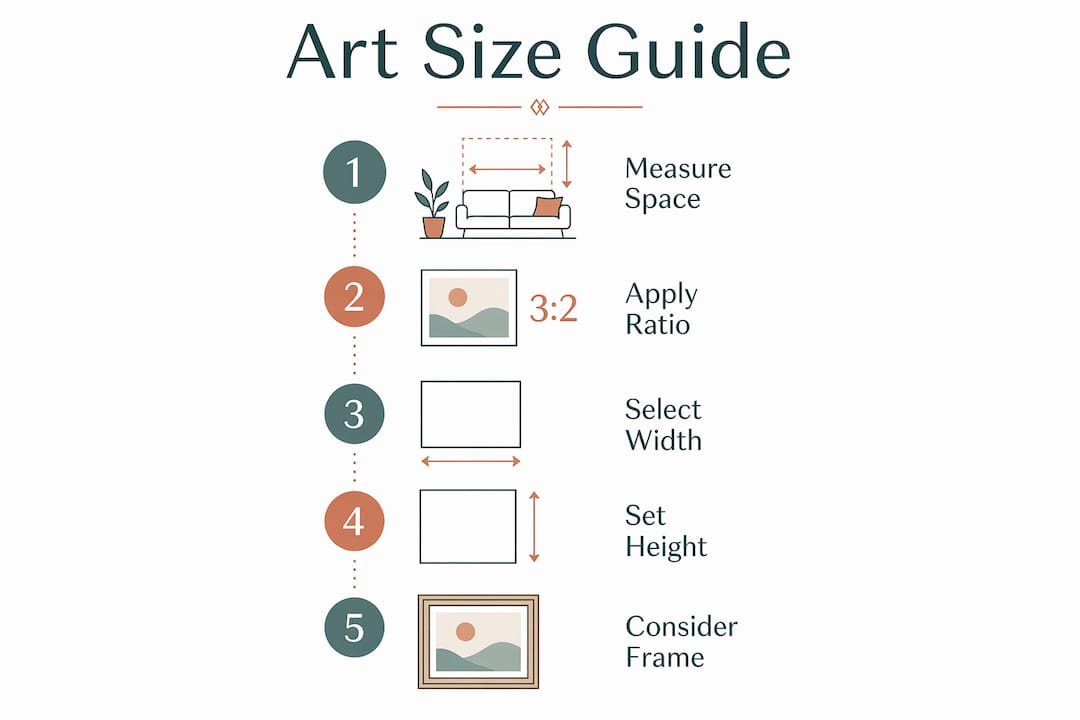
The 60–75% rule is the most reliable formula for choosing art dimensions that feel balanced. Multiply the width of your furniture or wall section by 0.6 to get the minimum artwork width, and by 0.75 to get the maximum. This range gives you a target zone rather than a single fixed number, which is helpful when standard print sizes do not match your exact calculation.
Applying the formula with real examples
A sofa that is 213 cm (84 inches) wide calls for artwork between 128 cm and 160 cm wide. That is a meaningful range. A 120 cm wide print would read as too small against that sofa, while a 180 cm piece would overwhelm it. The 60–75% width rule keeps the art visually connected to the furniture without competing with it.
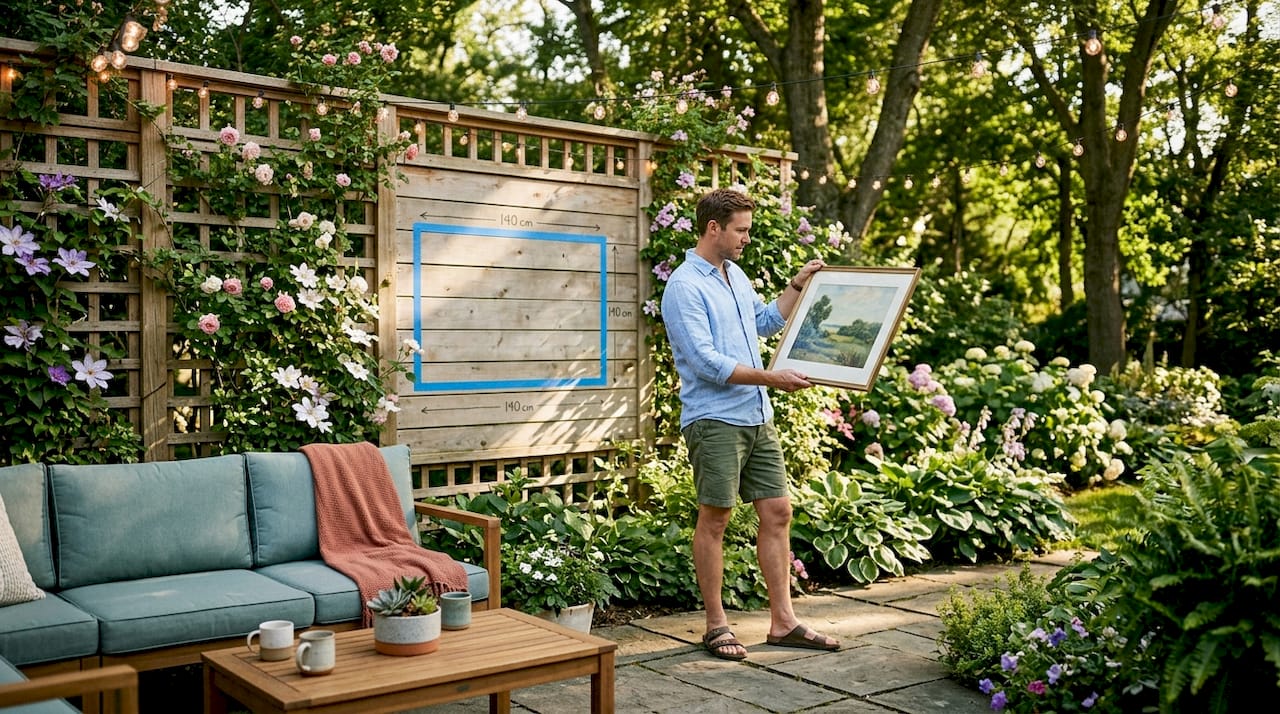
For a console table at 120 cm wide, the target artwork width falls between 72 cm and 90 cm. A standard 80 cm wide print sits comfortably in that range. For a bed frame at 150 cm wide, aim for artwork between 90 cm and 112 cm wide.
Hanging height follows a separate but equally clear standard. The centre of the artwork should sit at 145–152 cm (57–60 inches) from the floor. This aligns with average adult eye level and is the standard used in professional gallery installations. In dining rooms, where viewers are typically seated, lower the centre point to 137–145 cm (54–57 inches) for a more comfortable sightline.
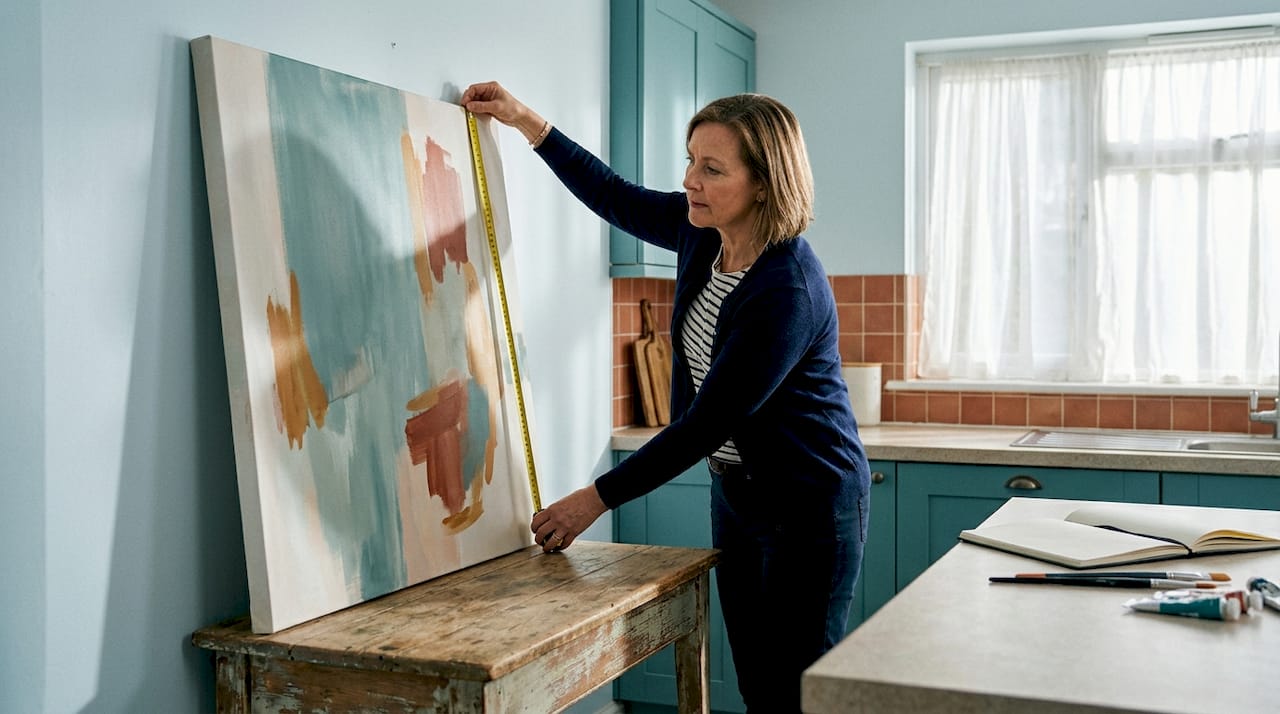
Frame size affects your final dimensions. A 5 cm frame adds 10 cm to both the width and height of the print inside it. Factor this in before ordering, particularly if you are working within a tight measurement range.
| Placement type | Target width (% of reference) | Centre height from floor |
|---|---|---|
| Above sofa | 60–75% of sofa width | 145–152 cm |
| Above bed | 60–75% of bed/headboard width | 145–152 cm |
| Above console | 60–75% of console width | 145–152 cm |
| Dining room wall | 60–75% of table or wall width | 137–145 cm |
| Open wall, standing viewer | 60–75% of wall section width | 145–152 cm |
Pro Tip: When calculating height, measure from the floor to where the centre of the art will sit, then subtract half the artwork’s height to find where the top edge lands. This tells you exactly where to place your hanging hook.
Adapting art size to specific home settings
The 60–75% rule applies across most settings, but each room type has its own nuances. Knowing these adjustments saves you from a technically correct but visually awkward result.
Above sofas and sideboards
Art above a sofa should sit 15–25 cm above the top of the sofa back. This gap keeps the art visually connected to the furniture below it. Any higher and the piece appears to float. Any lower and it risks being obscured by cushions or the heads of seated guests. A horizontal format works best here because sofas are wide and low, and a landscape orientation echoes that shape.
Above beds and headboards
Beds present a similar logic. The artwork width should match 60–75% of the bed frame, and the bottom of the frame should clear the headboard by at least 15 cm. In rooms with lower ceilings, a single wide horizontal piece often works better than a tall vertical one, which can make the ceiling feel even closer.
Console tables and hallways
Console tables are typically narrower than sofas, so the artwork above them tends to be smaller in absolute terms. A vertical or portrait format suits a hallway console well because it draws the eye upward and makes the corridor feel taller. Portrait orientation suits narrow spaces precisely because it emphasises height rather than width.
Gallery walls and grouped arrangements
Gallery walls follow different rules. The grouping as a whole should observe the 60–75% width rule relative to the wall or furniture below it. Individual pieces within the group can vary in size, but spacing between frames should stay consistent, typically 5–8 cm between each piece. A well-planned gallery wall reads as a single composed unit rather than a random collection.
- Keep the largest piece as the visual anchor, usually positioned at or near the centre.
- Mix orientations (portrait and landscape) for visual interest, but keep the outer edges of the grouping roughly rectangular.
- Lay the arrangement out on the floor before committing to wall positions.
- Use paper templates on the wall to confirm spacing before drilling.
Common mistakes that undermine art placement
The most frequent error homeowners make is choosing art that is too small. A single A3 print above a three-seat sofa disappears into the wall. The room reads as unfinished even when everything else is well considered. Sizing up is almost always the right instinct.
Hanging art too high is the second most common problem. When the centre of the piece sits above 152 cm from the floor, viewers crane their necks slightly and the art loses its connection to the room. The gallery standard of 57–60 inches exists because it works for the widest range of viewers and spaces.
Proportion is not about following rules for their own sake. It is about creating a visual relationship between the art and the room that feels natural. When the sizing is right, nobody notices the art is “correctly hung.” They simply feel that the room works.
Other placement mistakes worth avoiding:
- Hanging multiple pieces at different heights without a shared centre line or top edge alignment.
- Ignoring the effect of lighting. Art in a poorly lit corner reads as smaller and darker than it is. A picture light or directed spotlight can make a medium piece feel substantial.
- Forgetting that ceiling height changes perceived scale. In a room with 3-metre ceilings, a piece that looks large in the shop may feel modest on the wall.
Pro Tip: Cut paper templates to the exact dimensions of the artwork you are considering and tape them to the wall before ordering. This takes five minutes and eliminates the most common sizing regrets.
Accurate measurement also applies beyond the artwork itself. If you are planning a larger home project that involves outdoor spaces or extensions, the same discipline of measuring before committing applies across every installation decision.
Key takeaways
Artwork that fits its space correctly follows the 60–75% width rule relative to furniture or wall width, hangs with its centre at 145–152 cm from the floor, and sits 15–25 cm above any furniture below it.
| Point | Details |
|---|---|
| Apply the 60–75% rule | Multiply furniture or wall width by 0.6–0.75 to find the ideal artwork width range. |
| Hang at eye level | Position the centre of the artwork at 145–152 cm from the floor for standing viewers. |
| Mind the gap above furniture | Leave 15–25 cm between the bottom of the frame and the top of the furniture below. |
| Match orientation to space | Use portrait formats in narrow spaces and landscape formats above wide furniture. |
| Test before you hang | Use paper templates on the wall to confirm scale and position before ordering or drilling. |
Lennard’s take: proportion is personal, but the numbers don’t lie
Working with homeowners on art placement over the years, I have noticed one pattern more than any other. People instinctively reach for art that is too small. There is a kind of caution at play, a worry that a large piece will dominate the room or feel like a statement they are not ready to make. The result is a 40 cm print floating above a 200 cm sofa, and a room that feels unresolved.
The 60–75% rule is not a constraint. It is permission to go bigger than your instincts suggest. Once you see a correctly proportioned piece on the wall, the logic becomes obvious. The art anchors the furniture beneath it. The room gains a focal point. Everything else falls into place around it.
What I tell every homeowner is this: measure first, browse second. Most people do it the other way around. They fall in love with a piece, buy it, hang it, and then wonder why the room still feels incomplete. The art is not wrong. The sizing is. Starting with your measurements and then finding art that fits those dimensions is a completely different experience. You end up with a room that looks considered rather than assembled.
The art print sizing guide at Frametheworld is a useful reference if you want to cross-check your calculations against standard print dimensions before committing to a purchase.
— Lennard
Art sized for your space, ready to browse at Frametheworld
Frametheworld offers curated collections built around the sizes that work in real homes. The Wabi Sabi wall art collection features hand-painted abstract pieces in dimensions that suit the 60–75% rule for sofas, beds, and console tables. For bolder statements, the Pop Art collection brings retro and modern formats in sizes designed for larger walls and open living spaces. Each piece comes with clear size information so you can match your measurements directly to the artwork before you buy. Browse by size, style, or format to find the piece that fits your space rather than the other way around.
FAQ
What is the 60–75% rule for art sizing?
The 60–75% rule states that artwork width should cover 60–75% of the width of the furniture or wall section it hangs above. Multiply your furniture width by 0.6 for the minimum and 0.75 for the maximum to find your target range.
How high should I hang wall art?
Hang art so the centre of the piece sits at 145–152 cm (57–60 inches) from the floor. In dining rooms where viewers are seated, lower this to 137–145 cm for a more comfortable sightline.
How far above a sofa should art hang?
The bottom of the frame should sit 15–25 cm above the top of the sofa back. This keeps the art visually connected to the furniture without risking damage or appearing to float.
Does frame size affect the artwork dimensions I should choose?
Yes. A 5 cm frame adds 10 cm to both the width and height of the print inside it. Always factor in frame depth when calculating whether a piece fits your target size range.
What size art works best in a hallway?
Portrait orientation suits hallways because it emphasises height in a narrow space. Apply the 60–75% rule to the usable wall width between architectural features, and hang the centre at standard eye level of 145–152 cm from the floor.


Leave a comment
This site is protected by hCaptcha and the hCaptcha Privacy Policy and Terms of Service apply.