

Choosing artwork for an urban home can feel daunting when so much modern art is misunderstood as random or lacking purpose. In reality, artists from France to the United States have invested years perfecting technical skills and unlocking expressive possibilities that challenge viewers’ perceptions. If you want to enrich your living or working space, understanding modern art’s deliberate innovation and personal interpretation will help you create interiors that inspire conversation and reflect your unique style.
Table of Contents
- Modern Art Defined and Common Misconceptions
- Key Movements and Notable Artists
- Defining Characteristics and Innovation
- How Modern Art Transforms Interiors
- Choosing and Displaying Modern Art Prints
Key Takeaways
| Point | Details |
|---|---|
| Understanding Modern Art | Modern art is a complex movement that defies traditional artistic conventions, focusing on personal interpretation and emotional themes. |
| Influential Movements | Key movements like Impressionism, Cubism, and Surrealism represent unique philosophical approaches that reshaped artistic expression. |
| Art as a Design Element | Modern art can significantly enhance interior spaces, serving as powerful design components that establish atmosphere and narrative. |
| Selecting Art Prints | When choosing modern art prints, consider colour compatibility, scale, and emotional resonance to ensure they harmonise with your space. |
Modern Art Defined and Common Misconceptions
Modern art represents a profound artistic movement that challenges traditional perceptions of creativity and expression. Artists across this period experimented with radical techniques, rejecting established artistic conventions and pushing boundaries of visual representation.
Contrary to popular belief, modern art is not about creating simplistic or random imagery. It involves deliberate, sophisticated approaches that require significant technical skill and conceptual depth. Contemporary misconceptions often misunderstand the complexity behind these innovative artistic works.
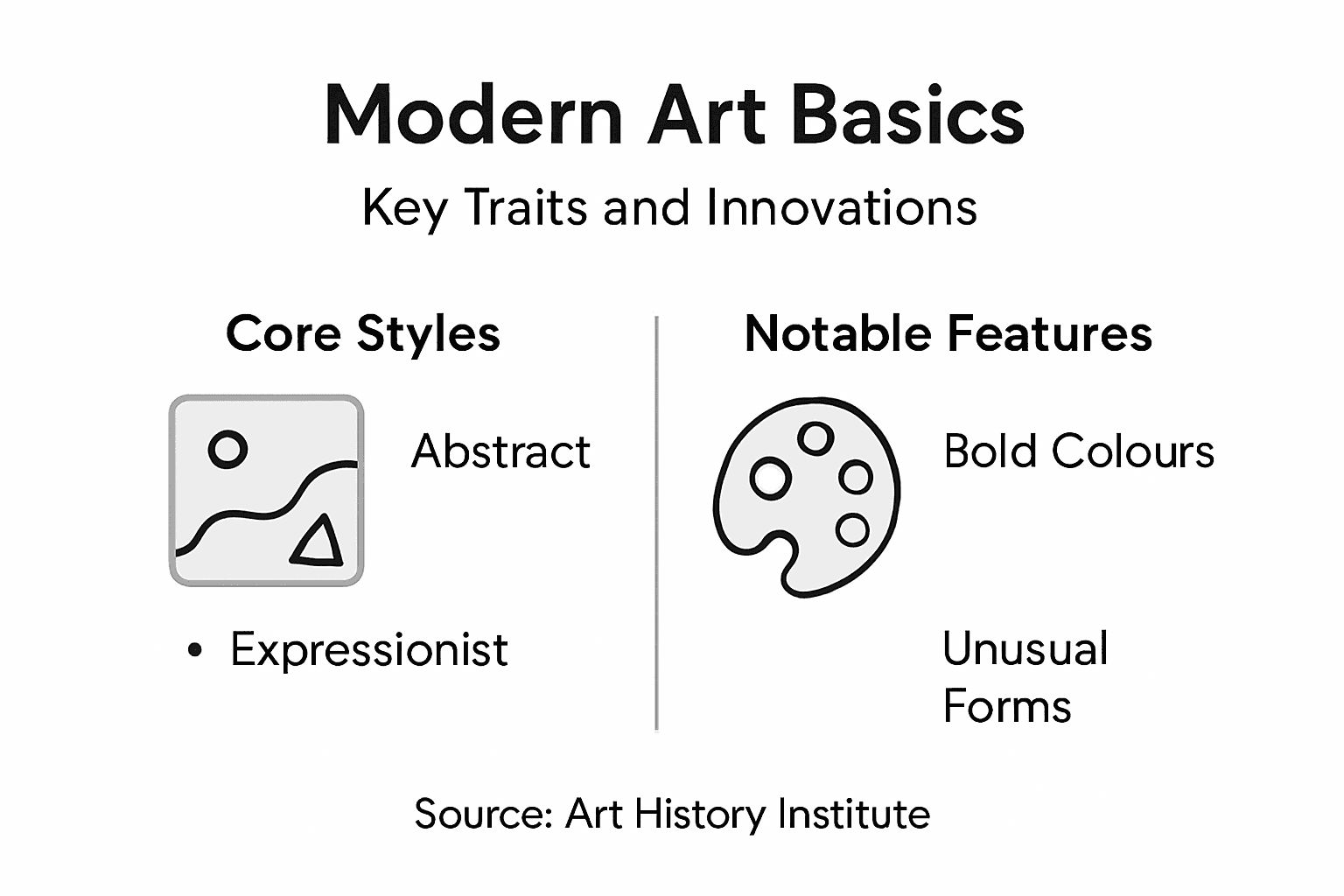
Key characteristics of modern art include:
- Rejection of traditional artistic methods
- Emphasis on personal interpretation
- Exploration of social and emotional themes
- Experimental use of materials and techniques
- Breaking established visual representation rules
The movement encompasses diverse artistic expressions, ranging from abstract painting to sculptural innovations. Artists like Jackson Pollock and Marcel Duchamp exemplified this approach by introducing groundbreaking techniques that challenged viewers’ understanding of artistic creation.
Modern art fundamentally represents a dialogue between the artist’s vision and the viewer’s perception. It invites personal engagement, encouraging audiences to explore multiple layers of meaning rather than accepting a single, predetermined interpretation.
Pro tip: When viewing modern art, approach each piece with an open mind and consider the emotional and conceptual context rather than seeking literal representation.
Key Movements and Notable Artists
Modern art movements emerged as revolutionary waves of creative expression, transforming artistic landscapes across Europe and beyond. Significant artistic transformations defined this extraordinary period of cultural innovation, challenging traditional artistic conventions.
Key movements reshaped artistic perspectives through radical approaches to colour, form, and conceptual representation. The most influential movements included:
- Impressionism: Pioneered by Claude Monet, emphasising light and atmospheric effects
- Cubism: Revolutionised by Pablo Picasso, fragmenting visual perspectives
- Surrealism: Explored subconscious imagery through Salvador Dalí’s provocative works
- Expressionism: Communicated intense emotional experiences through distorted forms
- Abstract Art: Moved beyond representational imagery towards pure aesthetic experience
Each movement represented a unique philosophical approach to artistic creation. Impressionist painters like Monet challenged traditional painting techniques by capturing momentary visual sensations, while Cubist artists like Picasso deconstructed visual reality into geometric fragments.
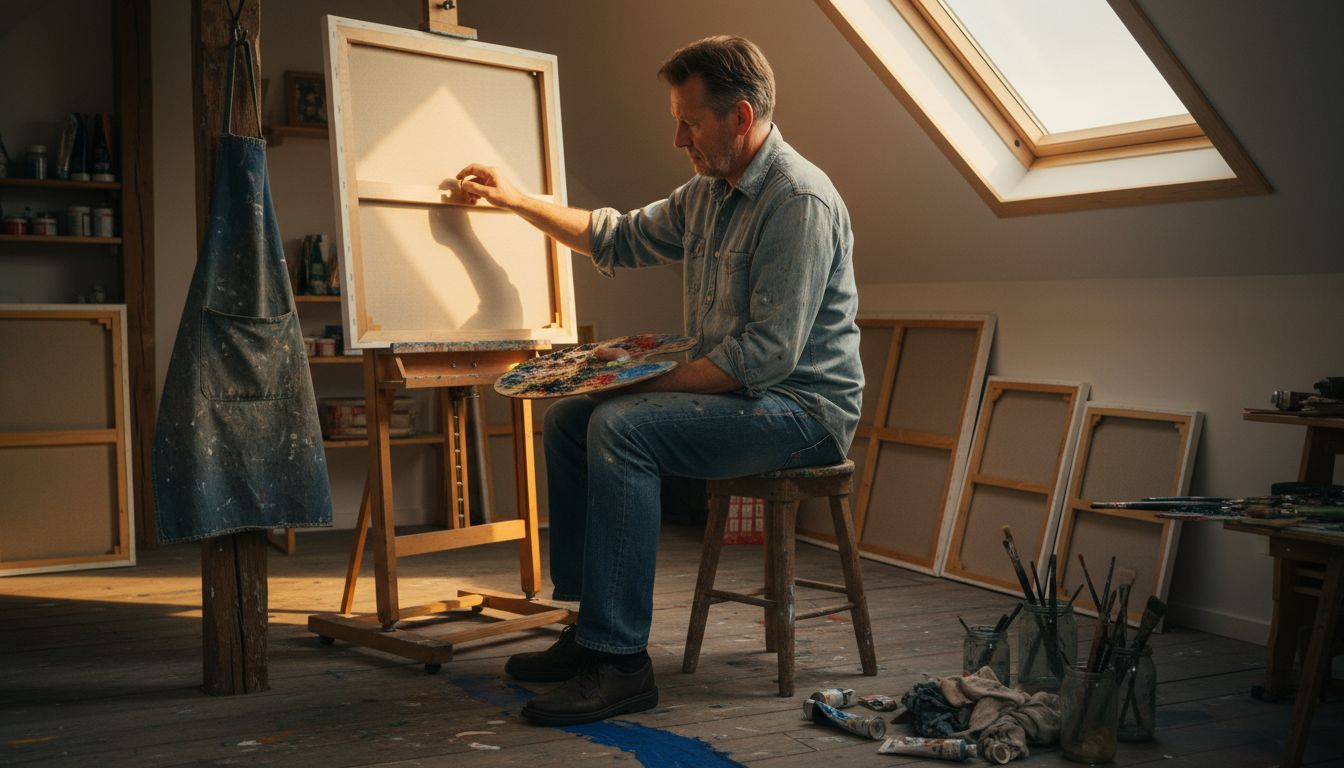
Artistic innovation became a hallmark of these movements, with artists consistently pushing boundaries and redefining creative expression. They transformed how audiences perceived art, moving from literal representation to more conceptual and emotionally charged visual languages.
To clarify the evolution and influence of major modern art movements, the following table contrasts their main features:
| Movement | Visual Focus | Leading Artist | Impact on Art History |
|---|---|---|---|
| Impressionism | Light, fleeting effects | Claude Monet | Inspired open-air and light painting |
| Cubism | Geometric fragmentation of objects | Pablo Picasso | Redefined perception and structure |
| Surrealism | Subconscious, dream-like scenes | Salvador Dalí | Bridged art and psychology |
| Expressionism | Distorted forms, vivid colours | Egon Schiele | Intensified emotional content |
| Abstract Art | Non-representational compositions | Wassily Kandinsky | Pioneered pure abstraction |
Modern art movements were not merely aesthetic experiments, but profound statements about human perception and cultural transformation.
Pro tip: When exploring modern art movements, focus on understanding the philosophical and emotional contexts that inspired each artistic approach.
Defining Characteristics and Innovation
Modern art innovation represented a radical departure from traditional artistic approaches, fundamentally reimagining creative expression. Innovation emerged through deliberate artistic disruption, challenging established conventions and pushing aesthetic boundaries.
Modern art’s defining characteristics encompassed several transformative elements that distinguished it from previous artistic movements:
- Rejection of traditional representation
- Emphasis on individual emotional expression
- Experimentation with unconventional materials
- Breaking established compositional rules
- Prioritising conceptual meaning over visual realism
The core philosophical underpinning of modern art centred on challenging audience perceptions. Artists deliberately sought to provoke, question, and deconstruct existing artistic paradigms, transforming art from a passive visual experience into an active intellectual engagement.
Experimental techniques became hallmarks of modern artistic innovation. Artists explored unprecedented approaches to colour, form, and composition, using mediums in ways that challenged traditional understanding. Painters began treating canvases as experimental spaces, where emotional and conceptual ideas could be explored through abstract representations.
Modern art was not merely about creating aesthetic objects, but about challenging fundamental assumptions about creativity, perception, and human experience.
Pro tip: When analysing modern artworks, focus on understanding the conceptual intent rather than seeking literal interpretations.
How Modern Art Transforms Interiors
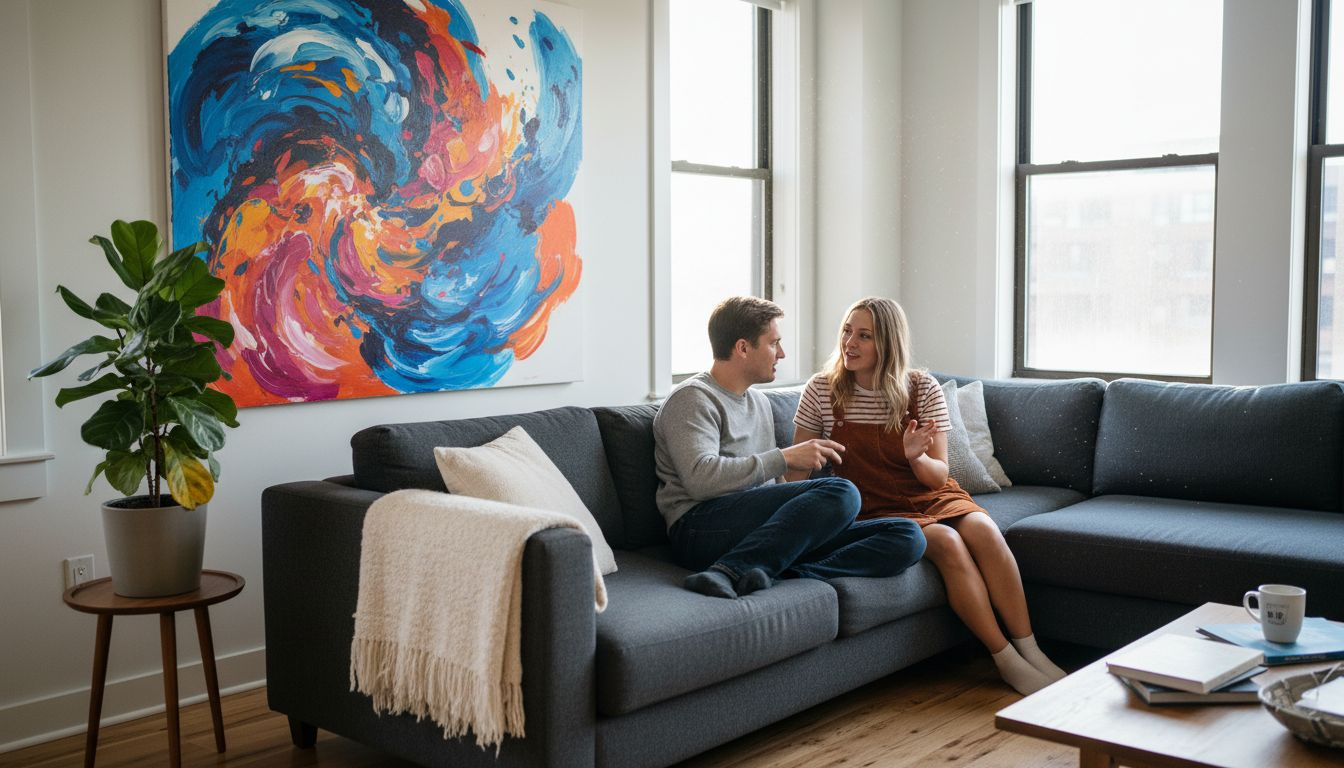
Modern art serves as a powerful design element that transcends mere decoration, becoming an integral component of interior spaces. Art profoundly influences interior design dynamics, transforming environments from mundane to extraordinary.
Interior designers leverage modern art strategically to achieve multiple design objectives:
- Creating visual focal points
- Establishing emotional atmospheres
- Defining spatial relationships
- Introducing unexpected colour and texture
- Communicating personal or brand narratives
Spatial transformation occurs when modern artworks are thoughtfully integrated into interior environments. Bold abstract pieces can visually expand rooms, while minimalist works can create a sense of calm and sophistication. The art becomes more than a decorative element - it becomes a living, breathing component of the architectural narrative.
Contemporary interiors increasingly view art as a dynamic design language. Art as a Design Anchor demonstrates how carefully selected pieces can anchor entire design schemes, providing visual rhythm and emotional resonance that traditional decorative elements cannot achieve.
Modern art transforms spaces from mere physical environments into curated emotional experiences.
Pro tip: Select artworks that resonate with your space’s existing colour palette and architectural character to ensure seamless visual integration.
Here is a summary comparing how modern art can influence different interior settings:
| Interior Type | Art’s Role | Typical Choices | Resulting Atmosphere |
|---|---|---|---|
| Minimalist Living | Subtle focal point | Monochrome abstracts | Calm, sophisticated |
| Corporate Lobby | Commanding centrepiece | Bold large-scale prints | Energetic, memorable |
| Home Office | Stimulating visual interest | Geometric expressions | Creative, inspiring |
| Boutique Retail | Brand narrative or theme anchor | Pop art or installations | Vibrant, unique character |
Choosing and Displaying Modern Art Prints
Selecting modern art prints requires a nuanced approach that balances aesthetic appeal with personal expression and interior design harmony. Finding the perfect artwork involves understanding your space’s unique character and emotional resonance.
When choosing modern art prints, consider these critical selection criteria:
- Colour compatibility with existing interior palette
- Scale and proportion relative to wall space
- Emotional impact and personal connection
- Artistic style matching room’s design aesthetic
- Potential for creating conversational focal points
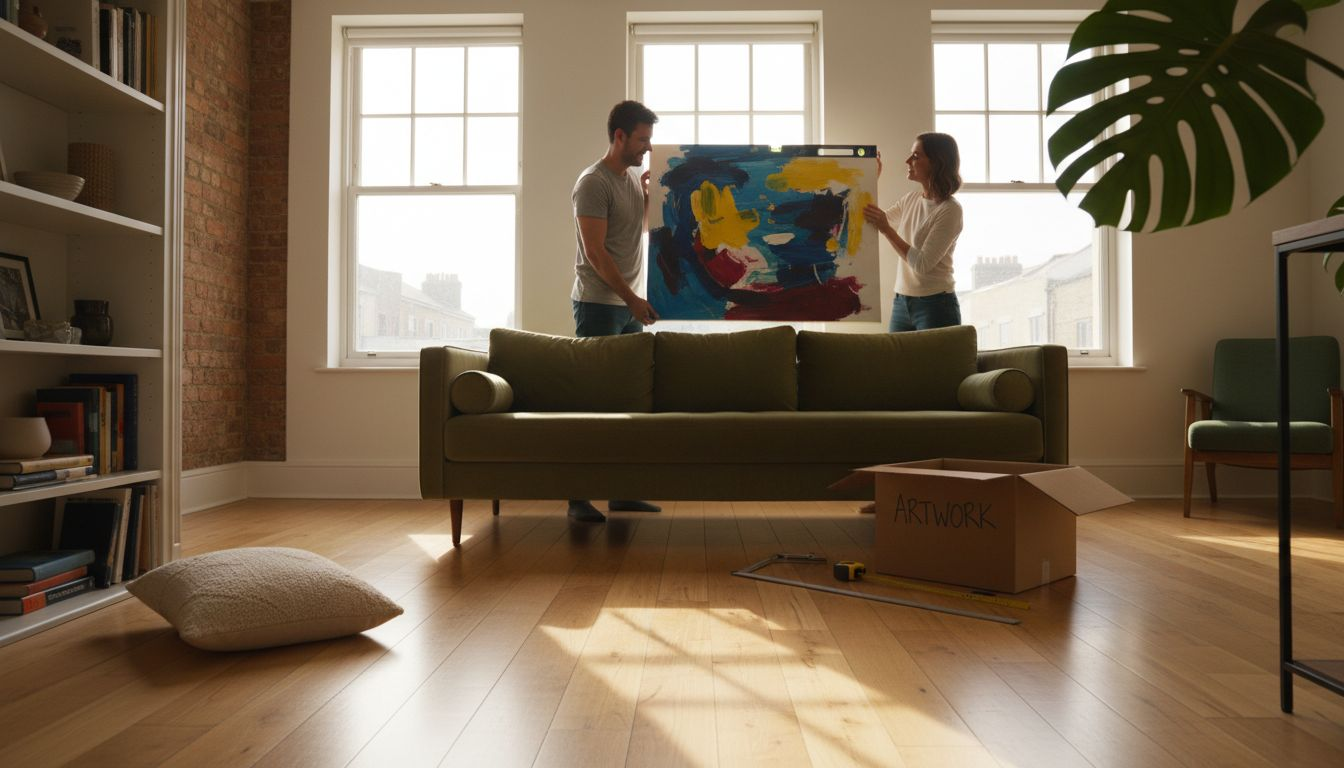
Displaying techniques play a crucial role in maximising the visual impact of modern art prints. Strategic placement can transform an ordinary room into a curated, sophisticated environment. Consider unconventional hanging approaches like asymmetrical groupings, floor-to-ceiling installations, or unexpected wall locations that challenge traditional display conventions.
Interior designers recommend thinking beyond traditional framing. Frameless canvas prints, floating glass mounts, and mixed-media presentations can elevate modern art from mere decoration to a dynamic design element. Collaborating with interior designers can provide professional insights into creating harmonious visual narratives.
Modern art prints are not just decorations, but powerful tools for personal storytelling and spatial transformation.
Pro tip: Create visual cohesion by selecting art prints that echo subtle colour tones or geometric patterns already present in your interior design.
Enhance Your Space with Thoughtful Modern Art
Understanding the true essence of modern art is the first step to transforming your surroundings into a personalised, inspiring environment. The article highlights common challenges such as deciphering emotional context and selecting artworks that complement your interior’s character. At Frametheworld, we address these pain points by offering a diverse collection of high-quality modern art prints that emphasise conceptual meaning and visual innovation. Whether you seek abstract pieces that provoke thought or vibrant works that energise your space, our range caters to every style and mood.
Discover how our customisation options and professional consultation services provide a seamless way to integrate modern art that resonates emotionally and enhances your décor. Take advantage of our easy browsing by style, theme, or size to find that perfect piece now. Ready to elevate your interiors with meaningful modern art Choose Frametheworld today to explore unique artworks and bespoke solutions crafted to reflect your vision. Visit Frametheworld and begin your journey to a captivating space that speaks to both personal expression and sophisticated design.
Frequently Asked Questions
What defines modern art?
Modern art is characterised by its rejection of traditional artistic methods, emphasis on personal interpretation, and exploration of social and emotional themes through innovative techniques.
How did modern art movements influence artistic expression?
Modern art movements, such as Impressionism and Cubism, transformed artistic expression by challenging established conventions and introducing new ways of viewing colour, form, and composition.
Why is modern art important today?
Modern art is important as it represents a dialogue between the artist’s vision and viewers’ perceptions, encouraging personal engagement and emotional exploration, which remains relevant in contemporary culture.
What should I consider when displaying modern art in my home?
When displaying modern art, consider factors like colour compatibility with existing decor, scale relative to your space, and the emotional impact of the artwork to create a cohesive and engaging environment.

Leave a comment
This site is protected by hCaptcha and the hCaptcha Privacy Policy and Terms of Service apply.