

TL;DR:
- Contemporary art includes diverse styles created since the late 1960s, focused on cultural and social issues.
- Key movements are figurative painting, post-internet figuration, urban contemporary, and minimalist revival.
Contemporary art is defined as the diverse body of artistic production created from the late 1960s to the present, with no single unifying style or movement. This contemporary art styles list covers the key movements shaping galleries, auction houses, and walls worldwide in 2026. Unlike earlier eras defined by a single “ism,” contemporary art spans painting, sculpture, installation, digital media, and performance, united by shared cultural concerns rather than shared technique. Identity, technology, migration, and politics recur across every medium. Understanding these movements gives you a far richer experience of the art you encounter, whether in a gallery or on your own walls.

What are the key contemporary art styles dominating the scene?
Four movements anchor the current art world institutionally: figurative painting, post-internet figuration, post-graffiti and urban contemporary, and a minimalist and conceptual revival. These are not passing trends. They are the styles commanding serious curatorial attention, museum acquisitions, and auction results in 2025–2026.
- Figurative painting. After two decades of abstraction dominance, figurative painting has returned to prominence in galleries and auction houses. Artists working in this mode focus on psychological depth and intimate human subjects, often with raw, expressive surfaces.
- Post-internet figuration. This style reflects a generation raised on screens. Artists translate the visual language of digital imagery, memes, and social media into painted or printed works. The result is a flattened, high-saturation aesthetic that feels simultaneously familiar and unsettling.
- Post-graffiti and urban contemporary. Rooted in street culture, this movement carries the legacy of Jean-Michel Basquiat into gallery spaces. Basquiat’s 1982 skull painting set a benchmark for quality and pricing in late 20th-century post-graffiti work, and that influence continues to shape how collectors and curators value urban contemporary art today.
- Minimalist and conceptual revival. Renewed interest in post-war minimalism and conceptual art has produced work that strips away decoration to focus on ideas, space, and material. Artists like Richard Serra adapted minimalist intensity/4.10.1.01%3A_A_beginner’s_guide) for direct audience interaction while maintaining conceptual rigour.
Pro Tip: When visiting a gallery, ask which institutional bodies have acquired a given artist’s work. Museum acquisitions signal long-term relevance far more reliably than social media popularity.
How Minimalism and Pop Art shaped today’s styles
The contemporary art styles you see today did not emerge from nowhere. Two movements from the early 1960s fundamentally redirected what art could be and what it could say.
-
Minimalism adopted industrial materials and geometric forms. Artists moved away from expressive brushwork and toward steel, concrete, and fluorescent light. The goal was to strip art down to its physical presence. That shift opened the door to conceptual practices where the idea behind a work matters as much as its appearance.
-
Pop Art appropriated commercial and low-culture imagery. Comic books, advertising, and consumer packaging became legitimate artistic sources. Pop Art blurred the boundary/4.10.1.01%3A_A_beginner’s_guide) between fine art and everyday life, making social critique accessible through familiar imagery.
-
Both movements shifted the focus from aesthetics to interrogation. Art was no longer primarily about beauty. It became a vehicle for questioning society, commerce, and the nature of art itself. That critical stance is the direct ancestor of today’s post-internet figuration and conceptual revival.
-
Their legacy continues in living practice. Contemporary artists working in wall art trends for 2026 draw directly on both traditions, whether through bold Pop Art colour fields or spare minimalist compositions.
Pro Tip: When you encounter a contemporary work that feels deliberately plain or aggressively commercial, look for the critical argument underneath. Minimalism and Pop Art taught artists to hide their sharpest ideas in plain sight.
Diverse contemporary practices beyond painting
Contemporary art is not confined to the canvas. Installation, performance, digital, and street art represent equally significant practices that expand what art can do and where it can exist.
- Installation art treats space itself as the medium. Artists construct environments that viewers physically enter, making the experience inseparable from the work. Tate Modern’s Turbine Hall commissions are among the most visible examples of this approach reaching mass audiences.
- Performance art places the artist’s body, actions, or presence at the centre of the work. The audience becomes a participant rather than a passive observer. Marina Abramović’s durational performances, including “The Artist Is Present” at MoMA in 2010, demonstrated how performance can generate the same cultural weight as a painting.
- Digital and video art uses screens, algorithms, and internet infrastructure as both medium and subject. Post-internet artists in particular treat the browser and the feed as artistic environments. The rise of 3D printing in creative expression has further expanded what digital artists can produce and exhibit.
- Street art operates in public space, making it the most democratically accessible of all contemporary forms. Its cultural and political relevance comes from its refusal to wait for institutional permission. The movement carries a direct line from Basquiat’s early New York work through to globally recognised artists working on city walls today.
How contemporary styles engage with identity, technology, and society
Contemporary art does not offer simple messages. Art experts advise audiences to treat contemporary works as open-ended cultural dialogues rather than single answers. That framing is the most useful tool you can bring to any gallery visit.
Identity and migration are central concerns across nearly every current style. Figurative painters address race, gender, and belonging with psychological directness. Post-internet artists interrogate how identity is performed and fragmented across digital platforms. These are not decorative choices. They are arguments about who gets to be seen and how.
Technology shapes both the subject matter and the making of contemporary art. Screen culture, data, and artificial intelligence have entered the studio as tools and as themes. The result is work that reflects the speed and saturation of contemporary life in ways that traditional media cannot.
“Contemporary art’s intentional difficulty encourages viewers to derive personal meanings amid contradictory interpretations. Viewing contemporary artwork as an open-ended cultural dialogue, rather than a fixed answer, provides the deepest engagement with what artists are actually doing.”
Art historians encourage moving beyond mere categorisation toward understanding contemporary art as active cultural argument and problem-solving. A work that confuses you is not failing. It is asking you to do the interpretive work alongside the artist.
Key takeaways
Contemporary art is best understood as a field of active cultural arguments, not a catalogue of fixed styles.
| Point | Details |
|---|---|
| Four dominant movements | Figurative painting, post-internet figuration, post-graffiti, and minimalist revival anchor the current institutional art world. |
| Historical roots matter | Minimalism and Pop Art from the 1960s directly shaped the conceptual and visual language of contemporary practice. |
| Media extends beyond painting | Installation, performance, digital, and street art are equally central to the contemporary art styles overview. |
| Complexity is intentional | Contemporary works deliberately resist single readings; engaging with contradictory meanings is part of the experience. |
| Institutional engagement signals value | Museum acquisitions and curatorial attention are stronger indicators of an artist’s relevance than visual trends alone. |
Why I think most people approach contemporary art the wrong way
Most art enthusiasts and students arrive at contemporary art looking for a style to identify and then move on. They want to tick a box: “That’s minimalism. That’s street art.” I understand the impulse. Categorisation feels like understanding.
The problem is that contemporary art functions as a competitive discourse where artists engage by challenging previous generations’ arguments. When you reduce a work to its style label, you miss the argument it is making. You see the surface and skip the substance.
The most rewarding shift I have seen in students and enthusiasts is when they stop asking “What style is this?” and start asking “What problem is this artist trying to solve?” That question opens up figurative painting, post-internet work, and conceptual sculpture in ways that no style guide can. Institutional engagement is a stronger indicator of long-term relevance than any visual trend, and the same principle applies to how you engage with art. Depth of attention beats breadth of categorisation every time.
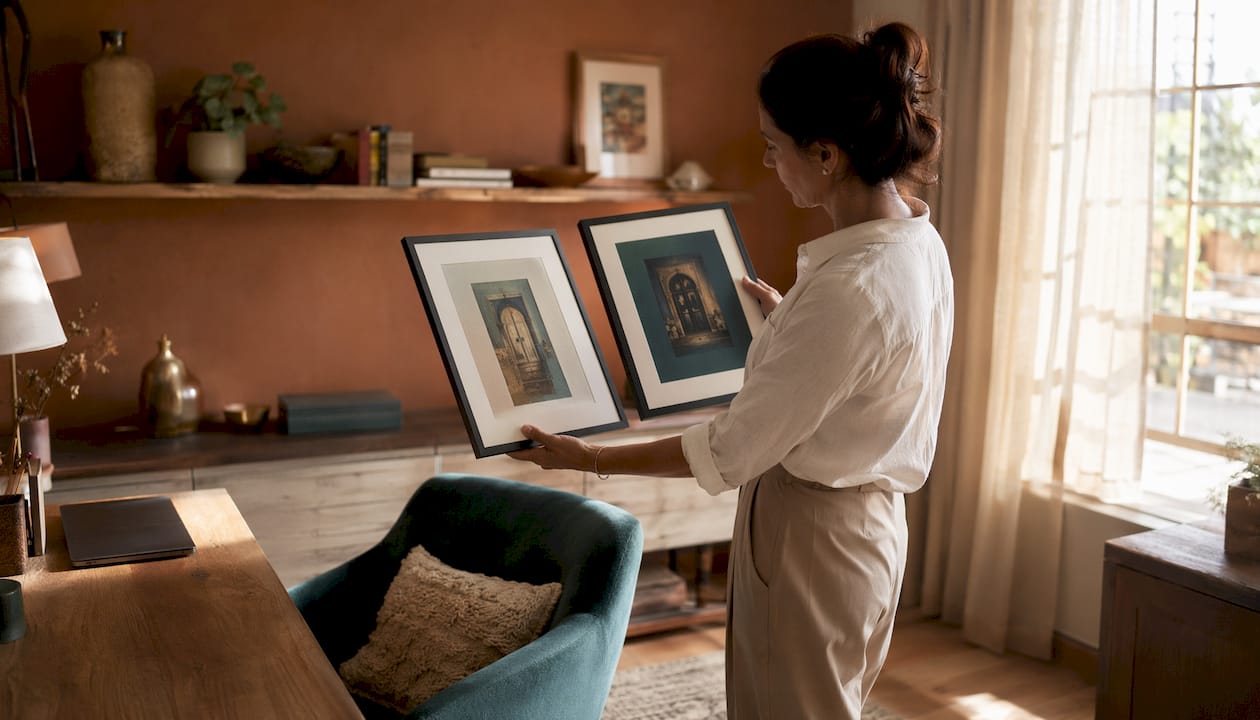
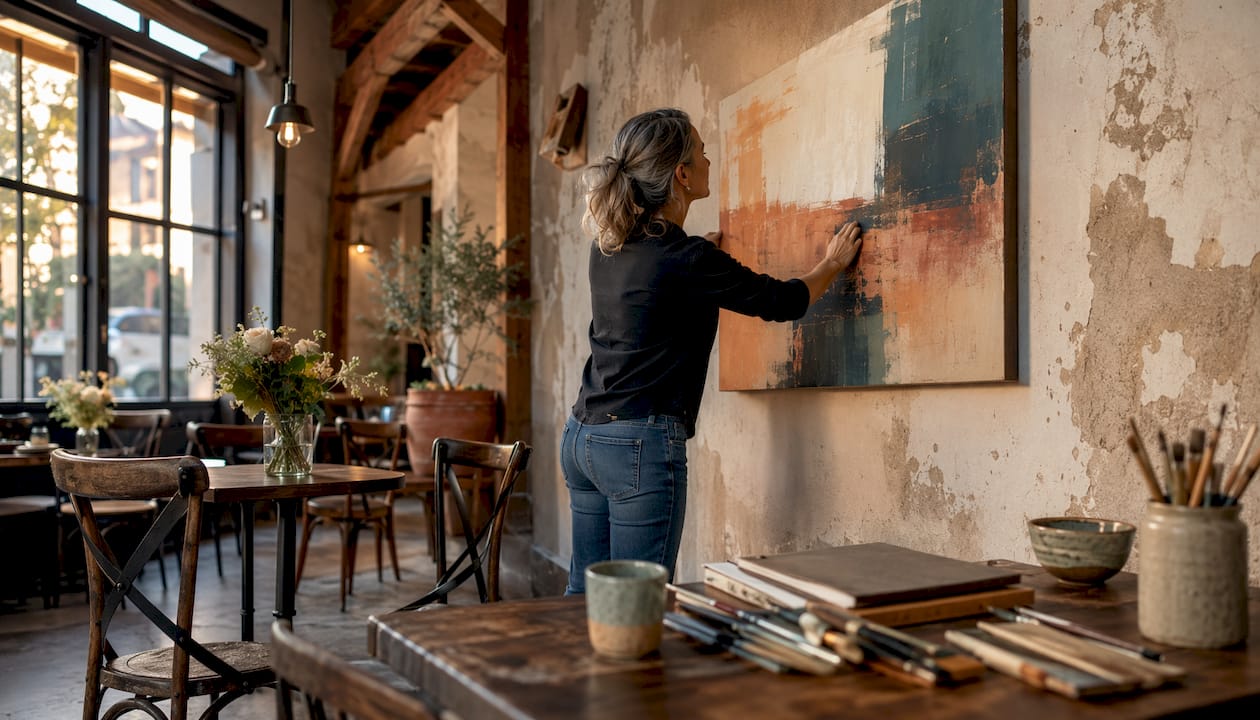
If you are building a personal collection or decorating your home, apply the same logic. Choose works that hold your attention and reward repeated looking, not works that simply match a trend. The role of art in home style is most powerful when the piece carries genuine meaning for you, not just a fashionable label.
— Lennard
Frametheworld’s collections for contemporary art lovers
Frametheworld brings several of the movements covered here directly into curated collections you can browse by style, theme, and format. The Pop Art wall art collection reflects one of contemporary art’s most enduring and visually bold traditions, with hand-painted pieces that carry the commercial energy and social critique that defined the movement. For those drawn to the minimalist and conceptual revival, the Wabi Sabi wall art collection offers textured, abstract works that embrace imperfection and material honesty. Both collections are available in multiple sizes and formats, with bespoke options for private clients and commercial projects. If you are still deciding which direction suits your space, the art styles selection guide is a practical starting point.
FAQ
What is contemporary art style?
Contemporary art style refers to the diverse range of artistic approaches produced from the late 1960s to the present, with no single defining movement. It spans painting, installation, digital media, performance, and street art, united by engagement with current cultural and social concerns.
What are the main types of contemporary art?
The main types include figurative painting, post-internet figuration, post-graffiti and urban contemporary, minimalist and conceptual art, installation art, performance art, digital and video art, and street art.
How is contemporary art different from modern art?
Modern art generally refers to work produced from the 1860s to the 1960s, associated with movements like Impressionism, Cubism, and Abstract Expressionism. Contemporary art begins roughly in the late 1960s and is defined by its diversity of media and its engagement with present-day cultural issues.
Why is contemporary art often difficult to understand?
Contemporary art deliberately embraces complexity and multiple meanings, reflecting rapid societal and technological change. Treating a work as an open-ended cultural dialogue rather than a fixed statement is the most effective way to engage with it.
Which contemporary art styles work best for home decoration?
Figurative painting, minimalist and conceptual works, and Pop Art translate most readily into domestic spaces. Choosing a style that rewards repeated looking, rather than one that simply follows a trend, produces the most satisfying long-term result.

Leave a comment
This site is protected by hCaptcha and the hCaptcha Privacy Policy and Terms of Service apply.