

TL;DR:
- Art in retail transforms spaces into immersive brand experiences that influence customer emotion and boost sales. It leverages neuroaesthetic principles, fostering loyalty and extending dwell time through strategic placement and rotation. Effective implementation requires long-term planning, storytelling, technical expertise, and a focus on brand narrative to create meaningful cultural capital.
Art in retail environments is defined as the deliberate integration of visual and experiential artworks into commercial spaces to shape customer emotion, reinforce brand identity, and drive measurable business outcomes. This goes far beyond decoration. When retailers treat art as a strategic asset, they create immersive settings that influence how shoppers feel, how long they stay, and whether they return. Brands like Lotte Department Store and Kotex have demonstrated this with hard data. The role of art in retail environments is, at its core, a discipline of behavioural design and cultural positioning, one that separates forgettable shops from genuinely memorable brand experiences.
How does art influence customer behaviour and sales in retail spaces?
The science behind art’s commercial power is grounded in neuroaesthetics, the study of how the brain responds to beauty and visual stimuli. Art triggers a reward response in the brain, producing pleasure and emotional bonding that directly drives purchasing decisions. This means that a well-chosen artwork is not merely pleasant to look at. It is actively priming the shopper to feel positively disposed towards the brand and its products.
The commercial results are striking. Retail renovations incorporating art and intentional design increase new customer sales by nearly 50%. That figure reflects a fundamental shift in how first-time visitors perceive a space. When the environment signals quality and care, shoppers extend that judgement to the products on the shelves.
The impact of art on shopping extends to dwell time and decision fatigue. Thoughtfully curated art environments give customers visual anchors and moments of pause, which reduce the cognitive overload that often causes shoppers to leave without buying. Research into how art shapes client experience confirms that perceived quality of a space directly correlates with satisfaction and spending.
Key behavioural benefits of art in retail spaces include:
- Increased dwell time. Shoppers linger longer in visually engaging environments, creating more opportunity for purchase.
- Emotional brand attachment. Repeated positive aesthetic experiences build loyalty that price promotions cannot replicate.
- Word-of-mouth and social sharing. Striking installations become shareable moments, extending brand reach beyond the physical store.
- Employee motivation. Artistic initiatives create measurable internal benefits including increased employee well-being, which translates directly into better customer service.
Pro Tip: Commission a short customer survey at the point of exit asking specifically about the store’s atmosphere. Baseline this before any art installation and repeat it three months afterwards. The shift in language customers use to describe the space will tell you more than footfall data alone.
What strategic roles can art play beyond aesthetics in retail branding?
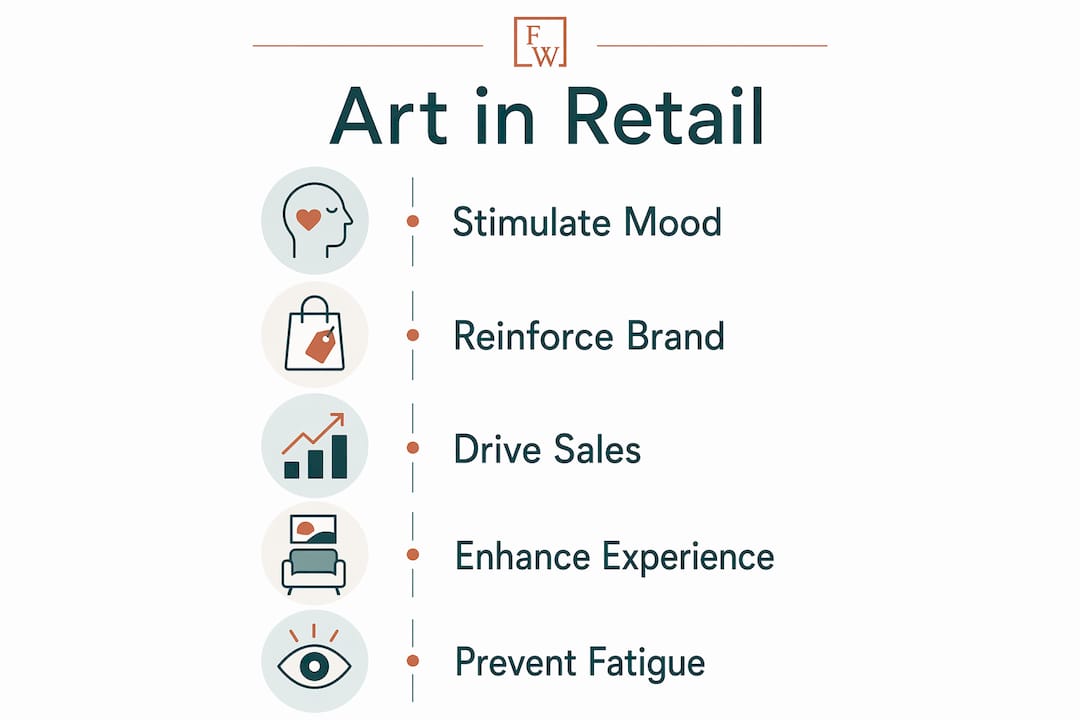
The importance of art in retail extends well beyond making a space look appealing. Art functions as an identity mediator, a term used in cultural economics to describe how creative works communicate values, community belonging, and brand character without a single word of copy. Art humanises brands, strengthens cultural relevance, and builds trust with local communities in ways that advertising campaigns simply cannot.
Luxury houses have understood this for decades. Tiffany, LVMH, and Hermès all maintain significant art programmes and corporate collections. Their rationale is not philanthropic. Exceptional art signals refined judgement and competence that traditional marketing cannot replicate, creating what industry analysts call an “unfakeable brand premium.” When a retailer commissions or displays art that is respected by curators and critics, it borrows that cultural authority for its own brand.
“Art breaks through advertising scepticism by signalling uncompromisable judgement, long-term thinking, cultural capital, and values alignment.” — Moon Above
This matters enormously in 2026, when consumers are more sceptical of brand messaging than at any previous point. Art as a marketing tool works precisely because it does not look like marketing. A curated gallery wall in a flagship store communicates taste, permanence, and confidence. It tells the shopper that this brand thinks beyond the next promotional cycle.
Pro Tip: When selecting art for a flagship location, involve a professional curator rather than defaulting to the marketing team’s instincts. A curator’s credibility transfers to the brand. The selection process itself becomes part of the story you tell.
How do different types and placements of art enhance retail experiences?
Not all art serves the same purpose in a retail setting, and the format you choose should follow the story you want to tell. The table below compares the most common approaches:
| Art format | Best suited for | Key benefit | Consideration |
|---|---|---|---|
| Fine art prints and paintings | Premium and lifestyle brands | Signals quality and cultural authority | Requires thoughtful framing and lighting |
| Interactive installations | High-footfall and experiential retail | Drives engagement and social sharing | Needs technical expertise for safety |
| Murals and large-scale works | Brand storytelling and local identity | Creates distinctive visual identity | Difficult to update without full repaint |
| Digital and rotating galleries | Fashion, tech, and trend-led retail | Maintains freshness for repeat visitors | Requires ongoing content curation |
| Sculptural pieces | Luxury and destination retail | Creates focal points and tactile interest | Specialist engineering required for heavy works |
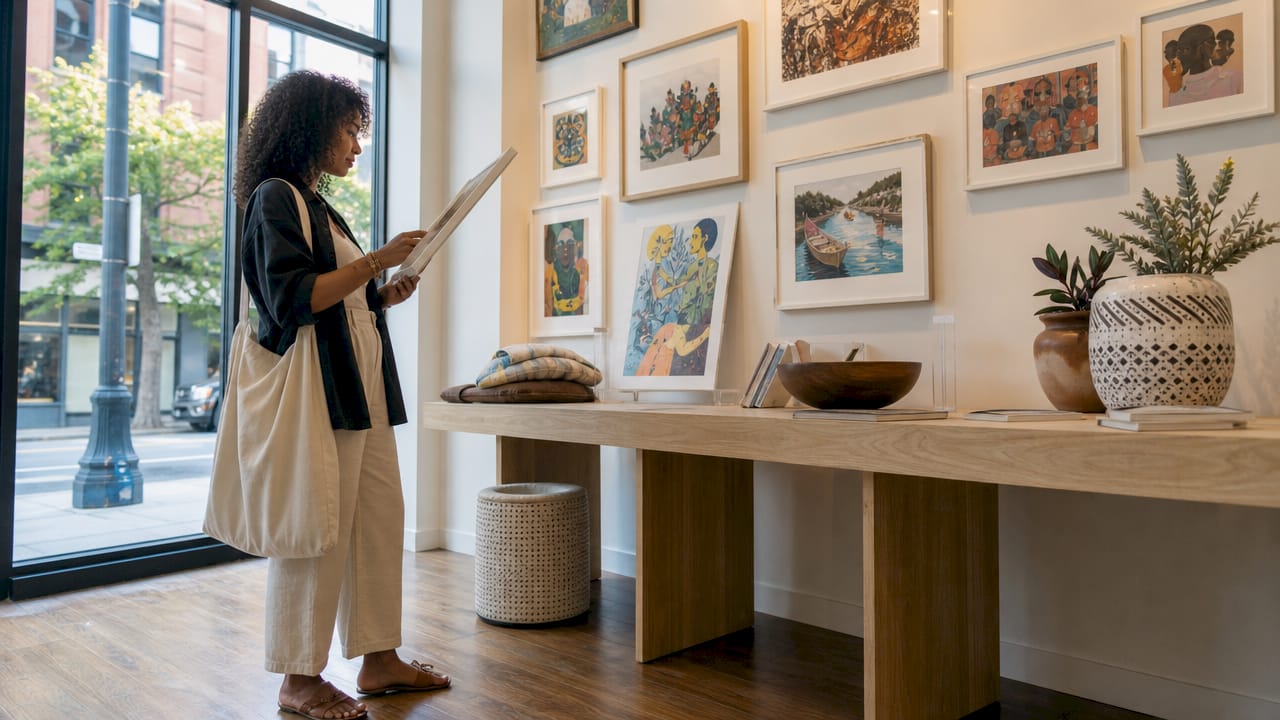
Placement is as consequential as the artwork itself. Focal point positioning, placing a significant piece at the natural end of a sightline, draws customers deeper into the store. Idle spaces such as fitting room corridors, lift lobbies, and queuing areas are consistently underused. Art in these locations transforms waiting from a negative experience into a brand touchpoint.
Lotte Department Store in South Korea applied art visual merchandising across its flagship locations with extraordinary results. Sales volume reached 130% of the previous year’s figures at its headquarters following the Art VM programme. The strategy combined curated exhibitions with product display, making the shopping floor itself feel like a cultural destination.
Kotex took a different route by launching a virtual gallery featuring over 40 artworks activated by QR codes on outdoor billboards. The campaign linked physical and digital experiences, demonstrating that art influence in retail no longer requires a permanent physical installation. A QR code on a poster can open a gallery that shifts brand perception entirely.
Rotating collections prevent visual fatigue, which is a genuine risk for regular customers who stop noticing static displays within weeks. A rotation schedule of every three to six months keeps the environment feeling current and gives loyal customers a reason to look again.
What practical steps can retail businesses take to implement art effectively?
Implementing art in store design requires the same rigour as any other brand investment. The following steps provide a structured path from intention to measurable impact.
-
Assign strategic ownership. Art decisions should sit with brand or marketing leadership, not facilities management. The curatorial vision must connect to the brand narrative, not simply fill wall space.
-
Develop a multi-year collection plan. Art investment requires multi-year curation programmes with rotation schedules and contextual storytelling to sustain impact. A single purchase is not a strategy. Define the cultural narrative you want to build over three to five years.
-
Incorporate storytelling and digital tools. QR codes linking to artist interviews, provenance information, or behind-the-scenes content transform passive viewing into active engagement. This is where enhancing retail experience with art becomes genuinely interactive.
-
Address technical requirements early. Specialist materials and professional engineering are necessary for durable, safe retail art installations, particularly for sculptural or interactive works. Engage structural engineers and comply with building regulations before installation begins.
-
Measure impact systematically. Track sales data, customer dwell time, social media mentions, and Net Promoter Score before and after installation. Segment new versus returning customer behaviour to isolate the art’s contribution.
-
Explore bespoke and hand-painted options. Off-the-shelf prints rarely achieve the distinctiveness that retail branding demands. Commissioning original works or working with platforms that offer art styles for commercial interiors gives you pieces that competitors cannot replicate.
Pro Tip: Brief your retail staff on the artworks in your space. When a team member can speak knowledgeably about a piece, it deepens the customer’s connection to both the art and the brand. A 15-minute team briefing costs nothing and pays dividends in customer conversations.
Key takeaways
Art in retail environments delivers its greatest commercial return when treated as a long-term brand investment, not a one-off aesthetic decision.
| Point | Details |
|---|---|
| Art drives measurable sales growth | Retail renovations incorporating art increase new customer sales by nearly 50%. |
| Neuroaesthetics explains the mechanism | Beauty triggers emotional bonding in the brain, directly influencing purchasing behaviour. |
| Strategic art signals brand premium | Brands like Tiffany and Hermès use art to communicate values that advertising cannot replicate. |
| Format and placement both matter | Rotating collections, focal point positioning, and digital integration each serve distinct strategic purposes. |
| Implementation requires structured planning | Multi-year curation, technical compliance, and measurement are non-negotiable for sustained impact. |
Why most retailers are still getting art wrong
Most retailers treat art as the last line item in a fit-out budget, something chosen quickly once the shelving and lighting decisions are finalised. I have seen this pattern repeatedly, and it consistently produces the same result: generic prints that nobody notices and that do nothing for the brand.
The mistake is categorical. Art is not furniture. It is not a finishing touch. It is a communication medium with its own grammar, and when you deploy it without a curatorial voice or a narrative intention, it communicates nothing. Worse, it can signal that the brand has no genuine point of view.
What I find genuinely exciting about the current moment is that the barriers to doing this well have dropped considerably. You no longer need a corporate art collection worth millions to create a distinctive retail environment. A single commissioned piece from an emerging artist, placed thoughtfully and supported by a story, can do more for brand perception than a wall of expensive but anonymous prints.
The retailers I respect most are the ones who ask a different question. Instead of “what art should we put here?”, they ask “what do we want people to feel, and what kind of art creates that feeling?” That shift in framing changes everything. It connects the role of art in interior design to the broader brand strategy, and it produces environments that customers remember and return to.
The brands that will lead retail in the next decade are the ones building cultural capital now. Art is one of the most direct routes to that capital, and it is still underused by the majority of the market.
— Lennard
Discover curated wall art for your retail space
Frametheworld offers hand-painted original artworks and curated print collections specifically suited to commercial and retail environments. The Wabi Sabi wall art collection brings textured, abstract works that communicate calm sophistication, ideal for wellness brands, premium lifestyle retailers, and hospitality spaces. For brands seeking bold visual impact, the Pop Art collection delivers high-energy, hand-painted pieces that command attention and spark conversation. Frametheworld also offers bespoke commissioning for retailers who need artwork that is genuinely unique to their brand. Browse by style, format, and size to find pieces that serve your specific retail narrative.
FAQ
What is the role of art in retail environments?
Art in retail environments functions as a strategic tool that shapes customer emotion, reinforces brand identity, and drives commercial outcomes including increased sales and dwell time. It operates through neuroaesthetic principles, triggering pleasure responses that build emotional attachment to the brand.
How does art influence consumer behaviour in stores?
Art triggers reward responses in the brain that produce positive emotional associations with the surrounding brand and products. Retailers who incorporate art into store design report significant increases in new customer sales and measurable improvements in customer satisfaction scores.
What types of art work best in retail spaces?
The most effective format depends on the brand’s objectives. Fine art prints and paintings suit premium brands seeking cultural authority, while interactive installations and digital galleries work well for high-footfall environments where engagement and social sharing are priorities.
How often should retail art displays be rotated?
Art collections in retail spaces should be rotated every three to six months to prevent visual fatigue. Regular customers stop noticing static displays within weeks, so rotation is necessary to maintain the environment’s impact and give loyal shoppers a reason to re-engage with the space.
Do small retailers benefit from art investment as much as large brands?
Yes. A single commissioned piece placed thoughtfully, supported by a clear narrative, can shift brand perception as effectively as a large corporate collection. The strategic intent behind the selection matters more than the scale or budget of the programme.


Laat een reactie achter
Deze site wordt beschermd door hCaptcha en het privacybeleid en de servicevoorwaarden van hCaptcha zijn van toepassing.