
TL;DR:
- Art formats shape how artworks look, last, and fit a space, including physical and digital types. Choosing the right medium and format depends on environmental factors, intended impact, and edition type to ensure durability and value. Proper selection before style saves money, prevents maintenance issues, and creates enduring interior designs.
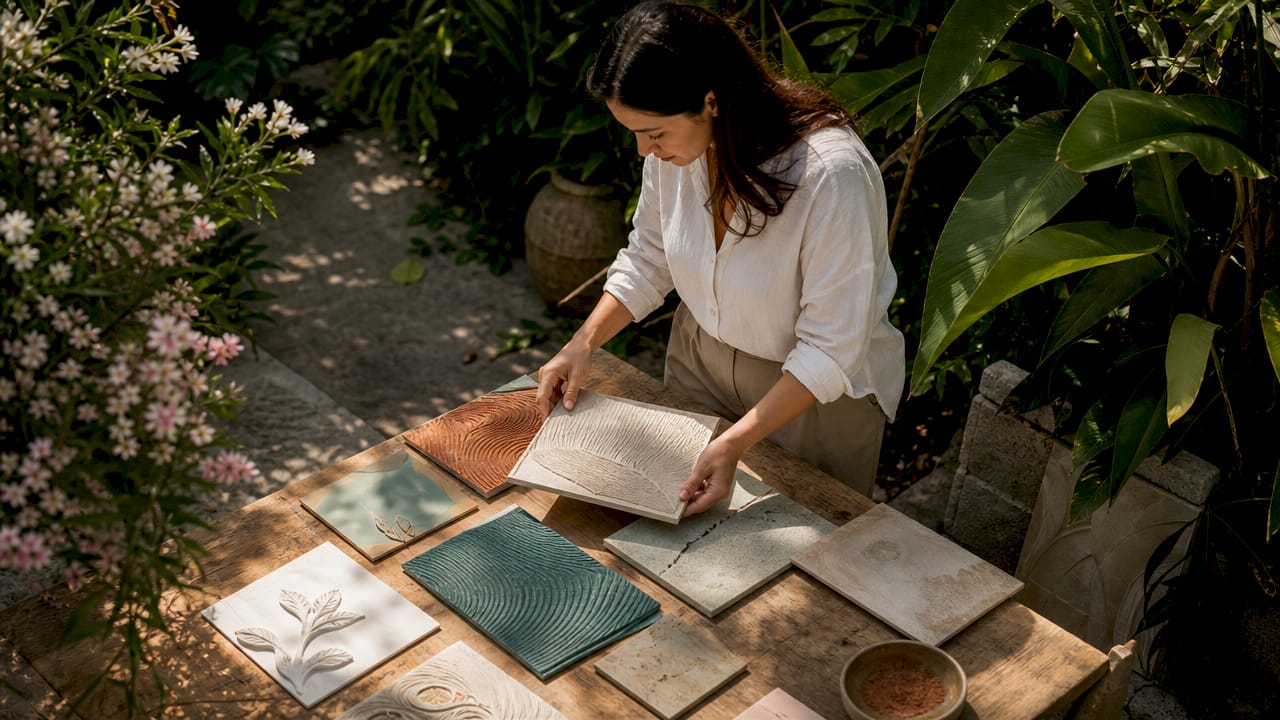
Art formats are defined as the physical or digital presentations through which a work of art is created, reproduced, and displayed. The term covers everything from oil on canvas to high-resolution digital prints, and the choice of format shapes how a piece looks, lasts, and fits a given space. For individuals decorating a home and designers specifying art for commercial projects, explaining art formats is the starting point for every confident buying decision. Frametheworld offers artworks across a wide range of formats and mediums, making it easier to match the right piece to the right wall.
What are the main types of art formats used in decor?
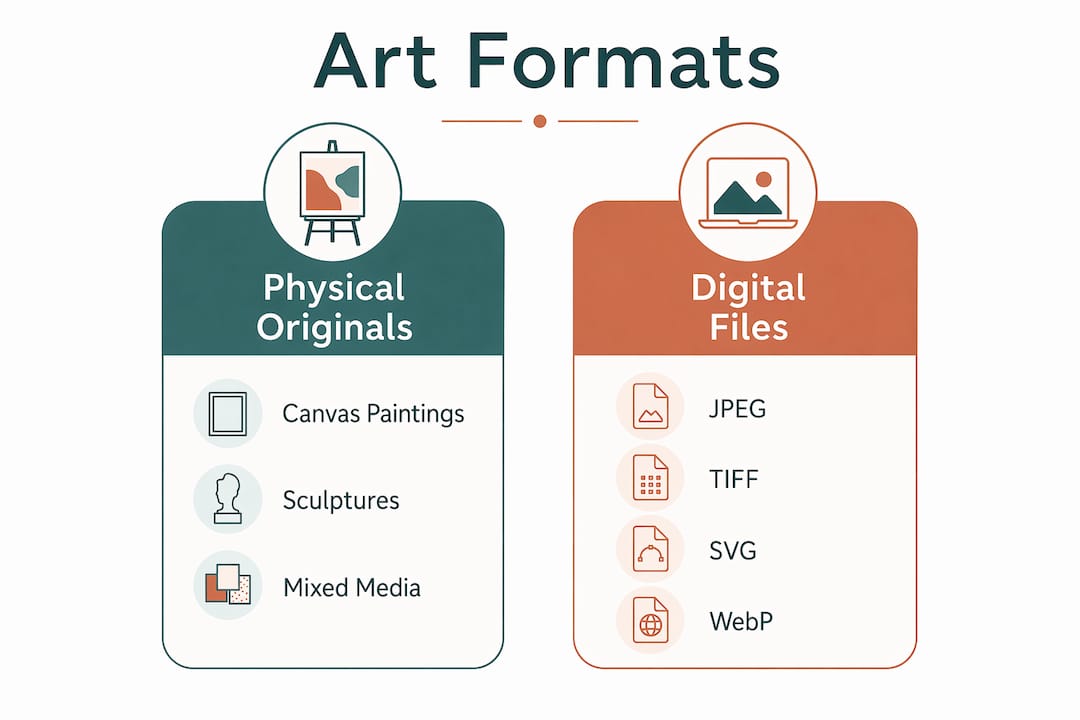
Art formats divide into three broad categories: physical originals, reproductions, and digital files. Each serves a different purpose depending on budget, scale, and the visual effect you want to achieve.
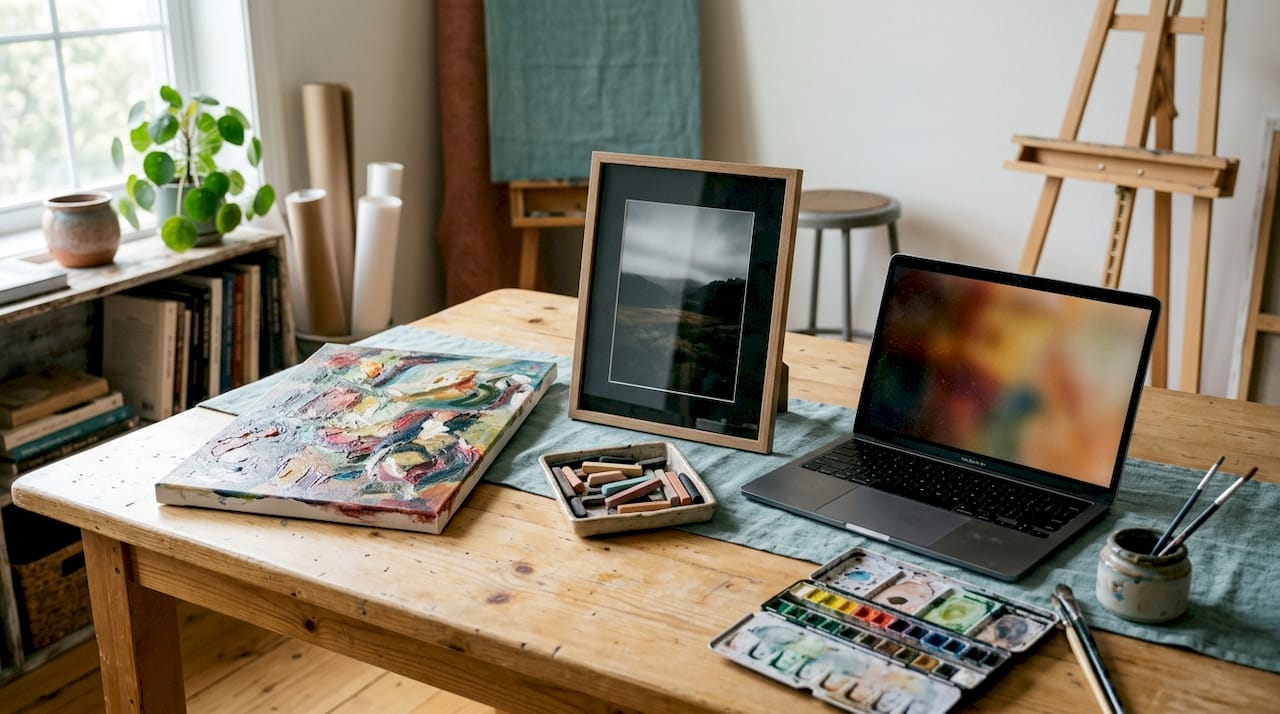
Physical originals include canvas paintings, works on paper, and sculpture. Canvas paintings are the most common wall art format in both residential and commercial settings. They carry texture and depth that reproductions rarely replicate. Framed prints, whether photographic or fine art giclée, offer a more affordable route to the same aesthetic. Sculptural formats add a three-dimensional quality that flat wall pieces cannot match, making them particularly effective in reception areas and large open-plan spaces.
Mixed media is the third major physical category. About 60% of contemporary artists now incorporate multiple mediums, combining paint, collage, and found objects to create surfaces with unique textures. That figure reflects a broader shift in the market: buyers and designers increasingly want pieces that feel singular rather than mass-produced.
Digital file formats sit behind every printed reproduction. JPEG, PNG, TIFF, SVG, and newer formats like WebP and AVIF each have distinct properties that affect print quality and colour accuracy. Understanding these is as relevant to a designer ordering a large-format print as it is to an artist preparing files for a gallery.
| Format | Type | Best use | Key characteristic |
|---|---|---|---|
| Canvas painting | Physical original | Feature walls, focal points | Texture, depth, uniqueness |
| Giclée print | Reproduction | Affordable art, editions | High colour fidelity |
| Framed photograph | Reproduction | Residential, hospitality | Precise detail |
| Sculpture | Physical original | Reception, retail, open plan | Three-dimensional presence |
| Mixed media | Physical original | Contemporary interiors | Layered texture and surface |
| Digital print (large format) | Reproduction | Commercial, signage | Scalable, consistent |
How do different art mediums influence visual and tactile qualities?
The medium is the material an artist uses to make a mark, and it determines texture, colour vibrancy, longevity, and maintenance requirements. Choosing the wrong medium for a space is one of the most common and costly mistakes in interior art selection.
Drawing mediums such as graphite and charcoal rely on direct hand pressure for precision, while painting mediums such as oil, acrylic, and watercolour use binders to control pigment movement, drying time, and texture. That physical difference has practical consequences. Charcoal works on paper are fragile and require UV-protective glazing. Oil paintings are durable but can yellow without proper varnishing. Acrylics dry quickly, resist moisture, and suit high-traffic commercial environments well.
Pro Tip: For commercial spaces with high humidity, such as hotel bathrooms or restaurant kitchens, acrylic on canvas or a sealed giclée print outperforms oil or works on paper every time.
Here is a summary of the key mediums and their practical trade-offs:
- Oil paint. Rich colour depth and a long history of collectability. Requires varnishing and indirect light to prevent yellowing. Best for formal living rooms and boardrooms.
- Acrylic paint. Fast-drying, moisture-resistant, and colour-stable. The most practical choice for commercial settings. Slightly less luminous than oil.
- Watercolour. Delicate, translucent, and light-sensitive. Requires UV glass and is best suited to low-light residential spaces.
- Graphite and charcoal. Precise and tonal. Fragile without fixative and glazing. Ideal for studies, libraries, and calm domestic interiors.
- Mixed media. Highly textural and visually arresting. Durability varies by materials used. Works well as a statement piece in contemporary commercial or residential spaces.
Beginners typically learn drawing mediums first to build foundational skills before progressing to painting mediums. For buyers, this progression matters because it signals the level of technical skill embedded in a piece, which in turn affects value and display suitability.
Which digital image formats best serve art display and reproduction?
Digital file formats determine whether a printed artwork looks sharp at two metres or pixelated at half a metre. The distinction between raster and vector formats is the most important technical concept for anyone ordering large-format art prints.
Raster formats store images as grids of pixels. JPEG uses lossy DCT compression, which reduces file size by discarding some image data. That makes JPEG suitable for photographic art where minor quality loss is acceptable. PNG and TIFF use lossless compression, preserving every pixel at the cost of larger file sizes. TIFF is the professional standard for print-ready art files. PNG handles transparency, making it useful for layered design work.
Vector formats such as SVG store images as mathematical paths rather than pixels. They scale to any size without quality loss, which makes them the correct choice for logos, typographic art, and geometric prints intended for large-format commercial display.
WebP and AVIF are newer raster formats that deliver file sizes 30–50% smaller than JPEG at comparable quality. That efficiency matters for online galleries and e-commerce platforms where page speed affects user experience.
Colour mode is equally critical. RGB is the correct working mode for digital screens, and converting CMYK files to RGB often produces dull, inaccurate colours. For print production, the workflow should run from a master PSD or TIFF file in the appropriate colour space, with flattened JPEG or PNG exports used for delivery.
Pro Tip: Always request a TIFF or high-resolution PSD master file from your artist or supplier before ordering large-format prints. JPEG exports degrade slightly with every re-save, and that loss becomes visible at scale.
| Format | Compression | Transparency | Best use |
|---|---|---|---|
| JPEG | Lossy | No | Photographic prints, web display |
| PNG | Lossless | Yes | Layered graphics, web art |
| TIFF | Lossless | Optional | Print-ready master files |
| SVG | Vector | Yes | Scalable geometric and typographic art |
| WebP | Lossy/Lossless | Yes | Web galleries, e-commerce |
| AVIF | Lossy/Lossless | Yes | High-efficiency web delivery |
How to select the right art format for your space
Selecting an art format is a decision that combines aesthetic preference, environmental conditions, and practical maintenance. A format that looks perfect in a showroom can fail in a north-facing hallway or a sunlit office atrium.
Work through these considerations in order:
-
Define the decorative goal. Is the piece a focal point, a background element, or part of a curated gallery wall? A single large canvas painting commands attention. A series of framed giclée prints creates rhythm and continuity. Knowing the role of the piece narrows the format immediately.
-
Assess the environment. Light levels, humidity, and traffic all affect which formats perform well. Direct sunlight fades watercolours and unvarnished oils. High humidity damages works on paper. High-traffic areas need formats that resist knocks and do not require delicate handling.
-
Consider edition type. Edition type, whether a limited print run or a unique sculpture, significantly affects value, longevity, and maintenance needs. A limited edition giclée of 50 carries more collectability and resale value than an open edition print. For commercial clients, limited edition prints also signal investment in quality, which matters in client-facing spaces.
-
Match the medium to the interior style. Oil and acrylic paintings suit traditional and contemporary interiors alike. Mixed media and sculptural formats work best in spaces with a modern or eclectic brief. Watercolours and works on paper suit quieter, more intimate rooms.
-
Plan the framing and display. The frame is part of the format. A deep-edge canvas needs no frame, while a work on paper requires a mount and glazing. Expert framing advice can transform how a piece reads on the wall, particularly in commercial settings where presentation standards are high.
-
Layer formats for depth. The most considered interiors rarely rely on a single format. Combining a large canvas painting with smaller framed prints and a sculptural element creates visual hierarchy. An art display arrangement guide can help you plan the composition before committing to purchases.
Collectors and interior designers should weigh edition type as carefully as medium when assessing value and display suitability. A unique hand-painted canvas and a limited edition print of the same image serve different purposes and carry different long-term implications for a space.
Key takeaways
Art format selection is most effective when physical medium, edition type, and environmental conditions are assessed together before any purchase is made.
| Point | Details |
|---|---|
| Format defines function | The physical or digital presentation of art determines its durability, maintenance needs, and visual impact. |
| Medium affects longevity | Acrylic suits commercial environments; watercolour and works on paper require UV protection and controlled humidity. |
| Edition type adds value | Limited edition prints and unique originals carry greater collectability and display significance than open editions. |
| Digital formats matter for print | TIFF and PSD master files preserve colour accuracy; JPEG degrades with repeated re-saving. |
| Layer formats for impact | Combining canvas, framed prints, and sculptural elements creates visual hierarchy in any interior. |
Why I think most people choose art formats in the wrong order
Most buyers start with aesthetics and work backwards to practicality. They fall in love with a watercolour, hang it in a sun-drenched kitchen, and wonder why it fades within two years. The format conversation should happen before the style conversation, not after.
The single most underestimated factor is edition type. I have seen designers specify open-edition prints for high-end commercial projects, then discover that the client’s facilities manager has ordered the same image for a different floor. That is not a problem with the art. It is a problem with format selection. A limited edition or unique original would have prevented it entirely.
Mixed media is the format I find most consistently underused in residential settings. Buyers gravitate towards flat prints because they are familiar and easy to hang. But a piece that combines paint, texture, and collage does something a flat print cannot: it changes as the light changes throughout the day. That quality is worth paying for, and it is worth planning around.
The practical rule I apply is this: choose the format that the space demands, then find the style within that format. Not the other way around. It saves money, avoids maintenance problems, and produces interiors that hold up over time.
— Lennard
Art formats and collections at Frametheworld
Frametheworld offers art across the full range of formats discussed here, from hand-painted originals on canvas to limited edition prints and textured mixed media works. The Wabi Sabi wall art collection is a strong starting point for anyone looking for format variety with a contemporary edge. These hand-painted canvases use texture and imperfection as deliberate design elements, making them well suited to both residential feature walls and commercial reception spaces. For bolder colour and graphic impact, the pop art collection offers hand-painted pieces in formats that work at scale. Frametheworld also supports bespoke commissions for designers who need a specific format, size, or edition type for a project.
FAQ
What is an art format?
An art format is the physical or digital form in which a work of art is created and presented, including canvas paintings, framed prints, sculptures, and digital files. The format determines how a piece is displayed, maintained, and valued.
What is the difference between a medium and a format?
The medium is the material used to make the artwork, such as oil paint, charcoal, or acrylic. The format is the overall presentation, such as a framed canvas, a giclée print, or a sculpture. A single medium can appear in multiple formats.
Which art format is best for commercial spaces?
Acrylic paintings on canvas and sealed giclée prints are the most practical formats for commercial spaces because they resist humidity, require minimal maintenance, and hold colour well under artificial lighting.
What digital file format is best for large-format art prints?
TIFF is the professional standard for print-ready art files because it uses lossless compression and preserves full colour accuracy. PNG and TIFF both avoid the quality degradation associated with JPEG’s lossy compression.
Does edition type affect how I should display an artwork?
Yes. Edition type significantly affects value and maintenance needs, and unique or limited edition works often warrant more considered framing and display conditions than open edition prints.


Laat een reactie achter
Deze site wordt beschermd door hCaptcha en het privacybeleid en de servicevoorwaarden van hCaptcha zijn van toepassing.