

TL;DR:
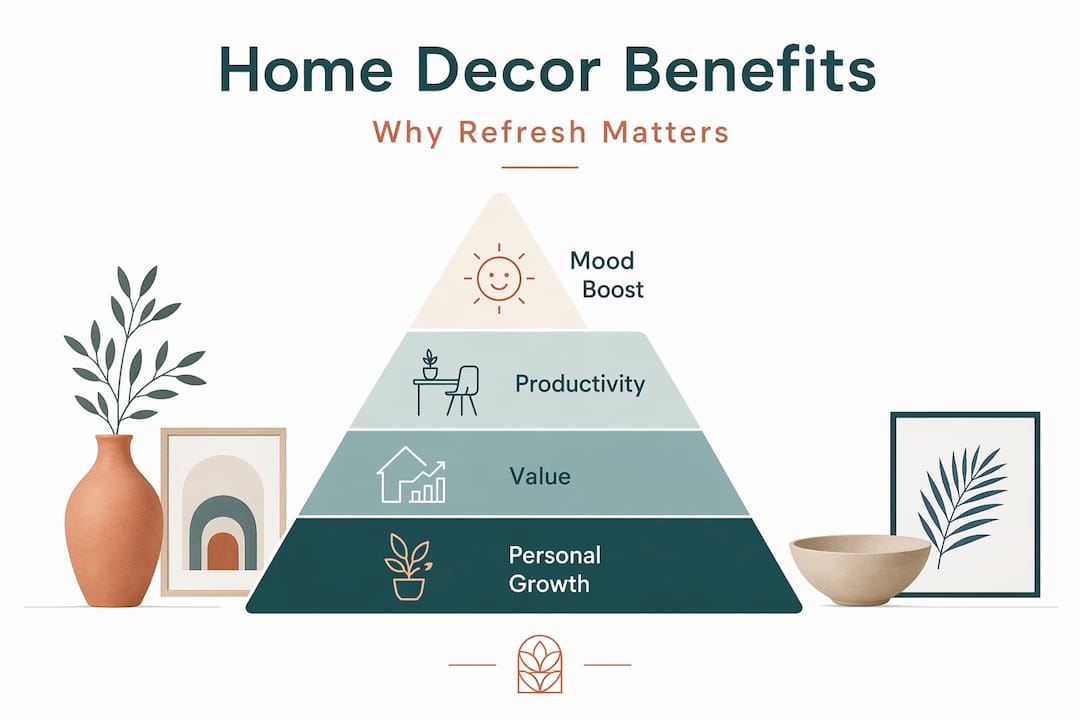
- Refreshing home decor is rooted in neuroscience and environmental psychology, impacting mental health and self-identity. Small, intentional updates like lighting, rearranging furniture, and repurposing items can significantly improve mood, stress levels, and home functionality. Focusing on authentic style and personal growth ensures a lasting, satisfying transformation rather than fleeting trends.
Most people assume the urge to refresh home decor is vanity dressed up as interior design. It is not. The desire to change your surroundings is rooted in neuroscience and environmental psychology, two fields that have spent decades documenting how profoundly your physical space shapes your mental state, habits, and sense of self. Whether you rent a flat or own a four-bedroom house, the reasons to update decor go far deeper than aesthetics. This article unpacks the psychology, the practicalities, and the personal growth dimension of giving your home a thoughtful refresh.
Table of Contents
- Key takeaways
- Why refresh home decor: the psychology behind the urge
- Practical reasons to refresh your space
- How to refresh your home thoughtfully
- Decor as a reflection of personal growth
- My honest take on why this matters
- Refresh your space with art that means something
- FAQ
Key takeaways
| Point | Details |
|---|---|
| Decor affects mental health | Changing your environment triggers dopamine and can meaningfully reduce stress and anxiety. |
| Small updates, big impact | Swapping lighting, rearranging furniture, or adding art can transform a space without a full redesign. |
| Shop your own home first | Repurposing existing items adds sentimental value and prevents impulsive, regret-filled spending. |
| Reflect your current self | Decor that no longer fits your life stage can quietly undermine your mood and sense of identity. |
| Timeless beats trendy | Choosing styles aligned with your personality lasts longer and delivers more lasting satisfaction. |
Why refresh home decor: the psychology behind the urge
There is a concept called the Diderot effect, named after the French philosopher Denis Diderot, who wrote about acquiring a beautiful dressing gown and then feeling compelled to replace everything around it. Sound familiar? The Diderot effect and redecorating are deeply connected: when one element of your home changes, the rest suddenly looks mismatched. This is not a character flaw. It is a completely normal neurological response to dissonance in your environment.
What makes this more interesting is the dopamine angle. Your brain releases dopamine not just when you receive something new, but in anticipation of novelty. The act of browsing, planning, and imagining a refreshed room is itself rewarding. This is why the urge to redecorate strikes so often without an obvious trigger. Your brain is chasing that chemical signal.
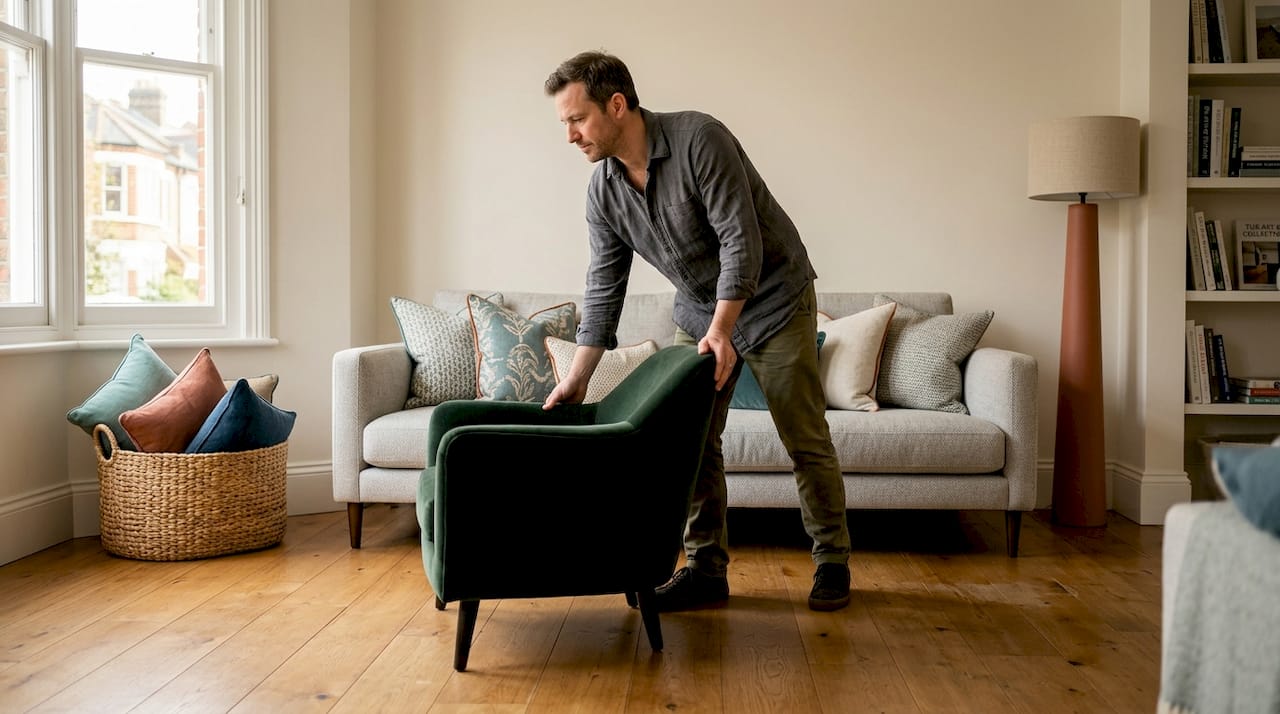
Beyond dopamine, there is serotonin to consider. Rearranging your space reduces stress and creates a sense of calm by giving you physical agency over your environment. When life feels unpredictable, your home becomes one of the few things you can genuinely control. Decluttering a corner, shifting a sofa, clearing a windowsill: these small acts of rearrangement send a powerful signal to your nervous system that things are manageable.
The benefits of home decor updates extend into territory most people overlook entirely:
- Mental clarity: Clutter competes for your attention. A refreshed, organised space reduces cognitive load.
- Emotional regulation: Environments that reflect your current values reduce internal conflict and quiet background stress.
- Habit formation: Intentional design shapes behaviour. A reading nook invites reading. A clear desk invites focus.
- Self-narrative: Your surroundings tell you a story about yourself. When that story feels outdated, discomfort follows.
“Creating an intentional, calming environment acts as a nervous system sanctuary, supporting well-being far beyond what it looks like on the surface.” — Environmental psychology research
Pro Tip: If you feel unsettled at home but cannot pinpoint why, spend ten minutes identifying the three objects or areas that feel most out of place. Start there, not with a full room overhaul.
Practical reasons to refresh your space
The psychological case is compelling, but the practical reasons to update decor are equally persuasive. Strategic updates can improve how a space functions, how it feels to move through it, and how it registers to visitors or potential buyers.
Lighting changes everything
Lighting is arguably the single highest-impact, lowest-cost lever available to you. Natural and well-planned light directly influences your circadian rhythm and serotonin levels, which means poor lighting is not just an aesthetic issue. It is a health issue. Swapping cold overhead bulbs for warm-toned lamps, adding a floor light to a dark corner, or repositioning furniture to allow more window light are all changes that cost relatively little and deliver disproportionate results.
Designers consistently cite lighting as the secret sauce of decor: the element that makes a room feel expensive, calm, or energised without touching anything else. Most homeowners address it last. The ones who address it first are always glad they did.
Flow, furniture, and functionality
Beyond lighting, there are tangible functional reasons to rethink how your space is arranged. Poor furniture placement creates awkward traffic patterns, forces conversations across distances that feel uncomfortable, and makes rooms feel smaller than they are.
| Update type | Cost level | Impact |
|---|---|---|
| Rearranging furniture | Free | Improves flow, creates new focal points |
| Swapping lighting | Low | Transforms mood and perceived room size |
| Fresh paint or wallpaper panel | Medium | Dramatically changes character of a room |
| Adding or replacing wall art | Low to medium | Adds personality and anchors colour palette |
| Updating hardware (handles, taps) | Low | Makes kitchens and bathrooms feel current |
Pro Tip: Before spending anything, photograph each room and view the images on your phone. The camera’s objective perspective reveals imbalances, clutter, and missed opportunities that you stop noticing when you live with them every day.
Small, strategic home updates like paint and lighting are also cost-effective ways to increase perceived home value. For anyone planning to sell or let their property, this matters financially as well as aesthetically. You do not need a full renovation to make a home feel well-maintained and considered.
How to refresh your home thoughtfully
The tips for revamping interiors that actually stick share one common trait: intention. The difference between a refresh that satisfies and one that leads to buyer’s remorse is whether you started with a clear sense of what you were trying to achieve.
Here is a framework that works:
-
Shop your own home first. Before buying anything, walk through every room and identify objects that are underused, misplaced, or forgotten. Repurposing and rearranging existing items adds personal meaning and avoids unnecessary spending. A lamp from a spare bedroom can transform a living room corner. A print gathering dust in a hallway might be exactly what a bedroom wall needs.
-
Set a clear intention. Ask what is not working before asking what to buy. Is the room too dark? Too busy? Does it lack a focal point? Starting with a problem to solve keeps updates purposeful rather than impulsive.
-
Build a values-based budget. Decide in advance what you are willing to spend and on what categories. Prioritise the things you interact with most daily: your sofa, your desk chair, your bedding, your lighting.
-
Collect physical samples. Designers advise collecting physical swatches rather than relying on digital images alone. Paint colours, fabric textures, and art prints look genuinely different in your specific light conditions and alongside your existing pieces. Trusting a screen is one of the most common and costly decorating mistakes.
-
Choose personal over trending. Home decor trends shift constantly. A fixed personal style reduces impulsive purchases and builds a home that feels coherent and genuinely yours over time.
Pro Tip: Give yourself a 48-hour rule before purchasing anything over a set amount. Most impulsive decor buys feel far less compelling two days later. The ones that still excite you after the wait are almost always good decisions.
Decor as a reflection of personal growth
There is a reason your home can feel wrong even when nothing has technically gone wrong. The impact of fresh decor on mood is often less about aesthetics and more about alignment. When your surroundings reflect an earlier version of yourself, a past relationship, an old job, a life stage you have moved beyond, there is a quiet friction that accumulates over time.
Updating decor to reflect personal growth is not superficial. It is the act of making your physical environment congruent with who you are now. This matters especially during major life transitions: moving in with a partner, having children, separating, changing careers, or simply reaching a point where your values have shifted.
Consider what your home currently communicates, not to visitors, but to you. Think through the following:
- Does the space support the habits and routines you are trying to build?
- Are there objects or styles that belong to a version of yourself you have grown out of?
- Does the room you spend the most time in genuinely restore you, or does it just exist?
- Are you holding onto things out of guilt, habit, or the sunk-cost of having bought them?
- Does the space feel like it belongs to the life you have, or the life you are moving towards?
Letting go of outdated decor is not wasteful. It is clarifying. And the concept of affordances in environmental psychology supports this directly: spaces should actively enable the behaviours and habits you want, not just provide a backdrop for them. A home that reflects who you are becoming is genuinely more functional than one that reflects who you were.
You can also find current art trends for homeowners that support exactly this kind of intentional, identity-led refresh.
My honest take on why this matters
I have watched people agonise over full room renovations when what they actually needed was a single piece of art moved from a hallway to above their bed. And I have seen others spend thousands chasing the latest home decor trends only to feel the same vague dissatisfaction six months later, because they never paused to ask what they were actually looking for.
In my experience, the most successful decor refreshes are not the biggest or the most expensive. They are the most honest. The people who walk away genuinely satisfied are the ones who started by asking what their home should feel like rather than what it should look like. That is a fundamentally different question, and it leads to fundamentally different choices.
I have also learned to be sceptical of trend-led updates. Trends are designed to cycle, which means chasing them is, by definition, a loop with no exit. The psychology of colour and texture matters far more than whether a particular style is having its moment on social media. Subtle, considered changes accumulate into a home that feels like yours. That satisfaction is quiet, but it is lasting.
What I find most compelling about the case for refreshing your space is how low the barrier actually is. You do not need a budget or a designer. You need a clear eye and a willingness to question what is actually working.
— Lennard
Refresh your space with art that means something
If any of this has prompted you to think about how to refresh your space, wall art is one of the most direct, lowest-disruption changes you can make. A single piece can anchor a colour palette, create a focal point, and shift the entire feeling of a room. At Frametheworld, the collections are built with exactly this in mind.
The Wabi Sabi wall art collection offers hand-painted, textured pieces that bring warmth, imperfection, and quiet depth to any interior. For something bolder, the Pop Art collection delivers vivid, hand-painted works that inject personality and visual energy into living spaces. Frametheworld also offers customisation and bespoke options, so if you have a specific colour, scale, or brief in mind, the platform can work with that too. Browse by style, size, or theme to find art that genuinely fits your space and your current chapter.
FAQ
Why do I keep wanting to redecorate my home?
The urge to redecorate is driven by the Diderot effect and the brain’s dopamine response to novelty. It often signals that your environment no longer reflects your current life stage or values, rather than a desire for spending.
What is the easiest way to refresh a room without spending much?
Start by rearranging furniture and repurposing items from other rooms. Changing your lighting is also one of the highest-impact, lowest-cost updates you can make to any space.
Does refreshing home decor actually improve mental health?
Yes. Research in environmental psychology shows that intentional changes to your space reduce stress, lower cognitive load, and can measurably improve mood through increased serotonin and a restored sense of control.
How often should I update my home decor?
There is no fixed rule. A useful prompt is when your space starts feeling misaligned with your current habits, values, or life stage rather than following a calendar or trend cycle.
How do I avoid impulsive decor purchases I will regret?
Apply a 48-hour pause before buying anything non-essential, collect physical swatches rather than relying on digital images, and define the specific problem you are solving before you begin browsing.


Leave a comment
This site is protected by hCaptcha and the hCaptcha Privacy Policy and Terms of Service apply.