

Selecting the right art canvas can feel like a defining moment for homeowners and interior designers who want to bring unique vision and lasting quality to their spaces. The choice of canvas carries roots in European artistic traditions, shaping everything from home galleries to bold commercial displays. Discover how the right canvas material and preparation can help you achieve stunning custom art that endures and inspires, whether for a modern flat or a bustling office.
Table of Contents
- Defining Art Canvas: Origins And Core Uses
- Distinct Types Of Art Canvas Materials
- Key Features: Weaves, Preparation And Formats
- How Canvas Impacts Art Quality And Display
- Personalised And Commercial Uses For Canvases
Key Takeaways
| Point | Details |
|---|---|
| Art Canvas Evolution | Art canvas originated during the Renaissance, becoming a vital medium for artistic expression due to its durability and versatility. |
| Types of Canvas Materials | Canvas materials vary, with Cotton being ideal for beginners, Linen favoured by professionals, and Synthetic suitable for outdoor applications. |
| Importance of Canvas Preparation | Proper canvas preparation enhances artwork quality by affecting paint adhesion, colour vibrancy, and longevity. |
| Commercial and Personal Uses | Canvases serve both personal and commercial purposes, from home decorations to strategic visual communications in businesses. |
Defining Art Canvas: Origins And Core Uses
The art canvas represents a fundamental medium that has transformed artistic expression over centuries, serving as a crucial platform for creative communication. From its earliest origins in European academic traditions, canvas emerged as a revolutionary substrate that enabled artists to capture complex visual narratives with unprecedented precision and durability.
Canvas development traces back to the Renaissance period, where it became integral to artistic practices. European art academies played a pivotal role in establishing canvas as a primary artistic medium, supporting the creation of realistic and idealised representations. Unlike earlier painting surfaces such as wooden panels, canvas offered several remarkable advantages:
- Lightweight and portable construction
- Superior durability compared to traditional painting surfaces
- Enhanced capacity for larger artistic compositions
- Greater flexibility in artistic technique
- Resistance to environmental degradation
The technical evolution of canvas involved transitioning from early linen fabrics to more refined cotton and synthetic blends. Artists discovered that tightly woven, high-quality fabrics could be stretched across wooden frames, creating a taut, smooth surface ideal for capturing intricate details and nuanced brushwork.
Professional artists and craftspeople quickly recognised canvas as more than just a painting surface - it became a fundamental tool for artistic expression. The medium’s ability to absorb pigments, maintain structural integrity, and preserve artwork for generations made it revolutionary in visual storytelling.
Pro tip: When selecting a canvas, consider the weave density and material composition to ensure optimal painting performance and longevity.
Distinct Types Of Art Canvas Materials
Artists and art enthusiasts encounter a diverse range of canvas materials, each offering unique characteristics and performance attributes for creative expression. Canvas material selection profoundly influences the painting’s final appearance, durability, and overall artistic quality.
The primary canvas materials can be categorised into three distinct types:
- Cotton Canvas: Affordable and versatile
- Linen Canvas: Premium and professional grade
- Synthetic Canvas: Modern and specialised alternative
Cotton Canvas represents the most accessible option for emerging artists. This material provides a flexible and forgiving surface that absorbs paint effectively, making it ideal for beginners exploring various painting techniques. The softer weave allows for easier manipulation and tends to be more budget-friendly compared to other canvas types.
Linen Canvas stands as the professional artist’s preferred medium. With a tighter, more uniform weave, linen offers superior durability and archival quality. Its natural fibres create a more resilient surface that maintains structural integrity over decades, making it an excellent choice for serious painters committed to long-lasting artwork.
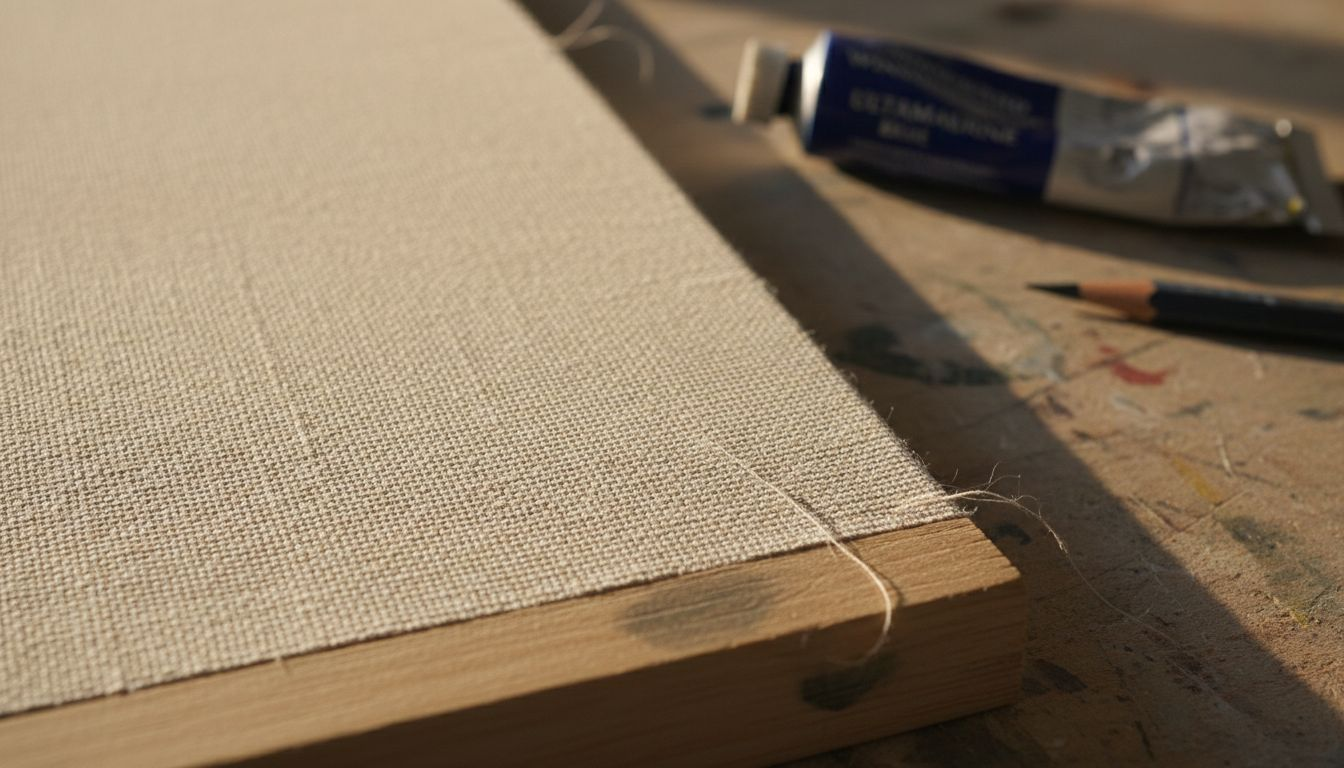
Synthetic Canvas emerges as a contemporary alternative, engineered to provide stability and resistance to environmental challenges. These canvases excel in moisture management and demonstrate remarkable durability, particularly for commercial or outdoor art installations. Synthetic materials often combine the best attributes of natural fibres with enhanced performance characteristics.
Here’s a comparison of the main art canvas materials and their ideal usage scenarios:
| Canvas Type | Strengths | Best For |
|---|---|---|
| Cotton | Affordable, easy to handle | Students, hobbyists |
| Linen | Archival, strong, refined | Professional fine artists |
| Synthetic | Resistant, weatherproof | Outdoor, commercial projects |
Pro tip: Evaluate your artistic medium and intended artwork preservation when selecting canvas material to ensure optimal painting performance and longevity.
Key Features: Weaves, Preparation And Formats
Canvas construction involves intricate technical considerations that significantly impact artistic outcomes. Canvas preparation techniques represent a critical foundation for creating exceptional artwork, determining the surface’s quality, durability, and paint interaction.
Canvas weaves are characterised by several fundamental patterns:
- Plain Weave: Simple, uniform texture
- Twill Weave: Diagonal pattern with enhanced strength
- Herringbone Weave: Complex, textured surface
Weave Density plays a crucial role in canvas performance. Tighter weaves create smoother surfaces ideal for detailed work, while looser weaves provide more texture and visual interest. The weave’s structural integrity directly influences paint absorption, brush movement, and overall artistic expression.
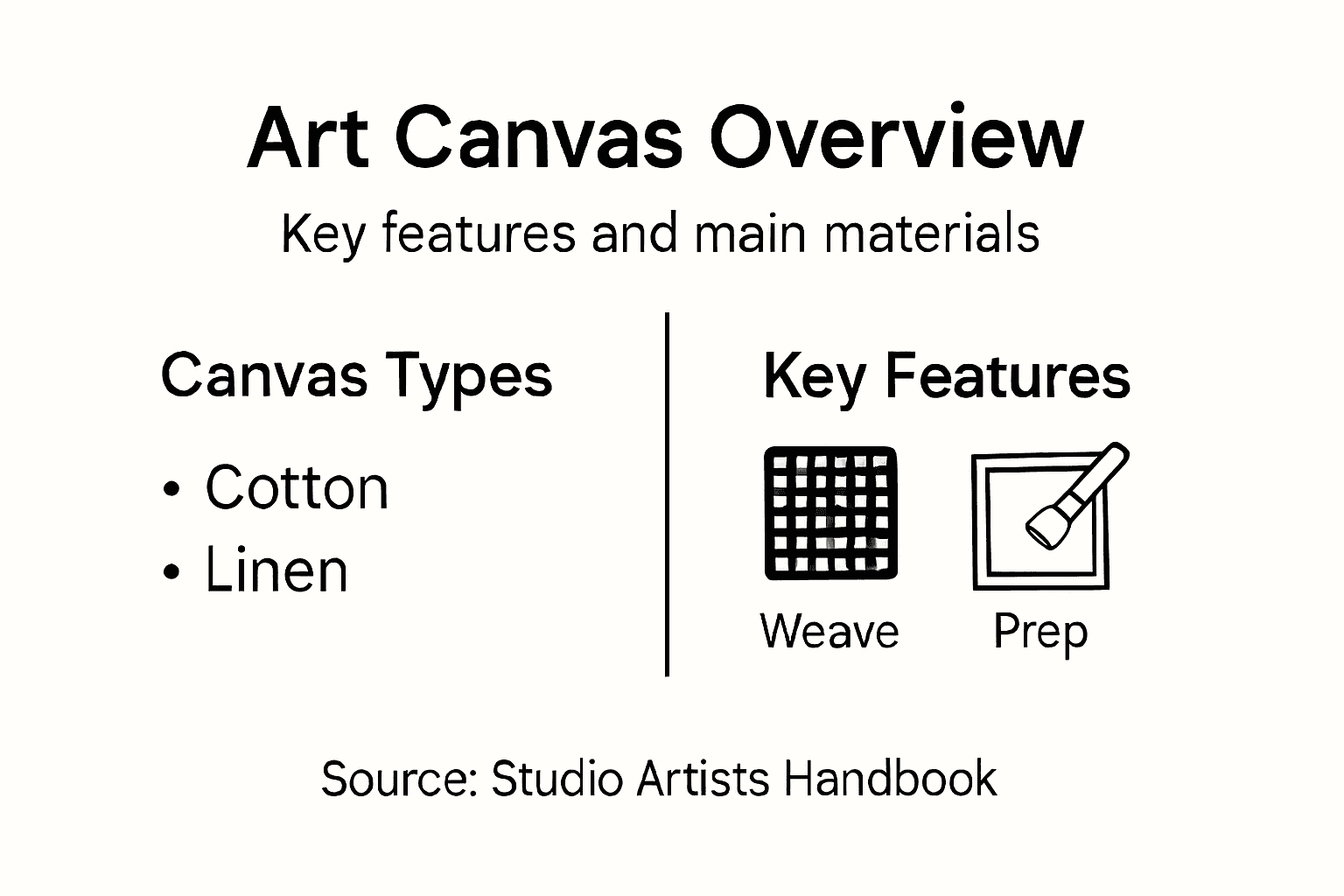
Preparation Processes transform raw canvas into a professional painting surface. Artists typically employ multiple stages of treatment, including:
Below is a summary of canvas preparation stages and how each impacts artwork outcome:
| Preparation Stage | Purpose | Effect on Artwork |
|---|---|---|
| Sizing | Blocks paint absorption | Prevents fibre deterioration |
| Gesso Application | Creates smooth painting layer | Enhances colour vibrancy |
| Ground Creation | Improves paint adhesion | Supports long-term preservation |
| Finishing | Secures archival quality | Ensures extended artwork life |
- Sizing the canvas to prevent paint absorption into fibres
- Applying multiple gesso layers for surface protection
- Creating an optimal ground for paint adhesion
- Ensuring archival quality and longevity
Canvas formats range from pre-stretched professional canvases to raw roll materials, offering artists flexibility in their creative approach. Stretched canvases provide immediate usability, while roll canvases allow complete customisation of size and mounting technique.
Pro tip: Invest time in understanding canvas preparation to significantly enhance your artwork’s quality and preservation.
How Canvas Impacts Art Quality And Display
The selection of canvas is far more than a mere technical decision; it represents a fundamental choice that dramatically influences artistic expression and longevity. Canvas quality determines artwork preservation and ultimately shapes the visual narrative artists seek to communicate.
Key factors affecting canvas performance include:
- Surface texture and smoothness
- Fiber density and material composition
- Priming and preparation techniques
- Environmental resistance
- Colour reproduction capabilities
Canvas Thickness plays a critical role in artwork presentation. Thicker canvases provide greater structural integrity and a more substantial visual presence, while thinner variants offer lightweight flexibility. Professional artists carefully consider canvas weight to match their specific artistic intentions and display requirements.
The interaction between canvas and painting medium creates unique visual characteristics. Different canvas textures can dramatically alter paint absorption, colour vibrancy, and brushstroke definition. Museum-grade canvases with exceptional fiber density ensure:
- Superior paint adhesion
- Enhanced colour preservation
- Minimal surface deformation
- Long-term archival quality
Environmental factors further underscore the importance of canvas selection. High-quality canvases resist humidity, prevent warping, and maintain colour fidelity, ensuring artworks remain pristine in diverse display conditions.
Pro tip: Select canvas materials that complement your specific artistic medium and intended display environment to maximise artwork longevity and visual impact.
Personalised And Commercial Uses For Canvases
Canvases transcend traditional artistic boundaries, serving diverse purposes across personal and professional domains. Commercial canvas applications demonstrate remarkable versatility in strategic visualization and creative expression.
Personalised canvas uses span multiple contexts:
- Home decoration and personal art collections
- Gift creation and commemorative pieces
- Corporate branding and marketing materials
- Educational visual communication
- Professional portfolio presentations
Domestic Applications represent the most intimate canvas usage. Homeowners transform living spaces by selecting personalised artworks that reflect individual aesthetics, memories, and emotional connections. Custom canvas prints enable people to immortalise significant moments, from family portraits to cherished landscape photographs.
In Commercial Environments, canvases serve strategic communication purposes. Businesses leverage canvas technologies to:
- Create compelling brand narratives
- Design engaging office environments
- Develop visual strategic frameworks
- Produce professional marketing collateral
Professional sectors increasingly recognise canvas as a powerful communication tool. Design studios, marketing agencies, and educational institutions utilise canvases to visualise complex concepts, map organisational strategies, and facilitate collaborative understanding.
Pro tip: Consider the intended environment and audience when selecting canvas materials to maximise visual impact and communicative effectiveness.
Transform Your Space With Premium Art Canvas Creations
Understanding the significance of art canvas highlights the crucial role that material quality and texture play in how art communicates emotion and story. If you seek wall art that balances superb craftsmanship with lasting beauty explore our Impasto Art and Palette Knife Paintings which showcase textured canvases designed to enhance colour vibrancy and brushstroke definition. These pieces bring depth and expression right into your home or office.
Elevate your décor by choosing from our carefully curated selections including Plaster Art Texture Paintings – Modern Wall Art that provide tactile surfaces ideal for those who appreciate detailed texture and sophisticated canvas preparation. Discover the perfect blend of artistic quality and durability by visiting Frametheworld.co.uk today. Act now to personalise your environment with canvas art that speaks to your unique vision and ensures a lasting impression.
Frequently Asked Questions
What is art canvas used for?
Art canvas serves as a primary medium for artists to create paintings, allowing for intricate details and durable artwork that can be appreciated for generations.
What are the main types of canvas materials?
The main types of canvas materials include cotton canvas, linen canvas, and synthetic canvas, each offering unique characteristics and suitability for different artistic practices.
How does canvas preparation impact the quality of artwork?
Canvas preparation, including sizing and gesso application, enhances the paint’s adhesion and vibrancy, significantly affecting the quality and longevity of the finished artwork.
What factors should be considered when choosing a canvas?
When selecting a canvas, consider factors such as weave density, material composition, intended artistic techniques, and environmental conditions to ensure optimal performance and preservation.


Leave a comment
This site is protected by hCaptcha and the hCaptcha Privacy Policy and Terms of Service apply.