
TL;DR:
- Large scale abstract art influences a room’s atmosphere by dominating walls with its distinctive style. Different types like expressionism, geometric, color field, minimalist, and organic forms suit various interior styles, emphasizing harmony or contrast. Multi-panel works offer practicality and visual rhythm, making them ideal for diverse spaces and architectural features.
Large scale abstract art is defined as non-representational work produced at a scale large enough to dominate a wall and alter the atmosphere of a room. The main styles collectors encounter fall into five categories: abstract expressionism, geometric abstraction, colour field painting, minimalist abstraction, and organic or lyrical abstraction. Each type carries distinct visual characteristics, emotional registers, and interior design applications. Understanding these differences is the foundation of building a collection that works spatially, not just aesthetically. This guide covers all the major large scale abstract art types, how they perform in real interiors, and what practical factors determine whether a piece succeeds on your wall.
1. What are the key large scale abstract art types?
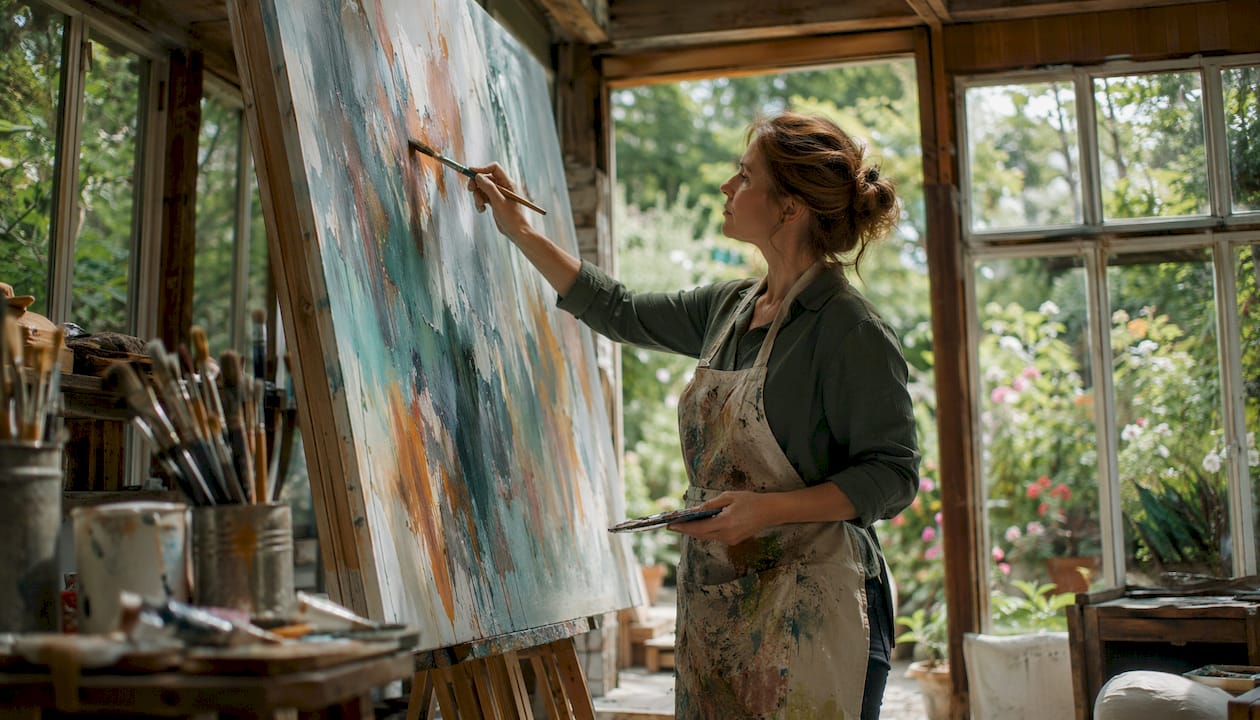
Abstract expressionism is the most emotionally charged of all large abstract art styles. Artists let feelings guide the process, producing raw, gestural works defined by large brushwork, drips, and physical marks. At scale, these pieces carry enormous energy. They work best as a single focal point in a room rather than part of a crowded gallery wall.
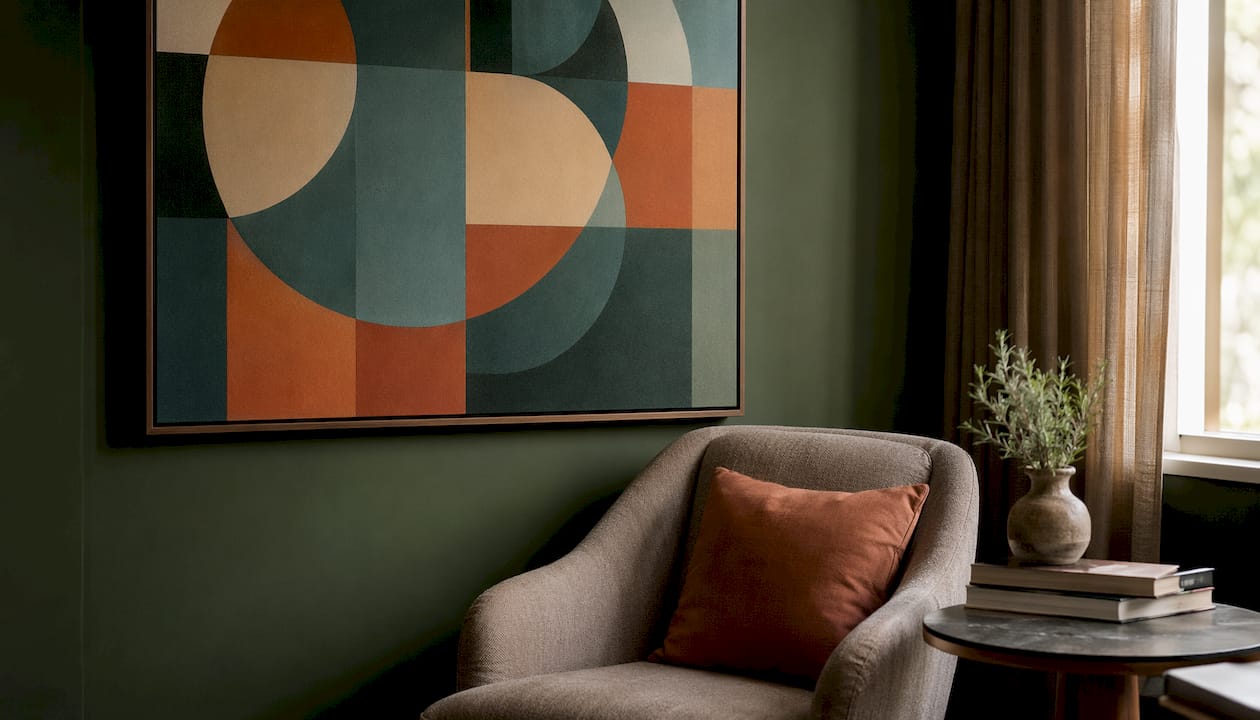
Geometric abstraction takes the opposite approach. Circles, squares, triangles, and grids are arranged with precision and intent. The result is structured, controlled, and visually satisfying in a way that rewards close inspection. At large scale, geometric works create a sense of order that anchors a room without overpowering it.
Colour field painting fills the canvas with large areas of flat or thinly applied colour without boundary lines or interruption. The effect is meditative. A large colour field piece changes the perceived temperature and mood of a room more reliably than almost any other art type.
Minimalist abstraction uses simple forms, limited palettes, and deliberate negative space. These works are often monochrome or near-monochrome. Their restraint makes them extraordinarily versatile, fitting into spaces where more expressive work would clash.
Organic and lyrical abstraction draws on natural forms: curves, flowing lines, and shapes that suggest leaves, water, or landscape without depicting them literally. At large scale, these pieces introduce a softness and movement that purely geometric or flat colour works cannot replicate. They suit collectors who want emotional warmth without figurative imagery.
2. How do multi-panel abstract artworks enhance a space?
Multi-panel displays provide immersive impact while breaking up the visual weight of a single enormous canvas. A diptych or triptych achieves the same wall coverage as a single large piece but with practical advantages that matter to collectors and interior designers alike.
The benefits of multi-panel formats are significant:
- Ease of transport and installation. Panels ship and move more easily than a single canvas measuring two metres or more across.
- Visual rhythm. The gaps between panels create a beat across the wall, adding movement and preventing the composition from feeling static.
- Flexibility. Panels can be rearranged or displayed in different configurations as a collection evolves.
- Suitability for awkward spaces. A triptych can span a wall interrupted by a doorframe or window in a way a single canvas cannot.
Multi-panel abstract works suit dining rooms, hallways, and open-plan living areas particularly well. These are spaces where a viewer moves past the work rather than sitting directly in front of it. The rhythm of a triptych rewards that kind of lateral viewing.
Pro Tip: When hanging a triptych, keep the gap between panels consistent at 5–8cm. Wider gaps fragment the composition; narrower gaps make the piece read as a single canvas and lose the rhythm effect.
3. Matching large abstract art styles to interior design
Geometric abstraction pairs naturally with industrial and mid-century modern interiors, while organic forms better suit boho or eclectic décor. This is not a rigid rule, but it reflects how visual language works. A room already built around clean lines and structured materials will be reinforced by geometric abstraction. Introducing organic, flowing work into the same space creates tension that most collectors find uncomfortable rather than interesting.
The table below maps the main abstract styles to their most compatible interior design contexts.
| Abstract style | Best interior match | Why it works |
|---|---|---|
| Abstract expressionism | Contemporary, eclectic | Raw energy complements layered, expressive interiors |
| Geometric abstraction | Industrial, mid-century modern | Structured forms echo architectural precision |
| Colour field painting | Minimalist, Japandi | Flat colour amplifies calm and spatial openness |
| Minimalist abstraction | Scandinavian, Japanese-inspired | Restraint mirrors the interior’s own visual discipline |
| Organic and lyrical abstraction | Boho, biophilic, eclectic | Flowing forms echo natural materials and textures |
Minimalist and monochrome works serve as timeless, versatile choices for Scandinavian or Japanese-inspired spaces. These interiors rely on restraint and material quality, and a large monochrome abstract piece respects that logic while still providing a focal point. You can read more about how these styles perform in residential settings in this minimalist art for homes guide.
Pro Tip: Before buying, photograph your room and apply a digital overlay of the artwork’s dominant colour. This takes ten minutes and prevents the most common mistake collectors make: choosing a piece they love in isolation that fights with the room’s existing palette.
For collectors working with Scandinavian or holiday-style interiors, minimalist interior examples show how restrained abstract works function in real spaces.
4. Practical considerations when choosing large scale abstract art
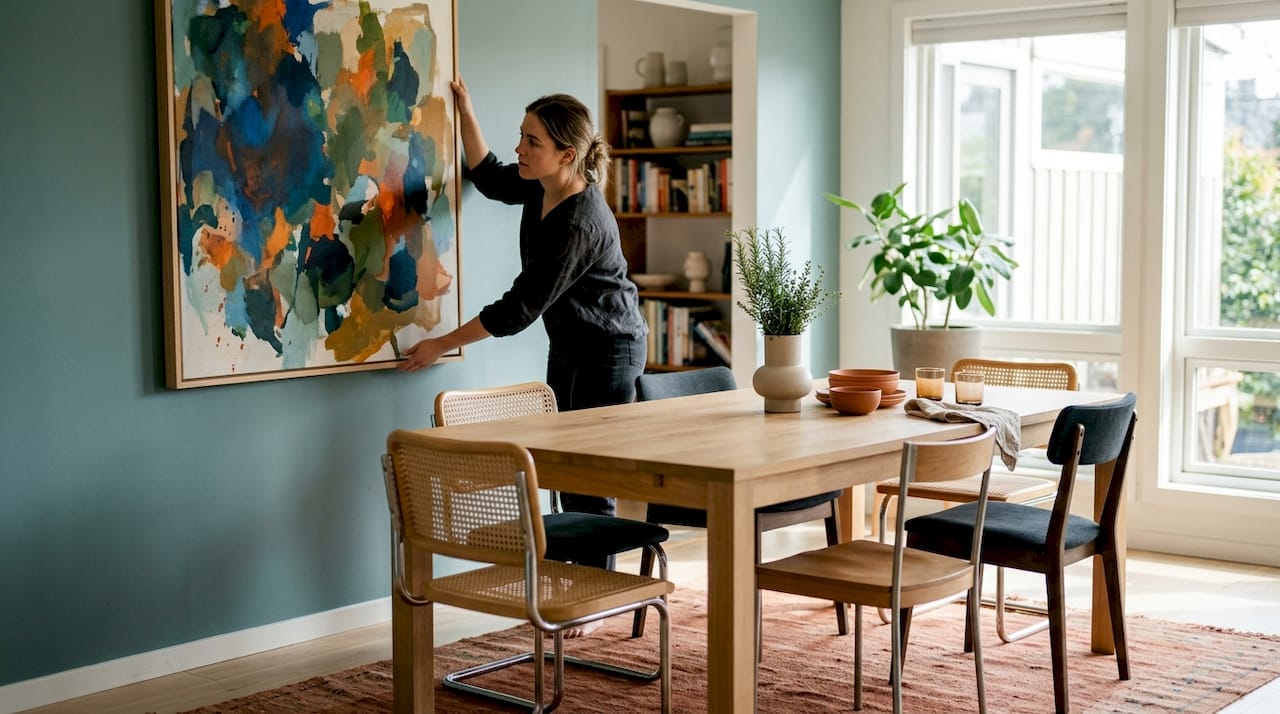
Size proportion is the most commonly misunderstood factor in selecting large abstract works. Artwork should be approximately two-thirds the width of the furniture it sits above, with 40–60cm of surrounding space maintained to prevent the piece from feeling cramped or overwhelming.
Key practical factors to assess before purchasing:
- Wall measurement. Measure the wall width, then calculate two-thirds of the primary furniture piece below it. This gives you a reliable maximum width for the artwork.
- Ceiling height. Rooms with ceilings below 2.4 metres read better with horizontal formats. Tall ceilings can carry vertical or square canvases without the room feeling compressed.
- Lighting conditions. Textured or mixed-media pieces behave differently under varied lighting compared to flat paintings. Impasto surfaces and raised textures cast shifting shadows as natural light moves through the day. This is an asset in well-lit rooms and a liability in dark corridors.
- Room function. Bedrooms benefit from colour field or minimalist works that support rest. Living rooms and dining rooms can carry more energetic abstract expressionist or geometric pieces.
- Viewing distance. Large gestural works need space in front of them. A piece that measures 150cm across requires at least 2.5 metres of viewing distance to read correctly.
For a structured approach to these decisions, the art selection checklist at Frametheworld covers size, colour, and placement in a single reference.
Texture deserves particular attention when creating large scale abstract art collections. A mixed media piece with heavy impasto or embedded materials will read completely differently under warm tungsten light versus cool daylight. Collectors who place textured works in rooms with a single fixed light source often find the piece looks static. Rooms with adjustable or directional lighting get far more from textured abstract works.
Key takeaways
Matching abstract art style to interior design is the single most important decision collectors make when selecting large scale works, because scale amplifies both harmony and conflict.
| Point | Details |
|---|---|
| Style defines emotional register | Abstract expressionism energises; colour field calms; geometric abstraction orders a space. |
| Multi-panel formats solve practical problems | Diptychs and triptychs ease transport and installation while maintaining large-scale visual impact. |
| Size proportion matters | Artwork should be approximately two-thirds the width of the furniture it sits above. |
| Texture responds to light | Mixed-media and impasto works shift in appearance through the day; plan lighting accordingly. |
| Interior style guides art selection | Geometric works suit industrial and mid-century spaces; organic forms suit boho and eclectic interiors. |
My view on where large scale abstract art is heading
The collectors I find most interesting are not chasing a single style. They are building rooms where two or three abstract types coexist, and the tension between them is the point. A large colour field piece hung opposite a gestural expressionist work creates a conversation that neither piece could have alone. That kind of layering is where the real interest lies, and I think it is underused.
What I notice more broadly is that collectors are becoming better at thinking spatially before they think aesthetically. The question used to be “do I love this piece?” The question now is “what does this piece do to the room?” That shift is healthy. Scale amplifies everything, including mistakes. A piece that is slightly wrong in a small format becomes very wrong at 150cm across.
The market is also moving towards textured and mixed media works, particularly in the organic and lyrical abstraction category. Flat prints and reproductions are losing ground to hand-painted originals with physical presence. Collectors want work that changes with the light and rewards close inspection. That preference is reshaping what abstract art does for a home in ways that purely decorative prints simply cannot match.
My strongest advice: do not buy large scale abstract art from a screen alone. See the piece in person, or at minimum request a high-resolution photograph taken under the same lighting conditions as your room. Scale and texture are the two things that photographs consistently misrepresent.
— Lennard
Large scale abstract art at Frametheworld
Frametheworld curates hand-painted abstract collections designed for collectors who want genuine visual presence on their walls. The Wabi Sabi wall art collection brings textured, organic abstraction to spaces that need warmth and depth, with each piece hand-painted to respond to light in the way only original work can. For collectors drawn to bolder colour and graphic energy, the Pop Art wall art collection offers large scale works that hold their own in contemporary and eclectic interiors. Both collections are available in multiple sizes and formats, including multi-panel sets, with bespoke options for collectors working to specific dimensions.
FAQ
What is the most popular large scale abstract art type?
Abstract expressionism and colour field painting are the most widely collected large abstract styles, valued for their emotional impact and ability to anchor a room. Geometric abstraction is growing in popularity for contemporary and mid-century modern interiors.
How large should abstract art be relative to a wall?
Artwork should be approximately two-thirds the width of the furniture below it, with 40–60cm of clear space around the piece. This proportion maintains visual balance without the work feeling undersized or oppressive.
Are multi-panel abstract works better than single large canvases?
Multi-panel works offer practical advantages in transport and installation, and create visual rhythm across wide walls. Single canvases deliver a more unified composition. The best choice depends on wall width, room layout, and whether the collector values flexibility.
What abstract art style suits a Scandinavian interior?
Minimalist and monochrome abstract works are the strongest match for Scandinavian and Japanese-inspired interiors. Their restraint and limited palette reinforce the calm, material-focused logic of these design styles.
How does lighting affect large scale abstract art?
Textured and mixed-media abstract pieces cast shifting shadows as natural light changes through the day, which adds visual interest in well-lit rooms. Flat colour field works are less affected by lighting variation and perform consistently across different conditions.

Leave a comment
This site is protected by hCaptcha and the hCaptcha Privacy Policy and Terms of Service apply.