
TL;DR:
- Art significantly influences property perception, sale speed, and neighborhood demand through strategic indoor and outdoor placements. Properly scaled and positioned artwork enhances buyer visualization, while public murals boost foot traffic and property values, especially in regenerating areas. Differentiating art’s roles as staging aids, luxury markers, or investment assets is essential to making informed property and investment decisions.
Art is a proven driver of buyer perception, sale speed, and neighbourhood demand, making it one of the most underutilised tools in residential and investment property strategy. The role of art in property value operates through two distinct mechanisms: indoor staging that helps buyers visualise living in a space, and public art that activates street-level economic activity. Neither mechanism works in isolation. Both require deliberate placement, appropriate scale, and integration with a broader presentation strategy. This article draws on research from the National Association of Realtors (NAR), the University of Cincinnati, and interior design analysis to give homeowners and investors a clear, evidence-based picture.
How does artwork in home staging affect sale value and speed?
Staging is the practice of presenting a property to maximise buyer appeal, and art is one of its most powerful components when used correctly. 29% of real estate agents reported that staging can increase offer values by 1% to 10%, with 49% seeing faster sales as a direct result. That figure translates to tens of thousands of pounds on a mid-range UK property, which makes the cost of a well-chosen canvas look negligible by comparison.
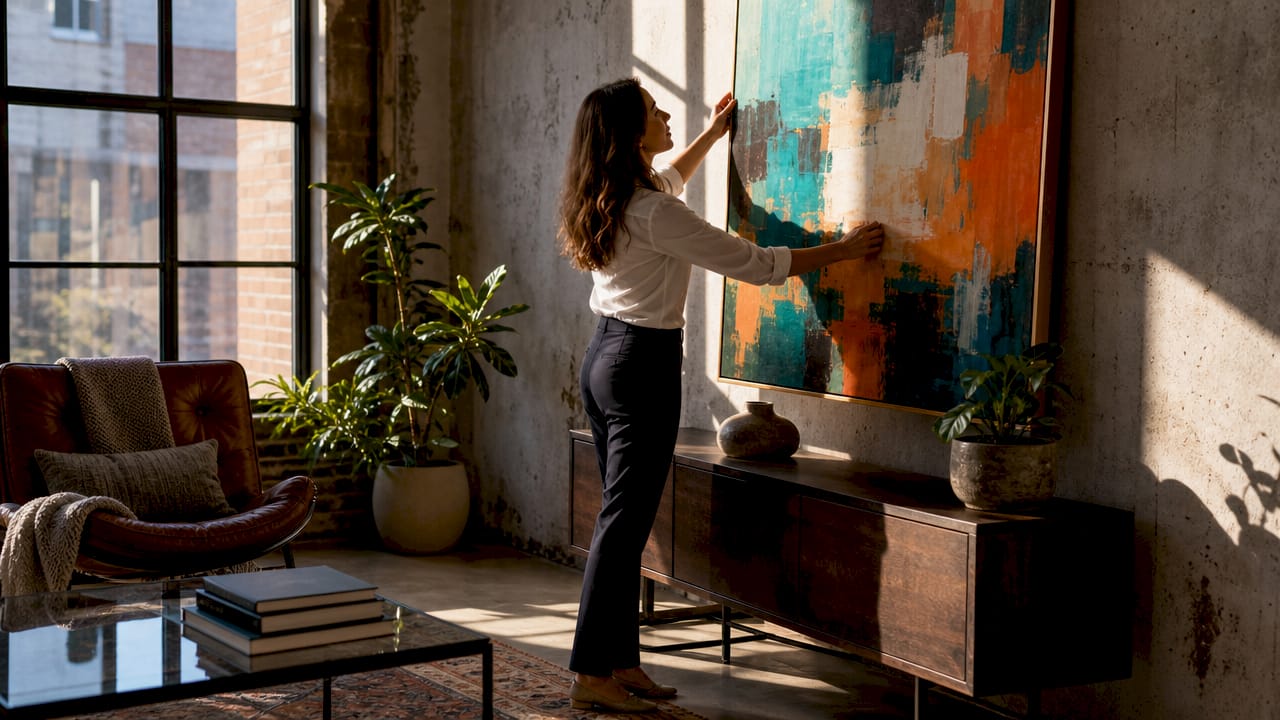
The mechanism behind this is buyer visualisation. 83% of buyers’ agents say staging helps buyers picture themselves living in a home. Art accelerates this process by giving rooms a sense of identity and warmth that empty walls simply cannot provide. A large abstract canvas in a living room signals scale and confidence. A botanical print in a bedroom creates calm. Both guide the buyer’s emotional reading of the space before a single word is spoken.
Scale and placement are where most homeowners go wrong. Art that is too small for a wall looks apologetic. Art that is too bold or thematically jarring pulls attention away from the room’s proportions and architecture. Art misplaced or cluttered can actively undermine staging outcomes, turning a potential asset into a distraction. The goal is for artwork to feel inevitable in its position, not decorative for decoration’s sake.
In the luxury market, the stakes are higher and the role of art shifts slightly. Fine art makes luxury homes feel curated and distinctive, signalling that the property has been cared for and considered. At this price point, buyers are purchasing a lifestyle as much as a building, and original art communicates taste in a way that generic prints cannot.
- Choose artwork proportional to the wall and furniture it accompanies
- Stick to a coherent colour palette that complements the room’s existing tones
- Avoid gallery walls during staging as they create visual noise for buyers
- Use one or two statement pieces per room rather than multiple smaller works
- Position art at eye level, typically with the centre of the piece at 145 to 150 centimetres from the floor
Pro Tip: Declutter the room completely before selecting art. Art placed in a cluttered space reads as more clutter. In a clean, well-proportioned room, a single strong piece becomes the focal point that buyers remember.
What impact do public murals and outdoor art have on property values?
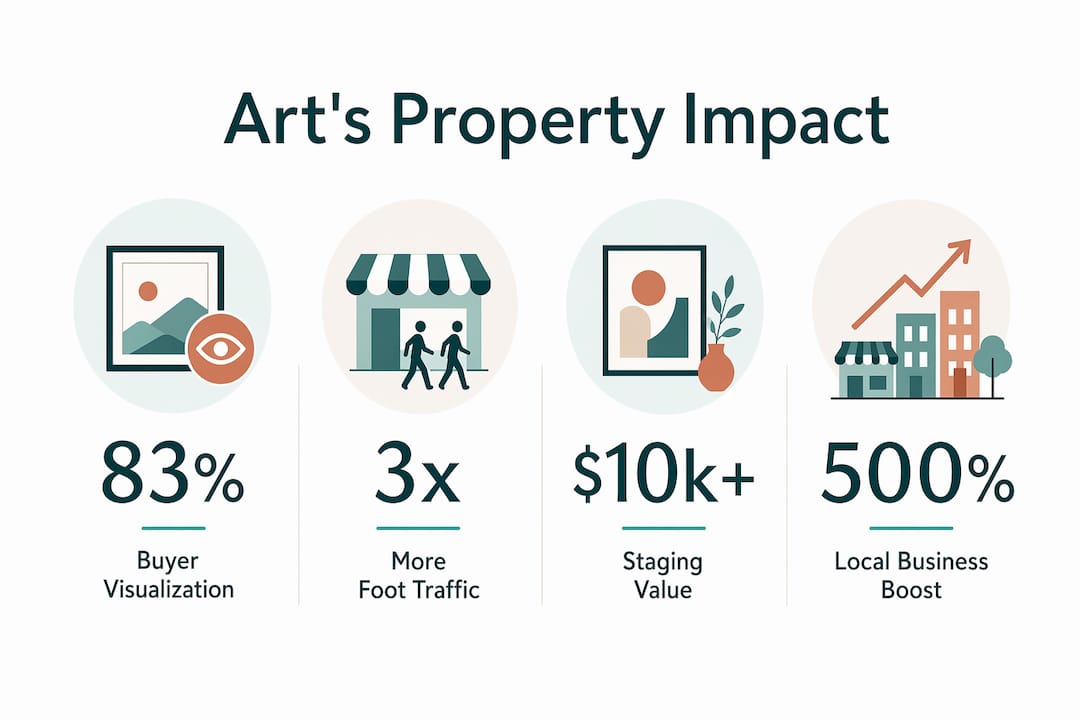
Public art operates on a different scale to indoor staging, but its effect on the property market is measurable and significant. Research from the University of Cincinnati found that city blocks with murals exhibit nearly three times higher pedestrian traffic than those without. Higher foot traffic means more local business activity, which in turn signals neighbourhood vitality to prospective buyers and tenants.
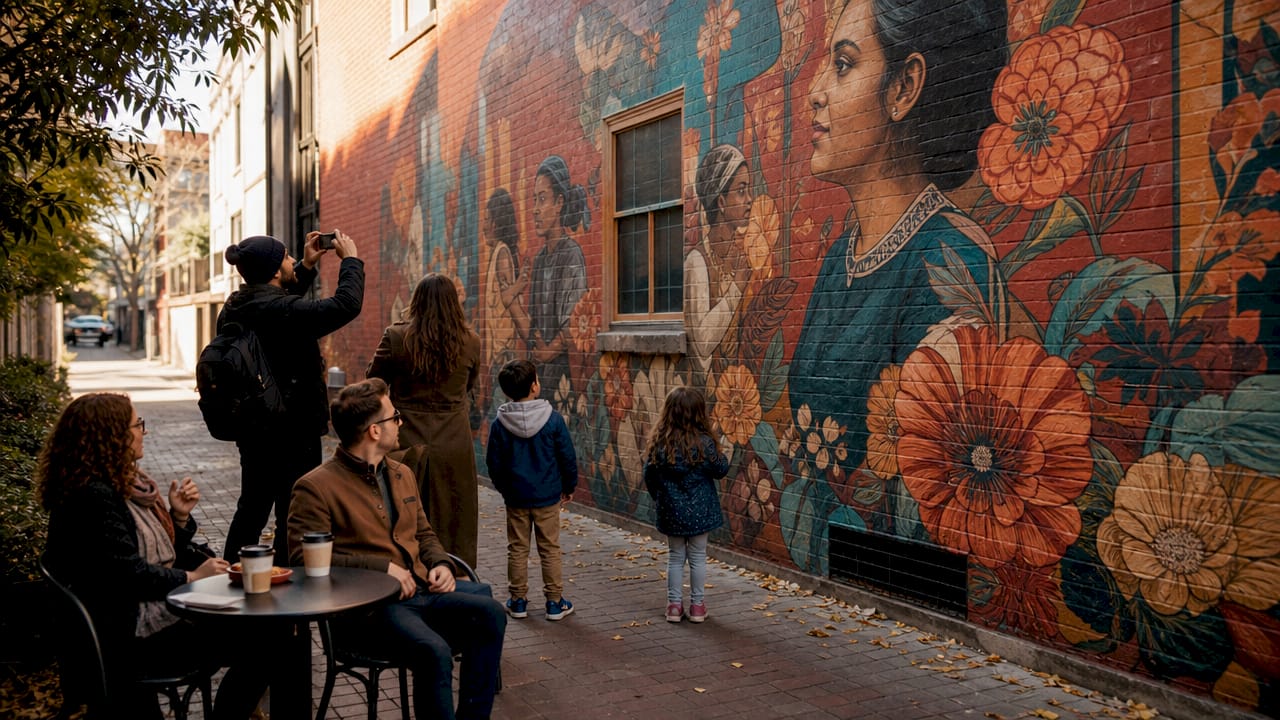
The economic chain from mural to property value is not direct, but it is real. Murals link to increased housing values, rising rents, and higher household incomes in the surrounding area. Properties on mural-adjacent blocks have recorded more than 30% higher value in some analyses, alongside stronger tenant attraction. For property investors, this is not a soft cultural benefit. It is a demand-side signal with direct implications for net operating income.
| Factor | Effect on property market |
|---|---|
| Mural presence on block | Up to 3x higher pedestrian traffic |
| Increased foot traffic | Higher local business revenue and vitality |
| Neighbourhood vitality | Rising rents and household incomes |
| Tenant attraction | Stronger occupancy rates and reduced vacancy |
| Property value uplift | Recorded increases exceeding 30% in some cases |
The University of Cincinnati study also noted that blocks with 10 or more food-related businesses can generate 500% more foot traffic than those with fewer. This matters because murals and food businesses tend to cluster in the same regenerating neighbourhoods, compounding the demand effect. Investors who understand this dynamic can identify undervalued streets before the wider market catches up.
The ethical dimension deserves acknowledgement. Murals and public art can accelerate gentrification, raising property values in ways that displace existing residents and businesses. Investors and developers commissioning public art should engage local communities in the process, both to produce work that reflects the area’s identity and to reduce the social friction that can accompany rapid value increases.
Pro Tip: When underwriting a property investment in a regenerating area, model the demand-driven impact of nearby public art on net operating income rather than treating the art itself as a capital expenditure that appraises at equal value. The returns come through occupancy and rent, not the mural’s balance sheet entry.
Art as a staging tool vs a luxury differentiator vs a financial asset
These three roles are frequently confused, and the confusion leads to poor decisions. Understanding how art affects home value requires separating three distinct mechanisms.
| Role of art | Primary function | Measurable outcome |
|---|---|---|
| Staging accessory | Aids buyer visualisation and emotional connection | Faster sales, stronger offers within staging context |
| Luxury differentiator | Signals curation, taste, and lifestyle | Memorability and perceived exclusivity in high-end listings |
| Financial investment | Asset appreciation in the art market | Returns tied to art market cycles, not property cycles |
Art investment returns differ from art’s effect on property perception. These are entirely separate mechanisms requiring separate financial assumptions. A painting that appreciates in value on the art market does not automatically increase the sale price of the property it hangs in. Conflating the two leads homeowners to overprice properties based on the art inside them, which buyers and valuers will not support.
Original art in staging offers uniqueness and layers that photographs may not fully convey, contributing to a listing’s memorability. This is the legitimate case for investing in quality artwork before a sale. The art makes the listing photograph better, the viewing more emotionally resonant, and the buyer’s memory of the property more vivid. None of that is the same as the art independently adding £20,000 to the valuation.
For luxury properties, fine art provides a distinctive, curated feel that is genuinely difficult to replicate with furniture or finishes alone. At the top end of the market, where buyers are comparing properties that are all technically excellent, art becomes a tiebreaker. It is the detail that makes one property feel like a home and another feel like a show flat.
Practical tips for selecting and positioning art to maximise property appeal
Effective art selection for property purposes is not about personal taste. It is about understanding how a buyer’s eye moves through a room and using art to guide that movement towards the property’s strengths. For detailed guidance on art selection for styling, Frametheworld’s resource library covers the specifics in depth.
The practical process works as follows:
- Assess the room’s architecture first. High ceilings suit tall, vertical works. Wide, open-plan spaces benefit from large horizontal canvases or a considered arrangement of two to three pieces. Match the art’s format to the room’s geometry.
- Choose a colour anchor. Select one dominant colour from the room’s palette and find art that references it without replicating it exactly. This creates cohesion without monotony.
- Prioritise key rooms. The living room, master bedroom, and entrance hallway have the greatest influence on buyer perception. Invest your art budget here before considering secondary rooms.
- Use art to conceal weaknesses. A well-placed large canvas can draw the eye away from an awkward alcove, a low ceiling, or an uninspiring view. This is legitimate staging strategy, not deception.
- Test with photographs. Before a viewing, photograph each room with the art in place. If the art disappears in the photo or dominates it, adjust the scale or position. Listing photographs are often a buyer’s first impression.
Alongside art selection, consider how wall art placement interacts with lighting, furniture arrangement, and the overall flow of a viewing. Art placed in dark corners loses its impact entirely. Art positioned opposite a window benefits from natural light and reads as a deliberate, confident choice.
Colour trends also influence buyer response. Incorporating Pantone’s trending colours into your art selection keeps the property feeling current without requiring a full redecoration. A single canvas in a trending tone can modernise a room that might otherwise feel dated.
Key takeaways
Art enhances property value primarily through buyer visualisation and neighbourhood demand activation, not as an independent price driver.
| Point | Details |
|---|---|
| Staging with art accelerates sales | NAR data shows staging can increase offer values by 1% to 10% and speed up sales for nearly half of sellers. |
| Public art drives neighbourhood demand | Mural-adjacent blocks show up to 3x higher foot traffic and property value increases exceeding 30% in some cases. |
| Art roles must not be conflated | Staging art, luxury differentiators, and art market investments operate through entirely separate financial mechanisms. |
| Scale and placement are critical | Incorrectly sized or cluttered art actively undermines staging outcomes rather than supporting them. |
| Invest in key rooms first | Living rooms, master bedrooms, and entrance hallways deliver the greatest return on art investment during a sale. |
Why I think most homeowners are using art backwards
Most people hang art they love and then try to sell around it. That is the wrong order of operations. After years of observing how properties perform at market, the pattern is consistent: the homes that sell fastest and strongest are the ones where art was chosen for the buyer, not the seller.
This does not mean stripping your home of personality. It means understanding that during a sale, the property is a product and the buyer is the customer. Art that reflects your taste but confuses or alienates a buyer’s spatial reading is working against you. I have seen properties with genuinely valuable original works sit on the market longer than comparable homes with well-placed, modestly priced prints, purely because the art created visual noise rather than clarity.
The public art dimension is equally underappreciated by investors. Most underwriting models ignore murals and street-level art entirely, treating them as irrelevant to net operating income. The University of Cincinnati research changes that calculus. If you are evaluating a property in a regenerating area and there are murals within two or three streets, that is a demand signal worth modelling. The foot traffic they generate feeds local businesses, which feeds neighbourhood confidence, which feeds rental demand.
The pitfall to avoid is assuming that expensive art equals higher property value. It does not. Art’s influence on the property market is real but indirect. It works through perception, emotion, and economic activation, not through its price tag.
— Lennard
Discover art that works as hard as your property does
If you are preparing a property for sale or looking to strengthen an investment’s appeal, the art you choose matters more than most sellers realise. Frametheworld specialises in handmade, original works that bring genuine character to a space without the gallery price tag. The Wabi Sabi wall art collection is particularly well suited to staging, offering textured, abstract pieces that read as considered and calm in listing photographs and in-person viewings alike. For bolder statements in key rooms, the colourful hand-painted canvases create the kind of visual anchor that buyers remember long after the viewing ends. Every piece is handmade, which means no two properties will look identical.
FAQ
Does art directly increase a property’s sale price?
Art does not independently increase a property’s valuation, but it contributes to staging outcomes that can raise offer values by 1% to 10% according to NAR data. The effect is indirect, working through buyer visualisation and emotional connection rather than through the art’s intrinsic monetary value.
How do murals affect property values in a neighbourhood?
Research from the University of Cincinnati shows mural-adjacent blocks generate nearly three times more pedestrian traffic, which correlates with rising rents, household incomes, and housing values. Some analyses have recorded property value increases exceeding 30% on blocks with prominent public art.
Should I remove personal art before selling my home?
Art that is highly personal, thematically bold, or stylistically niche should be replaced with pieces that support buyer visualisation rather than reflect the seller’s taste. The goal during a sale is to help buyers picture themselves in the space, and art that is too specific to the current owner works against that.
What is the difference between art as a staging tool and art as an investment?
Art as a staging tool improves buyer perception and sale speed within a property marketing context. Art as a financial investment generates returns through the art market, which operates on entirely separate cycles and assumptions. Conflating the two leads to mispriced properties and unrealistic seller expectations.
Which rooms benefit most from art during a property sale?
The living room, master bedroom, and entrance hallway have the greatest influence on buyer perception and should receive the majority of the art budget during staging. These are the spaces buyers spend the most time in during viewings and the rooms that feature most prominently in listing photographs.


Laat een reactie achter
Deze site wordt beschermd door hCaptcha en het privacybeleid en de servicevoorwaarden van hCaptcha zijn van toepassing.