

Start with brand identity and spatial function, not personal taste. The most effective commercial art programmes begin with a clear brief: what the organisation stands for, what mood each area should create, and how artworks will work alongside existing colours, materials, and lighting. Get those foundations right, and everything else, from scale decisions to rotation schedules, follows logically.
The core steps are:
- Define your brand values and the emotional tone you want each area to carry
- Select artworks that reflect that narrative through subject matter, style, and medium
- Match scale to the space: statement pieces for open lobbies, smaller works for corridors and breakout rooms
- Coordinate frames, finishes, and colour palettes across the collection for visual coherence
- Use adjustable LED or track lighting to show artworks at their best
- Choose durable, low-maintenance formats for high-traffic zones
- Plan for periodic rotation so the collection stays fresh and relevant
Table of Contents
- How art shapes mood and brand perception in commercial interiors
- Aligning artwork with brand identity and desired emotions
- Coordinating artwork with interior design elements
- Choosing the right artwork size and scale for commercial spaces
- How to create a cohesive art collection across a commercial property
- How art influences visitor perceptions and employee engagement
- What does the installation process actually involve?
- Copyright, licensing, and legal considerations for displayed artworks
- Frametheworld: curated art for UK commercial spaces
- Key takeaways
How art shapes mood and brand perception in commercial interiors
Art does more than fill blank walls. Art in commercial spaces enhances employee wellbeing, client experience, and recruitment by creating an atmosphere that visitors notice and remember. That is a measurable business outcome, not an aesthetic luxury.
The most effective collections communicate something specific: company history, regional identity, or a commitment to culture. As Corgan’s Art Coordinator Aralyn Griesbach puts it, art curated with a narrative spine transforms spaces and deepens employee engagement. A well-chosen piece in a reception area tells a visitor something about the organisation before anyone has spoken a word.
Art also supports psychological safety. Larger pieces can rally employees and cultivate inclusivity; interactive or locally sourced works encourage interaction. The key is intentionality: a collection assembled without a guiding idea reads as random, however individually strong the pieces are.
Aligning artwork with brand identity and desired emotions
The most common mistake in art selection is choosing pieces based on personal taste rather than the environment and its purpose. Different spaces call for different energy, and different organisations need different visual languages.
Start by articulating your brand’s story before you look at a single artwork. Ask:
- What values does the organisation want to project? Innovation, heritage, community, or something else?
- Who moves through each space, and what should they feel when they arrive?
- Are there regional or cultural references relevant to your UK location, such as local artists, landscapes, or craft traditions?
- Does the brand lean contemporary or classic, and does the existing interior reinforce that?
A technology firm in Manchester might commission bold abstract works that echo the city’s industrial heritage. A law practice in Edinburgh might favour monochrome photography or restrained landscape prints that signal precision and calm. The art style should feel like a natural extension of the brand, not a decoration layered on top of it. Aligning your corporate branding with art choices from the outset prevents costly mismatches later.
Coordinating artwork with interior design elements
Art does not exist in isolation. It sits within a context of wall colours, furniture materials, flooring, and light, and it either harmonises with those elements or fights them.
Key considerations when coordinating art with interior design:
- Colour palette: artworks do not need to match the room exactly, but they should share at least one tonal reference with the walls or furnishings. A warm terracotta accent in a painting reads beautifully against a muted grey wall; the same piece against a competing warm tone can feel cluttered.
- Furniture style: sleek metal frames suit contemporary open-plan offices; warmer wood frames complement traditional boardrooms or hospitality spaces.
- Lighting: adjustable LED spotlights or track lighting showcase textures and colours without glare. Fluorescent lighting distorts hues and casts harsh shadows, so avoid it wherever art is displayed.
- Space function: a high-energy collaborative zone can support bolder, more striking work. A client-facing meeting room often calls for something more restrained.
Reception areas, corridors, and executive floors each have different requirements. Treating them as a unified programme, rather than decorating them individually, is what separates a considered collection from a series of unrelated purchases.
Choosing the right artwork size and scale for commercial spaces

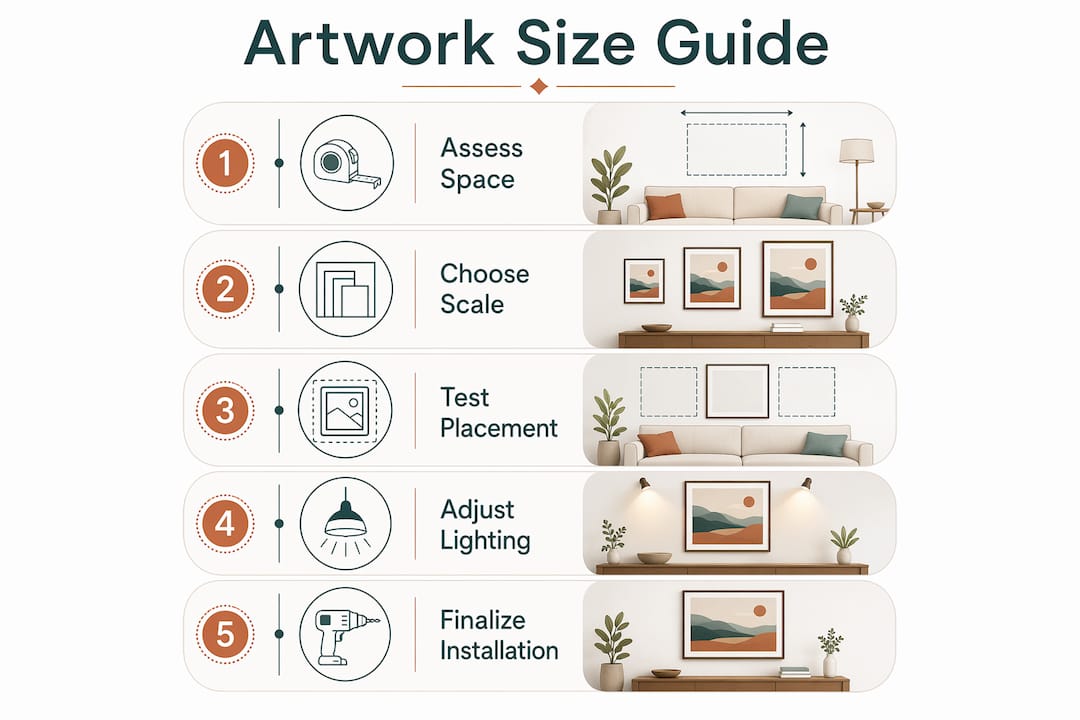
Scale is the most frequently underestimated decision in commercial art coordination. A piece that looks substantial in a gallery can disappear entirely on a double-height lobby wall.
| Space type | Recommended scale | Notes |
|---|---|---|
| Lobby or atrium | Statement pieces 40×60 inches or larger | Creates focal point; anchors the space |
| Conference room | Medium works, 40×60 inches | Supports conversation without dominating |
| Corridor | Smaller works or a series | Vertical arrangements work well in narrow spaces |
| Individual office | Intimate pieces, — | Personalises without overwhelming |
| Breakout or café area | Mixed scale groupings | Encourages engagement and dwell time |
Large commercial spaces benefit from one or two statement-scale pieces of at least 40 by 60 inches to attract attention and anchor the room. For placement height, position works at eye level, roughly 57–60 inches from floor to centre, for comfortable viewing in high-traffic areas.
Pro Tip: Before purchasing, tape paper templates of your intended artwork dimensions to the wall and live with them for a day. What looks right on screen often reads very differently in the actual space, particularly in rooms with high ceilings or long sightlines. For more on this, Frametheworld’s guide on planning large-scale art covers the process in detail.
How to create a cohesive art collection across a commercial property
A building-wide collection needs a unifying idea. Without one, even high-quality individual pieces feel like they belong to different organisations.
- Establish a narrative thread: this might be a consistent colour palette, a regional focus, a shared medium, or a conceptual theme tied to the company’s history. The theme does not need to be obvious to visitors, but it should guide every acquisition decision.
- Standardise framing and finishes: consistent framing across diverse artworks creates cohesion even when styles and subjects vary widely. A unified frame profile or finish signals that the collection is intentional.
- Vary style and scale within the theme: coherence does not mean uniformity. A mix of photography, painting, and print within a shared palette keeps the collection visually alive.
- Coordinate by floor or department: different areas can carry different moods while remaining part of the same visual family. A creative studio might lean towards expressive abstract works; a finance floor might favour more structured compositions.
- Phase acquisitions thoughtfully: original artworks add exclusivity and personal touch for signature spaces; prints offer flexibility and cost-effectiveness for larger or less critical areas. A phased approach, starting with originals in reception and client areas, then adding quality prints elsewhere, keeps budgets manageable without sacrificing impact.
- Build in a rotation plan: scheduling a refresh every 12–18 months prevents the collection from becoming invisible to the people who see it daily.
How art influences visitor perceptions and employee engagement
The effect of a well-curated collection on the people inside a building is well documented. Art makes a space feel complete and lived in, shaping the emotional tone and contributing to how people feel and behave throughout the day.
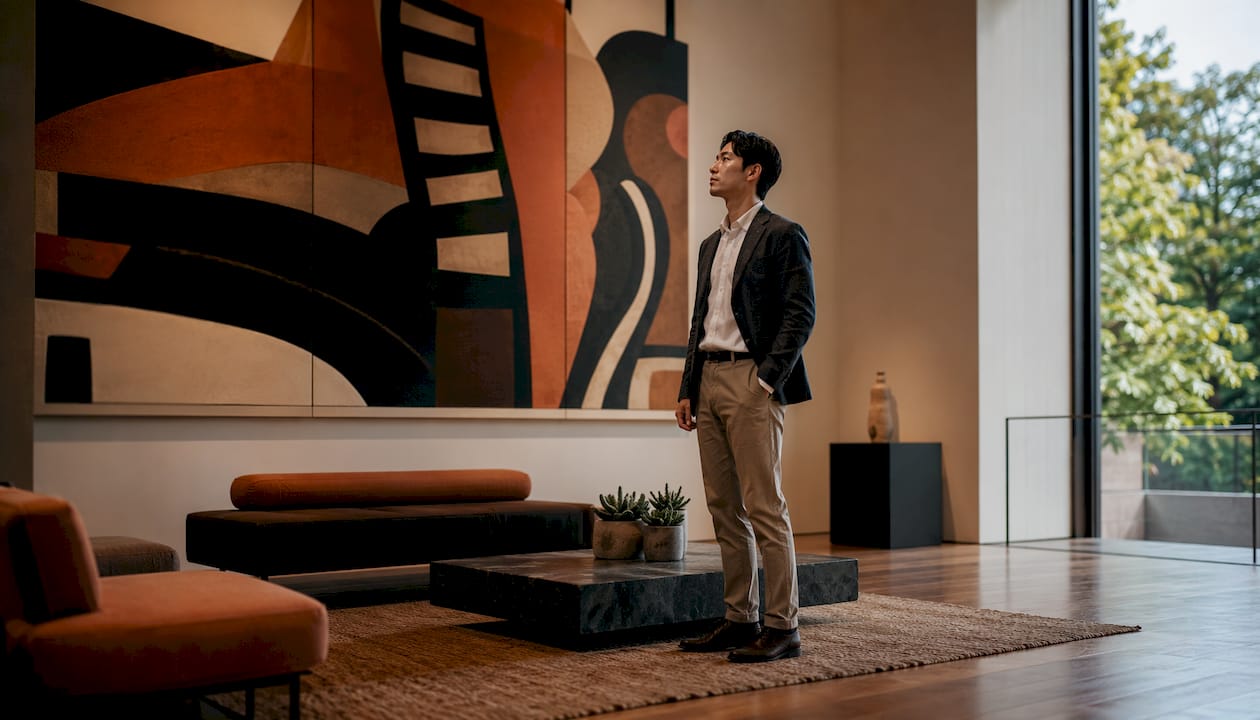
For visitors, the first impression matters most. A reception area with considered, original artwork signals that the organisation invests in its environment and, by extension, in the people who work and meet there. For employees, the cumulative effect is subtler but no less real. A well-crafted visual environment boosts morale by making the space feel more engaging and authentic. Investing in art and artists demonstrates a commitment to culture and connection that employees notice and appreciate. For practical guidance on getting this right in office environments, Frametheworld’s office art tips cover placement and selection in detail.
Recruitment is another consideration. Studies show that original artwork contributes to a sense of atmosphere and attention to detail that prospective employees notice during visits. In competitive hiring markets, the physical environment carries more weight than many organisations expect.
What does the installation process actually involve?
Installation is where good planning either pays off or unravels. The logistics of commercial art display are more involved than most decision-makers anticipate, particularly for large-scale or multi-site programmes.
Track hanging systems installed during initial construction allow discreet, flexible, and secure artwork mounting that can adapt to evolving displays without repeated drilling. For existing spaces, retrofit track systems offer similar flexibility. In leased offices or multi-use buildings, this matters: you need to move or rotate works without damaging walls or losing your deposit.
For large-scale installations, the process typically involves wall structure assessment, secure hanging hardware, and compliance with building codes. Delivery logistics, staging areas for unpacking, and on-site supervision all need coordinating with the general contractor’s schedule. Permits may be required for outdoor sculptures or murals that affect public access. Involving an art coordinator or specialist installer early, ideally before walls are finished, prevents expensive retrofitting and ensures lighting, electrical connections, and structural support are in place before the artwork arrives. For lobby-specific guidance, Frametheworld’s article on art in commercial lobbies covers placement and installation considerations in detail.
Copyright, licensing, and legal considerations for displayed artworks
Displaying artwork in a commercial setting carries legal obligations that are easy to overlook and expensive to ignore.
In the UK, copyright in an original artwork remains with the creator for their lifetime plus 70 years. Purchasing a physical work does not transfer copyright. Displaying a reproduction, print, or digital image without a licence from the rights holder is an infringement, even on private commercial premises. This applies to photography, illustration, and digital art as much as to painting.
When commissioning bespoke works, the contract should specify who owns the copyright on completion. Without a written assignment, copyright defaults to the artist, which can restrict how the business uses images of the work in marketing or on its website. For prints and reproductions, always obtain a commercial display licence rather than a personal use licence. The distinction matters: personal use licences typically prohibit display in public or commercial environments.
For collections that include works by living artists or estates, the Artist’s Resale Right (droit de suite) applies in the UK to resales above £1,000 through a commercial intermediary. This does not affect display, but it is relevant if the collection is ever sold or deaccessioned. When in doubt, consult a solicitor with intellectual property experience before acquiring or displaying any work whose provenance or rights status is unclear.
Frametheworld: curated art for UK commercial spaces
Coordinating art for a commercial space takes time, expertise, and access to the right works. Frametheworld offers a direct route to both, without the overhead of a full art consultancy engagement.
The platform carries curated collections browsable by style, theme, size, and format, making it straightforward to shortlist works that fit a specific brief. For signature spaces where a generic print will not do, Frametheworld’s bespoke commission service lets you specify subject matter, palette, and dimensions, so the finished piece is built for the wall it will hang on. The Wabi Sabi wall art collection is particularly well suited to commercial interiors seeking tactile, hand-painted pieces with genuine presence. Frametheworld serves professional clients alongside private buyers, so the process is designed to handle larger projects with multiple locations and phased delivery. Browse the collections or get in touch to discuss a bespoke brief at frametheworld.co.uk.
Key takeaways
Coordinating art for commercial spaces requires aligning every acquisition decision with brand identity, spatial function, and a building-wide narrative before a single piece is purchased.
| Point | Details |
|---|---|
| Brand first, art second | Define your organisation’s values and emotional goals before selecting any artwork. |
| Scale is frequently underestimated | Statement pieces of at least 40×60 inches anchor large open areas; position all works at 57–60 inches from floor to centre. |
| Framing unifies diverse collections | Consistent frame profiles and finishes make varied styles read as intentional across a whole building. |
| Allocate 3% to 5% of your total design or renovation budget for wall art, with higher investment appropriate for signature client-facing spaces. | |
| Frametheworld for commercial projects | Frametheworld offers curated collections, bespoke commissions, and multi-location project support for UK commercial interiors. |



Laat een reactie achter
Deze site wordt beschermd door hCaptcha en het privacybeleid en de servicevoorwaarden van hCaptcha zijn van toepassing.