
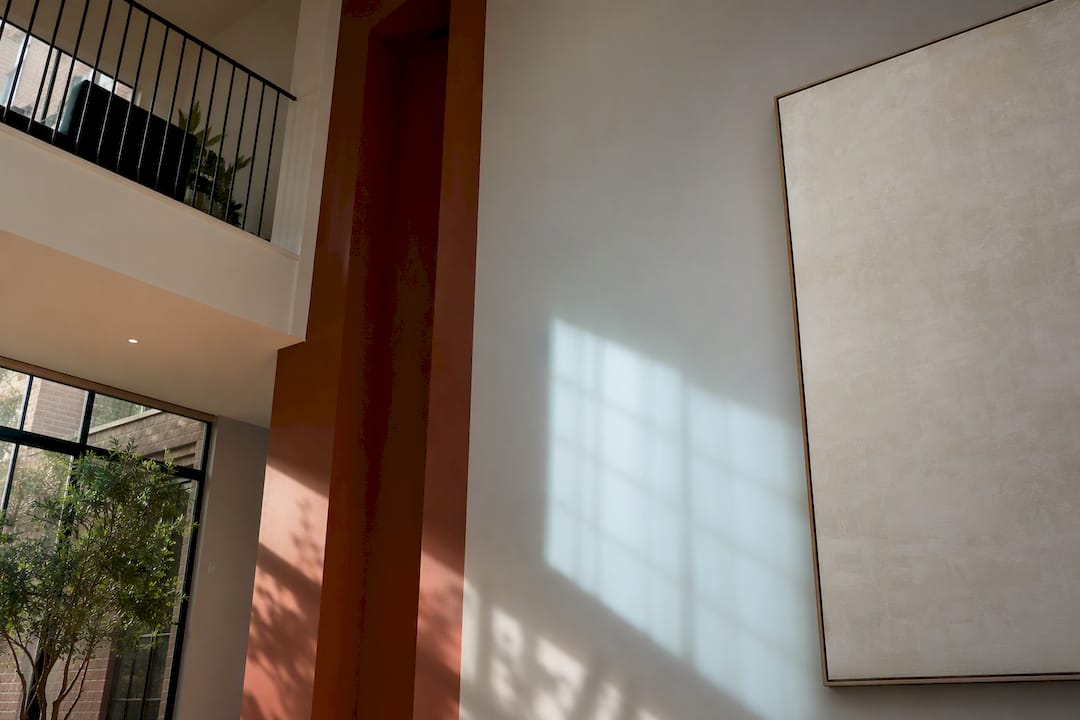
Yes, you can commission a large or extra-large canvas, and the process is more straightforward than most first-time buyers expect. Start by measuring your wall and taking photos at different times of day rather than picking a colour first. Flag the 200cm width mark early, because that’s roughly where standard courier delivery stops and specialist freight begins. Send those measurements and photos to an artist, and you’ve already done the hardest part.
TL;DR:
- A 200cm width is the practical limit for standard courier delivery, beyond which specialist freight and higher costs are typically involved.
- Materials like acrylic, oil, and mixed media impact drying time, weight, and handling, influencing your timeline and freight choices.
- Precise wall measurements, multiple photos in different lights, and a clear brief significantly speed up the commissioning process and reduce misunderstandings.
- Confirm logistics details like door widths, site access, and crating requirements early to avoid last-minute surcharges or delivery delays.
- Red flags include lack of a written contract, inability to show prior large-scale work, or vagueness about shipping and installation procedures.
Table of Contents
- What counts as a large or extra-large canvas?
- The commissioning process, step by step
- Oil, acrylic and mixed media: what suits a large canvas
- Shipping, packing and installation for very large canvases
- How pricing scales on a large commission
- Preparing your brief: the measurements and photos artists actually want
- Choosing an artist or provider: questions and red flags
- Why Frametheworld suits a large canvas commission
- Design the wall first, not the colour
- Starting your commission with Frametheworld
- Sources
What counts as a large or extra-large canvas?
Most studios and framers group canvases into rough bands rather than a single fixed definition. Anything from around 100cm to 150cm on the longest side sits in the “statement piece” territory, suited to a stairwell wall or a sofa backdrop. Move into 150cm to 200cm and you’re looking at feature walls, reception areas, and double-height living rooms. Beyond widths around 2 metres, you’re in genuinely extra-large territory, and that’s where logistics start driving decisions as much as design does.
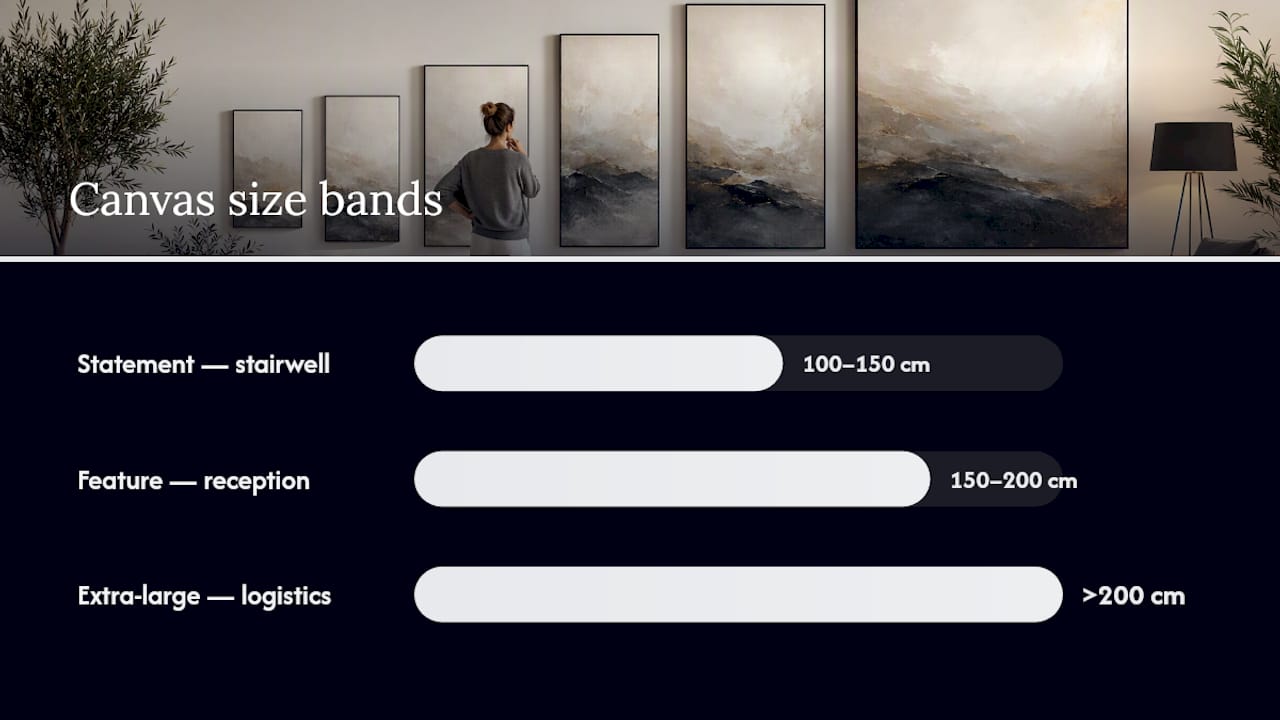
The 200cm figure isn’t arbitrary. Multiple commissioning guides point to it as a practical width barrier because standard couriers and van sizes struggle beyond it, pushing you towards crated fine-art freight.
Before contacting anyone, measure properly:
- Record the wall’s full width and height, not just the space you think the art should fill.
- Note skirting board height, any cornice overhang, and socket or switch positions.
- Photograph the wall in morning light, midday light, and evening light.
- Take one wide shot showing the whole room and one close-up of the wall texture or colour.
The commissioning process, step by step
Commissioning a large canvas painting follows a fairly consistent rhythm across studios, whether you’re working with an independent artist or an online art platform.
- Initial enquiry. Send wall dimensions, photos, your preferred style or reference images, and a rough budget. Artists use this to gauge scale, palette, and whether the brief suits their technique.
- Scope and contract. Materials, exact final size, price, and payment schedule get confirmed in writing, typically with a deposit due before work starts.
- Concept approval. You’ll usually see a sketch, colour study, or digital mockup before paint touches canvas.
- Production with checkpoints. Expect progress photos at agreed intervals rather than daily updates. This is where you approve direction, not micromanage brushwork.
- Final approval, packing, and installation. Once the piece is signed off, it moves to packing and shipping, with professional installation recommended for anything over 150cm.
Staged payments protect both sides. A typical process moves through consultation, concept approval, studio creation, and insured shipping as distinct, billable stages rather than one lump transaction.
Pro Tip: Ask for progress photos taken in natural daylight, not studio lighting. Colours can shift noticeably under artificial light, and you want to approve what you’ll actually see on your wall.
Oil, acrylic and mixed media: what suits a large canvas
Material choice affects far more than finish. It dictates drying time, weight, and how the piece travels.
- Acrylic dries in hours rather than weeks, which suits tighter deadlines and reduces the risk of surface damage in transit.
- Oil gives richer depth and blending but needs significantly longer to cure fully, and large oil commissions often require staged production around drying periods that extend the overall timeline.
- Heavy texture or mixed media (impasto, plaster, fabric, or resin elements) adds weight and fragility, meaning thicker crating and more careful handling.
- Varnishing protects the surface from UV fading and dust, and most artists apply it only once the paint has fully cured, so it’s worth asking when this step happens relative to your delivery date.
If your timeline is tight, lead with that constraint in your first conversation. It narrows the material shortlist immediately.
Shipping, packing and installation for very large canvases
Logistics quietly become the most expensive part of a large commission if nobody plans for them early. The 200cm width threshold matters because beyond it, carriers typically require crated transport and different handling rates, which changes both cost and lead time.
- Rolled shipping (canvas removed from its stretcher bars) suits long-distance transport but means restretching on arrival, adding a step and a cost.
- Crated shipping keeps the piece stretched and ready to hang but needs more space in transit and at delivery.
- Check door widths, lift dimensions, and staircases before the piece leaves the studio, not after it arrives and won’t fit through the doorway.
- Ask whether an on-site survey is available for anything approaching 200cm in any dimension.
Specifying exact crate dimensions, and confirming site access in advance, avoids last-minute surcharges that catch buyers off guard when a courier reassesses the job on collection day. Insurance and tracked delivery should be standard for anything of this scale, and a recommended installer is worth requesting rather than sourcing yourself at the last minute.
How pricing scales on a large commission
Price on a large canvas painting commission isn’t a simple per-inch multiplication. Size, technique, and complexity all move the number independently.
- Square metreage sets the baseline, but a heavily textured or multi-panel piece costs more than a flat, single-colour equivalent of the same dimensions.
- Technique matters too. Detailed figurative oil work generally costs more than a bold, gestural acrylic piece of the same size.
- Framing and installation are often quoted separately, and large commissions typically involve a deposit followed by staged payments tied to production milestones rather than one final invoice.
Budget for the extras that catch people out: crating, specialist courier fees, professional installation, and VAT where applicable. None of these are hidden in bad faith, they’re just easy to forget when you’re focused on the artwork itself. Ask for a full breakdown at quote stage so nothing appears as a surprise on the final invoice.
Preparing your brief: the measurements and photos artists actually want
A strong brief cuts weeks off the concept stage. Artists repeatedly say the same thing: vague colour requests slow everything down, while a clear wall context speeds it up.
- Exact wall measurements: width, height, distance to the nearest corner, and intended hanging height from the floor.
- Full-room photos alongside close-ups of the wall in different light, so the artist can judge how colours will actually read.
- A moodboard or fabric swatch, if you have one. Designers commonly bring swatches or reference images to the first consultation, and it noticeably narrows the palette conversation.
Pro Tip: Photograph the wall at the time of day you’ll spend the most time in that room. A north-facing living room photographed at midday tells the artist nothing useful about the evening light you’ll actually be looking at the piece under.
Choosing an artist or provider: questions and red flags
Before committing a deposit, ask direct questions and watch how they’re answered.
- “Can you show me a comparable piece you’ve delivered at this scale?” A confident answer includes photos of installed, similarly sized work, not just studio shots.
- “How do you handle shipping and installation for pieces over 150cm?” Vagueness here is a warning sign, not a minor gap.
- “What’s the realistic timeline, including drying and packing?” A specific answer beats a reassuring one.
- “Is there a written contract covering deposit, staged payments, and approval points?”
Red flags include no written agreement, reluctance to discuss packing or transport, and an inability to show prior large-scale work. Trust signals run the other way: a documented history of large installations, clear insurance cover, and a certificate of authenticity provided with the finished piece.
Why Frametheworld suits a large canvas commission
Some platforms build commissions around custom sizing from the outset, rather than offering a fixed catalogue with limited scaling. That fits the space-first approach this guide has argued for throughout.
- Custom dimensions, style, and finish, tailored to the wall rather than a standard size chart.
- Published buyer guidance covering large canvas hanging and related sizing questions, useful reading before you even request a quote.
- Support may be available for private commissions as well as trade or commercial projects, where installation guidance and staged approvals often matter.
Design the wall first, not the colour
Most commissioning advice online still opens with style and colour. That’s backwards. The wall, its light, and its width should shape every decision that follows, including which artist can realistically deliver the piece.
The 200cm barrier gets treated as a footnote in most guides, when it should sit near the top of the conversation. It changes your courier options, your budget, and sometimes your material choice, all before a single brushstroke happens. Buyers who raise it in the first enquiry avoid the mid-project scramble that pushes costs up and delays deliveries by weeks.
If there’s one thing worth prioritising above aesthetics, it’s site access. A piece that’s perfect on canvas but won’t clear a stairwell or a lift door isn’t a design problem anymore, it’s a logistics failure that should have been caught in week one. Trade-friendly providers who ask about doorways and lift dimensions before discussing palette are doing the job properly. That’s the standard worth expecting from anyone you brief.
— Lennard
Starting your commission with Frametheworld
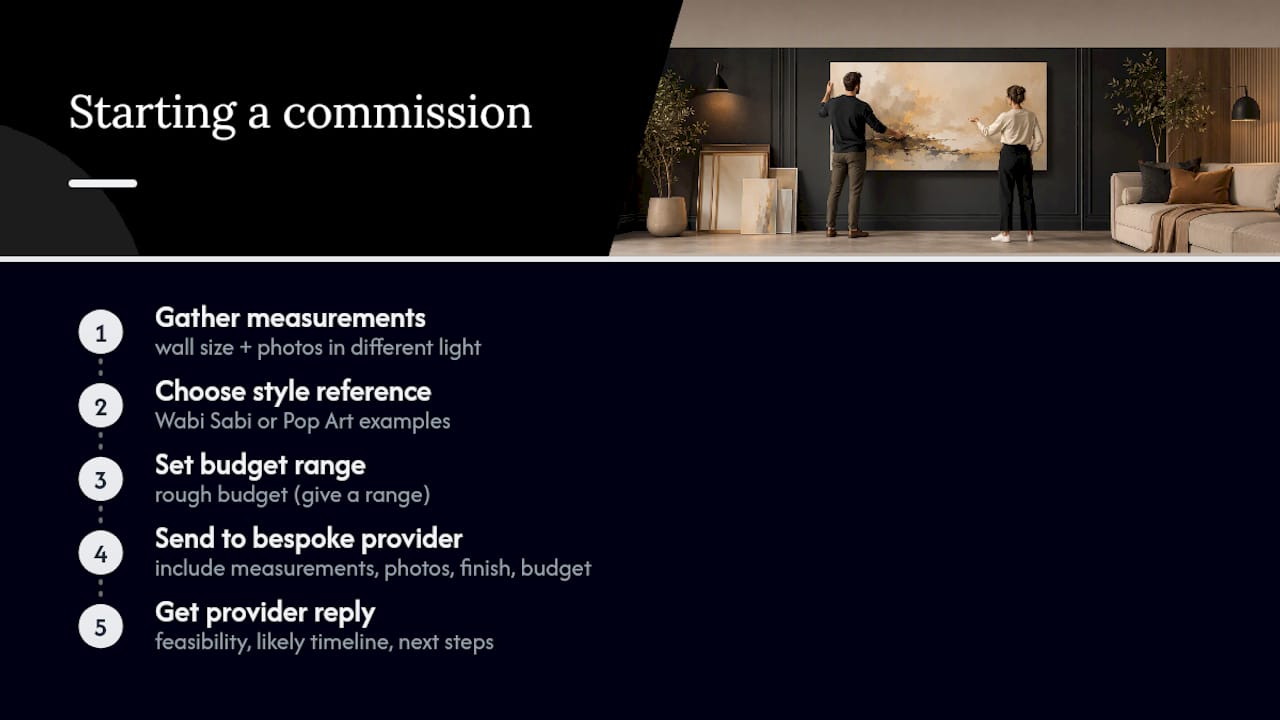
Some providers handle bespoke sizing directly rather than routing you through a generic enquiry form built for smaller prints, which can matter once you’re planning a wall-scale piece rather than a standard frame. Send wall measurements, photos of the space in different light, your preferred finish or style reference, and a rough budget range, and you’ll get a response addressing feasibility, likely timeline, and next steps rather than a generic price list.
For style direction, browse the Wabi Sabi Wall Art collection for textured, hand-painted abstraction, or the Pop Art collection if you want something bolder and more graphic. Either works as a starting reference point rather than a fixed choice; commissions can move in a different direction entirely once the wall photos come in. Sharing your wall measurements and photos can be a helpful way to start the commissioning conversation.
Sources
For sizing heuristics before you brief anyone, see how to select art size for your home and planning large-scale art for interior projects. Tall or double-height walls have their own considerations, covered in art for high ceilings.
- Extra Large Canvas Art Over 2 Metres Wide
- Commissioning a Large‑Scale Original: What the Process Is Really Like

Laat een reactie achter
Deze site wordt beschermd door hCaptcha en het privacybeleid en de servicevoorwaarden van hCaptcha zijn van toepassing.