
TL;DR:
- Digital visualization enables precise planning of art placement in real space before installation.
- Structured documentation and clear coordination between all parties reduce delays and ensure durability.
What does a modern art placement workflow look like in 2026?
The most effective art placement workflow in 2026 starts with digital visualisation, moves through a structured physical installation, and closes with ongoing maintenance. Done properly, it clear documentation between designers, clients, and installers reduces project delays by approximately 33% and ensures successful project outcomes. and produces displays that hold up aesthetically and structurally for years.
Here is what the full process covers:
- Digital preview first. Upload room photos into a digital art visualiser to test scale, colour, and layout before a single hole is drilled.
- Curatorial framing. Effective placement is built on storytelling: balancing uniformity with contrast to create a narrative thread that guides the viewer through the space.
- Site assessment. Verify wall load capacity, door clearances, HVAC proximity, and environmental factors before committing to any position.
- Detailed hanging plan. Document object weights, sensitivities, and placement order. For complex projects, finalised documentation keeps every stakeholder aligned.
- Professional installation. Follow a structured sequence: site protection, precise measuring, secure mounting, final alignment, and wall restoration.
- Lighting. Poor lighting or glare damages sensitive materials and undermines even the best placement decisions.
- Permitting and insurance. For UK residential projects, check whether your home insurance covers installation damage. Commercial or listed-building installations may require contractor liability cover and, in some cases, local authority consent.
- Sustainability. Smart glass and considered wall treatments reduce UV exposure and support long-term conservation without compromising the display.
- Post-installation care. Schedule periodic hardware checks, monitor for environmental changes, and plan rotation as spaces evolve.
- Coordination. Clear documentation and scheduled communication between designers, clients, and installers keeps projects on track. Frametheworld’s professional installation guide covers this coordination in detail.
Table of Contents
How do digital visualisation tools improve your art placement process?
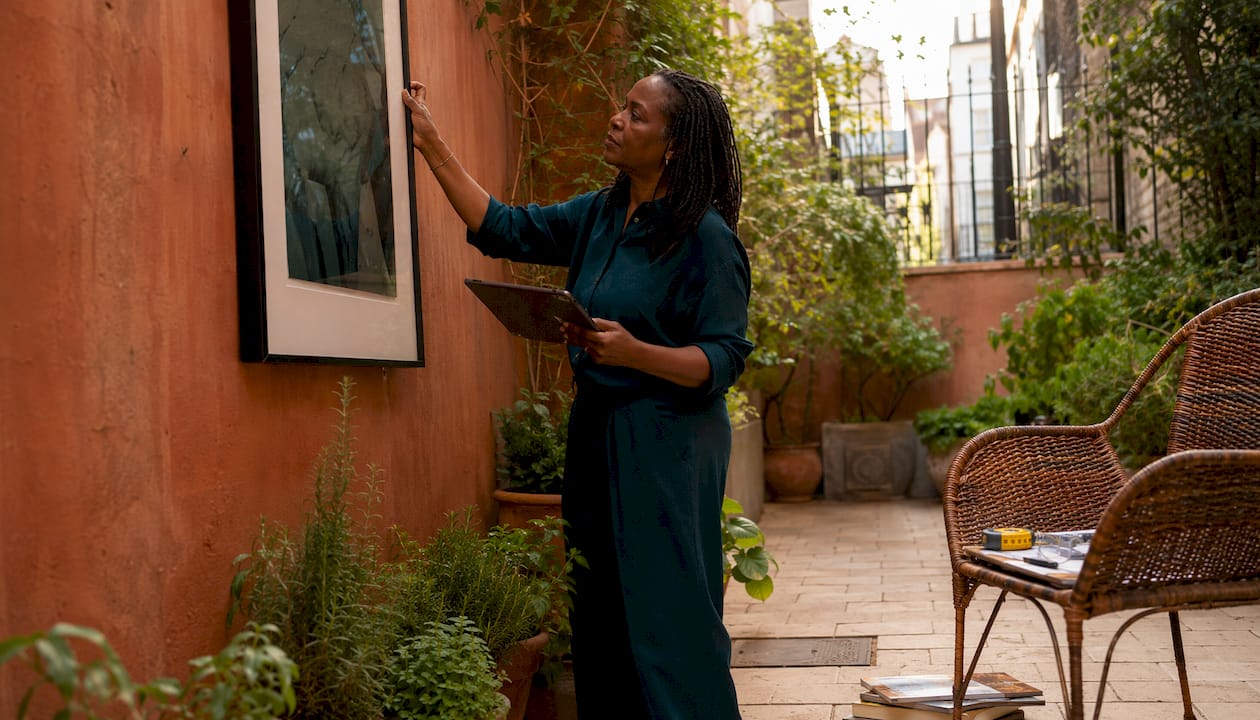
Digital art visualisers have changed the way buyers and designers approach placement. Rather than guessing how a piece will read on a wall, you can test it at true scale inside a photo of the actual room before anything is ordered or installed.
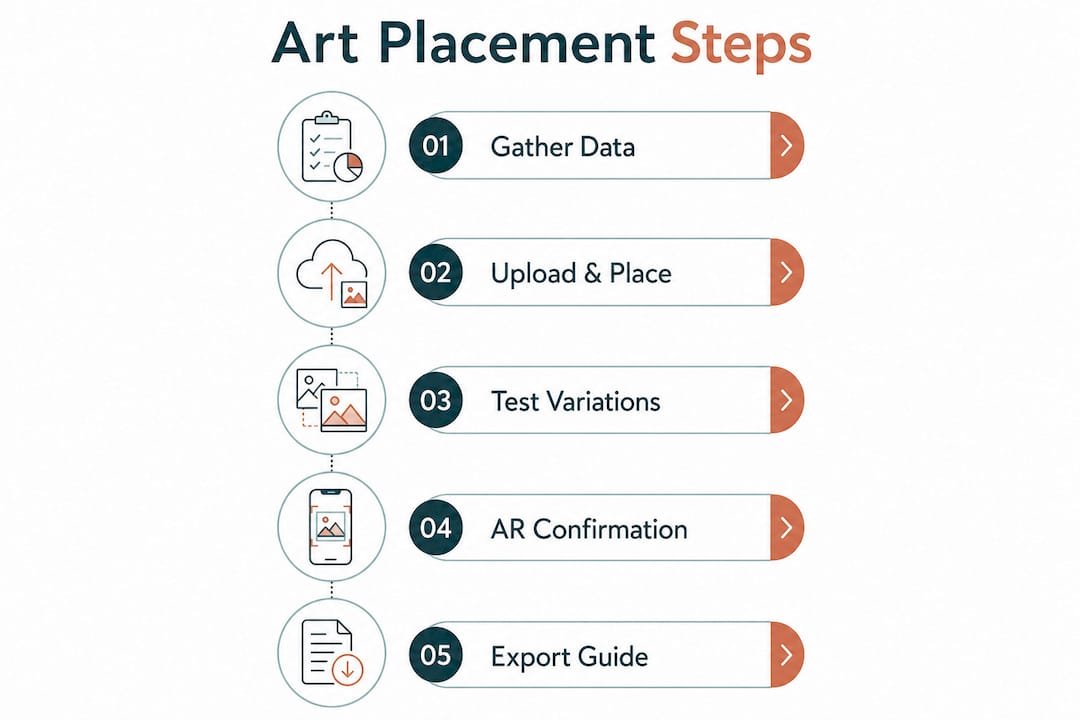
Step 1: Gather your room data. Photograph the wall straight-on in good natural light, then measure width, height, and the position of any furniture the artwork will sit above. Accurate inputs produce accurate previews.
Step 2: Upload and place. Tools such as GalleryPlanner let you input real frame dimensions, run auto-layout algorithms across multiple arrangement options, and assign images to frames. The result is a scaled mockup that reflects exactly what the finished wall will look like.

Step 3: Test colour and scale variations. Adjust wall colour, framing finish, and artwork size within the tool. Wall art visualisers answer the three questions that most often stall a purchase: will it fit, will the colours work, and will it look right in context?
Step 4: Use AR for on-site confirmation. Augmented reality features let you hold a phone up to the wall and see the artwork placed at true scale in real time. This is particularly useful for large-format pieces or gallery walls where spatial relationships are hard to judge from a flat plan.
Step 5: Export a hanging guide. Generate a PDF with a measurement table and a gridded scale drawing. Send it to whoever is doing the installation. A well-prepared hanging guide means the installer arrives knowing exactly where every piece goes, which is where the delay reduction comes from.
Pro Tip: Run at least two lighting simulations within your visualiser, one for daytime natural light and one for evening artificial light. A piece that reads beautifully at noon can look flat or washed out under warm tungsten, and catching that before purchase saves a return.
Frametheworld’s art placement guide applies these principles directly to home interiors, and its framing options guide helps you match frame materials to the room once the layout is confirmed. For anyone planning a larger project, the same structured approach that works for a single wall applies to a whole-room scheme. A clear pre-installation checklist, much like the kind used in residential installation projects, prevents the last-minute scrambles that push timelines and budgets off course.
If you are ready to start with the artwork itself, Frametheworld’s Wabi Sabi collection offers hand-painted pieces that photograph well in visualisers and translate beautifully to real walls.
Key takeaways
A well-executed art placement workflow in 2026 combines digital previewing with structured physical installation to cut delays and protect artwork long-term.
| Point | Details |
|---|---|
| Start with digital visualisation | Upload room photos and test scale, colour, and layout before ordering or installing anything. |
| Document everything in advance | A detailed hanging plan with weights, sensitivities, and placement order keeps all parties aligned. |
| Coordinate to cut delays | Clear documentation between designers, clients, and installers clear documentation between designers, clients, and installers reduces project delays by approximately 33% and ensures successful project outcomes… |
| Lighting shapes the outcome | Plan display positions around both natural and artificial light to avoid glare and material damage. |
| Post-installation care extends longevity | Schedule hardware checks and monitor environmental conditions to preserve artwork over time. |


Leave a comment
This site is protected by hCaptcha and the hCaptcha Privacy Policy and Terms of Service apply.