
TL;DR:
- Project-specific art is designed and fabricated to suit the physical, cultural, and logistical conditions of a specific project or site. It differs from site-specific art by responding to the full project brief, including client requirements and installation logistics, beyond just location. Successful implementation requires early collaboration, thorough site analysis, prototyping, and careful management of logistics and materials.
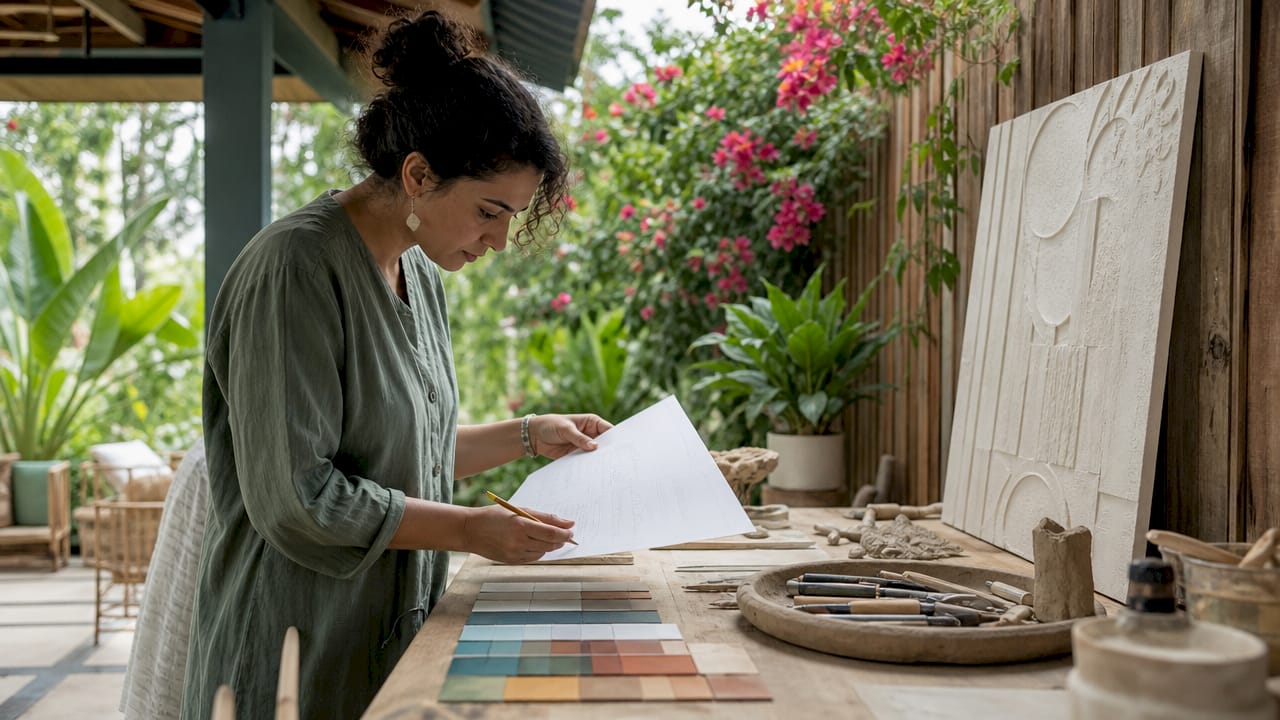
Project-specific art is artwork deliberately designed and fabricated to fit the physical, cultural, and logistical conditions of a particular project or site, making those conditions integral to its conception and execution. Unlike decorative art selected after a space is finished, project-specific work is conceived alongside the project itself. Its scale, materials, meaning, and installation method all respond directly to where and how it will live. For artists, designers, and project managers, understanding this discipline is the difference between art that transforms a space and art that merely occupies one.
What is project-specific art and how is it defined?
Project-specific art is artwork created with a defined location, project brief, and set of physical constraints at the centre of its design process. The term overlaps with, but is distinct from, the broader category of site-specific art. Site-specific art is defined as work created expressly for a single unique location, where removal destroys its original intent. Richard Serra captured this in 1989: “To move the work is to destroy the work.” Project-specific art shares that commitment to context, but extends it further into the practical and logistical realities of a commissioned project.
The definition of project-specific art includes three non-negotiable elements. The artwork must respond to the physical environment, whether that means the architecture, the light, the scale, or the circulation of people through the space. It must meet the project’s functional and aesthetic requirements, which are typically set by a client, architect, or design team. And it must be fabricated with the installation process in mind from the very beginning. These three elements together distinguish project-specific work from both fine art produced for galleries and decorative art selected from a catalogue.
The distinction matters practically. A mural commissioned for a corporate atrium that references the company’s founding city is project-specific. A print bought from a shop and hung in the same atrium is not. The former required research, collaboration, and fabrication decisions tied to that exact space. The latter could hang anywhere.
How does project-specific art differ from site-specific and other art types?
The terms project-specific and site-specific are often used interchangeably, but they describe different priorities. Site-specific art foregrounds the physical location as the primary driver of meaning. Project-specific art foregrounds the full scope of a commissioned project, which includes the site but also the client brief, the budget, the timeline, the installation logistics, and the intended audience.
| Attribute | Site-specific art | Project-specific art |
|---|---|---|
| Primary driver | Physical location | Full project brief and context |
| Fabrication approach | Responds to site conditions | Tailored to site, logistics, and client requirements |
| Collaboration | Often artist-led | Cross-disciplinary from conception |
| Portability | Rarely portable without loss of meaning | Designed as permanent or semi-permanent fit |
| Examples | Richard Serra’s Tilted Arc | Moynihan Train Hall commissions, JR’s Pont Neuf installation |
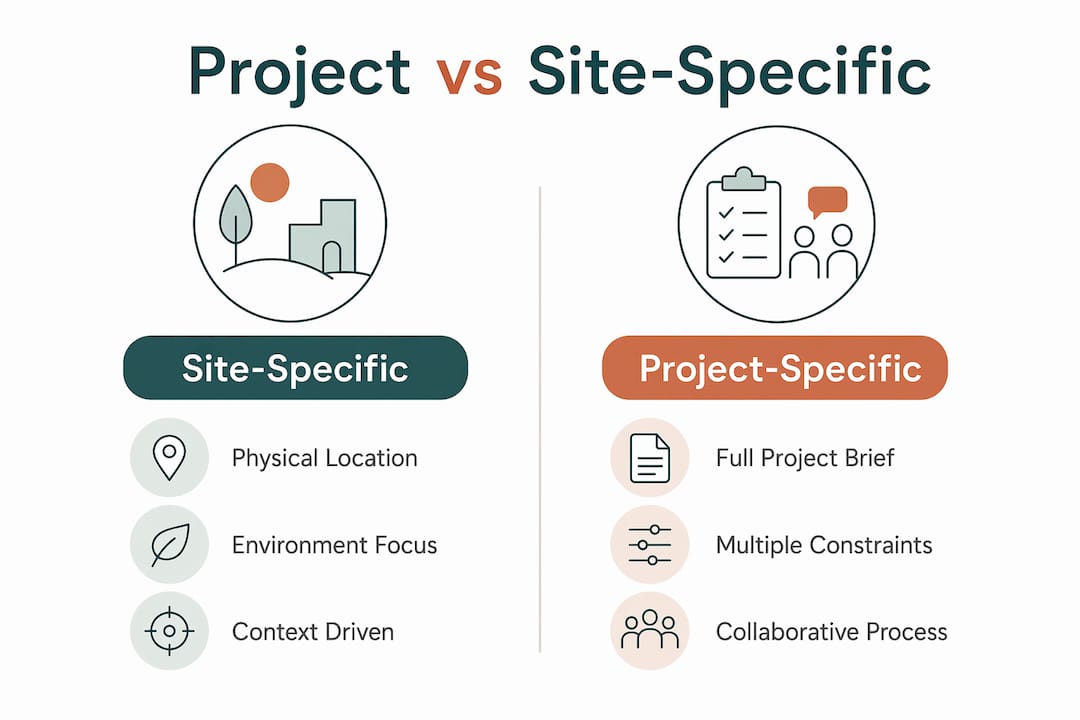
For artists and project managers, the practical implication is clear. Site-specific art asks: “What does this place demand?” Project-specific art asks: “What does this project need, and how does the place shape that answer?” The second question is broader and requires earlier collaboration with architects, engineers, and clients.
Public art commissions, corporate installations, and large-scale hospitality projects almost always fall into the project-specific category. The art in interior design tradition has moved firmly in this direction, with architects and project managers now treating art as a core element of spatial storytelling rather than a finishing touch.
What factors influence the creation and fabrication of project-specific art?
Project-fit fabrication tailors the build path to site conditions rather than forcing standard processes onto a unique environment. This requires evaluating several factors before a single material is ordered or a design is finalised.
Site environment and architectural context. The artwork must work with the architecture, not against it. Ceiling height, wall composition, natural and artificial lighting, and the movement of people through the space all shape what is possible and what will succeed visually.
Material and finish selection. Materials must suit the location’s durability requirements and aesthetic register. A coastal hospitality project demands corrosion-resistant finishes. A healthcare environment may require antimicrobial surfaces. A heritage building may restrict fixings or surface treatments.
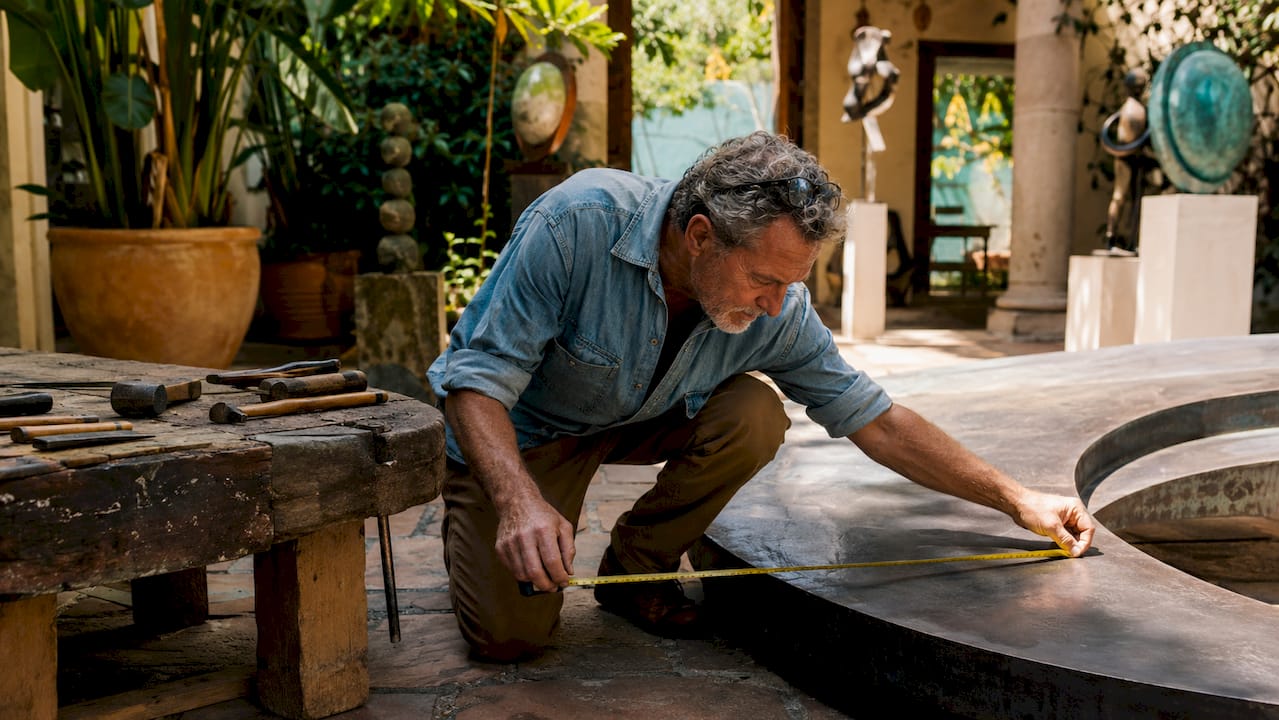
Handling and installation logistics. Ignoring handling routes during design almost guarantees project failure. Access through doors, hallways, lifts, and staircases must be mapped before fabrication begins. An artwork that cannot physically reach its intended location is a failed project regardless of its artistic merit.
Collaboration across disciplines. Artists develop concept sketches based on architectural drawings, lighting plans, and circulation studies, then refine those concepts through ongoing dialogue with architects and engineers. This collaboration must begin at the design phase, not after construction is complete.
Cultural and historical context. For public commissions especially, the artwork’s relationship to the cultural history of the site shapes its reception and longevity. Archival research, community consultation, and sensitivity to local identity are not optional extras.
Pro Tip: Before finalising any design, walk the full installation route with a scaled mock-up or a physical stand-in of similar dimensions. Discovering a tight corridor or a low doorway during fabrication is expensive. Discovering it during a site visit costs nothing.
What are notable examples of project-specific artworks?
Concrete examples clarify what project-specific art looks like in practice and what separates successful commissions from problematic ones.
JR’s La Caverne du Pont Neuf, Paris. In 2025, the French artist JR transformed Paris’s oldest bridge into a vast inflatable grotto. The 2026 project used over 18,900 square metres of material and 20,000 cubic metres of air for the inflatable structures. The scale demanded multi-year planning, corporate partnerships, and engineering coordination. Critically, the team rehearsed the installation in a historic hangar to verify structural integrity and lighting effects before the work reached the bridge. That off-site dress rehearsal is now considered best practice for large-scale project-specific commissions.
Moynihan Train Hall, New York. The Public Art Fund’s commissioning process for Moynihan Train Hall required each artwork to respond to the building’s specific architectural and cultural attributes. Artists conducted archival research into the hall’s history and developed works that speak to the building’s identity as a civic space. The result is a collection of commissions that feel inseparable from the architecture rather than applied to it.
Refik Anadol Studio, Google campus. Generative AI and real-time data now enable installations to react dynamically to environmental factors such as temperature, movement, and ecological data. Refik Anadol Studio’s ecological AI-driven media installation at the Google campus processes live environmental inputs to generate imagery that shifts with the surrounding conditions. This represents the leading edge of project-specific art in contemporary culture, where the artwork’s behaviour is as site-responsive as its physical form.
| Project | Artist/Studio | Key project-specific factor |
|---|---|---|
| La Caverne du Pont Neuf | JR | Scale, logistics, off-site rehearsal |
| Moynihan Train Hall commissions | Various, Public Art Fund | Cultural heritage, architectural integration |
| Machine Dreams: Biophilia | Refik Anadol Studio | Generative AI, real-time environmental response |
How can artists and project managers plan and implement project-specific art?
Successful project-specific art does not happen by accident. It follows a structured process that integrates creative and technical decision-making from the earliest stages.
-
Engage at the design phase. The single most common mistake is bringing the artist in after the architecture is fixed. Integrated fabrication of artwork into architectural elements produces more authentic and durable results than add-on pieces. If you are a project manager, schedule the artist briefing alongside the architect briefing, not after it.
-
Conduct a thorough site and logistics analysis. Map every dimension of the installation environment: ceiling heights, wall load ratings, access routes, lighting conditions, and any restrictions imposed by the building’s heritage status or use. This analysis should produce a written brief that the artist and fabricator both sign off on.
-
Develop prototypes and test them off-site. Physical or digital mock-ups allow the team to assess scale, material behaviour, and visual impact before committing to final fabrication. For complex installations, a full off-site rehearsal, as JR’s team demonstrated at Pont Neuf, removes the risk of discovering problems during installation when time and budget are most constrained.
-
Align materials with site conditions and project lifespan. A work intended to last twenty years in a high-traffic public space requires different material choices than a temporary exhibition piece. Specify materials with the end environment in mind, not the studio environment.
-
Manage stakeholder communication throughout. Project-specific art involves clients, architects, engineers, fabricators, and sometimes planning authorities. A single point of coordination, whether that is the artist, the project manager, or a specialist art consultant, prevents the miscommunications that derail timelines and inflate costs.
Pro Tip: Build a shared project log that all stakeholders can access and update. Decisions made verbally in site meetings are the ones most likely to be forgotten or contradicted. A written record of every material choice, dimension change, and installation decision protects everyone.
Key takeaways
Project-specific art succeeds when creative vision, fabrication expertise, and logistical planning are integrated from the first day of a project, not assembled at the end.
| Point | Details |
|---|---|
| Definition is distinct | Project-specific art responds to the full project brief, not just the physical location. |
| Logistics must come first | Handling routes and installation access must be mapped before fabrication begins. |
| Collaboration is non-negotiable | Artists, architects, and engineers must work together from the design phase. |
| Prototyping reduces risk | Off-site rehearsals and mock-ups catch structural and visual problems before they become costly. |
| Technology is expanding the field | Generative AI now enables artworks to respond dynamically to their environment in real time. |
Why project-specific art demands more than most creatives expect
I have worked on enough complex art commissions to say this plainly: the gap between a good idea and a successful installation is almost always logistical, not creative. The artists who struggle with project-specific work are rarely those with weak concepts. They are the ones who underestimate how much the physical reality of a space will reshape their vision.
The shift I have seen in the past decade is significant. Architects and project managers now treat art as a core component of spatial storytelling, which means the expectations placed on artists have risen sharply. You are no longer being asked to make something beautiful and hand it over. You are being asked to make something that functions as part of a building’s identity, survives its use conditions, and can be physically installed without a crisis.
What actually works, in my experience, is treating the logistics brief with the same rigour as the creative brief. The commercial space art planning process is a good model here: it forces you to think about access, scale, finish, and timeline before you fall in love with a concept that cannot be delivered. The artists and project managers who embrace that discipline consistently produce better work, on time and on budget.
The other lesson I keep returning to is this: the best project-specific art is invisible in the best possible sense. It does not announce itself as art. It makes the space feel inevitable, as though it could not have been designed any other way.
— Lennard
Explore bespoke wall art to complement your project
When a project-specific installation sets the tone for a space, the surrounding art choices need to match that intention. Frametheworld offers hand-painted collections designed for exactly this kind of considered environment. The Wabi Sabi wall art collection brings textured, tactile finishes that complement installations where material quality and imperfection are part of the visual language. For spaces that call for bold visual contrast, the Pop Art collection delivers hand-painted works with strong graphic energy. Both collections are available in bespoke sizes and formats, making them practical options for designers and project managers working to commission artwork tailored to a specific environment.
FAQ
What is the simplest definition of project-specific art?
Project-specific art is artwork designed and fabricated to meet the physical, cultural, and logistical requirements of a particular commissioned project or site. Its meaning and success depend on remaining in its intended context.
How does project-specific art differ from site-specific art?
Site-specific art is driven primarily by the physical location, while project-specific art responds to the full project brief, including client requirements, installation logistics, and fabrication constraints. All project-specific art is site-aware, but not all site-specific art is project-specific.
What are the most common mistakes in project-specific art projects?
The two most frequent failures are ignoring installation logistics during the design phase and bringing the artist into the process too late. Both errors are avoidable with early cross-disciplinary collaboration and a thorough site analysis before fabrication begins.
Can generative AI be used in project-specific art?
Yes. Refik Anadol Studio’s work at the Google campus demonstrates that generative AI can create installations that respond dynamically to real-time environmental data, making the artwork’s behaviour as site-responsive as its physical form.
How long does a project-specific art commission typically take?
Timelines vary significantly by scale and complexity. Large public commissions, such as JR’s Pont Neuf installation, require multi-year planning and coordination. Smaller commercial commissions can be completed in weeks, provided the site analysis and fabrication brief are thorough from the outset.


Laat een reactie achter
Deze site wordt beschermd door hCaptcha en het privacybeleid en de servicevoorwaarden van hCaptcha zijn van toepassing.