
TL;DR:
- Minimalist home art emphasizes simplicity with restrained forms, clean lines, and limited colors.
- Choosing art based on its relationship to space creates a calm and cohesive environment.
Minimalist art for homes is defined by purposeful simplicity: restrained forms, clean lines, and a limited colour palette that creates calm rather than clutter. The term used by interior designers and galleries is reductive art, though minimalist art is the phrase most homeowners recognise. Platforms like Artsy and Frametheworld both curate collections built on this principle, where every piece acts as a purposeful anchor rather than decoration for its own sake. The result is a room that feels edited and sophisticated, not bare. This guide covers the best styles, room-by-room selection advice, display techniques, and budget ideas to help you get it right.

1. What is minimalist art for homes, and why does it work?
Minimalist art works because it asks a room to do less. When walls carry fewer pieces, each one carries more weight. Minimalist art calls for dialogue between the artwork and its environment, treating the room and the piece as a single cohesive system. That relationship is what separates a curated home from a decorated one. Homeowners who understand this principle stop buying art to fill space and start buying it to define space.
2. Geometric abstraction
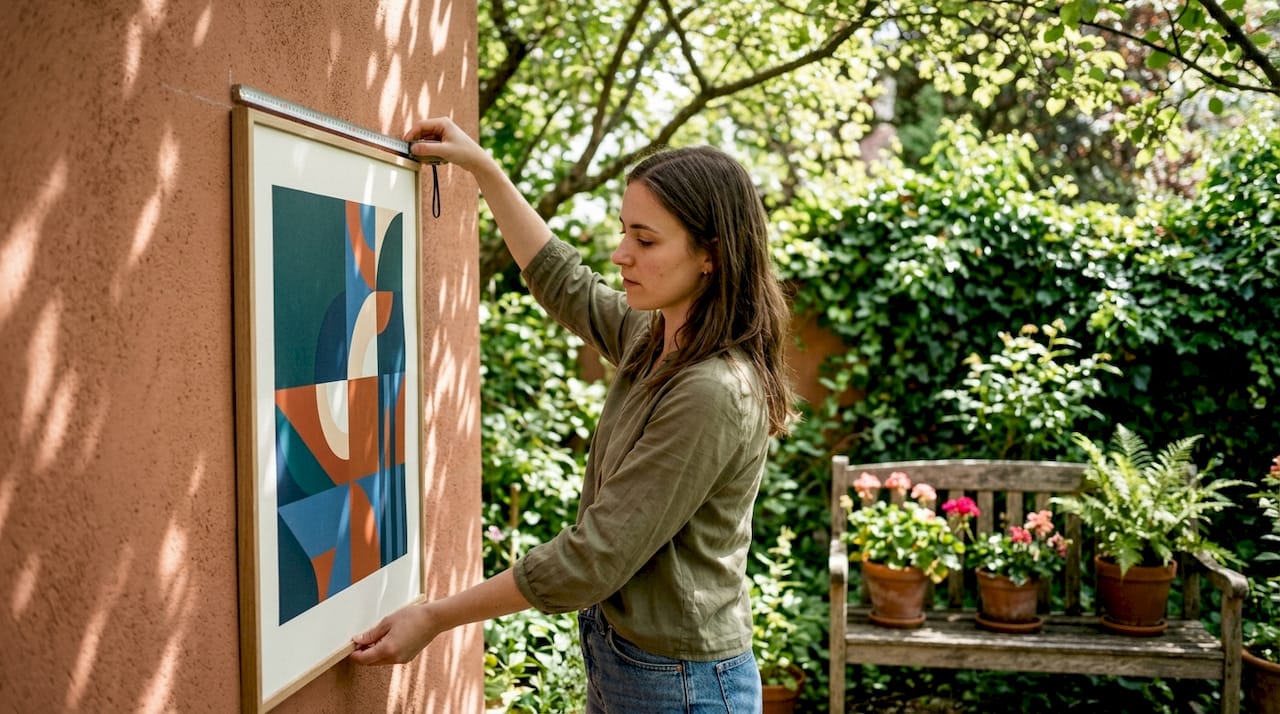
Geometric abstraction is the most widely recognised minimalist style. It uses shapes such as circles, rectangles, and triangles in flat, clean arrangements to create visual order. The appeal for modern homes is directness: a single arc on a white canvas communicates confidence without explanation. Geometric pieces work particularly well in living rooms and home offices where a sense of structure supports the room’s function. Frametheworld’s contemporary minimalist collection includes hand-painted geometric works that carry the texture of original art without the gallery price.
3. Line art
Line art uses a single continuous stroke or a spare contour drawing to suggest a subject without filling it in. A face, a plant, or a landscape rendered in one unbroken line reads as both simple and skilled. This style suits bedrooms and hallways because it creates visual interest without demanding attention. The restraint is the point. Line art is also one of the most affordable minimalist options, as high-quality prints reproduce the style faithfully.
4. Monochrome and duotone palettes
Monochrome or duotone art creates a calm, fresh atmosphere by avoiding the sensory competition that multi-coloured decor produces. Interior designer Brynna Evans identifies colour as the single biggest mood driver in minimalist spaces. A black and white photograph, a grey wash abstract, or a two-tone botanical print all unify a room without imposing a specific colour scheme. This makes neutral colour art particularly flexible: it moves between rooms and works across furniture styles without clashing.
5. Textural and fibre art
Textured and fibre art introduces tactile interest without overwhelming a minimalist space. Rope art, woven wall hangings, and macramé panels add a physical dimension that flat prints cannot. This matters in rooms that already use hard surfaces such as concrete, glass, or polished wood, where softness on the wall creates balance. Fibre art also photographs well in natural light, which makes it a strong choice for living rooms and dining areas where daylight shifts throughout the day.
Pro Tip: Mix one textured fibre piece with two flat prints in a gallery wall. The contrast in surface quality makes each piece more noticeable than if all three were the same medium.
6. Key minimalist art styles at a glance
Before selecting pieces, it helps to understand how each style performs in a real room. The five styles above cover the main categories, but they behave differently depending on scale, light, and the room’s existing palette.
- Geometric abstraction: Strong in living rooms and offices. Works best at large scale on a single focal wall.
- Line art: Ideal for bedrooms and hallways. Effective at smaller sizes, especially in pairs or trios.
- Monochrome and duotone: The most flexible option. Suits every room and adapts to any furniture colour.
- Textural and fibre art: Best in living rooms and dining spaces. Adds warmth to hard-surface interiors.
- Sculptural minimalism: Three-dimensional wall pieces in ceramic or metal. Strong in entryways where a single object can anchor the space.
Pro Tip: Combine two or three minimalist styles in one gallery wall rather than repeating the same medium. A line art print beside a woven panel beside a monochrome photograph creates a dynamic arrangement that still reads as restrained.
7. How to choose minimalist wall decor by room
Room function determines which style of simple art works best. The living room tolerates the most visual weight, so large-scale geometric or abstract pieces succeed here. Grouping smaller minimalist works also creates compelling visual interest and draws viewers in for closer appreciation, which suits a social space. The bedroom calls for calming neutrals and soft shapes that support rest rather than stimulate thought. Hallways and entryways benefit from sculptural or textured pieces because visitors encounter them at close range and briefly, so tactile detail rewards the short viewing time.
Scale relative to furniture is the most common mistake homeowners make. A piece that looks substantial in an online image can disappear above a large sofa. The standard rule is to choose art that spans roughly two thirds of the furniture width below it. For art selection guidance that covers scale, proportion, and room type in detail, Frametheworld’s checklist is a practical starting point.
Pro Tip: Stand at the furthest point in the room from where the art will hang. If you cannot read the composition clearly from that distance, the piece is too small or too detailed for the space.
8. How to arrange and display minimalist art effectively
Display decisions matter as much as the art itself. Sightlines and light are crucial for minimalist art impact: a piece that works in a gallery can feel flat on a poorly lit wall at home. Natural light from a side window is the most flattering source for most works. Ambient artificial light, such as a picture light or a directed spotlight, extends the art’s presence into the evening without washing out its tones.
Framing choices shape the entire reading of a piece. Simple black, white, or natural wood frames complement minimalist work without competing with it. Ornate gold or heavily textured frames pull attention away from the art and undermine the restrained effect. Floating frames, where the artwork sits with a visible gap between the piece and the frame edge, are particularly effective for abstract and line art because they reinforce the sense of negative space.
| Display choice | Typical effect |
|---|---|
| Single large piece, centred | Creates a strong focal point; suits living rooms and dining rooms |
| Grouped small pieces, even spacing | Builds visual rhythm; suits hallways and bedroom walls |
| Asymmetric arrangement | Adds energy; works in informal spaces such as studies |
| Floating frame | Emphasises negative space; suits abstract and line art |
| No frame, canvas wrap | Casual and contemporary; suits geometric and textural work |
Pro Tip: Leave at least 15–20 centimetres of wall space around each piece in a grouping. Minimalist art needs breathing room to read as intentional rather than crowded.
9. Budget-friendly ideas for affordable minimalist paintings and prints
Affordable minimalist art does not mean low quality. High-quality prints, online platforms, and DIY projects all deliver the clean aesthetic at accessible prices. Mixing one original hand-painted piece with two or three quality prints produces a curated look because the eye cannot immediately distinguish the mediums at a distance.
Practical options for homeowners working to a budget:
- Quality art prints: Online platforms including Frametheworld offer prints that reproduce minimalist compositions faithfully at a fraction of original artwork prices.
- Smaller original pieces: A 30 x 30 centimetre original costs significantly less than a large canvas but carries the same authenticity. Group three small originals for the visual weight of one large piece.
- DIY textured canvases: Apply gesso or plaster to a canvas in broad strokes, then leave it unpainted. The result is a textural, neutral piece that suits any minimalist room.
- Simple line drawings: A confident pen drawing on quality paper, framed well, reads as considered art. The frame often costs more than the paper, which is the right investment.
- Sculptural accessories: Small ceramic wall discs or minimal metal wall objects add a three-dimensional quality without the cost of large fibre art.
For kitchen and utility spaces, urban kitchen design ideas often incorporate small minimalist prints as a low-cost way to add character without disrupting a functional room’s layout.
Key takeaways
Minimalist art works best when every piece is chosen for its relationship to the space, not simply to fill a wall.
| Point | Details |
|---|---|
| Style determines room fit | Geometric art suits living rooms; line art suits bedrooms and hallways. |
| Scale is the most common mistake | Art should span roughly two thirds of the furniture width below it. |
| Light shapes the art’s impact | Natural side light and directed spotlights reveal minimalist work at its best. |
| Breathing room is non-negotiable | Leave 15–20 centimetres around each piece so it reads as intentional. |
| Budget does not limit quality | Mixing one original with quality prints creates a curated result at lower cost. |
Why restraint is harder than it looks
I have spent years advising homeowners on art selection, and the single most common error I see is buying too much. People understand minimalism intellectually but feel anxious about empty wall space, so they fill it. The result is a room that looks busy despite containing technically minimal pieces.
The harder skill is patience. Minimalist art requires patience and precision, not simply fewer objects. I have seen a single well-placed line art print transform a hallway more completely than six pieces arranged without thought. The architecture of the room, the quality of light at different times of day, and the viewing distance all determine whether a piece lands or disappears.
My honest advice: live with a blank wall for two weeks before hanging anything. You will notice the light, the sightlines, and the scale of the space in a way that no amount of planning replicates. Then choose one piece. If the room feels complete, stop there. Minimalist art is not a trend you apply once. It is an ongoing, evolving relationship between the objects you choose and the space they inhabit. Texture, in particular, is underused. A woven panel or a plaster-effect canvas adds warmth that flat prints rarely achieve, and warmth is what stops a minimalist room from feeling cold. For more on integrating art with your home’s design, the principles of restraint and context apply regardless of budget or style.
— Lennard
Frametheworld’s minimalist collections for modern homes
Frametheworld offers two collections that suit homeowners looking for quality minimalist wall decor with immediate impact. The Wabi Sabi wall art collection brings hand-painted abstract texture and deliberate imperfection, making it ideal for living rooms and bedrooms where warmth and subtlety matter. For homeowners who want a bolder accent within a restrained scheme, the Pop Art wall art collection offers striking hand-painted pieces that hold their own as a single focal point. All pieces are crafted to a high standard and shipped within the UK. Frametheworld also offers customisation for homeowners who need a specific size or colour to match an existing interior.
FAQ
What is minimalist art?
Minimalist art, also called reductive art, uses clean lines, restrained forms, and limited colour to create purposeful visual simplicity. The goal is to make each piece feel intentional rather than decorative.
What size minimalist art works best in a living room?
A single piece should span roughly two thirds of the sofa or main furniture width below it. Grouped smaller pieces can achieve the same visual weight with more flexibility.
Does minimalist art suit every home style?
Minimalist art suits most modern and contemporary interiors. Monochrome and neutral colour art is the most adaptable option because it works across furniture styles and existing colour schemes.
How do I light minimalist wall art effectively?
Natural side light is the most flattering source. A directed picture light or spotlight works well in the evening and prevents the art from appearing flat against the wall.
Where can I find affordable minimalist paintings in the UK?
Quality art prints from platforms like Frametheworld offer minimalist compositions at accessible prices. Mixing one original hand-painted piece with two or three prints produces a curated result without a large outlay.

Laat een reactie achter
Deze site wordt beschermd door hCaptcha en het privacybeleid en de servicevoorwaarden van hCaptcha zijn van toepassing.