

TL;DR:
- Art consultation helps homeowners and collectors select, source, and place artwork that enhances their space, style, and budget. It offers significant time savings, financial benefits through negotiation, and reduces risks like forgeries while improving interior design harmony. Consulting services are accessible for all budgets, providing expertise that ensures art fits perfectly and adds value to the home environment.
Art consultation is the expert service of guiding homeowners and art enthusiasts through selecting, sourcing, and placing artwork that suits their space, style, and budget. The reasons to opt for art consultation are practical and financial, not just aesthetic. A professional art consultant saves you time, reduces the risk of costly mistakes, and ensures every piece you buy works within your interior design. Whether you are furnishing a single room or building a collection, the benefits of art consultation extend far beyond simply pointing at a painting you like.
Why opt for art consultation: the core case
Art advisory services exist because buying art without guidance is genuinely difficult. You face thousands of options, uncertain provenance, unpredictable pricing, and the real risk of choosing something that looks wrong in your home. An art consultant removes all of that friction. The role sits firmly on your side: neutral sourcing means consultants source from galleries, auction houses, independent artists, and private collections without promoting any single seller. That independence is the foundation of their value.
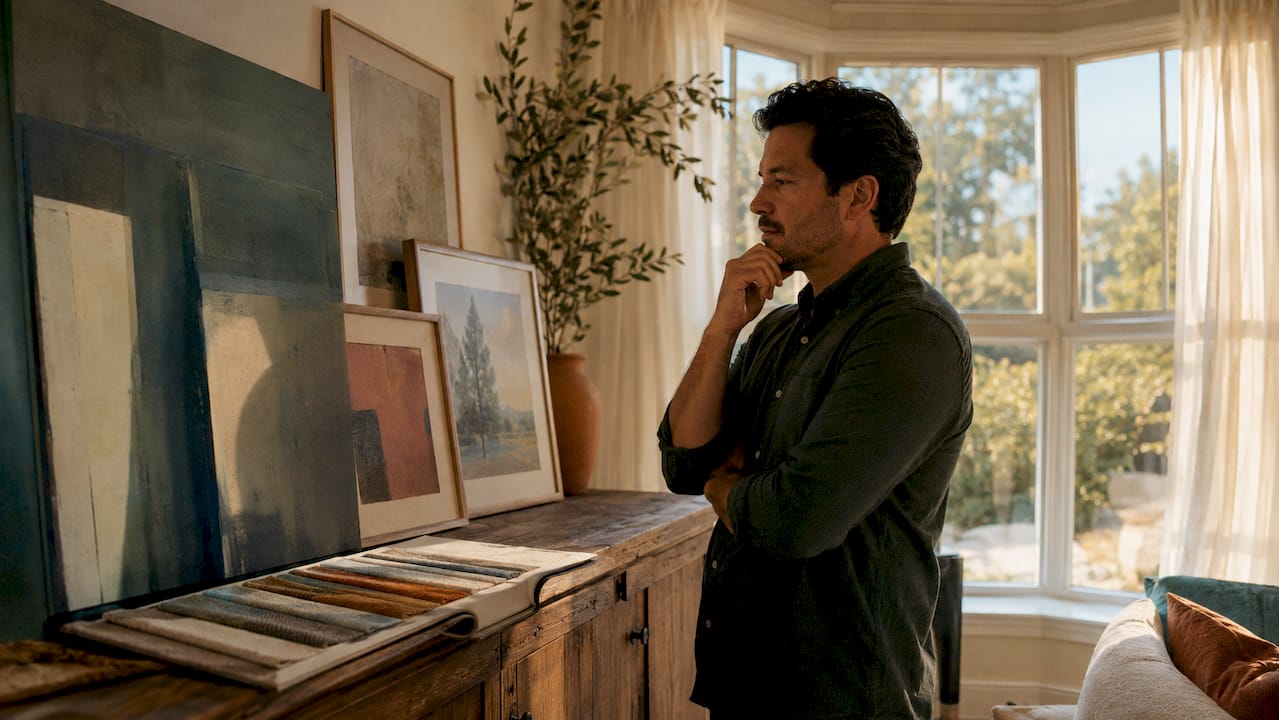
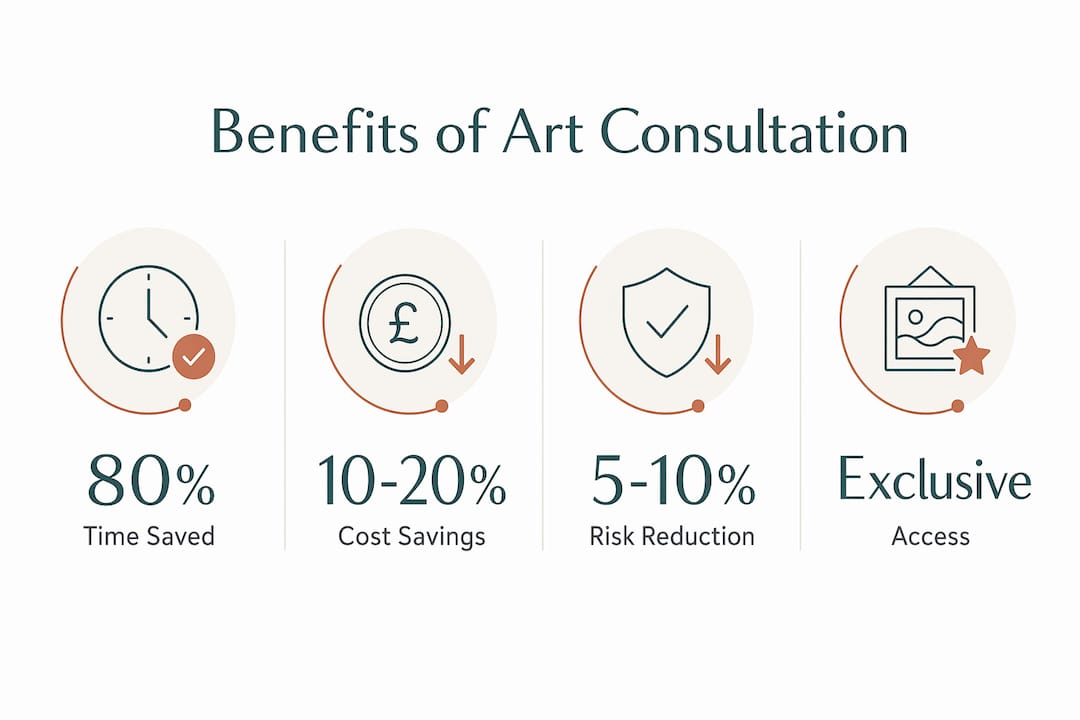
The importance of art consultants becomes clearest when you consider the scale of what they manage. Art consultants handle up to 80% of the sourcing process, saving clients more than 200 hours of research per project. That is not a marginal efficiency gain. It is the difference between months of indecision and a resolved, cohesive interior.
What does an art consultant actually do?
The art consulting process covers far more than recommending artists. A consultant begins with a structured conversation about your vision, style preferences, budget, and how you live in your space. From there, the work becomes operational.
A full-service art consultant typically handles:
- Sourcing and curating artwork from galleries, auction houses, art fairs, and independent studios
- Vetting authenticity and provenance to confirm a work is genuine and legally owned
- Negotiating price on your behalf, drawing on market knowledge you would not have access to alone
- Managing logistics including framing, delivery, and professional installation
- Post-purchase support such as maintenance advice, insurance guidance, and collection documentation
The collaborative process from vision to installation is what separates a consultant from a gallery visit. You are not browsing; you are working with someone who understands both art and interiors. Consultants also provide structured systems for collection documentation and long-term maintenance, which preserves the value of what you buy.
Pro Tip: Ask any potential consultant to walk you through a recent project from brief to installation. Their answer will tell you more about their process and communication style than any credentials document.
What are the real benefits of art consultation?
The benefits of art consultation fall into three categories: time, money, and design quality. Each one is concrete and measurable.
Time savings
Art research is time-consuming in a way most homeowners underestimate. Comparing artists, visiting galleries, cross-referencing prices, and reading provenance documents takes hundreds of hours. A consultant compresses that process dramatically. The 80% sourcing handled figure reflects a real transfer of labour from client to expert.
Financial advantages
Consultants bring negotiation leverage that individual buyers simply do not have. Clients typically save 10–20% on art purchases through consultants’ negotiation skills and volume relationships with sellers. On a £5,000 piece, that is a saving of £500–£1,000. That saving alone can offset a consultant’s fee.
Risk reduction
Forgeries and misattributed works are a real problem in the art market. Provenance issues affect an estimated 5–10% of market purchases. A consultant’s vetting process catches these problems before you spend money. Buying without that check is a genuine financial risk, not a theoretical one.
Design cohesion
Art that looks wrong in a room is one of the most common and expensive decorating mistakes. Consultants balance long-term investment goals, emotional meaning, and design cohesion simultaneously. They assess scale, colour palette, lighting conditions, and sightlines before recommending a single piece. The result is art that feels like it belongs in your home rather than art that was simply placed there.
Access and exclusivity
Consultants maintain networks that give you access to works not listed publicly. Private sales, studio visits, and pre-market pieces are all within reach when you work with an established advisor. That access is not available to individual buyers browsing online marketplaces.
Common misconceptions about art advisory services
The most persistent myth about art advisory services is that they are reserved for wealthy collectors with large budgets. Consultants assist with single pieces and small collections just as readily as they work with major collectors. If you want one statement piece for your living room and you want to get it right, a consultant is a practical choice, not a luxury one.
A second misconception is that consultants push their preferred artists or galleries. The opposite is true. Client-side neutrality is the defining professional standard. A reputable consultant sources from wherever the best option for your brief exists, not from whoever pays them a commission.
How to choose an art consultant
Choosing the right consultant requires asking the right questions. The factors that matter most are:
- Relevant experience: Have they worked with homeowners in similar spaces and with similar budgets?
- Style understanding: Can they articulate why a specific work suits your interior, not just your taste?
- Communication: Do they explain their reasoning clearly, or do they rely on authority and jargon?
- Credentials: Are they members of a professional body such as the Association of Professional Art Advisors (APAA)?
- Fee structure: Do they charge a flat fee, hourly rate, or a percentage of purchase price? Each model creates different incentives.
The relationship works best as a creative partnership. You bring knowledge of your home, your life, and your taste. The consultant brings market knowledge, aesthetic judgement, and operational expertise. Neither party should dominate the process.
Pro Tip: Request a short paid trial brief before committing to a full engagement. Ask the consultant to recommend three works for a specific room with written reasoning. Their choices and explanations will confirm whether their vision aligns with yours.
How does art consultation enhance interior design?
Art consultation and interior design are closely linked disciplines. A consultant who understands interiors does not just find art you like. They find art that makes your room work better.
The practical considerations consultants address include:
| Design factor | What a consultant assesses |
|---|---|
| Scale | Whether the artwork’s dimensions suit the wall and the room’s proportions |
| Colour | How the work’s palette interacts with existing furniture, textiles, and paint |
| Lighting | Whether natural or artificial light enhances or distorts the piece |
| Sightlines | Where the eye travels when entering the room, and how art guides that movement |
| Framing | Whether the frame material and profile complement the room’s architectural style |
Consultants ensure art scale, colour, lighting, and framing harmonise with the home, preventing the “forced decor” effect that makes a room feel assembled rather than considered. This is the difference between a room that photographs well and a room that genuinely feels right to live in.
For homeowners planning larger installations, understanding how to plan large-scale art is a natural extension of the consultation process. Scale errors are among the most common and most visible mistakes in residential interiors. A consultant catches them before purchase, not after delivery. Pairing professional advice with resources like a thorough art selection checklist gives you a structured framework to work from.
Consultants also integrate bespoke design approaches into their recommendations, considering how art interacts with other custom elements in a room, from wallcoverings to architectural details. The best results come when art is treated as part of the interior system, not an afterthought.
Key takeaways
Art consultation delivers measurable time savings, financial advantages, and design quality that individual buyers cannot replicate through independent research alone.
| Point | Details |
|---|---|
| Time savings are substantial | Consultants handle up to 80% of sourcing, saving clients over 200 hours per project. |
| Financial savings are real | Negotiation expertise typically delivers 10–20% savings on purchase price. |
| Risk reduction matters | Provenance vetting protects against forgeries, which affect an estimated 5–10% of market purchases. |
| Consultation suits all budgets | Consultants work with single-piece briefs and small collections, not only large collectors. |
| Design cohesion is the outcome | Expert assessment of scale, colour, lighting, and framing ensures art belongs in your space. |
Art consultation: what I have seen it do for homeowners
I have watched homeowners spend months circling the same decision: which piece, which size, which wall. The paralysis is real, and it is not a sign of indecisiveness. It is a sign that the stakes feel high and the information available is genuinely inadequate for the task.
What strikes me most about the clients who engage a consultant is not the quality of the art they end up with. It is the confidence they feel about it. They know why the piece works. They understand the provenance. They have a record of what they own and what it is worth. That knowledge changes the relationship between a person and the art on their walls.
The art market has also become more complex in recent years. Prices at auction are less predictable. Online platforms have made access easier but verification harder. A consultant’s market knowledge is not a nice extra. It is a practical necessity for anyone spending meaningful money on art.
My honest view is that the value of professional art advice is most visible in the mistakes it prevents. The oversized canvas that dominates a small room. The reproduction sold as an original. The piece bought impulsively that never quite fits the space. These are not rare outcomes. They are the default outcome when buyers go it alone. A good consultant does not take over your taste. They make your taste work in the real world.
— Lennard
Frametheworld’s art collections for your home
Frametheworld offers a curated range of wall art collections designed for homeowners who want quality and character without the complexity of sourcing from scratch. The Wabi Sabi wall art collection features hand-painted abstract pieces that bring texture, calm, and considered imperfection to any interior. For bolder spaces, the Pop Art collection delivers vivid, hand-painted works that hold their own as statement pieces. Frametheworld also offers bespoke options for homeowners with specific briefs, making it straightforward to find art that fits your space, your style, and your wall dimensions precisely.
FAQ
What is art consultation?
Art consultation is a professional service in which an expert guides clients through selecting, sourcing, and placing artwork suited to their space, style, and budget. Consultants handle everything from provenance vetting to installation management.
Is art consultation only for wealthy collectors?
No. Consultants work with homeowners seeking a single statement piece as readily as they work with major collectors. The service scales to your budget and brief.
How much can I save by using an art consultant?
Clients typically save 10–20% on art purchases through a consultant’s negotiation skills and market relationships. On higher-value pieces, that saving often covers the consultant’s fee.
How do I verify an art consultant’s credentials?
Check for membership of a recognised professional body such as the Association of Professional Art Advisors (APAA). Ask for references from past residential clients and request a written explanation of their fee structure before engaging.
Can an art consultant help with interior design decisions?
Yes. Consultants assess scale, colour, lighting, sightlines, and framing to ensure artwork integrates with your existing interior. Their role overlaps directly with interior design when it comes to spatial planning and aesthetic cohesion.

Laat een reactie achter
Deze site wordt beschermd door hCaptcha en het privacybeleid en de servicevoorwaarden van hCaptcha zijn van toepassing.