
TL;DR:
- Large canvas art creates a bold focal point that unifies room colors and improves spatial perception. It offers long-lasting style by resisting trends and fading, making it a durable interior feature. Proper placement and size choices enhance room balance, making large art a powerful tool for home design.
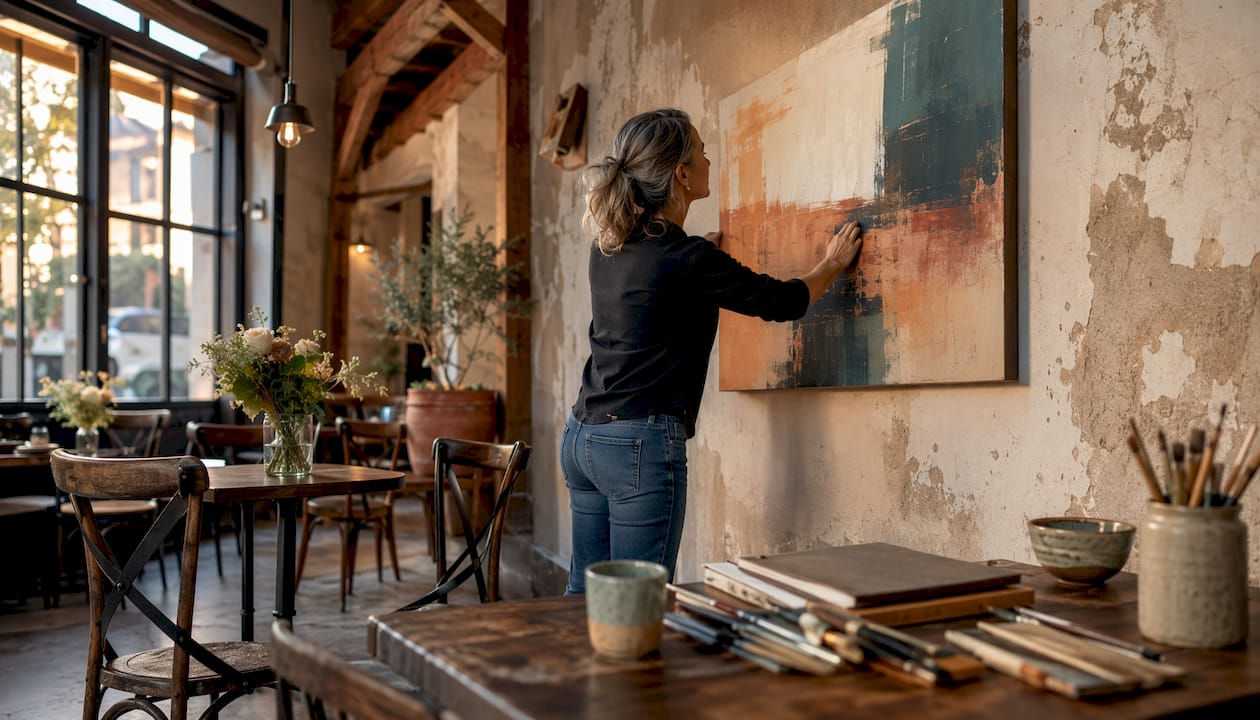
Large canvas art is defined as any single artwork printed or painted on canvas at a scale large enough to serve as the primary visual anchor of a room. The large canvas art benefits go well beyond aesthetics. Scale shapes mood, spatial perception, and how cohesive a room feels. A single oversized piece does what a gallery wall of small prints cannot: it commands attention, unifies a colour palette, and gives a room a clear focal point. This guide covers everything you need to know, from how scale changes a room’s atmosphere to practical advice on placement, room-by-room styling, and overcoming common display challenges.
1. How large canvas art benefits room atmosphere and spatial perception
Scale is the single most powerful tool in interior design. A large canvas placed on the right wall does not just decorate a space. It defines it.
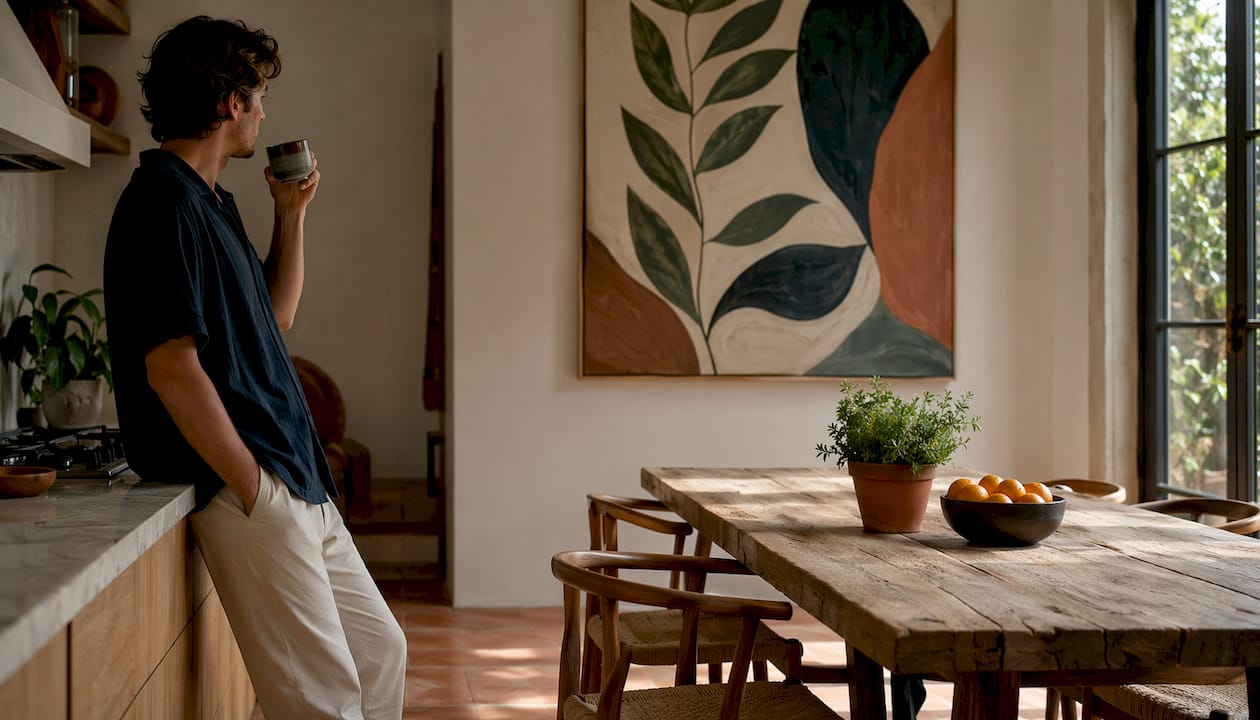
Single large wall art creates less visual complexity than multiple small pieces, which means rooms feel more open and cohesive. This is the principle of visual continuity. Instead of your eye jumping between five small frames, it settles on one commanding image. The result is a calmer, more considered space.
Placement matters as much as scale. Museum standard recommends hanging artwork with its centre at roughly 57 inches from the floor for optimal viewing. This aligns the piece with natural eye level and connects it to the furniture below, rather than floating it awkwardly above the room. Most homeowners hang art too high, which weakens its impact and makes the room feel disconnected.
Large canvases also influence perceived room size. A landscape or abstract with strong horizontal lines draws the eye across the wall, making a narrow room feel wider. A vertical piece in a low-ceilinged room pulls the eye upward, adding a sense of height. The imagery itself becomes an architectural tool.
- Focal point creation: One large piece gives every room a clear visual starting point, which makes furniture arrangement easier and more intentional.
- Colour unification: A large canvas pulls accent colours from sofas, rugs, and cushions into a single visual statement, tying the room together.
- Mood setting: Muted textures and monochrome photographs at large scale become atmospheric and almost sculptural, adding depth without noise.
- Spatial illusion: Strategic imagery and orientation can make a room feel taller, wider, or more intimate depending on your goal.
Pro Tip: Hang your large canvas so its centre sits at 57 inches from the floor, then position your sofa or console table roughly 6–8 inches below the bottom edge of the frame. This creates a visual connection between art and furniture that feels intentional rather than accidental.
2. Long-term durability and timelessness of large canvas art
Small decor trends cycle every 18 months. Ceramic ornaments, patterned cushions, and printed posters come and go with seasonal collections. Large canvas art operates on an entirely different timeline.
A well-chosen large canvas is a structural element of a room, not a seasonal accessory. Homeowners treat it accordingly. Consumers research large canvases more carefully than impulse-purchased small decor, which means the final choice reflects genuine taste rather than a passing trend. That deliberation pays off in long-term satisfaction.
The materials behind a quality large canvas also contribute to its longevity. Stretched canvas on a solid timber frame resists warping. UV-resistant inks prevent fading even in rooms with significant natural light. Unlike paper prints or fabric wall hangings, a properly made canvas does not buckle, peel, or yellow over time. For homeowners who want durable long-lasting pieces, the canvas format consistently outperforms alternatives.
The timelessness argument is also psychological. When you invest meaningfully in a piece, you choose something that reflects your identity rather than the current season’s trend. That connection keeps the piece feeling relevant for years.
Pro Tip: When selecting a large canvas, choose imagery or abstraction that resonates with you personally rather than what is trending. Trend-led choices date quickly. Personal choices age well.
| Factor | Small decor | Large canvas art |
|---|---|---|
| Trend cycle | Approximately 18 months | Years to decades |
| Purchase behaviour | Often impulse-driven | Researched and deliberate |
| Material durability | Variable, often fragile | Stretched canvas resists warping and fading |
| Room role | Accent or accessory | Structural visual anchor |
| Long-term satisfaction | Declines as trends shift | Remains high due to personal investment |
3. Creative ways to incorporate large canvas art into different rooms
The advantages of large canvas art are not limited to living rooms. Every room in a home benefits from scale when the piece is chosen and positioned correctly. The key is matching the artwork’s subject matter, orientation, and tone to the function of the room.
Living rooms are the most natural home for a large canvas. The wall behind a sofa is the most common placement, and for good reason. A canvas that spans roughly two-thirds of the sofa’s width creates proportion and balance. You can explore styling large wall art for specific guidance on achieving that balance without overcrowding the wall.
Bedrooms call for imagery that feels restful. Soft abstracts, nature photography, or botanical prints at large scale create a calming backdrop behind the bed head. Avoid high-contrast or busy compositions in sleeping spaces, as they can feel visually stimulating rather than restful.
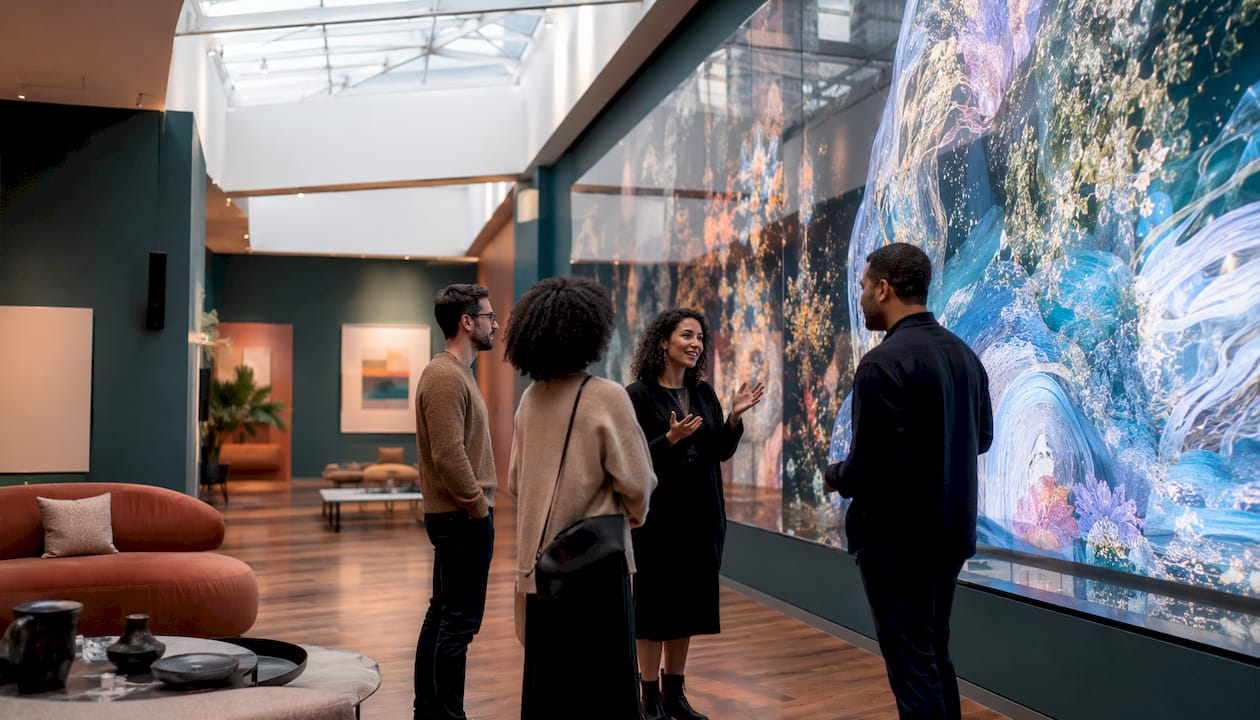
Dining rooms are an underused opportunity. Dining rooms benefit especially from impactful large-scale art because of the time spent seated and facing walls during meals. A large canvas on the wall opposite the table acts as a stage backdrop, enriching every meal without requiring any effort.
Home offices have gained new relevance. Large art behind office desks enhances virtual call backgrounds while contributing to personal design expression. A considered canvas signals professionalism and personality simultaneously.
- Orientation: Use landscape canvases on wide walls and portrait canvases in narrow spaces or above tall furniture like bookshelves.
- Scale relative to furniture: Aim for the canvas width to cover roughly two-thirds of the furniture piece below it.
- Subject matter: Match the tone of the imagery to the room’s purpose. Energetic abstracts suit living areas; calm, minimal pieces suit bedrooms and offices.
- Flexibility: Swappable canvas designs let you change the artwork seasonally while keeping the frame installed, giving you the benefits of scale without permanent commitment.
For a broader view of how oversized art shapes rooms, the principles of proportion and placement apply across every interior style, from Scandi minimalism to maximalist colour.
4. Common challenges and solutions when choosing large canvas art
The most common reason homeowners avoid large canvas art is fear. Fear that the piece will overwhelm the room. Fear of making the wrong choice. Fear of commitment to something that cannot be easily swapped out. These concerns are real, but each has a practical solution.
-
Measure before you buy. Take the width of your wall and the width of the furniture below it. The canvas should cover 60–75% of the wall width for balanced impact. This is the two-thirds wall coverage rule, and it prevents both overcrowding and the underwhelming effect of art that is too small for its wall.
-
Use paper templates. Cut newspaper or brown paper to the exact dimensions of the canvas you are considering. Tape it to the wall and live with it for a day. This removes the guesswork from scale decisions and builds confidence before you commit.
-
Hang at the correct height. Artwork hung too high feels disconnected and weakens the room’s visual balance. Centre the piece at 57 inches from the floor, regardless of ceiling height.
-
Choose interchangeable canvases. Swappable large canvases let you keep the frame installed while changing the artwork as your tastes or seasons change. This approach gives you the full impact of scale with far less commitment anxiety.
-
Start with abstraction. If you are uncertain about subject matter, an abstract canvas in your room’s existing colour palette is the lowest-risk entry point. It complements rather than competes, and it ages well across changing furniture and accessories.
Key takeaways
Large canvas art is the most effective single change a homeowner can make to improve a room’s visual coherence, spatial perception, and long-term design satisfaction.
| Point | Details |
|---|---|
| Scale creates cohesion | One large canvas unifies colour, furniture, and mood better than multiple small pieces. |
| Hang at 57 inches | Centre the artwork at 57 inches from the floor to align with natural eye level. |
| Apply the two-thirds rule | Aim for the canvas to cover 60–75% of the wall width for balanced proportion. |
| Large art outlasts trends | Small decor cycles every 18 months; a quality canvas remains relevant for years. |
| Swappable designs reduce risk | Interchangeable canvases let you change artwork without removing the frame. |
Why I think most homeowners underestimate the power of scale
People spend months choosing sofas, weeks choosing paint colours, and about ten minutes choosing wall art. That imbalance is the single biggest mistake I see in home design decisions.
A sofa fills a room physically. A large canvas fills it emotionally. The two are equally important, and yet art is consistently treated as an afterthought. When I see a beautifully furnished room with a cluster of small prints above the sofa, I see a room that is almost there. The furniture is doing its job. The art is not.
The shift in thinking that changes everything is this: treat the wall as a design surface, not a storage space for frames. One large piece, chosen deliberately, does more for a room than any collection of smaller works. It gives the eye somewhere to rest. It gives the room a personality. It makes the furniture feel intentional rather than assembled.
I also think the accessibility of large canvas art has changed dramatically. The idea that oversized art is only for galleries or grand houses is outdated. You can find large-scale art for interior projects that suits a modest flat as readily as a period property. Scale is not about grandeur. It is about proportion. And proportion is available to everyone.
The homeowners I have seen get this right share one trait: they were willing to be bold. Not reckless, but bold. They measured carefully, chose deliberately, and committed. The rooms they created are the ones that feel genuinely finished.
— Lennard
Large canvas art at Frametheworld
Frametheworld offers a curated selection of large-scale wall art designed for homeowners who want lasting impact rather than seasonal decoration. The Wabi Sabi collection features hand-painted abstract canvases that use texture and deliberate imperfection to create pieces that feel both contemporary and timeless. For homeowners who want something bolder, the Pop Art collection brings large-format colour and energy to living rooms and dining spaces. Frametheworld also offers bespoke sizing and customisation, so you can find a canvas that fits your exact wall rather than compromising on scale. Browse by style, theme, or size to find a piece that works with your space.
FAQ
What size canvas is considered large for a living room?
A canvas is generally considered large when it measures at least 100 cm in width. For a living room sofa wall, aim for a width that covers roughly two-thirds of the sofa’s length.
Does large wall art make a small room look bigger?
Yes. A single large canvas creates less visual fragmentation than multiple small pieces, which makes a room feel more open and cohesive. Horizontal imagery and light tones amplify this effect further.
How high should I hang a large canvas?
Hang the canvas so its centre sits at 57 inches (approximately 145 cm) from the floor. This aligns with natural eye level and connects the artwork to the furniture below it.
Is large canvas art a good long-term investment for home decor?
Large canvas art outlasts small decor trends, which cycle approximately every 18 months. A quality stretched canvas on a solid frame resists warping and fading, making it a durable and lasting choice.
What rooms benefit most from large canvas art?
Living rooms, dining rooms, bedrooms, and home offices all benefit from large-scale art. Dining rooms in particular gain from impactful pieces because of the extended time spent seated and facing walls during meals.


Laat een reactie achter
Deze site wordt beschermd door hCaptcha en het privacybeleid en de servicevoorwaarden van hCaptcha zijn van toepassing.