
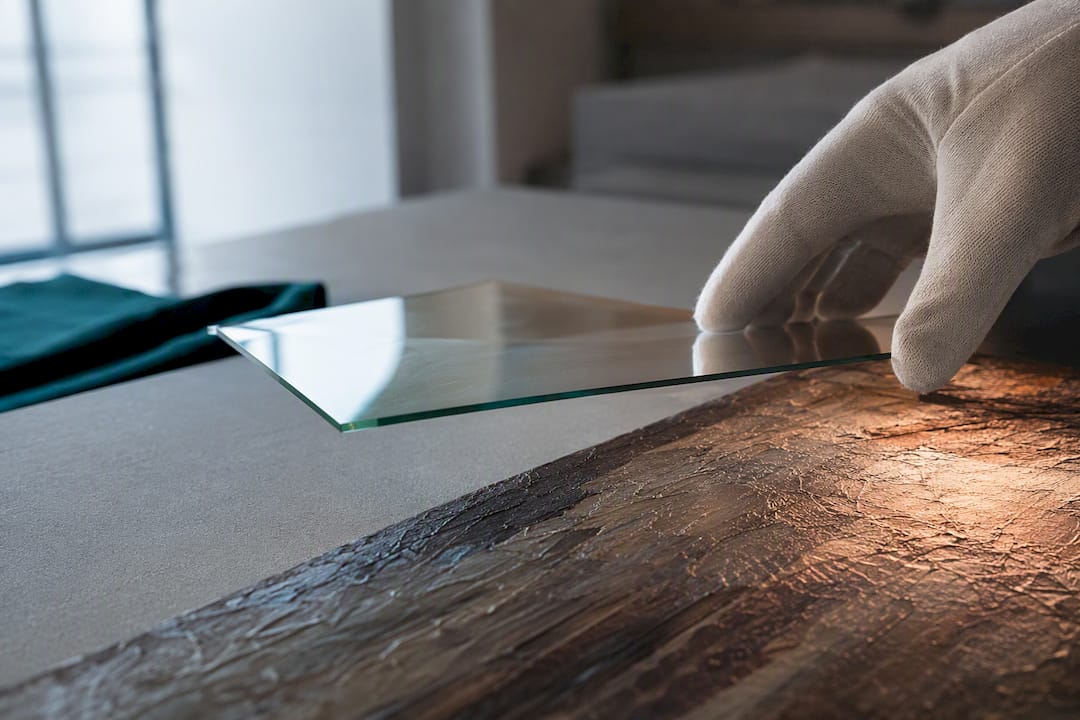
The fastest way to stop UV fading is conservation-grade glazing or full-coverage UV window film, paired with LED lighting and reduced light exposure. Conservation glazing blocks over 97% of UV radiation, but glazing alone will not save a painting hung in direct sun with visible light left uncontrolled. It is recommended to treat glazing, lighting and placement as one combined strategy, not three separate purchases.
TL;DR:
- Conservation glazing blocks at least 97% of UV radiation, but it must be combined with proper placement and lighting management to prevent damage from visible light.
- UV-blocking window films remain effective for about 15 to 20 years and protect all artwork and furnishings through the entire room, making them ideal for multiple pieces.
- UV-filtering varnishes protect the paint surface but do not address room ambient light, so they should be complemented with glazing and placement strategies.
- Proper installation, regular cleaning with appropriate products, and periodic UV performance checks are essential to maintain the effectiveness of UV protection solutions.
- Protecting valuable artworks requires matching the level of UV and light protection to their value, medium, and placement, with higher-value pieces deserving conservation-grade glazing.
Table of Contents
- How light damages paintings: UV versus visible light
- Glazing, window films and varnishes: which actually works?
- How do I choose the right UV protection for my painting?
- Installing and maintaining UV protection so it keeps working
- What conservation standards should you check before buying?
- What to ask when you buy framed art or commission a piece
- Why glazing alone isn’t the fix most people think it is
- Where to find hand-painted art built with framing in mind
- Sources
- FAQ
How light damages paintings: UV versus visible light
Light damage builds silently and never reverses. Pigments fade, varnishes yellow, and canvas or paper supports weaken, and once that has happened, no cleaning or restoration brings the original colour back.
Three types of radiation are doing the work, and they don’t act the same way:
- UVA and UVB (roughly 300 to 380 nanometres) carry the most energy and cause the fastest chemical breakdown in pigments and varnish.
- Visible light (the light you actually see) still degrades colour over time, even with UV filtered out entirely.
- Infrared mostly shows up as heat, which dries out oil paint and stresses canvas through repeated expansion and contraction.
Museum and conservation guidance sets a working target of below low UV exposure levels, with a general recommendation to keep UV radiation below 75 microwatts per lumen(https://manual.museum.wa.gov.au/conservation-and-care-collections-2017/paintings/preventive-conservation/index.html), alongside lux limits that vary by medium: oil paintings tolerate more visible light than watercolours or works on paper. LED bulbs help because they emit almost no UV compared with older halogen or incandescent fittings, but that only solves one part of the problem. Visible light exposure still needs managing through placement, glazing and curtains, since conservation authorities are clear that visible light causes damage on its own.
Glazing, window films and varnishes: which actually works?
Three categories cover almost every practical option available to a collector or homeowner, and each one solves a different part of the problem.
- Conservation glazing (glass or acrylic). This is the benchmark. Products such as Tru Vue Conservation Clear acrylic block at least 97% of UV in the 300 to 380 nanometre range, with some formulations reaching 99%. Acrylic options like Plexiglas UV100 make similar claims, often quoted around 99.7% UV absorption for cut-to-size sheets sold for framing. Glass glazing offers better scratch resistance and a more traditional look; acrylic is lighter, safer for large pieces, and less prone to shattering, though it can attract static and scratches more easily than glass.
- UV-blocking window film. Rather than treating one frame, film covers the whole window, protecting every piece of art in a room, plus the furniture and flooring. Good-quality film remains effective for around approximately 15 to 20 years provided it’s fitted edge to edge with no gaps. It’s the more sensible choice for a room with several artworks or an awkward bay window that would be expensive to reglaze piece by piece.
- Varnishes and anti-UV sprays. Conservation varnishes formulated with UV absorbers and hindered amine light stabilisers, such as Conservar Finishing Varnish, offer removable protection without yellowing over time. They protect the paint surface itself but do nothing about ambient room light, and suitability depends heavily on the medium, so this is a decision to make with a conservator rather than off a product label.
Specialist options exist too. Graphene veils have shown protection factors of up to roughly 70% in controlled lab tests against colour fading, but adhesion and reversibility issues on textured canvas keep this firmly in museum research territory rather than something you’d fit at home.
Pro Tip: Don’t assume a varnish replaces glazing. A UV-resistant varnish protects the paint film from direct exposure, but if the painting hangs opposite a south-facing window, the surrounding room light is still doing damage the varnish was never designed to stop.
How do I choose the right UV protection for my painting?
Start with the painting, not the product. A £200 print and a£20,000 oil commission need very different levels of investment, and the questions below help match protection to value.
- How valuable or irreplaceable is the piece? Original oils and limited editions justify conservation-grade glazing; decorative prints may only need UV film on the window.
- What’s the medium? Watercolours and works on paper fade faster than oils and need stricter lux limits and, ideally, UV-filtering glass rather than film alone.
- Where will it hang? A stairwell with a skylight or a south-facing living room needs far more protection than a north-facing hallway.
- Does reflection or weight matter? Acrylic suits large or heavy pieces and reduces glare; glass suits smaller, higher-value works where optical clarity matters most.
Budget against longevity, not just purchase price. Conservation glazing is a one-off cost that lasts the life of the frame; window film needs checking and eventual replacement after approximately 15 to 20 years. When you’re speaking to a framer or installer, ask directly: what percentage of UV does this glazing block, do you have ISO test documentation, and what’s the expected replacement schedule? A framer who can’t answer the UV percentage question probably isn’t selling conservation-grade material. Our guide to acrylic versus glass framing covers this trade-off in more detail.
Installing and maintaining UV protection so it keeps working
Fitting film or glazing badly undoes most of the benefit. A few rules keep protection working for years rather than months.
- Fit window film full-coverage, edge to edge, with no gaps at the frame, and get large windows professionally installed to avoid trapped air bubbles or moisture.
- Clean glass with a standard glass cleaner; never use ammonia-based or solvent cleaners on acrylic, as they cloud and craze the surface.
- Check film performance periodically. A UV meter or supplier documentation is the only reliable way to confirm a film is still filtering effectively, since degradation isn’t visible to the eye.
- Don’t leave a high-exposure display unchanged for years. Rotating pieces or repositioning them relative to natural light does more for long-term preservation than most people expect.
Pro Tip: If you can’t tell whether an existing film is still working, don’t guess. A ten-minute check with a UV meter costs far less than restoring a faded canvas.
What conservation standards should you check before buying?
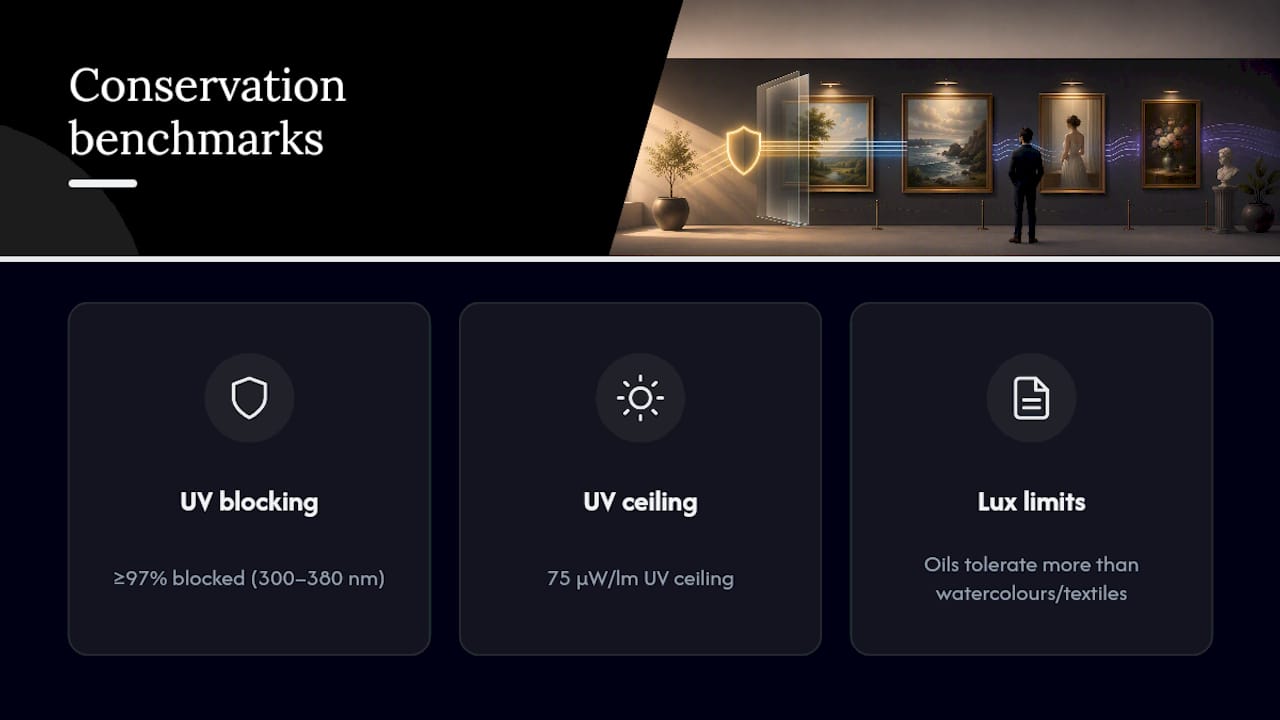
Two figures are worth memorising before you talk to a supplier. The professional threshold for effective UV-blocking glazing is blocking at least 97% of UV in the 300 to 380 nanometre range, which is the industry benchmark referenced by PPFA and ISO-aligned testing. For lighting and room conditions, conservation guidance sets 75 µW/lm as the UV ceiling, with lux recommendations varying by medium: oils tolerate more than watercolours or textiles.
When comparing glazing or film products, ask for test data referencing ISO 18902 and ISO 18916, the standards covering photographic and archival material stability, which framing suppliers increasingly cite for UV-filtering products. A supplier who says “conservation-grade” without a percentage or a standard behind it is making a marketing claim, not a technical one.
What to ask when you buy framed art or commission a piece
Hand-painted canvases and bespoke commissions are available, and framing decisions matter as much as the painting itself. If a piece is going somewhere bright, ask whether the frame can be upgraded to conservation glazing at the point of order, rather than retrofitted later. Our page on why frame selection matters covers what to weigh up before committing to glass, acrylic or an open frame.
Why glazing alone isn’t the fix most people think it is
Most advice on this subject stops at “buy UV glass” and moves on, and that’s where it falls short. Glazing solves the UV problem well. It does almost nothing about visible light, which conservation bodies are explicit is a separate cause of fading that glazing cannot filter out entirely.
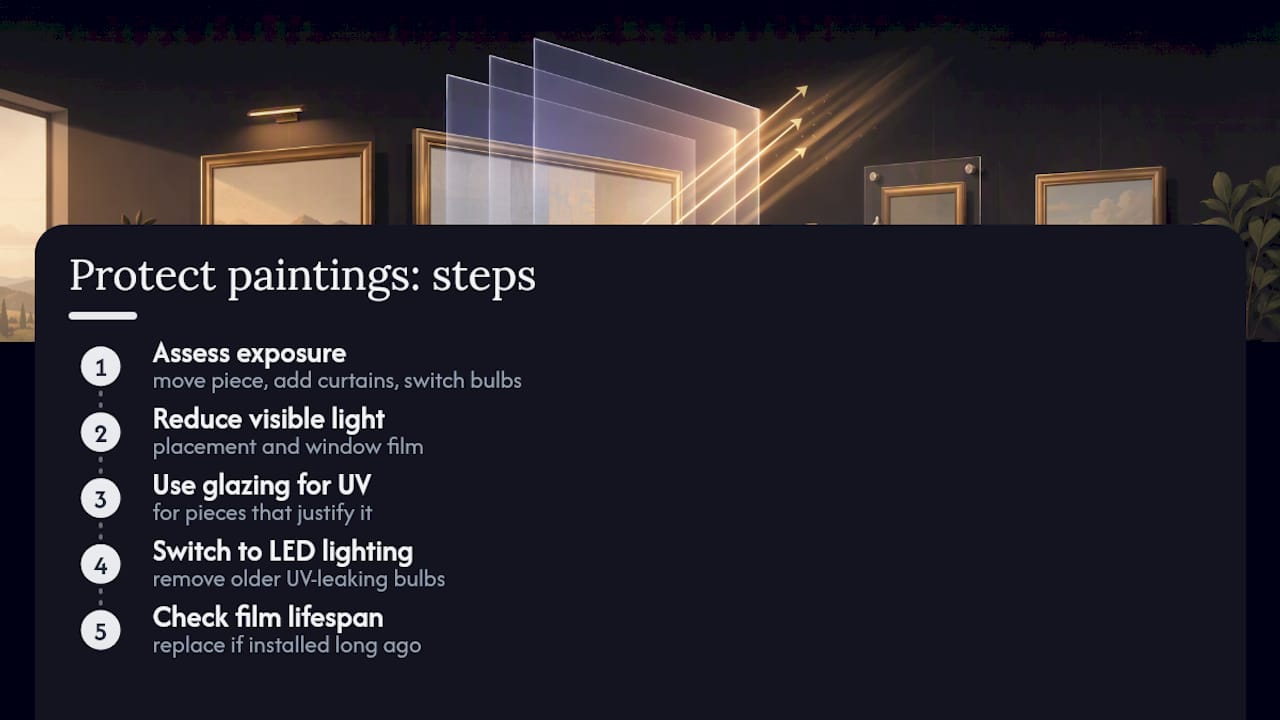
The homeowners who protect their collections best treat this as three decisions, not one: glazing for UV, placement and window film for visible light, and LED lighting to cut out the older bulbs still leaking UV into rooms. Skip any one of the three and you’ve only solved part of the problem while feeling like you’ve solved all of it.
The other place conventional advice underperforms is timing. People buy UV glazing once and never think about it again, but window film has a working lifespan, and nobody checks it. If you fitted film a decade ago and have no idea whether it still filters UV, that’s worth resolving before spending more on glazing upgrades. Sort the exposure problem first: move the piece, add curtains, or switch bulbs. Then invest in glazing for the pieces that justify it.
— Lennard
Where to find hand-painted art built with framing in mind
Choosing the right piece is only half the job. Frametheworld’s collections, including the Wabi Sabi wall art range, are designed to work with a range of framing options, so upgrading to conservation glazing later is straightforward rather than a retrofit headache. Specialist UV glazing itself is typically supplied and fitted by a local framer, and Support is available to point customers towards that conversation when ordering.
If you’re commissioning something bespoke, whether a specific size for a bright hallway or a custom palette for a shaded study, get in touch through Frametheworld to talk through sizing, style and where the piece will hang before it’s painted. For bold colour that holds up well against a good UV plan, the colourful wall art collection is worth a look first.
Sources
For deeper detail, consult the NEDCC preservation leaflet on light damage, Tru Vue’s conservation glazing specifications, and museum preventive conservation guidance. Collectors of paper-based or graded items may also find these comic storage preservation habits useful for handling and rotation principles that overlap with painting care.
- Conservation Clear® Acrylic | UV Acrylic | Tru Vue®
- Protection from light damage — NEDCC preservation leaflet
- Preventive conservation guidance for paintings (museum manual)
- Preventing colour fading in artworks with graphene veils (Nature Communications research)
FAQ
Where can I buy UV-protective glass for art?
Specialist framers and glazing suppliers stock conservation-grade glass and acrylic, including products like Tru Vue Conservation Clear acrylic and Plexiglas UV100, usually cut to size for a specific frame. Ask your framer directly about UV percentage and ISO test documentation before buying.
Does UV pass through Perspex?
Standard Perspex and basic acrylic glazing offer little UV protection on their own, but UV-rated acrylic products such as Plexiglas UV100 are specifically treated to block up to around 99.7% of UV radiation. The difference lies entirely in the UV-filtering treatment, not the acrylic itself.
What do artists use to protect their paintings?
Many artists apply a conservation varnish containing UV absorbers and light stabilisers over the finished paint layer, which protects the surface while remaining removable. This complements, rather than replaces, UV-filtering glazing and sensible placement away from direct sunlight.
How do I protect pictures from UV at home?
Combine conservation-grade glazing or full-coverage UV window film with LED lighting and careful placement away from direct sun, since visible light causes fading independently of UV. Rotating pieces periodically and checking older window film for remaining effectiveness rounds out a proper protection plan.


Leave a comment
This site is protected by hCaptcha and the hCaptcha Privacy Policy and Terms of Service apply.